Dolaut throat
Italy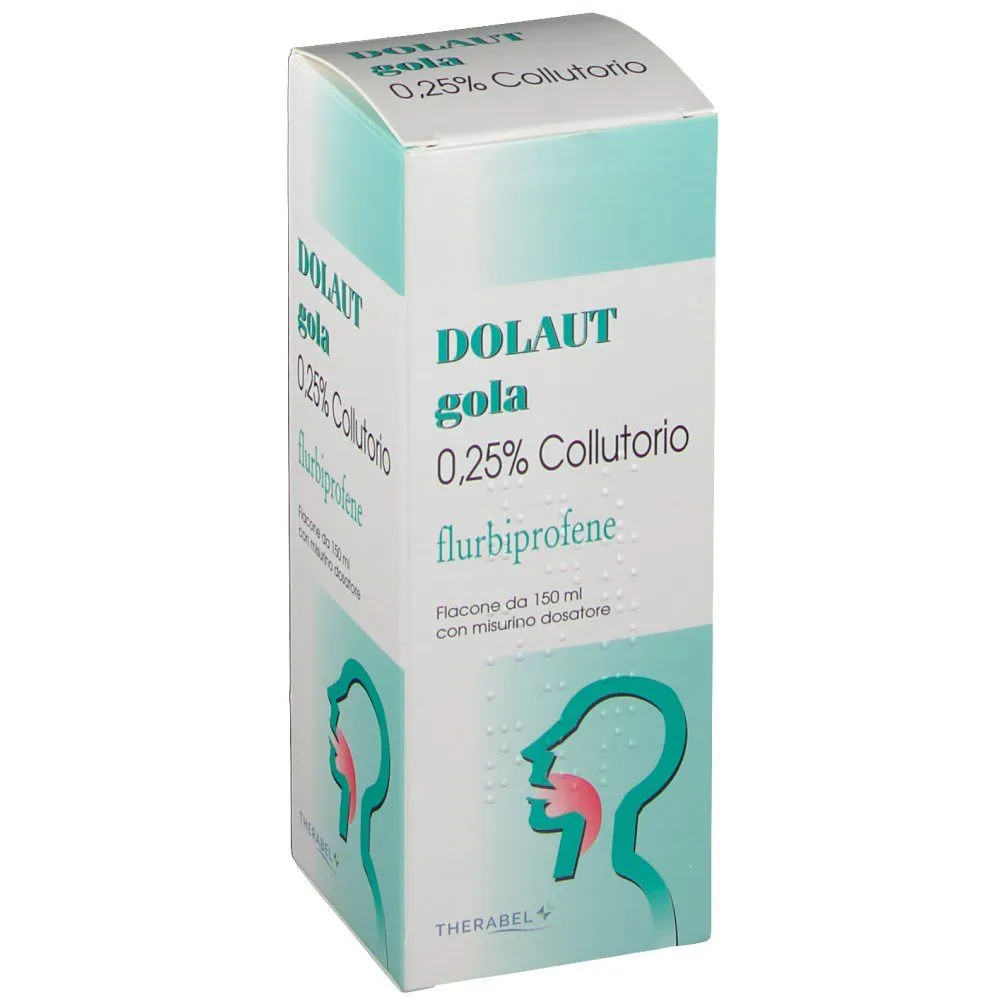
Table of Contents
- Package leaflet: Information for the patient
- DOLAUT GOLA 0.25% oral mucosa spray
- 1. What Dolaut gola is and what it is used for
- 2. What you need to know before using Dolaut Gola
- 3. How to use Dolaut gola
- 4. Possible side effects
- 5. How to store Dolaut gola
- 6. Package contents and other information
- Package leaflet: information for the user
- DOLAUT GOLA 0.25% mouthwash
- 1. What Dolaut gola is and what it is used for
- 2. What you need to know before using Dolaut gola
- 3. How to use Dolaut gola
- 4. Possible side effects
- 5. How to store Dolaut gola
- 6. Pack contents and other information
Package leaflet: Information for the patient
DOLAUT GOLA 0.25% oral mucosa spray
flurbiprofen
Please read this leaflet carefully before using this medicine because it contains
important information for you.
Always use this medicine exactly as described in this leaflet or as your doctor or
pharmacist has instructed you.
- Keep this leaflet. You may need to read it again.
- If you need further information or advice, consult your pharmacist.
- If you experience any side effects, including those not listed in this leaflet, contact your doctor or pharmacist. See section 4.
- Consult your doctor if you do not notice any improvement or if your symptoms worsen after a short period of treatment.
Contents of this leaflet:
- What Dolaut gola is and what it is used for
- What you need to know before using Dolaut gola
- How to use Dolaut gola
- Possible side effects
- How to store Dolaut gola
- Contents of the pack and other information
1. What Dolaut gola is and what it is used for
Dolaut gola contains flurbiprofen, which is an anti-inflammatory medicine used for disorders of the oral cavity.
Dolaut gola is used to treat symptoms of irritation and inflammation, including pain in the mouth and throat (e.g. gingivitis, stomatitis, pharyngitis), even when these are due to dental treatments (conservative or extraction procedures).
Consult your doctor if you do not feel better or if you feel worse after a short period of treatment.
2. What you need to know before using Dolaut Gola
Do not use Dolaut Gola
- if you are allergic to the active substance or to any of the other ingredients of this medicine (listed in section 6);
- if you have had asthma, urticaria, or any other allergic reaction after taking acetylsalicylic acid (known as aspirin) or other NSAIDs;
- if you have peptic ulcer (ulcer of the stomach or duodenum) or Crohn's disease, suffer or have suffered from ulcerative colitis, have had two or more episodes of stomach or intestinal ulcer or bleeding, or have had even a single episode of stomach and/or intestinal bleeding or perforation due to NSAIDs;
- if you have severe heart, kidney, or liver problems;
- during the last three months of pregnancy.
Warnings and precautions
Talk to your doctor before taking DOLAUT GOLA if:
- you are elderly, as you may be more likely to develop adverse reactions to this medicine;
- you are pregnant, planning to become pregnant, or are breastfeeding;
- you have liver or kidney problems;
- you have heart or blood vessel problems, as medicines like DOLAUT GOLA may be associated with a small increased risk of heart attack (myocardial infarction) or stroke. The risk of side effects increases with higher doses and prolonged use; do not exceed the recommended dose of DOLAUT GOLA or use it for long periods. Inform your doctor if you have heart problems, a history of stroke, or think you may be at risk for these conditions (for example, if you have high blood pressure, diabetes, high cholesterol, or smoke);
- you have had a peptic ulcer (ulcer of the stomach or duodenum) or other stomach or intestinal diseases;
- you have asthma;
- you suffer from systemic lupus erythematosus (SLE, also known as lupus) or mixed connective tissue disease, conditions affecting connective tissue causing joint or muscle pain, skin changes, and problems in other organs;
- you are dehydrated, as you may be more likely to develop kidney problems.
BE CAREFUL, because during treatment with all pain and inflammation medicines (NSAIDs):
- at any time, with or without warning symptoms, even in patients without previous serious stomach or intestinal (gastrointestinal) problems, cases of bleeding, ulceration, or perforation of the stomach or intestine have been reported, which may be fatal.
- very rarely, severe skin reactions have been reported, some of which were fatal, manifesting as redness, blistering, and skin peeling (e.g., exfoliative dermatitis, Stevens-Johnson syndrome, and toxic epidermal necrolysis). During the initial stages of therapy, patients appear to be at higher risk: such reactions occur mostly within the first month of treatment.
The above effects have been reported particularly after administration of systemic formulations containing Flurbiprofen.
DOLAUT GOLA contains the dye patent blue V (E131), which may cause allergic reactions.
Other medicines and Dolaut Gola
Tell your doctor or pharmacist if you are taking, have recently taken, or might take any other medicine, as some medicines may interact with DOLAUT GOLA or increase the risk of adverse events, even serious ones.
In particular, contact your doctor if you are taking:
- diuretics (medicines that increase urine production, e.g., furosemide and spironolactone);
- cardiac glycosides (medicines used for heart conditions, such as digoxin);
- ACE inhibitors (e.g., captopril) or angiotensin II antagonists (e.g., losartan), medicines used for high blood pressure (hypertension);
- anticoagulant medicines (e.g., warfarin), used to prevent blood clotting;
- antiplatelet medicines, used to thin the blood;
- lithium, used in depression;
- zidovudine, an antiviral medicine;
- methotrexate, used to treat certain cancers and certain immune system disorders, such as rheumatoid arthritis;
- cyclosporine and tacrolimus, immunosuppressive medicines used to reduce your immune response;
- medicines known as corticosteroids, used to treat inflammatory diseases (e.g., prednisone, dexamethasone, hydrocortisone);
- antidepressant medicines called 'selective serotonin reuptake inhibitors (SSRIs)' (e.g., paroxetine, fluoxetine);
- antibiotics known as quinolones (e.g., ciprofloxacin);
- mifepristone, a medicine used for abortion (taken now or within the last 12 days);
- any other medicine used for inflammation (NSAIDs), including acetylsalicylic acid (aspirin) and medicines belonging to the COX-2 inhibitor class (e.g., celecoxib).
The interactions listed above have been reported particularly after administration of systemic formulations containing Flurbiprofen.
At the recommended doses, no interactions with other medicines or of other types have been reported.
Pregnancy, breastfeeding, and fertility
If you are planning to become pregnant or have fertility problems, consult your doctor, as this medicine may impair fertility.
Avoid using DOLAUT GOLA during the first or second trimester of pregnancy, unless specifically directed by your doctor.
Do not use DOLAUT GOLA during the last three months of pregnancy.
Avoid using DOLAUT GOLA during breastfeeding.
Driving and using machines
DOLAUT GOLA may cause drowsiness, visual disturbances, dizziness, fatigue, and vertigo. Make sure you do not experience these side effects before driving or operating machinery.
Dolaut contains
- the dye patent blue V (E131), which may cause allergic reactions;
- ethanol. This medicine contains small amounts of ethanol (alcohol), less than 100 mg per dose.
For those engaged in sports: the use of medicines containing ethyl alcohol may lead to positive results in anti-doping tests, depending on the alcohol concentration limits set by certain sports federations.
3. How to use Dolaut gola
Use this medicine exactly as stated in this leaflet or as instructed by your doctor or pharmacist. If you have any doubts, consult your doctor or pharmacist.
The recommended dose is 2 sprays, 3 times a day. Direct the spray toward the affected area.
At the first use of Dolaut gola oral spray, gently rotate the nozzle to the right or left, then press the dispenser several times until a regular spray is obtained.
Do not exceed the recommended doses.
Use the medicine as needed, at any time of day.
Consult your doctor if symptoms recur repeatedly or if you have noticed any recent changes in their characteristics.
Use only for short treatment periods.
If you use more Dolaut gola than you should
In case of accidental ingestion of an excessive dose of DOLAUT GOLA, contact your doctor immediately or go to the nearest hospital. Remember to bring the DOLAUT GOLA package with you.
If you forget to use Dolaut gola
Do not use a double dose to make up for the missed dose.
If you stop using Dolaut gola
If you have any doubts about using this medicine, consult your doctor or pharmacist.
Use in children and adolescents:
No data are available; therefore, the use of DOLAUT GOLA in the pediatric population is not recommended.
4. Possible side effects
Like all medicines, this medicine can cause side effects, although not everyone will experience them. In particular, some side effects observed with other medicines containing flurbiprofen taken orally or topically (e.g. tablets or patches), or with other anti-inflammatory drugs (NSAIDs), may also occur during treatment with DOLAUT GOLA.
Stop taking DOLAUT GOLA immediately and contact your doctor if you experience any of the following:
- severe burning or abdominal pain due to gastric or duodenal ulcer (peptic ulcer). These side effects are not common;
- sudden, severe upper abdominal pain (ulcer perforation). This side effect is not common;
- vomiting blood (haematemesis) or black stools (melena), associated with stomach or intestinal bleeding, unusual fatigue with reduced urine output (due to non-visible bleeding). These side effects are common;
- allergic reactions, even severe, such as swelling (angioedema) of the face, eyes, lips, or throat with breathing difficulties (these side effects are not common), with sudden drop in blood pressure (anaphylactic reaction) (these side effects are rare);
- severe skin rashes with redness, peeling, and/or blistering (e.g. erythema multiforme, Stevens-Johnson syndrome, toxic epidermal necrolysis). These side effects are very rare;
- breathing problems, even severe such as asthma and dyspnoea (these side effects are not common), or bronchospasm (this side effect is not common);
- inflammation of the pancreas (pancreatitis). This side effect is very rare;
- swelling of the face, hands, legs (oedema), reduced urine output or difficulty urinating (fluid retention). These side effects are common;
- fatigue, shortness of breath, leg swelling, symptoms of heart failure; high blood pressure. These side effects are not common;
- blood clots in the arteries (which may cause, for example, heart attack or stroke), diseases of the brain's blood vessels (cerebrovascular events). The frequency of these side effects is unknown.
Common side effects (may affect up to 1 in 10 people)
- nausea, vomiting, diarrhoea, flatulence, difficulty passing stools (constipation), indigestion, abdominal pain;
- changes in liver function tests, prolonged bleeding time;
- dizziness, headache, fatigue, malaise.
Uncommon side effects (may affect up to 1 in 100 people)
- decrease in red blood cells (anaemia);
- gastritis, mouth ulcers;
- sudden or gradual appearance of skin lesions, such as discoloured spots or widespread rash (rash, purpura), even after sun exposure (photosensitivity reactions), urticaria, itching;
- ringing, buzzing, hissing, whistling, or other persistent sounds in the ears;
- visual disturbances, altered sensation, vertigo.
Rare side effects (may affect up to 1 in 1,000 people)
- depression, confusion, drowsiness, difficulty falling asleep (insomnia);
- kidney problems (nephrotoxicity) such as nephrotic syndrome, kidney inflammation (tubulointerstitial nephritis), impaired kidney function (renal failure).
Very rare side effects (may affect up to 1 in 10,000 people)
- changes in blood parameters: reduced platelets (thrombocytopenia), reduced white blood cells (leucopenia) or neutrophils (neutropenia), severe reduction in granulocytes (agranulocytosis), reduced red blood cells due to bone marrow problems (aplastic anaemia), destruction of red blood cells leading to reduced numbers (haemolytic anaemia);
- yellowing of the skin or eyes (jaundice, cholestatic jaundice), dark urine, pale stools, itching or abdominal pain, possible signs of liver problems;
- hallucinations.
Side effects with unknown frequency (frequency cannot be estimated from the available data)
- inflammation of the colon and Crohn's disease;
- vision problems due to inflammation of the optic nerve (optic neuritis);
- kidney inflammation (glomerulonephritis).
Reporting of side effects
If you experience any side effect, including those not listed in this leaflet, please inform your doctor or pharmacist. You may also report side effects directly via the national reporting system at “www.agenziafarmaco.gov.it/it/responsabili”.
By reporting side effects, you can help provide more information on the safety of this medicine.
5. How to store Dolaut gola
This medicine does not require any special storage conditions.
After first opening, store at a temperature not exceeding 25°C and for no longer than 30 days.
Keep this medicine out of the sight and reach of children.
Do not use this medicine after the expiry date stated on the label after "expiry". The expiry date refers to the last day of that month.
Do not dispose of any medicine via wastewater or household waste. Ask your pharmacist how to dispose of medicines no longer in use. This will help protect the environment.
6. Package contents and other information
What Dolaut gola contains
- The active substance is flurbiprofen. 100 ml of oral mucosa spray contain 250 mg of flurbiprofen.
- The other components are: propylene glycol, ethanol (96%), chlorhexidine digluconate solution, hydrogenated castor oil-40-polyoxethylated, sodium hydroxide, sodium saccharin, peppermint flavour, patent blue V (E 131), quinoline yellow (E 104), purified water.
Description of the appearance of Dolaut gola and contents of the pack
Dolaut gola is supplied as an oral mucosa spray.
The pack contains one 15 ml dark glass bottle.
Marketing Authorisation Holder and Manufacturer
Marketing Authorisation Holder
NEOPHARMED GENTILI S.P.A. Via San Giuseppe Cottolengo, 15, 20143 - MILAN (MI)
Manufacturer
Francia Farmaceutici – Industria Farmaco Biologica Srl
Via dei Pestagalli, 7 - 20138 Milan
Package leaflet: information for the user
DOLAUT GOLA 0.25% mouthwash
flurbiprofen
Please read this leaflet carefully before using this medicine because it contains
important information for you.
Always use this medicine exactly as described in this leaflet or as your doctor or
pharmacist has instructed you.
- Keep this leaflet. You may need to read it again.
- If you need more information or advice, consult your pharmacist.
- If you experience any of the side effects, including those not listed in this leaflet, contact your doctor or pharmacist. See section 4.
- Consult your doctor if you do not notice improvement or if your symptoms worsen after a short period of treatment.
Contents of this leaflet:
- What Dolaut gola is and what it is used for
- What you need to know before using Dolaut gola
- How to use Dolaut gola
- Possible side effects
- How to store Dolaut gola
- Contents of the pack and other information
1. What Dolaut gola is and what it is used for
Dolaut gola contains flurbiprofen, which is an anti-inflammatory medicine used for conditions affecting the oral cavity.
Dolaut gola is used to treat symptoms of irritations and inflammations, including pain in the mouth and throat (e.g. gingivitis, stomatitis, pharyngitis), even as a result of dental treatments (conservative or extraction procedures).
Consult your doctor if you do not feel better or feel worse after a short period of treatment.
2. What you need to know before using Dolaut gola
Do not use Dolaut gola
- if you are allergic to the active substance or to any of the other ingredients of this medicine (listed in section 6),
- if you are allergic to aspirin or other non-steroidal anti-inflammatory drugs (NSAIDs), especially if the allergy is associated with asthma or urticaria,
- if you are in the third trimester of pregnancy (See "Pregnancy and breastfeeding"),
- if you have or have previously had a stomach or intestinal lesion (peptic ulcer),
- if you are breastfeeding.
Warnings and precautions
Talk to your doctor or pharmacist before using Dolaut gola.
- When used at the recommended doses, accidental swallowing of Dolaut gola does not cause any harm, as the amount ingested is considerably lower than that of a single dose of the medicine taken systemically (e.g. orally).
- If you use Dolaut gola mouthwash, especially for a prolonged period, you may experience sensitization or local irritation; in such cases, stop treatment and consult your doctor to obtain, if necessary, an appropriate therapy.
- If you do not achieve noticeable improvement after a short period of treatment, consult your doctor.
- If you suffer from kidney, heart or liver impairment, use this medicine with caution.
- Do not combine Dolaut gola with other non-steroidal anti-inflammatory drugs (NSAIDs).
Other medicines and Dolaut gola
Inform your doctor or pharmacist if you are taking, have recently taken, or might take any other medicines.
No interactions of Dolaut gola with other medicines are known at the recommended doses. However, flurbiprofen may occasionally affect the activity of the following medicines:
- furosemide (a medicine that increases urine production), since flurbiprofen may reduce its effectiveness;
- anticoagulant medicines (blood thinners), since flurbiprofen may interfere with their activity.
Pregnancy and breastfeeding
If you are pregnant, suspect you may be pregnant, planning a pregnancy, or are breastfeeding, ask your doctor or pharmacist for advice before using this medicine.
Pregnancy
Dolaut gola should be used during pregnancy only after consulting your doctor and carefully evaluating the risk/benefit ratio in your specific case.
The medicine, when administered during pregnancy, may delay the onset of labour and increase its duration.
Dolaut gola must not be used during the third trimester of pregnancy.
Breastfeeding
Use of Dolaut gola is not recommended during breastfeeding.
Driving and using machines
Dolaut gola does not impair the ability to drive or operate machinery.
Dolaut contains ethanol (alcohol)
This medicine contains 816.8 mg of alcohol (96% ethanol) in 10 ml (1 measuring cup). It may cause a burning sensation on damaged skin.
Dolaut gola contains propylene glycol
This medicine contains 2000 mg of propylene glycol in 10 ml (1 measuring cup). It may cause skin irritation.
Dolaut gola contains hydrogenated castor oil-40-polyoxyl
It may cause localized skin reactions.
3. How to use Dolaut gola
Use this medicine exactly as stated in this leaflet or as instructed by your doctor or pharmacist. If you have any doubts, consult your doctor or pharmacist.
The recommended dose is 2–3 rinses or gargles per day using 10 ml (1 measuring cup) of mouthwash. You may dilute the mouthwash in water.
Pour 10 ml of the solution into the measuring cup and use it undiluted as a gargle, or diluted in half a glass of water as a mouth rinse.
Do not exceed the recommended doses.
Use the medicine as needed, at any time of the day.
Consult your doctor if symptoms recur frequently or if you have noticed any recent changes in their characteristics.
Use only for short treatment periods.
If you use more Dolaut gola than you should
Use Dolaut gola mouthwash only for rinsing or gargling; accidental small ingestions of the medicine do not cause problems.
In case of accidental ingestion/overdose of Dolaut gola, contact your doctor immediately or go to the nearest hospital. Symptoms of overdose may include nausea, vomiting, and irritation of the stomach and intestines (gastrointestinal irritation).
If you forget to use Dolaut gola
Do not use a double dose to make up for the missed dose.
If you stop using Dolaut gola
If you have any doubts about using this medicine, consult your doctor or pharmacist.
4. Possible side effects
Like all medicines, this medicine may cause side effects, although not everybody gets them.
Use of this medicine, especially if prolonged, may lead to sensitisation or local irritation; in such cases, stop treatment and consult your doctor, who, if necessary, will prescribe appropriate therapy.
Following the instructions contained in this leaflet reduces the risk of side effects.
The following side effects have been reported, particularly after administration of formulations for systemic use, e.g. oral (by mouth):
-
blood cell disorders (thrombocytopenia, aplastic anaemia, agranulocytosis)
-
allergic reactions, even severe (anaphylaxis, angioedema, allergic reaction)
-
dizziness
-
damage to blood vessels in the brain (cerebrovascular accidents)
-
vision disturbances, inflammation of eye nerves (optic neuritis)
-
migraine
-
altered sensation in limbs and other body parts (paraesthesia)
-
depression, confusion, hallucination
-
vertigo
-
malaise
-
fatigue and somnolence
-
ringing in the ears (tinnitus)
-
breathing difficulties due to inflammation (asthma, bronchospasm, dyspnoea)
-
nausea, vomiting, diarrhoea, passage of gas from the anus (flatulence), constipation, difficulty digesting (dyspepsia), abdominal pain, blood in stool (melena), vomiting blood (haematemesis), mouth inflammation with poorly healing lesions (ulcerative stomatitis), bleeding from stomach and intestine, and worsening of inflammation of a part of the intestine called colon (exacerbation of colitis) and of a disease known as Crohn's disease
-
inflammation of the stomach (gastritis), lesions, perforations and bleeding of the stomach and intestine (peptic ulcer, ulcer perforation and haemorrhage)
-
skin disorders (rash, pruritus, urticaria, purpura, and very rarely bullous dermatoses, including Stevens-Johnson Syndrome, Toxic Epidermal Necrolysis, and Erythema Multiforme)
-
kidney damage (including interstitial nephritis and nephrotic syndrome, and rare cases of renal failure, as observed with other non-steroidal anti-inflammatory drugs - NSAIDs).
Reporting of side effects
If you experience any side effect, including those not listed in this leaflet, talk to your doctor or pharmacist.
You can also report side effects directly via the national reporting system at https://www.aifa.gov.it/content/segnalazioni-reazioni-avverse.
By reporting side effects, you can help provide more information on the safety of this medicine.
5. How to store Dolaut gola
This medicine does not require any special storage conditions.
Keep this medicine out of the sight and reach of children.
Do not use this medicine after the expiry date stated on the label after "expiry". The expiry date refers to the last day of that month.
Do not dispose of medicines via wastewater or household waste. Ask your pharmacist how to dispose of medicines you no longer use. This will help protect the environment.
6. Pack contents and other information
What Dolaut gola contains
- The active substance is flurbiprofen. 100 ml of mouthwash contains 250 mg of flurbiprofen.
- The other ingredients are: propylene glycol, ethanol (96%), chlorhexidine digluconate solution, hydrogenated castor oil-40-polyoxyl castor oil, sodium hydroxide, sodium saccharin, mint flavour, patent blue V (E 131), quinoline yellow (E 104), purified water.
Description of the appearance of Dolaut gola and pack contents
Dolaut gola is available as a mouthwash.
The pack contains one amber glass bottle with a measuring cup containing 150 ml of solution.
Marketing Authorisation Holder and Manufacturer
Marketing Authorisation Holder
NEOPHARMED GENTILI S.p.A., Via San Giuseppe Cottolengo, 15 – 20143 Milan, Italy
Manufacturer
Doppel Farmaceutici S.r.l. – Via Martiri delle Foibe, 1 – Cortemaggiore (PC)