Dermestril
Italy
Table of Contents
Package leaflet: Information for the user
DERMESTRIL
25 micrograms/24 hours transdermal patches
50 micrograms/24 hours transdermal patches
100 micrograms/24 hours transdermal patches
Estradiol
Please read all of this leaflet carefully before you start using this medicine because it contains important information for you.
- Keep this leaflet. You may need to read it again.
- If you have any questions, ask your doctor or pharmacist.
- This medicine has been prescribed for you only. Do not give it to other people, even if their symptoms are the same as yours, as it may be harmful.
- If you experience any side effects, including those not listed in this leaflet, tell your doctor or pharmacist. See section 4.
Contents of this leaflet:
- What DERMESTRIL is and what it is used for
- What you need to know before using DERMESTRIL
- How to use DERMESTRIL
- Possible side effects
- How to store DERMESTRIL
- Contents of the pack and other information
1. What DERMESTRIL is and what it is used for
DERMESTRIL contains the active substance estradiol, which belongs to a group of substances called estrogens, the main female sex hormones.
DERMESTRIL is a transdermal patch that continuously and steadily releases the active substance. The patch must be replaced every 3-4 days with a new one. It is indicated for the treatment of symptoms caused by estrogen deficiency (Hormone Replacement Therapy, HRT) in postmenopausal women who have been without menstruation for at least 6 months.
Additionally, DERMESTRIL 50 micrograms and DERMESTRIL 100 micrograms may be used, as a second-choice therapy, for the prevention of bone fragility (osteoporosis) in postmenopausal women at high risk of fractures and who cannot take other specific medicines for treating this condition.
Experience in women over 65 years of age is limited.
2. What you should know before using DERMESTRIL
Do not use DERMESTRIL
- if you are allergic to the active substance or to any of the other ingredients of this medicine (listed in section 6);
- if you currently have, have had in the past, or suspect you may have breast cancer (mammary carcinoma);
- if you have had or suspect you have a hormone-sensitive malignant tumour, such as one in the lining of the uterus (endometrium);
- if you experience vaginal bleeding of unknown origin;
- if you have untreated excessive thickening of the uterine lining (endometrial hyperplasia);
- if you currently have or have had in the past severe circulatory disorders due to blood clots (thrombi) in the veins, particularly in the legs (deep vein thrombosis) or in the lungs (pulmonary embolism);
- if you have blood clotting disorders (thrombophilic conditions), such as protein C deficiency, protein S deficiency, or antithrombin deficiency;
- if you currently have or have had in the past severe circulatory disorders due to blood clots (thrombi) in the arteries, resulting in severe chest pain (angina) or heart attack (myocardial infarction);
- if you currently suffer from or have had in the past liver disease (acute hepatopathy, history of hepatopathy). In this case, do not use this medicine until liver function test results return to normal;
- if you suffer from a hereditary blood disorder (porphyria).
Warnings and precautions
Talk to your doctor or pharmacist before using DERMESTRIL.
Before starting therapy, your doctor will ask you about your personal and family medical history. Additionally, you will undergo a general and gynaecological examination, including a breast and pelvic check.
Once you start treatment with DERMESTRIL, your doctor will perform periodic check-ups (at least once a year) to carefully assess the risks and benefits of the therapy.
Specifically, you are advised to undergo certain tests, such as mammography and Pap test, and to inform your doctor if you notice any changes in your breasts, such as skin dimpling, nipple changes, or visible or palpable hardening.
Furthermore, participation in mammographic screening programmes is recommended when available. For mammographic screening, it is important that you inform the nurse/healthcare professional performing the X-ray that you are undergoing hormone replacement therapy, as this treatment may increase breast density, which can affect mammography results. When breast density is increased, mammography may not detect all lumps.
Use this medicine with caution and inform your doctor if:
- you suffer from kidney or heart disorders (renal or cardiac dysfunction), as DERMESTRIL may cause reduced elimination of fluids and salts (fluid retention);
- you suffer from severe kidney problems (end-stage renal failure). In this case, your doctor must monitor you closely and carefully evaluate the prescribed dose, as DERMESTRIL levels in the blood may increase;
- blood tests show you have high levels of triglycerides in the blood (pre-existing hypertriglyceridemia), as this condition may worsen and, in severe cases, may lead to inflammation of the pancreas (pancreatitis);
- you need to undergo certain blood or urine tests, as DERMESTRIL may alter their results;
- you are taking thyroid replacement therapy (based on thyroxine), as your doctor may require more frequent monitoring of thyroid function.
Some conditions may worsen during hormone replacement therapy. Therefore, if you currently have, have had in the past, or are at risk for any of the following conditions, use the medicine with caution and inform your doctor, who will monitor you closely:
- benign uterine tumours (uterine fibroids) or presence of the uterine lining in abnormal locations (endometriosis);
- risk factors for blood clot formation (thrombi) in the legs and lungs;
- a first-degree relative with breast cancer or a tumour whose growth is sensitive to oestrogen hormones (e.g., uterine or ovarian cancer);
- high blood pressure (hypertension);
- liver disorders (hepatopathies, e.g., hepatic adenoma);
- diabetes;
- gallstones (cholelithiasis);
- headaches, even severe ones (migraine, severe headache);
- a serious disorder of the body's immune system (systemic lupus erythematosus);
- a disease causing seizures (epilepsy);
- asthma;
- a hereditary ear disorder (otosclerosis);
- hereditary or acquired angioedema.
If you notice any change in the conditions listed above while being treated with DERMESTRIL, inform your doctor.
Stop treatment with this medicine immediately and contact your doctor:
- if your skin turns yellow (jaundice) or if you develop liver problems (worsening of liver function);
- swelling of the face, tongue, and/or throat and/or difficulty swallowing, or hives with breathing difficulties, which are symptoms of angioedema;
- if you experience a significant increase in blood pressure;
- if you develop a sudden, severe headache (migraine-type headache);
- if you become pregnant (See section “Pregnancy and breastfeeding”).
Please note that treatment with DERMESTRIL may increase the risk of:
- Endometrial hyperplasia and carcinoma: oestrogen-only therapy increases the risk of thickening of the uterine lining (endometrial hyperplasia) and cancer of the uterine lining (carcinoma), even up to 10 years after stopping therapy, especially if DERMESTRIL is used for prolonged periods. Adding a progestogen to oestrogen for at least 12 days of each 28-day cycle protects against this additional risk. Therefore, if you have not undergone a hysterectomy (intact uterus), your doctor will prescribe a progestogen. However, if your uterus has been surgically removed (hysterectomy) due to endometriosis or residual endometriosis, discuss with your doctor whether you can safely use DERMESTRIL without a progestogen. During the first months of DERMESTRIL therapy, breakthrough bleeding or intermenstrual spotting may occur. If such bleeding persists after some time on therapy or continues after stopping treatment, consult your doctor;
- Breast cancer: evidence shows that taking hormone replacement therapy (HRT), either combined oestrogen-progestogen or oestrogen-only such as DERMESTRIL, increases the risk of breast cancer. The additional risk depends on the duration of HRT use. This increased risk becomes apparent within 3 years of use. After stopping HRT, the additional risk decreases over time, but may persist for 10 years or more if HRT has been used for more than 5 years. Comparison: Among women aged 50–54 years not using HRT, breast cancer will be diagnosed in approximately 13–17 women per 1,000 over 5 years. Among women aged 50 who start oestrogen-only HRT for 5 years, there will be 16–17 cases per 1,000 users (i.e., 0–3 additional cases). Among women aged 50 who start combined oestrogen-progestogen HRT for 5 years, there will be 21 cases per 1,000 women (i.e., 4–8 additional cases). Among women aged 50–59 not using HRT, breast cancer will be diagnosed in 27 women per 1,000 over 10 years. Among women aged 50 starting oestrogen-only HRT for 10 years, there will be 34 cases per 1,000 users (i.e., 7 additional cases). Among women aged 50 starting combined oestrogen-progestogen HRT for 10 years, there will be 48 cases per 1,000 users (i.e., 21 additional cases).
- Ovarian cancer: ovarian cancer (ovarian tumour) is rare, much rarer than breast cancer. The use of oestrogen-only or combined oestrogen-progestogen therapy has been associated with a slight increase in the risk of ovarian cancer. The risk varies with age. For example, among women aged 50–54 not using HRT, about 2 in 2,000 will be diagnosed with ovarian cancer over 5 years. Among women using HRT for 5 years, there will be about 3 cases per 2,000 women treated (i.e., about 1 additional case);
- Venous thromboembolism: the risk of blood clots in the veins is higher in users of DERMESTRIL compared to non-users, especially during the first year of therapy. Therefore, if you have previously had blood clotting disorders, do not use this medicine (See section “Do not use DERMESTRIL”). The risk of developing a blood clot in the veins increases:
- with increasing age;
- if you are unable to walk for long periods due to major surgery, an accident, or illness. Therefore, if you are undergoing surgery followed by prolonged immobilisation, stop DERMESTRIL treatment approximately 4–6 weeks before surgery and resume only after regaining mobility;
- if you are severely overweight (BMI >30 kg/m²);
- if you are pregnant or in the period immediately after childbirth;
- if you have an autoimmune disease (systemic lupus erythematosus);
- if you have cancer;
- if a close relative developed a blood clot (thrombosis) in the leg, lung, or another organ at a young age;
- if you have any blood clotting disorder (e.g., antithrombin deficiency, protein S or protein C deficiency, or a combination of abnormalities) requiring long-term treatment with a medicine that prevents blood clots. In all the above cases, the medicine should be used with caution and under close medical supervision. Report any thromboembolic symptoms to your doctor, such as leg swelling with pain, sudden chest pain, or difficulty breathing (dyspnoea).
- Coronary heart disease: if you are a woman over 60 years of age, you have a slightly higher chance of developing heart problems compared to women not using this medicine. If you have undergone a hysterectomy, there does not appear to be an increased risk of developing heart disease;
- Stroke: the risk of cerebrovascular damage (stroke) due to use of this medicine increases with age;
- Probable dementia in women who start using this medicine after age 65.
The risks associated with Hormone Replacement Therapy (HRT) in younger women for the treatment of premature menopause are limited.
Other medicines and DERMESTRIL
Inform your doctor or pharmacist if you are currently using, have recently used, or might use any other medicines.
Inform your doctor if you are taking the following medicines:
- anticonvulsants, such as phenobarbital, phenytoin, carbamazepine, used to treat seizures;
- antimicrobials, such as rifampicin, rifabutin, nevirapine, efavirenz, used to treat infections;
- medicines for the treatment of AIDS, such as ritonavir and nelfinavir;
- preparations containing St. John’s wort (Hypericum perforatum), used to treat depression.
Hormone replacement therapy may affect how other medicines work;
- an antiepileptic medicine (lamotrigine), as it may increase the frequency of seizures;
- medicines for hepatitis C virus (HCV), such as combination regimens including ombitasvir/paritaprevir/ritonavir and dasabuvir with or without ribavirin; glecaprevir/pibrentasvir or sofosbuvir/velpatasvir/voxilaprevir may cause increases in blood test results related to liver function (increase in liver enzyme ALT) in women using COCs containing ethinylestradiol. Dermestril contains estradiol instead of ethinylestradiol. It is not known whether an increase in liver enzyme ALT may occur when using Dermestril with these HCV combination regimens.
Although transdermal preparations are less affected by concomitant use of other substances than oral preparations, the medicines listed above may reduce the effectiveness of DERMESTRIL and cause changes in uterine bleeding.
Pregnancy and breastfeeding
If you are pregnant, suspect you may be pregnant, are planning to become pregnant, or are breastfeeding, consult your doctor or pharmacist before using this medicine.
Pregnancy
DERMESTRIL is not indicated during pregnancy.
If you are or suspect you may be pregnant, do not use this medicine.
If you become pregnant while being treated with this medicine, stop treatment immediately.
Breastfeeding
The use of DERMESTRIL is not indicated during breastfeeding. Therefore, if you are breastfeeding, do not use this medicine.
Driving and using machines
No studies on the ability to drive or use machines have been conducted.
3. How to use DERMESTRIL
Use this medicine exactly as instructed by your doctor or pharmacist. If you have
any doubts, consult your doctor or pharmacist.
Dosage and administration schedule
DERMESTRIL is an estrogen-only patch applied to the skin.
The recommended dose is 1 patch applied to the skin twice a week, ensuring continuous hormone delivery. The patch should therefore be replaced every 3–4 days.
Three DERMESTRIL dosage strengths are available:
- DERMESTRIL 25 micrograms;
- DERMESTRIL 50 micrograms;
- DERMESTRIL 100 micrograms.
Your doctor will determine the appropriate dose based on your individual condition, your response to treatment, and the occurrence of any overdose symptoms such as breast tenderness and/or vaginal bleeding.
For initiation and continuation of treatment for postmenopausal symptoms, the lowest effective dose for the shortest possible duration should be used.
The maximum daily dose of 100 µg should not be exceeded.
DERMESTRIL is generally used in a cyclic regimen of 3 weeks (6 applications) followed by a 1-week treatment-free interval. During this week, vaginal bleeding may occur.
If you experience adverse effects or symptoms of overdose such as breast tenderness and/or vaginal bleeding during treatment, inform your doctor, who may reduce your DERMESTRIL dose.
If you still have your uterus, your doctor will advise you to combine DERMESTRIL treatment with a progestogen for at least 12–14 days each month (28-day cycle) to prevent thickening of the uterine lining (endometrial hyperplasia) (See section “Warnings and precautions”).
Unless there is a prior diagnosis of endometrial tissue in abnormal locations (endometriosis), adding a progestogen is not recommended if your uterus has been surgically removed.
Your doctor may choose one of the following treatment regimens:
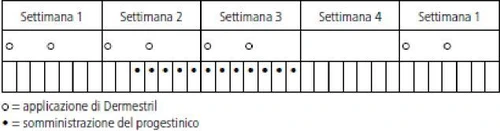
- Cyclic regimen: DERMESTRIL is administered cyclically, with regular treatment-free intervals, usually 21 days of treatment followed by 7 days without treatment. The progestogen is usually administered orally for 12–14 days during the cycle. This means that 3 patches are applied without daily oral progestogen, followed by 3 patches applied concurrently with daily oral progestogen. Subsequently, no hormones are administered for 1 week. Bleeding may occur during this treatment-free interval.
- Continuous sequential regimen: DERMESTRIL is administered continuously without interruption. The progestogen is usually administered for 12–14 days each month (28-day cycle). Bleeding may occur during the progestogen-free interval. This type of regimen is recommended if you experience marked symptoms due to estrogen deficiency during treatment-free intervals.


-
Continuous combined regimen: DERMESTRIL and the progestogen are administered every day without interruption. If you are not already being treated with these hormones, you may start DERMESTRIL therapy at any time. If you are currently on a cyclic or sequential dual-hormone therapy (estrogen/progestogen), complete your current treatment cycle before switching to DERMESTRIL. The most appropriate time to start therapy is on the first day of bleeding during the treatment-free interval.
If you are already on continuous combined dual-hormone therapy (estrogen/progestogen), you may switch directly to DERMESTRIL treatment.
Method of administration
Each carton contains 8 patches individually packaged in sachets.
To use the medicine correctly, carefully follow the instructions below: -
Open the sachet by tearing it from the marked notch (do not use scissors to avoid damaging the patch) and remove the patch (fig. 1–2).
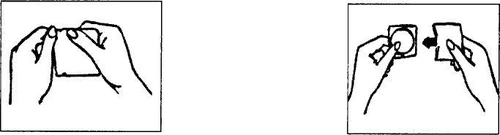
fig. 1 fig. 2
- Each DERMESTRIL patch consists of two parts: the actual patch containing the active ingredient, and a transparent protective liner with a dotted circular relief and a white logo, which must be removed before use. Hold the patch between your thumb and index finger at the smaller part of the protective liner marked by a notch (fig. 3), peel off the larger part of the liner with the other hand, and discard it (fig. 4).
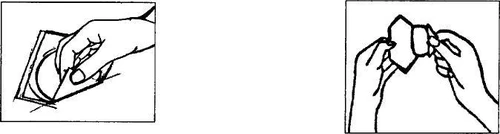
fig. 3 fig. 4
- Avoid touching the adhesive surface of the patch. Apply the patch to the skin of the hips, lower back (lumbar region), or abdomen (abdominal area), keeping the patch held between thumb and index finger at the area still covered by the protective liner (fig. 5). The skin at the application site must be clean, dry, non-oily, and free of redness or irritation. Avoid applying the patch to areas of the body that may form deep folds during movement or where the patch could detach due to movement or friction.
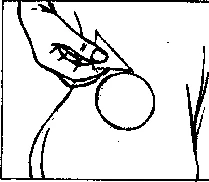
fig. 5
- DERMESTRIL must not be applied to the breasts.
- Remove the remaining part of the protective liner and press firmly over the entire surface of the patch for about 10 seconds.
- Run your finger over the edges again to ensure good adhesion. The patch should then adhere securely to the skin for approximately 4 days.
- Do not apply patches consecutively to the same site.
- Replace the patch twice a week to ensure continuous delivery of the active ingredient. For example, if you started treatment on Monday or Thursday, replace the patch the following Thursday or Monday, respectively.
- If the patch becomes detached, replace it with a new one, maintaining the original schedule.
- Used patches should be folded with the adhesive side inward and then discarded.
When applied correctly, bathing or showering should not cause problems.
However, after a very hot bath or sauna, the patch may detach. In such cases, it should be replaced with a new patch. If possible, schedule sauna sessions on the day designated for patch replacement.
If you use more DERMESTRIL than you should
Overdose is unlikely. However, symptoms may include: nausea,
vomiting, drowsiness, dizziness, cessation of bleeding, breast tenderness, and onset of vaginal bleeding.
If you experience these symptoms, remove the patch and contact your doctor or go to the nearest hospital.
If you forget to use DERMESTRIL
Do not use a double dose to make up for a missed dose.
If the patch has not been replaced on the scheduled day, replace it as soon as possible. Continue with regular application of a new patch, respecting the previously established schedule. Missing one or more doses may increase the likelihood of vaginal bleeding or intermenstrual spotting.
If you have any doubts about how to use this medicine, consult your doctor or pharmacist.
4. Possible side effects
Like all medicines, this medicine can cause side effects, although not everyone experiences them.
The following side effects may occur:
Common (may affect up to 1 in 10 people)
- increase or decrease in body weight;
- headache;
- abdominal pain, nausea;
- skin irritation (rash), itching;
- heavy uterine bleeding outside menstrual periods (metrorrhagia);
- uterine/vaginal bleeding, including light spotting between menstrual cycles (spotting).
Uncommon (may affect up to 1 in 100 people)
- fungal infection of the vagina (vaginal candidiasis);
- allergic reactions (hypersensitivity);
- depression;
- dizziness;
- visual disturbances;
- palpitations;
- difficulty digesting (dyspepsia);
- gallbladder disease (cholecystic disease);
- skin nodules (erythema nodosum), skin irritation accompanied by itching (urticaria);
- breast pain, breast tenderness;
- swelling due to fluid retention (edema).
Rare (may affect up to 1 in 1,000 people)
- anxiety, decreased or increased sexual desire;
- headache (migraine);
- intolerance to contact lenses;
- stomach and intestinal bloating, vomiting;
- excessive hair growth (hirsutism), acne;
- muscle cramps;
- menstrual pain (dysmenorrhea), vaginal discharge, premenstrual syndrome, breast enlargement;
- fatigue.
Frequency not known (frequency cannot be estimated from the available data)
- benign, malignant and unspecified tumours (including cysts and polyps);
- breast cancer;
- benign and malignant oestrogen-dependent tumours, e.g. endometrial cancer, ovarian cancer;
- increased size of benign uterine tumours (leiomyomas);
- probable dementia in women over 65 years of age, a condition characterised by involuntary, uncoordinated movements (chorea), exacerbation of epilepsy;
- damage to blood vessels in the brain (stroke);
- formation of blood clots in veins and arteries (venous and arterial thromboembolism);
- inflammation of the pancreas (pancreatitis) in women with pre-existing high blood fat levels (pre-existing hypertriglyceridaemia);
- gastro-oesophageal reflux disease;
- changes in liver function, sometimes with jaundice (yellowing of the skin and whites of the eyes);
- skin and subcutaneous tissue disorders: skin pigmentation changes, especially on the face or neck (chloasma), skin irritation with redness or sores (erythema multiforme), rapid swelling of the skin, mucosa and submucosal tissues (angioedema);
- red skin lesions due to loss of integrity or function of blood vessels (vasculitic purpura);
- erythema with or without itching;
- urinary incontinence;
- breast nodules (fibrocystic mastopathy).
Reporting of side effects
If you experience any side effect, including those not listed in this leaflet, please inform your doctor or pharmacist.
You can also report side effects directly via the national reporting system at https://www.aifa.gov.it/content/segnalazioni-reazioni-avverse.
By reporting side effects, you can help provide more information on the safety of this medicine.
5. How to store DERMESTRIL
Keep this medicine out of the sight and reach of children.
Store the medicine in its tightly closed sachets at a temperature not exceeding 25 °C.
Do not use this medicine after the expiry date stated on the packaging after "Expiry". The expiry date refers to the last day of that month and applies to the product in its original, undamaged packaging, properly stored.
Do not dispose of any medicine via wastewater or household waste.
Ask your pharmacist how to dispose of medicines you no longer use. This will help protect the environment.
6. Package contents and other information
What DERMESTRIL contains
DERMESTRIL 25 micrograms/24 hours transdermal patches
- The active substance is estradiol. Each transdermal patch contains 2 mg of estradiol. The daily release from DERMESTRIL 25 micrograms/24 hours transdermal patches is 25 µg of estradiol.
- The other components are: acrylic copolymers.
DERMESTRIL 50 micrograms/24 hours transdermal patches
- The active substance is estradiol. Each transdermal patch contains 4 mg of estradiol. The daily release from DERMESTRIL 50 micrograms/24 hours transdermal patches is 50 µg of estradiol.
- The other components are: acrylic copolymers.
DERMESTRIL 100 micrograms/24 hours transdermal patches
- The active substance is estradiol. Each transdermal patch contains 8 mg of estradiol. The daily release from DERMESTRIL 100 micrograms/24 hours transdermal patches is 100 µg of estradiol.
- The other components are: acrylic copolymers.
The transdermal systems are covered with a transparent polyester protective sheet which is
removed prior to use. The backing film is composed of lacquered polyethylene terephthalate.
Description of the appearance of DERMESTRIL and package contents
DERMESTRIL 25 micrograms/24 hours transdermal patches
Box containing 8 transdermal patches. Each patch is individually packaged in a sealed aluminum-lined thermoformed blister.
DERMESTRIL 50 micrograms/24 hours transdermal patches
Box containing 8 transdermal patches. Each patch is individually packaged in a sealed aluminum-lined thermoformed blister.
DERMESTRIL 100 micrograms/24 hours transdermal patches
Box containing 8 transdermal patches. Each patch is individually packaged in a sealed aluminum-lined thermoformed blister.
Marketing Authorization Holder
Exeltis Italia S.r.l. - Via Lombardia, 2/A - 20068 Peschiera Borromeo (MI) - Italy
Manufacturer
MEDA Pharma GmbH & Co. KG Benzstraße 1, 61352 Bad Homburg – Germany
LTS Lohmann Therapie Systeme AG, Lohmannstraße 2, Andernach - Germany