Deltarinolo
Italy
Table of Contents
- Package leaflet: Information for the patient
- DELTARINOLO 5 mg/ml + 1.25 mg/ml nasal spray, solution
- 1. What Deltarinolo is and what it is used for
- 2. What you need to know before using Deltarinol
- 3. How to use Deltarinolo
- 4. Possible side effects
- 5. How to store Deltarinolo
- 6. Package contents and other information
Package leaflet: Information for the patient
DELTARINOLO 5 mg/ml + 1.25 mg/ml nasal spray, solution
ephedrine and naphazoline
Please read all of this leaflet carefully before you start using this medicine because it contains important information for you.
Always use this medicine exactly as described in this leaflet or as your doctor or pharmacist has told you to do.
- Keep this leaflet. You may need to read it again.
- If you need more information or advice, consult your pharmacist.
- If you experience any side effects, including those not listed in this leaflet, contact your doctor or pharmacist. See section 4.
- Contact your doctor if you do not notice improvement or if your symptoms worsen after 4 days of treatment.
Contents of this leaflet:
- What Deltarinolo is and what it is used for
- What you need to know before using Deltarinolo
- How to use Deltarinolo
- Possible side effects
- How to store Deltarinolo
- Contents of the pack and other information
1. What Deltarinolo is and what it is used for
Deltarinolo is a nasal medicinal product containing two active substances: ephedrine and naphazoline,
which belong to the category of nasal decongestants and are used to reduce or eliminate
swelling of the nasal mucous membranes (decongestion).
This medicine is indicated to relieve (decongest) a blocked nose.
Consult your doctor if you do not feel better or if you feel worse after 4 days of treatment.
2. What you need to know before using Deltarinol
Do not use Deltarinol
- if you are allergic to ephedrine, naphazoline, or any of the other ingredients of this medicine (listed in section 6);
- if you suffer from any of the following conditions: heart disease, severe high blood pressure (arterial hypertension), eye disease characterized by increased pressure inside the eye (acute closed-angle glaucoma), excessive production of thyroid hormones (hyperthyroidism), enlarged prostate (prostatic hypertrophy), tumor of an internal organ called the adrenal gland (pheochromocytoma), diabetes mellitus;
- if you are under 12 years of age (see "Children and adolescents");
- if you are currently being treated with antidepressant medicines or within two weeks after stopping antidepressant treatment;
- if you are pregnant and/or breastfeeding (see "Pregnancy and breastfeeding").
Warnings and precautions
Talk to your doctor or pharmacist before using Deltarinol:
- if you have kidney failure (reduced kidney function);
- if you are elderly, due to the risk of urinary retention;
- if you have cardiovascular diseases (diseases affecting the heart and/or blood vessels);
- if you have hypertension (high blood pressure), even if not severe.
Prolonged use of medicines that constrict blood vessels, such as Deltarinol (vasoconstrictors), may alter the normal function of the nasal mucosa and paranasal sinuses, potentially leading to drug dependence (reduced effectiveness). Repeated use over long periods may be harmful.
The use, especially if prolonged, of products applied locally on mucous membranes may cause an allergic reaction (sensitization); in such a case, stop treatment and consult your doctor. In any case, if there is no complete therapeutic response within a few days, consult your doctor.
In patients with cardiovascular diseases (diseases affecting the heart and/or blood vessels), particularly in hypertensive patients (those with high blood pressure), the use of nasal decongestants should always be evaluated by a physician. Be vigilant and inform your doctor immediately if you experience difficulty breathing or chest pain.
This medicine must not be taken orally: accidental oral intake may cause toxic effects. Avoid contact of the liquid with the eyes. Prolonged use at excessive doses may lead to toxic effects.
Caution for those engaged in sports activities: the medicine contains substances prohibited in doping. Any use differing from the recommended dosage regimen or route of administration is forbidden (see "How to use Deltarinol").
Children and adolescents
The medicine is contraindicated in children under 12 years of age (see "Do not use Deltarinol"). Accidental ingestion in children may cause excessive sedation (marked sedation).
Other medicines and Deltarinol
Inform your doctor or pharmacist if you are currently using, have recently used, or might use any other medicines, including those without a prescription.
Do not use Deltarinol if you are taking antidepressant medicines, or within two weeks after stopping antidepressant therapy (see "Do not use Deltarinol").
Exercise particular caution if you are simultaneously taking the following medicines:
Antihypertensives (used for high blood pressure): ephedrine contained in Deltarinol may reduce the effectiveness of some of these medicines; when combined with clonidine (an antihypertensive), it may cause increased blood pressure.
Non-Steroidal Anti-Inflammatory Drugs (NSAIDs): combination with ephedrine may promote the development of lesions in the gastric mucosa.
Corticosteroids (cortisone-like medicines): ephedrine may reduce the effectiveness of these medicines. If you have asthma and are being treated with corticosteroids, avoid taking medicines containing ephedrine.
Acetazolamide (a diuretic), antacids, ammonium chloride, and sodium bicarbonate: these medicines slow down the urinary excretion of ephedrine.
Digoxin (a heart medicine), cyclopropane (a medicine used to induce anesthesia), phenylpropanolamine, and pseudoephedrine (nasal decongestants): concomitant administration with ephedrine increases the risk of undesirable effects on the heart and/or blood vessels.
Reserpine (an antihypertensive and antipsychotic): may reduce the effectiveness of ephedrine.
Theophylline (used for respiratory diseases): concomitant use with ephedrine may cause a higher incidence of gastrointestinal and nervous system side effects.
Caffeine: combination with ephedrine may enhance certain effects of ephedrine on the nervous system (sympathomimetic effects).
Pregnancy and breastfeeding
Do not use Deltarinol during pregnancy or while breastfeeding. Avoid using the medicine also if you suspect you may be pregnant or are planning to become pregnant.
Driving and using machines
Deltarinol does not impair the ability to drive vehicles or operate machinery.
Deltarinol contains methyl p-hydroxybenzoate and propyl p-hydroxybenzoate (parabens)
which may cause allergic reactions (including delayed reactions) and, exceptionally, bronchospasm (narrowing of the airways causing severe breathing difficulty).
3. How to use Deltarinolo
Use this medicine exactly as stated in this leaflet or as directed by your doctor or pharmacist. If you have any doubts, consult your doctor or pharmacist.
The recommended dose is one spray every 3–4 hours, up to 4 times a day.
Spray once inside each nostril.
Warning: strictly adhere to the recommended dosage. Exceeding the recommended dose—even when administered nasally and for a short period—may cause serious adverse effects on the body.
Do not extend treatment beyond 4 days.
Use only for short-term treatment: prolonged use at excessive doses may lead to toxic effects.
For correct use of the spray device, follow these instructions:
For nasal spray administration
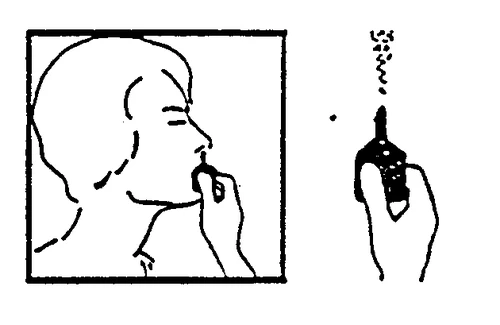
Without tilting your head backwards, insert the spray nozzle into the nostril and press rapidly and firmly on the central part of the bottle’s side walls.
The Deltarinolo bottle contains 15 ml of liquid.
The air space above the liquid is absolutely necessary for the proper functioning of the bottle.
To open the bottle
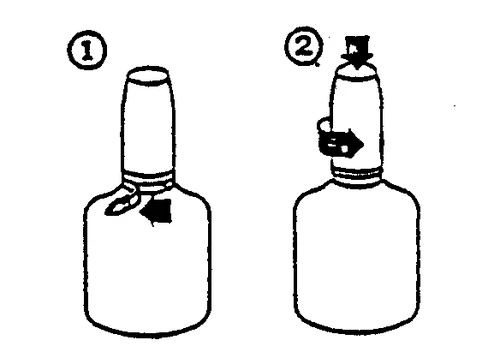
Tear off the tab (1).
Press down on the cap while simultaneously rotating it counterclockwise (2).
If you use more Deltarinolo than you should
If you have taken a much higher dose than recommended, symptoms such as arterial hypertension (high blood pressure), tachycardia (rapid heartbeat), photophobia (sensitivity to light), severe headache, chest tightness, psychiatric reactions, and—in children—hypothermia (lowered body temperature) and severe central nervous system depression with marked sedation may occur. In case of accidental ingestion or overdose, contact your doctor immediately or go to the nearest hospital.
If you forget to use Deltarinolo
Do not use a double dose to make up for the missed dose.
If you have any doubts about how to use this medicine, consult your doctor or pharmacist.
4. Possible side effects
Like all medicines, this medicine can cause side effects, although not everybody gets them.
The medicine may facilitate the occurrence of local allergic reactions (sensitization phenomena) and worsen nasal mucosal congestion.
After administration of Deltarinolo, the following side effects may occur:
- fast heartbeat (tachycardia),
- anxiety,
- restlessness,
- insomnia,
- nausea,
- headache,
- dizziness,
- tremors,
- dry mouth,
- urinary disorders,
- disturbances in blood circulation in the limbs,
- high blood pressure (arterial hypertension),
- slow heartbeat (bradycardia),
- irregular heartbeat (cardiac arrhythmias).
Reporting of side effects
If you experience any side effect, including those not listed in this leaflet, talk to your doctor or pharmacist. You can also report side effects directly via the national reporting system at
www.agenziafarmaco.gov.it/it/responsabili. By reporting side effects, you can help provide more information on the safety of this medicine.
5. How to store Deltarinolo
Keep this medicine out of the sight and reach of children.
Do not use this medicine after the expiry date stated on the pack. The expiry date refers to the last day of that month.
Store below 25°C.
Do not dispose of any medicine via wastewater or household waste. Ask your pharmacist how to dispose of medicines no longer in use. This will help protect the environment.
6. Package contents and other information
What Deltarinolo contains
- The active substances are ephedrine hydrochloride and naphazoline nitrate. 100 ml of solution contain 500 mg of ephedrine hydrochloride and 125 mg of naphazoline nitrate.
- The other components are: methyl-p-hydroxybenzoate, propyl-p-hydroxybenzoate, edetate sodium, monobasic sodium phosphate, sodium phosphate, sodium hydroxide, purified water.
Description of the appearance of Deltarinolo and contents of the pack
Nasal spray, solution.
The pack contains one nasal spray bottle with 15 ml of solution. The plastic bottle is equipped with a nebulizer.
Marketing Authorization Holder
VEMEDIA MANUFACTURING B.V.
Verrijn Stuartweg 60, 1112 – AX DIEMEN (Netherlands)
Manufacturer
Unither Liquid Manufacturing
1-3 Allée de la Neste; Z.I. d’en Sigal
Colomiers (France)