DaTscan
Italy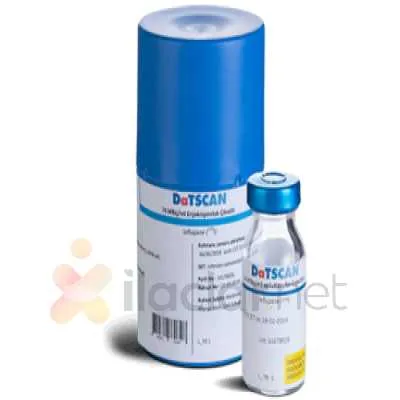
Table of Contents
Package leaflet: Information for the user
DaTSCAN 74 MBq/ml solution for injection
Ioflupane ( I)
Please read all of this leaflet carefully before you are given this medicine because it contains important information for you.
- Keep this leaflet. You may need to read it again.
- If you have any questions, ask the nuclear medicine specialist who will perform the examination.
- If you get any side effects, including those not listed in this leaflet, tell the nuclear medicine specialist. See section 4.
Contents of this leaflet
- What DaTSCAN is and what it is used for
- What you need to know before being given DaTSCAN
- How DaTSCAN is given
- Possible side effects
- How to store DaTSCAN
- Contents of the pack and other information
1. What DaTSCAN is and what it is used for
DaTSCAN contains the active substance ioflupane ( I), which is used to help identify
(diagnose) brain disorders. It belongs to a group of medicines called "radiopharmaceuticals",
which contain a small amount of radioactivity.
When a radiopharmaceutical is injected, it accumulates for a short time in an organ or part of the body.
Because it contains a small amount of radioactivity, its presence can be detected from outside the body using special imaging cameras.
These cameras can produce an image called a scan. The scan will show exactly where the radioactivity is located within the organ and body. This provides the doctor with valuable information about how that organ is functioning.
When DaTSCAN is injected into an adult, it is carried by the blood throughout the body and accumulates in a small area of the brain. Changes occur in this area of the brain in the following conditions:
Parkinsonism (including Parkinson's disease) and
dementia with Lewy bodies.
The scan enables the doctor to obtain information about the changes that have occurred in this area of the brain. The information obtained from the scan can help the doctor to diagnose the disease and decide on appropriate treatment.
When DaTSCAN is used, you are exposed to a small amount of radioactivity. This exposure is lower than that expected with some types of X-rays. Your doctor and the nuclear medicine specialist have assessed that the clinical benefit of this examination performed with a radiopharmaceutical outweighs the risk posed by exposure to these small amounts of radiation.
This medicine is for diagnostic use only, meaning it is used solely to identify diseases.
2. What you need to know before using DaTSCAN
Do not use DaTSCAN
if you are allergic to ioflupane or to any of the excipients of this medicine (listed in
section 6)
if you are pregnant
Warnings and precautions
Talk to the nuclear medicine specialist before being given DaTSCAN if you have
moderate or severe liver or kidney problems.
Before receiving DaTSCAN you must
drink plenty of water to ensure adequate hydration before and after the procedure, and urinate as frequently as possible during the first 48 hours following administration.
Children and adolescents
DaTSCAN is not recommended for children aged between 0 and 18 years.
Other medicines and DaTSCAN
Inform the nuclear medicine specialist if you are taking or have recently taken any other medicines. Some drugs and substances may affect how DaTSCAN works, including:
bupropion (used to treat depression or to help stop smoking)
sertraline, paroxetine, citalopram, escitalopram, fluoxetine, fluvoxamine (used to treat depression)
methylphenidate, dexamphetamine (used to treat attention deficit hyperactivity disorder (ADHD) and narcolepsy (excessive sleepiness))
phentermine (appetite suppressant, used in the treatment of obesity)
amphetamine
cocaine (sometimes used as an anaesthetic for nasal surgery)
modafinil (used to treat narcolepsy (excessive sleepiness) and other sleep disorders)
codeine (used to relieve mild to moderate pain and to suppress dry cough)
Some medicines may reduce the quality of the resulting images. Your doctor may ask you to temporarily stop taking them before administration of DaTSCAN.
Pregnancy and breastfeeding
Do not use DaTSCAN if you are pregnant or if there is any chance you may be pregnant, as the unborn child could be exposed to radiation. Inform the nuclear medicine specialist if this applies to you. Alternative diagnostic methods not involving radiation should always be considered.
If you are breastfeeding, your doctor may delay the use of DaTSCAN or advise you to discontinue breastfeeding. It is not known whether ioflupane (I) passes into breast milk.
You must not breastfeed for 3 days after receiving DaTSCAN. Replace breastfeeding with infant formula. Breast milk should be expressed at regular intervals during this time and discarded.
You must continue this procedure for 3 days, until radioactivity is no longer present in your body.
Driving and use of machines
DaTSCAN has no known effect on the ability to drive vehicles or operate machinery.
DaTSCAN contains alcohol (ethanol) 5% by volume. Each dose contains up to 197 mg of alcohol, equivalent to approximately 5 ml of beer or 2 ml of wine. This may be harmful for individuals suffering from alcoholism and should be taken into consideration in pregnant or breastfeeding women, children, and high-risk groups such as patients with liver disease or epilepsy. Inform your doctor if you belong to any of these groups.
3. How to use DaTSCAN
There are strict regulations regarding the use, handling, and disposal of radioactive materials.
DaTSCAN must always be used in a hospital or similar facility and must be handled and
administered only by trained and qualified personnel capable of using it safely.
The staff will provide you with all instructions to follow for the safe use of this medicine. The nuclear medicine specialist will determine the most appropriate dose for you.
Before receiving DaTSCAN, your doctor will ask you to take tablets or liquid containing iodine to prevent the accumulation of radioactivity in the thyroid gland. It is important that you take the tablets or liquid exactly as instructed by your doctor.
DaTSCAN is administered by injection, usually into a vein in the arm. The recommended dose of radioactivity to be administered by injection ranges between 111 and 185 MBq (megabecquerel or MBq is the unit of measurement of radioactivity). A single injection is sufficient. Imaging scans are usually performed between 3 and 6 hours after the injection of DaTSCAN.
If you are given more DaTSCAN than you should
Since DaTSCAN is administered by a doctor under close supervision, it is unlikely that you will receive an excessive dose. Your doctor will advise you to drink large amounts of fluids to help your body eliminate the medicine. You will need to pay particular attention when urinating; your doctor will give you specific instructions on this. This is a standard procedure with medicines such as DaTSCAN.
Any residual ioflupane (¹²³I) remaining in the body will naturally lose its radioactivity over time.
If you have further questions about the use of this medicine, please consult the nuclear medicine specialist performing the examination.
4. Possible side effects
Like all medicines, DaTSCAN can cause side effects, although not everybody gets them.
The frequency of side effects is as follows:
Common: may occur in 1 out of 10 people
- Headache
Uncommon: may occur in 1 out of 100 people
- Increased appetite
- Dizziness
- Taste disturbance
- Nausea
- Dry mouth
- Vertigo
- Brief sensation of irritation such as tingling or crawling on the skin (paraesthesia)
- Severe pain (or burning sensation) at the injection site. This has been
reported in patients where the DaTSCAN injection is administered into a small vein.
Not known: frequency cannot be estimated from the available data.
- Hypersensitivity (allergy)
- Difficulty breathing
- Skin redness
- Itching
- Rash
- Hives (urticaria)
- Excessive sweating
- Vomiting
- Low blood pressure
- Feeling of warmth
The amount of radioactivity in the body from DaTSCAN is very small and will be eliminated within a few
days, without the need for special precautions.
Reporting of side effects
If you experience any side effects, including those not listed in this leaflet, talk to the nuclear medicine specialist. You can also report side effects directly via the national reporting system detailed in Annex V. By reporting side effects, you can help provide more information on the safety of this medicine.
5. How to store DaTSCAN
You must not store this medicinal product. This medicine is stored by the specialist under their responsibility and in suitable premises. Storage of radiopharmaceuticals must comply with national regulations concerning radioactive materials.
The following information is intended exclusively for the specialist:
Keep this medicine out of the sight and reach of children.
Do not store above 25 °C.
Do not freeze.
Do not use this medicine after the expiry date stated on the carton and vial after "Exp." The expiry date refers to the last day of the month indicated. Hospital staff will ensure that the product is properly stored and disposed of, and that it is not used after the expiry date indicated on the label.
6. Package contents and other information
What DaTSCAN contains
The active substance is ioflupane ( I). Each ml of solution contains ioflupane ( I) 74 MBq at the
reference date and time (from 0.07 to 0.13 μg/ml of ioflupane).
The excipients are acetic acid, sodium acetate, ethanol, and water for injections.
Description of the appearance of DaTSCAN and package contents
DaTSCAN is a colourless injectable solution of 2.5 or 5 ml, supplied in a single 10 ml colourless glass vial sealed with a rubber stopper and metal cap.
Marketing Authorisation Holder and Manufacturer
GE Healthcare B.V.
De Rondom 8
5612 AP, Eindhoven
The Netherlands
This Patient Information Leaflet was last reviewed on <{MM/YYYY}
More detailed information on this medicinal product is available on the website of the European Medicines Agency: http://www.ema.europa.eu .
This Patient Information Leaflet is available in all EU/EEA languages on the European Medicines Agency website.