Cyanokit
Italy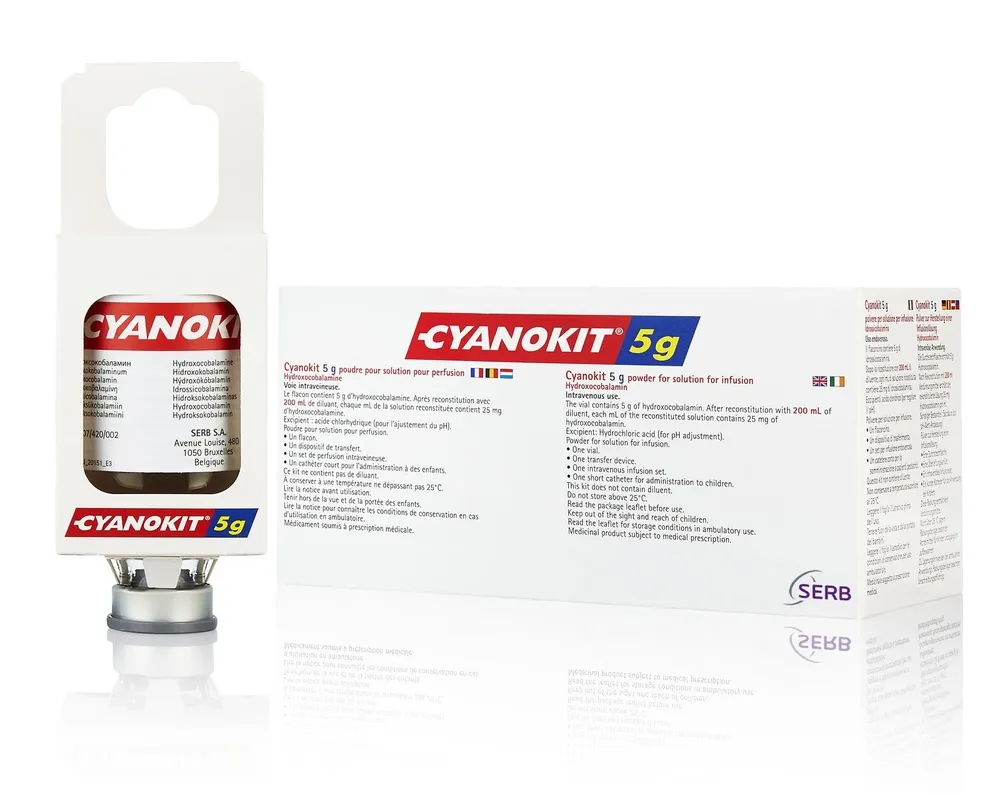
Table of Contents
- Package leaflet: Information for the user
- Cyanokit 2.5 g powder for solution for infusion
- 1. What Cyanokit is and what it is used for
- 2. What you should know before Cyanokit is used
- 3. How to use Cyanokit
- 4. Possible side effects
- 5. How to store Cyanokit
- 6. Package contents and other information
- Package leaflet: Information for the user
- Cyanokit 5 g powder for solution for infusion
- 1. What Cyanokit is and what it is used for
- 2. What you should know before Cyanokit is used
- 3. How Cyanokit is used
- 4. Possible side effects
- 5. How to store Cyanokit
- 6. Package contents and other information
Package leaflet: Information for the user
Cyanokit 2.5 g powder for solution for infusion
Hydroxocobalamin
Please read all of this leaflet carefully before you are given this medicine because it contains important information for you.
- Keep this leaflet. You may need to read it again.
- If you have any questions, ask your doctor or pharmacist.
- If you experience any side effects, including those not listed in this leaflet, inform your doctor or pharmacist. See section 4.
Contents of this leaflet:
- What Cyanokit is and what it is used for
- What you need to know before Cyanokit is administered
- How Cyanokit is used
- Possible side effects
- How to store Cyanokit
- Contents of the pack and other information
1. What Cyanokit is and what it is used for
Cyanokit contains the active substance hydroxocobalamin.
Cyanokit is an antidote for the treatment of confirmed or suspected cyanide poisoning in all age groups.
Cyanokit should be administered together with appropriate decontamination and supportive measures.
Cyanide is a highly toxic chemical agent. Cyanide poisoning may result from exposure to smoke produced by residential or industrial fires, from inhalation or ingestion of cyanide, or from skin contact with cyanide.
2. What you should know before Cyanokit is used
Warnings and precautions
Inform your doctor or other healthcare professionals
- if you are allergic to hydroxocobalamin or vitamin B. They must take this into account before treating you with Cyanokit.
- that you have been treated with Cyanokit if you undergo the following procedures:
- blood or urine tests. Cyanokit may alter the results of these tests.
- assessment of burns. Cyanokit may interfere with the assessment because it imparts a reddish discoloration to the skin.
- hemodialysis. As long as it has not been eliminated from the blood (at least 5.5–6.5 days), Cyanokit may cause hemodialysis equipment to shut down.
- monitoring of kidney function: Cyanokit may cause kidney impairment and the presence of crystals in the urine.
Other medicines and Cyanokit
Inform your doctor or other healthcare professionals if you are taking, have recently taken, or might take any other medicines.
Detailed information for the doctor or other healthcare professionals on the concomitant administration of Cyanokit with other medicines is provided at the end of this leaflet (see ‘Instructions for use’).
Pregnancy and breastfeeding
This medicine is an emergency treatment. It may be administered during pregnancy and breastfeeding.
As soon as possible, inform your doctor if you were pregnant or if you think you might have been pregnant during treatment with Cyanokit.
Your doctor will recommend that you stop breastfeeding after treatment with Cyanokit.
3. How to use Cyanokit
Your doctor or a healthcare professional will administer Cyanokit to you as an intravenous infusion. You may require one or two infusions.
The first infusion of Cyanokit will be given within the first 15 minutes. In adults, the initial dose is 5 g. In children, the initial dose is 70 mg/kg body weight, up to a maximum dose of 5 g. If a second infusion is needed, it will last between 15 minutes and 2 hours, depending on the severity of the poisoning. The maximum recommended dose is 10 g in adults and 140 mg/kg in children, up to a maximum of 10 g.
Detailed instructions for doctors or other healthcare professionals on how to prepare the Cyanokit infusion and determine the dose are provided at the end of this leaflet (see 'Instructions for use').
If you have any doubts about the use of this medicine, consult your doctor or pharmacist.
4. Possible side effects
Like all medicines, this medicine can cause side effects, although not everyone experiences them. The following side effects may occur (frequency cannot be determined from the available data):
Allergic reaction (hypersensitivity)
Immediately inform your doctor if you experience any of the following symptoms during or after this treatment:
- swelling of the eyes, lips, tongue, throat or hands
- breathing difficulties, hoarseness, difficulty speaking
- skin redness, hives or itching. These side effects can be serious and require immediate attention.
Heart and blood pressure problems
- symptoms such as headache or dizziness, which may be due to increased blood pressure. This rise in blood pressure occurs mainly at the end of treatment and usually stabilizes within a few hours
- irregular heartbeat
- facial flushing (hot flashes). In patients with cyanide poisoning, a decrease in blood pressure and an accelerated heartbeat have also been observed.
Respiratory and chest problems
- fluid in the chest (pleural effusion)
- breathing difficulties
- sensation of tightness in the throat
- dry throat
- feeling of pressure in the chest.
Kidney and urinary problems
- kidney damage such as acute kidney impairment and crystals in the urine
- red discoloration of the urine. During the first three days following administration, all patients will experience a rather pronounced dark red discoloration of the urine. The discoloration of urine may last up to 35 days after administration of Cyanokit. This red discoloration has no other consequences for the body.
Gastrointestinal (digestive) problems
- stomach discomfort
- indigestion
- diarrhea
- nausea
- vomiting
- difficulty swallowing.
Eye problems
- swelling, irritation, redness.
Skin reactions
- most patients will experience a reversible reddish discoloration of the skin and mucous membranes (lining of body cavities), which may last up to 15 days after administration of Cyanokit.
- blister-like skin lesions (pustular rashes). These may last several weeks, mainly affecting the face and neck.
- inflammation at the site of drug infusion.
Other side effects
- restlessness
- memory problems
- dizziness
- headache
- swelling of the ankles
- changes in blood test results regarding certain types of white blood cells (lymphocytes)
- colored plasma, which may cause artificial increases or decreases in levels of certain laboratory parameters.
Reporting of side effects
If you experience any side effect, including those not listed in this leaflet, talk to your doctor or pharmacist. You may also report side effects directly via the national reporting system listed in Annex V.
By reporting side effects, you help provide more information on the safety of this medicine.
5. How to store Cyanokit
Keep this medicine out of the sight and reach of children.
Do not use this medicine after the expiry date stated on the vial, on the box and on the carton after {Exp.}.
Do not store above 25°C.
For outpatient use, Cyanokit may be exposed for short periods to temperature fluctuations related to:
- common transport (for 15 days at temperatures between 5°C and 40°C)
- transport in desert zones (for 4 days at temperatures between 5°C and 60°C) and
- freeze/thaw cycles (for 15 days at temperatures between -20°C and 40°C).
For storage conditions of the reconstituted medicine, see 'Instructions for use' at the end of this leaflet.
Do not dispose of any medicine via wastewater or household waste. Ask your pharmacist how to dispose of medicines you no longer use. This will help protect the environment.
6. Package contents and other information
What Cyanokit contains:
- The active substance is hydroxocobalamin. Each vial contains 2.5 g of hydroxocobalamin. After reconstitution with 100 mL of diluent, each mL of reconstituted solution contains 25 mg of hydroxocobalamin.
- The other component is hydrochloric acid (to adjust pH).
Description of the appearance of Cyanokit and contents of the pack
Cyanokit powder for infusion solution is a dark red crystalline powder supplied in a glass vial closed with a bromobutyl rubber stopper and an aluminum seal with a plastic cap.
Each pack contains two vials (each vial individually boxed in a cardboard box), two sterile transfer devices, one sterile intravenous infusion set, and one sterile short catheter for pediatric administration.
Marketing Authorisation Holder
SERB S.A.
Avenue Louise 480
1050 Brussels
Belgium
Manufacturer
Merck Santé s.a.s. / SEMOY
2, rue du Pressoir Vert
45400 Semoy
France
OR
SERB S.A.
Avenue Louise 480
1050 Brussels
Belgium
OR
SERB
40 Avenue George V
75008 Paris
France
Other sources of information
More detailed information on this medicinal product is available on the website of the European Medicines Agency: http://www.ema.europa.eu.
The following information is intended exclusively for physicians or healthcare professionals:
Instructions for use
Treatment of cyanide poisoning must include immediate attention to airway patency, adequate oxygenation and hydration, cardiovascular support, and management of seizures. Appropriate decontamination measures should be considered based on the route of exposure.
Cyanokit does not replace oxygen therapy and must not delay the implementation of the above-mentioned supportive measures.
At the onset of treatment, the presence and severity of cyanide poisoning are often unknown. There is no rapid and widely available test to confirm the presence of cyanide in blood. However, if blood cyanide levels are to be measured, it is recommended to collect the blood sample before starting treatment with Cyanokit. Therapeutic decisions should be based on clinical history and/or signs and symptoms of cyanide poisoning. In cases of clinical suspicion of cyanide poisoning, immediate administration of Cyanokit is strongly recommended.
Preparation of Cyanokit
Each vial must be reconstituted with 100 mL of diluent using the sterile transfer device provided in the kit. The recommended diluent is sodium chloride 9 mg/mL (0.9%) injection solution. If sodium chloride 9 mg/mL (0.9%) injection solution is not available, Ringer's lactate solution or glucose 50 mg/mL (5%) injection solution may be used.
The Cyanokit vial should be inverted or turned upside down for at least 30 seconds to ensure proper mixing. The vial must not be shaken, as agitation may cause foaming and make it more difficult to control reconstitution. Because the reconstituted solution is dark red, insoluble particles may not be easily visible. The reconstituted solution must be administered using the intravenous infusion set provided in the kit, as it contains an appropriate filter. If necessary, repeat this procedure with the second vial.
Dosage
Initial dose
Adults: The initial dose of Cyanokit is 5 g (2 x 100 mL).
Paediatric population: In infants and adolescents (from 0 to 18 years of age), the initial dose of Cyanokit is 70 mg/kg body weight, but must not exceed 5 g.
| Body weight in kg | 5 | 10 | 20 | 30 | 40 | 50 | 60 |
| Initial dose in g in mL | 0.35 14 | 0.70 28 | 1.40 56 | 2.10 84 | 2.80 112 | 3.50 140 | 4.20 168 |
Subsequent Dose
Depending on the severity of poisoning and the clinical response, a second dose may be administered.
Adults: the subsequent dose of Cyanokit is 5 g (2 x 100 mL).
Pediatric population: from infants to adolescents (0 to 18 years of age), the subsequent dose of Cyanokit is 70 mg/kg body weight, but must not exceed 5 g.
Maximum Dose
Adults: the maximum recommended total dose is 10 g.
Pediatric population: from infants to adolescents (0 to 18 years of age), the maximum recommended total dose is 140 mg/kg, but must not exceed 10 g.
Renal and hepatic impairment
No dose adjustment is required in these patients.
Method of Administration
The initial dose of Cyanokit should be administered by intravenous infusion over 15 minutes.
The intravenous infusion rate of the subsequent dose varies between 15 minutes (for extremely unstable patients) and 2 hours, depending on the patient's condition.
Concomitant Administration of Cyanokit and Other Medicinal Products
Cyanokit must not be mixed with solvents other than sodium chloride 9 mg/mL (0.9%) injection solution, Ringer's lactate solution, or glucose 50 mg/mL (5%) injection solution.
Due to observed physical and chemical incompatibilities with a number of medicinal products commonly used in resuscitation practices, these and other medicinal products must not be administered simultaneously with hydroxocobalamin in the same intravenous line.
If blood products (whole blood, red blood cell concentrate, platelet pool, and fresh frozen plasma) and hydroxocobalamin are co-administered, the use of separate intravenous lines is recommended (preferably on contralateral limbs).
Concomitant Use with Other Cyanide Antidotes: Chemical incompatibility has been observed with sodium thiosulfate and sodium nitrite. If administration of another cyanide antidote concomitantly with Cyanokit is considered necessary, these medicinal products must not be administered simultaneously in the same intravenous line.
Stability of Reconstituted Solution
Chemical and physical stability under use conditions of the reconstituted solution with sodium chloride 9 mg/mL (0.9%) has been demonstrated for 6 hours at temperatures between 2°C and 40°C.
From a microbiological standpoint, the medicinal product should be used immediately. Otherwise, the duration and conditions of storage are the responsibility of the user and should normally not exceed 6 hours at a temperature between 2°C and 8°C.
Package leaflet: Information for the user
Cyanokit 5 g powder for solution for infusion
hydroxocobalamin
Please read this leaflet carefully before using this medicine because it contains important information for you.
- Keep this leaflet. You may need to read it again.
- If you have any questions, ask your doctor or pharmacist.
- If you experience any side effects, including those not listed in this leaflet, contact your doctor or pharmacist. See section 4.
Contents of this leaflet:
- What Cyanokit is and what it is used for
- What you need to know before Cyanokit is used
- How to use Cyanokit
- Possible side effects
- How to store Cyanokit
- Contents of the pack and other information
1. What Cyanokit is and what it is used for
Cyanokit contains the active substance hydroxocobalamin.
Cyanokit is an antidote for the treatment of confirmed or suspected cyanide poisoning in all age groups.
Cyanokit should be administered together with appropriate decontamination and supportive measures.
Cyanide is a highly toxic chemical agent. Cyanide poisoning may result from exposure to smoke from fires in domestic or industrial settings, from inhalation or ingestion of cyanide, or from skin contact with cyanide.
2. What you should know before Cyanokit is used
Warnings and precautions
Inform your doctor or other healthcare professionals
- if you are allergic to hydroxocobalamin or vitamin B. They must take this into account before treating you with Cyanokit.
- that you have been treated with Cyanokit if you need to undergo the following procedures:
- blood or urine tests. Cyanokit may alter the results of these tests.
- assessment of burns. Cyanokit may interfere with the assessment because it imparts a reddish discoloration to the skin.
- hemodialysis. As long as it remains in the blood (at least 5.5–6.5 days), Cyanokit may cause hemodialysis equipment to shut down.
- monitoring of kidney function: Cyanokit may cause kidney impairment and the presence of crystals in the urine.
Other medicines and Cyanokit
Inform your doctor or other healthcare professionals if you are taking, have recently taken, or might take any other medicines.
Detailed information for doctors or other healthcare professionals regarding the concomitant administration of Cyanokit with other medicines is provided at the end of this leaflet (see ‘Instructions for use’).
Pregnancy and breastfeeding
This medicine is an emergency treatment. It may be administered during pregnancy and breastfeeding.
As soon as possible, inform your doctor if you were pregnant or think you might have been pregnant during treatment with Cyanokit.
Your doctor will recommend that you stop breastfeeding after treatment with Cyanokit.
3. How Cyanokit is used
Your doctor or a healthcare professional will administer Cyanokit to you as an intravenous infusion. You may require one or two infusions.
The first Cyanokit infusion will be given within the first 15 minutes. In adults, the initial dose is 5 g. In children, the initial dose is 70 mg/kg body weight, up to a maximum dose of 5 g. If a second infusion is needed, it will last between 15 minutes and 2 hours, depending on the severity of the poisoning. The maximum recommended dose is 10 g in adults and 140 mg/kg in children, up to a maximum of 10 g.
Detailed instructions for the doctor or other healthcare professionals on how to prepare the Cyanokit infusion and how to determine the dose are provided at the end of this leaflet (see 'Instructions for use').
If you have any questions about the use of this medicine, ask your doctor or pharmacist.
4. Possible side effects
Like all medicines, this medicine can cause side effects, although not everyone experiences them. The following side effects may occur (frequency cannot be determined from the available data):
Allergic reaction (hypersensitivity)
Immediately inform your doctor if you notice the following symptoms during or after this treatment:
- swelling of the eyes, lips, tongue, throat or hands
- difficulty breathing, hoarseness, trouble speaking
- skin redness, hives or itching. These side effects can be serious and require immediate attention.
Heart and blood pressure problems
- symptoms such as headache or dizziness, as they may be due to increased blood pressure. This rise in blood pressure occurs mainly at the end of treatment and usually stabilizes within a few hours
- irregular heartbeat
- facial flushing (hot flushes). In patients with cyanide poisoning, a decrease in blood pressure and rapid heartbeat have also been observed.
Respiratory and chest problems
- fluid in the chest (pleural effusion)
- difficulty breathing
- sensation of tightness in the throat
- dry throat
- feeling of pressure in the chest.
Kidney and urinary problems
- kidney damage such as acute kidney impairment and crystals in the urine
- red discoloration of the urine. During the first three days following administration, all patients will experience a clearly evident dark red discoloration of the urine. The discoloration may last up to 35 days after Cyanokit administration. This red discoloration has no other consequences for the body.
Gastrointestinal (digestive) problems
- stomach discomfort
- indigestion
- diarrhoea
- nausea
- vomiting
- difficulty swallowing.
Eye problems
- swelling, irritation, redness.
Skin reactions
- most patients will experience a reversible reddish discoloration of the skin and mucous membranes (lining of body cavities), which may last up to 15 days after Cyanokit administration.
- blister-like skin lesions (pustular rashes). These may last several weeks, mainly affecting the face and neck.
- inflammation at the site of infusion where the medicine was administered.
Other side effects
- restlessness
- memory problems
- dizziness
- headache
- ankle swelling
- changes in blood test results for certain types of white blood cells (lymphocytes)
- coloured plasma, which may cause artificially increased or decreased levels of some laboratory parameters.
Reporting of side effects
If you experience any side effect, including those not listed in this leaflet, tell your doctor or pharmacist. You can also report side effects directly via the national reporting system detailed in Annex V.
By reporting side effects, you can help provide more information on the safety of this medicine.
5. How to store Cyanokit
Keep this medicine out of the sight and reach of children.
Do not use this medicine after the expiry date stated on the vial, the packaging, and the carton after {Exp.}.
Do not store at temperatures above 25°C.
For outpatient use, Cyanokit may be exposed for short periods to temperature variations related to
- standard transport (for 15 days at temperatures between 5°C and 40°C),
- transport in desert areas (for 4 days at temperatures between 5°C and 60°C), and
- freeze/thaw cycles (for 15 days at temperatures between -20°C and 40°C).
For storage conditions of the reconstituted medicine, see 'Instructions for use' at the end of this leaflet.
Do not dispose of any medicine via wastewater or household waste. Ask your pharmacist how to dispose of medicines you no longer use. This will help protect the environment.
6. Package contents and other information
What Cyanokit contains:
- The active substance is hydroxocobalamin. The vial contains 5 g of hydroxocobalamin. After reconstitution with 200 mL of diluent, each mL of reconstituted solution contains 25 mg of hydroxocobalamin.
- The other component is hydrochloric acid (to adjust pH).
Description of the appearance of Cyanokit and contents of the pack
Cyanokit powder for infusion solution is a dark red crystalline powder supplied in a glass vial sealed with a bromobutyl rubber stopper and an aluminium cap with a plastic cover.
Each pack contains one vial packed in a cardboard box, a sterile transfer device, a sterile intravenous infusion set, and a sterile short catheter for paediatric administration.
Marketing Authorisation Holder
SERB S.A.
Avenue Louise 480
1050 Brussels
Belgium
Manufacturer
Merck Santé s.a.s. / SEMOY
2, rue du Pressoir Vert
45400 Semoy
France
Or
SERB S.A.
Avenue Louise 480
1050 Brussels
Belgium
Or
SERB
40 Avenue George V
75008 Paris
France
Further information
More detailed information on this medicinal product is available on the website of the European Medicines Agency: http://www.ema.europa.eu.
The following information is intended exclusively for physicians or healthcare professionals:
Instructions for use
Treatment of cyanide poisoning must include immediate attention to airway patency, adequate oxygenation and hydration, cardiovascular support, and management of seizures. Appropriate decontamination measures should be considered based on the route of exposure.
Cyanokit does not replace oxygen therapy and must not delay the implementation of the above-mentioned measures.
At the onset of intervention, the presence and extent of cyanide poisoning are often unknown. There is no rapid and widely available test to confirm the presence of cyanide in blood. However, if blood cyanide level determination is planned, it is recommended to collect the blood sample before starting treatment with Cyanokit. Therapeutic decisions should be based on clinical history and/or signs and symptoms of cyanide intoxication. In case of clinical suspicion of cyanide poisoning, immediate administration of Cyanokit is strongly recommended.
Preparation of Cyanokit
The vial must be reconstituted with 200 mL of diluent using the sterile transfer device provided in the kit. The recommended diluent is sodium chloride 9 mg/mL (0.9%) solution for injection. If sodium chloride 9 mg/mL (0.9%) solution for injection is not available, Ringer's lactate solution or glucose 50 mg/mL (5%) solution for injection may be used.
The Cyanokit vial should be inverted or turned upside down for at least 1 minute to ensure proper mixing. The vial must not be shaken, as shaking may cause foaming and make it more difficult to control reconstitution. Since the reconstituted solution is dark red, insoluble particles may not be easily visible. The reconstituted solution must be administered using the infusion set provided in the kit, which includes an appropriate filter.
Dosage
Initial dose
Adults: The initial dose of Cyanokit is 5 g (200 mL, total volume of reconstituted solution).
Paediatric population: In infants and adolescents (from 0 to 18 years of age), the initial dose of Cyanokit is 70 mg/kg body weight, but must not exceed 5 g.
| Body weight in kg | 5 | 10 | 20 | 30 | 40 | 50 | 60 |
| Initial dose in g in mL | 0.35 14 | 0.70 28 | 1.40 56 | 2.10 84 | 2.80 112 | 3.50 140 | 4.20 168 |
Subsequent Dose
Depending on the severity of poisoning and clinical response, a second dose may be administered.
Adults: the subsequent dose of Cyanokit is 5 g (200 mL, total volume of reconstituted solution).
Paediatric population: from infants to adolescents (0 to 18 years of age), the subsequent dose of Cyanokit is 70 mg/kg body weight, but must not exceed 5 g.
Maximum Dose
Adults: the maximum recommended total dose is 10 g.
Paediatric population: from infants to adolescents (0 to 18 years of age), the maximum recommended total dose is 140 mg/kg, but must not exceed 10 g.
Renal and hepatic impairment
No dose adjustment is required in these patients.
Method of Administration
The initial dose of Cyanokit should be administered by intravenous infusion over 15 minutes.
The intravenous infusion rate of the second dose may vary between 15 minutes (for extremely unstable patients) and 2 hours, depending on the patient's condition.
Co-administration of Cyanokit and other Medicinal Products
Cyanokit must not be mixed with solvents other than 9 mg/mL (0.9%) sodium chloride injection solution, Ringer's lactate solution, or 50 mg/mL (5%) glucose injection solution.
Due to observed physical and chemical incompatibilities with a range of selected medicinal products commonly used in resuscitation practices, these and other medicinal products must not be administered simultaneously with hydroxocobalamin in the same intravenous line.
If blood products (whole blood, red blood cell concentrate, platelet pool, and fresh frozen plasma) and hydroxocobalamin are co-administered, the use of separate intravenous lines is recommended (preferably on contralateral limbs).
Concomitant use with other cyanide antidotes: Chemical incompatibility has been observed with sodium thiosulfate and sodium nitrite. If administration of another cyanide antidote concomitantly with Cyanokit is considered necessary, these medicinal products must not be administered simultaneously in the same intravenous line.
Stability of the Reconstituted Solution
Chemical and physical stability of the reconstituted solution in 9 mg/mL (0.9%) sodium chloride solution has been demonstrated for 6 hours at temperatures between 2°C and 40°C.
From a microbiological standpoint, the medicinal product should be used immediately. Otherwise, storage times and conditions prior to use are the responsibility of the user and should normally not exceed 6 hours at a temperature between 2°C and 8°C.