Clenil
Italy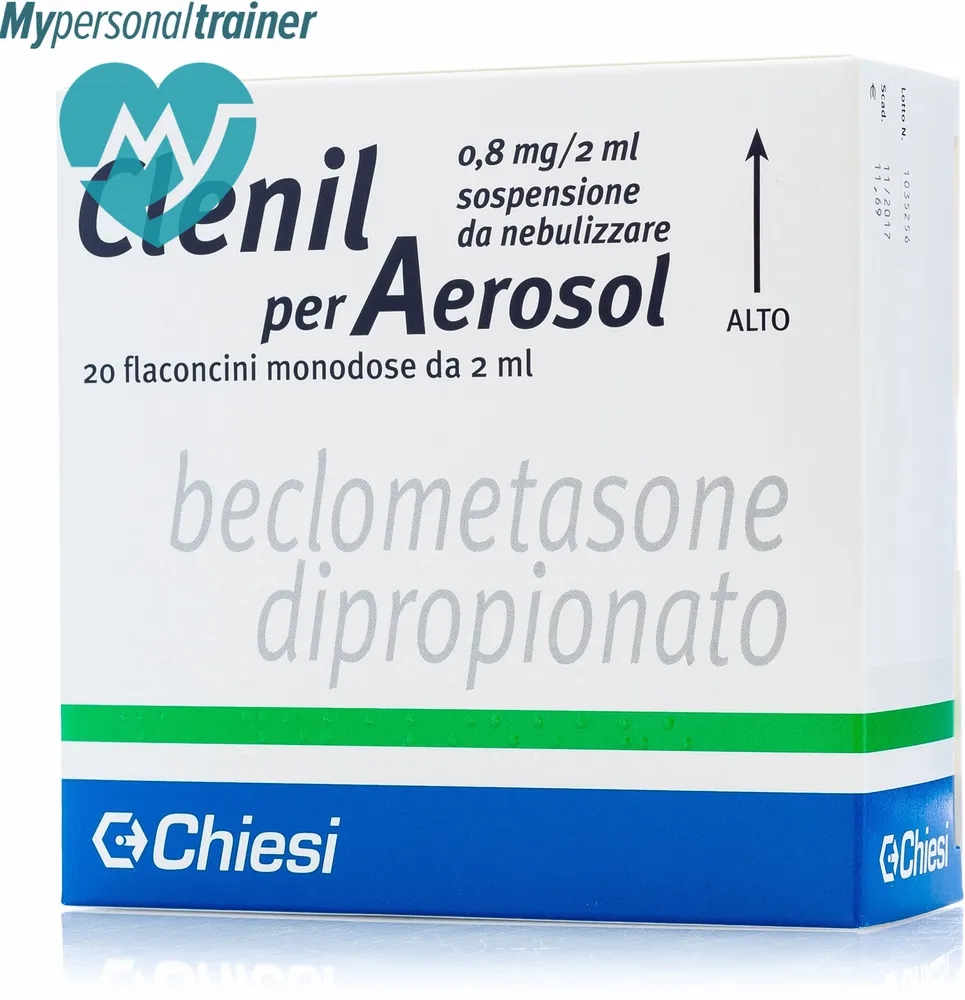
Table of Contents
- PACKAGE LEAFLET: INFORMATION FOR THE USER
- CLENIL 800 micrograms suspension for nebuliser
- 1. WHAT CLENIL IS AND WHAT IT IS USED FOR
- 2. WHAT YOU SHOULD KNOW BEFORE USING CLENIL
- 3. HOW TO USE CLENIL
- 4. POSSIBLE ADVERSE REACTIONS
- 5. HOW TO STORE CLENIL
- 6. PACK CONTENTS AND OTHER INFORMATION
- PATIENT LEAFLET: INFORMATION FOR THE USER
- CLENIL 400 micrograms suspension for nebulizer
- 1. WHAT CLENIL IS AND WHAT IT IS USED FOR
- 2. WHAT YOU SHOULD KNOW BEFORE USING CLENIL
- 3. HOW TO USE CLENIL
- 4. POSSIBLE SIDE EFFECTS
- 5. HOW TO STORE CLENIL
- 6. PACKAGING CONTENTS AND OTHER INFORMATION
PACKAGE LEAFLET: INFORMATION FOR THE USER
CLENIL 800 micrograms suspension for nebuliser
Beclometasone dipropionate
Read this leaflet carefully before using this medicine because it contains important information for you.
- Keep this leaflet. You may need to read it again.
- If you have any questions, ask your doctor or pharmacist.
- This medicine has been prescribed for you only. Do not give it to other people, even if their symptoms are the same as yours, as it may be harmful.
- If you experience any side effects, including those not listed in this leaflet, consult your doctor or pharmacist. See section 4.
Contents of this leaflet:
- What CLENIL is and what it is used for
- What you need to know before using CLENIL
- How to use CLENIL
- Possible side effects
- How to store CLENIL
- Contents of the pack and other information
1. WHAT CLENIL IS AND WHAT IT IS USED FOR
CLENIL contains the active substance beclometasone dipropionate. It belongs to a group of medicines called corticosteroids, which have an anti-inflammatory action that reduces swelling and irritation in the walls of the airways (e.g. nose, lungs), thereby alleviating respiratory problems.
CLENIL is indicated for the treatment of asthma in adults and children up to 18 years of age when the use of pressurised metered-dose inhalers or dry powder inhalers is unsatisfactory or inadequate.
CLENIL is also indicated for the treatment of recurrent wheezing (wheezing breath) in children up to 5 years of age.
2. WHAT YOU SHOULD KNOW BEFORE USING CLENIL
Do not use CLENIL:
- if you are allergic to the active substance or to any of the other ingredients of this medicine listed in section 6.
Warnings and precautions
Talk to your doctor or pharmacist before using CLENIL if any of the following apply to you:
- You are, or have previously been, undergoing treatment for tuberculosis.
- Your condition appears to worsen. You notice that wheezing or shortness of breath has increased or that the inhaler is less effective.
- Your doctor may need to increase your dose of CLENIL, prescribe a course of oral corticosteroids, or modify your overall treatment.
- You have a chest infection. Your doctor may prescribe a course of antibiotics.
- If you have an infection of the nasal and paranasal sinuses, you should be treated with appropriate therapies, although this does not specifically contraindicate the use of CLENIL.
- If blurred vision or other visual disturbances occur.
If you experience an immediate increase in wheezing, shortness of breath, or coughing after using CLENIL, stop using CLENIL immediately and contact your doctor.
After each inhalation, rinse your mouth with water to reduce the risk of developing oral fungal infections.
Switching from oral corticosteroids to CLENIL
Switching from oral corticosteroids to inhaled corticosteroid therapy with CLENIL may cause general malaise or you may develop a skin rash, eczema, runny nose, or sneezing (rhinitis).
If you experience these symptoms, contact your doctor as soon as possible. Do not stop treatment with CLENIL unless instructed by your doctor.
If you have taken high-dose oral corticosteroids for a prolonged period, the dose should be gradually reduced approximately one week after starting treatment with CLENIL.
During this period, your doctor will regularly monitor steroid levels in your body.
If you have been treated for a prolonged period with high doses of inhaled corticosteroids, you may require additional corticosteroid treatment during periods of stress, for example:
- during hospitalization following a serious accident,
- before surgery,
- or if you develop a chest infection or other serious illness.
Your doctor will decide whether you need a course of oral corticosteroids or possibly a corticosteroid injection, and will also advise you on how long you should continue taking oral corticosteroids and how to taper them as you begin to feel better.
Children and adolescents
If a child is under 5 years of age and has been using CLENIL for a long time to treat recurrent wheezing, the doctor will regularly monitor the child's height to assess for any potential growth retardation and may consider interrupting treatment.
Other medicines and CLENIL
Inform your doctor if you are currently taking, have recently taken, or might take any other medicines, including those obtained without a prescription.
Some medicines may increase the effects of CLENIL, and your doctor may wish to monitor you closely if you are taking these (including certain HIV treatments: ritonavir, cobicistat).
Inform your doctor if you are taking, have recently taken, or might take any other corticosteroid-containing medicines, as these may interact with CLENIL and worsen potential side effects.
Pregnancy, breastfeeding, and fertility
If you are pregnant, think you may be pregnant, planning to become pregnant, or are breastfeeding, consult your doctor or pharmacist before taking this medicine.
Since prolonged corticosteroid treatment (such as beclometasone dipropionate contained in CLENIL) during pregnancy cannot exclude the possibility of growth retardation or fetal harm, the decision to use CLENIL in such cases lies with your doctor.
Corticosteroids pass into breast milk in small amounts. To date, no adverse effects have been reported in breastfed infants. Nevertheless, as a precautionary measure, if high doses of beclometasone dipropionate are inhaled, breastfeeding should be avoided for 4 hours after drug administration.
Driving and using machines
It is unlikely that CLENIL will affect your ability to drive or operate machinery. However, if you experience side effects such as dizziness and/or tremor, your ability to drive or use machinery may be impaired.
Attention for athletes: This product contains substances prohibited for doping. Any use differing from the therapeutic indications, dosage regimen, or route of administration specified in the product information is prohibited.
3. HOW TO USE CLENIL
Use this medicine exactly as directed by your doctor. If you have any doubts, consult your
doctor or pharmacist.
The initial dose must be prescribed by the doctor according to the frequency and severity of the condition.
The dose may then be adjusted by the doctor until effective control of symptoms is achieved.
Recommended initial doses are:
Adults and adolescents (from 12 years of age):
- 800–1600 micrograms twice daily, corresponding to a total daily dose of 1600 or 3200 micrograms.
Children (up to 11 years of age):
400–800 micrograms twice daily, corresponding to a total daily dose of 800 or
1600 micrograms.
The daily dose should normally not exceed 1600 micrograms in children up to 11
years of age and 3200 micrograms in adults and adolescents.
In asthma, CLENIL must be used regularly on a daily basis. The duration of treatment will be determined by your doctor.
If the child suffers from recurrent wheezing (wheeze), the duration of treatment should not exceed
3 months, unless otherwise prescribed by the pediatrician.
The CLENIL 800 microgram vial may be used to obtain 400 micrograms (half the content) by using the half-dose marking as described below.
Method of administration
CLENIL must be used exclusively by inhalation. Do not inject intravenously or use orally.
CLENIL must be administered by inhalation using a suitable device (pneumatic nebulizer) as directed by your doctor.
The use of CLENIL with ultrasonic nebulizers is not recommended.
Instructions for use:
The vial must be used according to the following instructions:
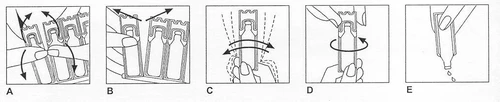
- Bend the vial forward and backward to loosen it from the strip (Figure A).
- Carefully separate the vial from the strip, starting from the top, then the center (Figure B), leaving the other vials in the pouch.
- Shake vigorously and invert the vial to mix the suspension. Repeat this procedure until the entire content is completely dissolved and mixed (Figure C).
- Open the vial by rotating the opening wings in the direction of the arrow (Figure D).
- Gently squeeze the vial and pour its contents into the nebulizer chamber (Figure E).
The vial must be opened immediately before administration.
If only half the dose of CLENIL 800 micrograms is required, invert the vial, ensure the half-dose mark is clearly visible, and apply gentle pressure. While squeezing the vial, dispense the contents until the suspension level reaches the half-dose mark (do not exceed it). Once half the content has been poured out, close the vial again by pressing the cap firmly onto it. The vial closed in this way must be stored at 2°C–8°C (in the refrigerator), and the remaining amount must be used within 12 hours of first opening.
Dilution:
Your doctor may decide that the dose should be diluted.
In this case, empty the vial contents into the nebulizer chamber, then add the amount of sterile sodium chloride solution 9 mg/ml (0.9%, physiological saline) prescribed by your doctor.
After closing the chamber, gently shake to mix the contents.
Dilution of the dose may be necessary to achieve a final volume suitable for the specific nebulizer used, to assist in administering small volumes, or if a longer administration time is preferred.
During nebulization
Place the mask or mouthpiece.
Turn on the nebulizer.
Breathe normally. Nebulization should not last longer than 10–15 minutes.
After nebulization
Do not forget to rinse your mouth, lips, and facial area covered by the mask with water.
After inhalation, any unused suspension remaining in the nebulizer chamber must be discarded.
Cleaning:
Follow the manufacturer's instructions for cleaning the nebulizer. It is important that the nebulizer is kept clean.
If you use more CLENIL than you should:
It is important to use the dose as recommended by your doctor. Do not increase or reduce the dose without consulting your doctor.
If you have used more CLENIL than you should, inform your doctor as soon as possible. The doctor may decide to monitor corticosteroid levels in the blood, and a blood sample may therefore be required.
If you forget to use CLENIL:
If you forget to take a dose, take it as soon as you remember. If it is almost time for your next dose,
do not take the missed dose; simply take the next dose at the scheduled time. Do not use a double dose
to make up for a forgotten dose.
If you have any doubts about how to use this medicine, consult your doctor or pharmacist.
4. POSSIBLE ADVERSE REACTIONS
Like all medicines, this medicine can cause adverse reactions, although not everyone experiences them.
The following adverse reactions have been reported. Inform your doctor as soon as possible if you notice any of these adverse reactions, but do not stop treatment unless instructed to do so. Your doctor will try to prevent these effects by prescribing CLENIL at the lowest effective dose possible.
Very common adverse reactions (may affect more than 1 in 10 people):
- Sore throat (pharyngitis, laryngitis). Gargling with water immediately after inhalation may help prevent this effect.
Common adverse reactions (may affect up to 1 in 10 people):
- Cough
- Nausea and stomach discomfort
- Oral thrush (in the mouth, tongue, and throat). Rinsing the mouth or gargling with water immediately after inhalation may help prevent these effects.
Uncommon adverse reactions (may affect up to 1 in 100 people):
- Headache
- Throat irritation, hoarseness
- Worsening of shortness of breath, cough, and wheezing (known as paradoxical bronchospasm). In this case, do not take another dose of CLENIL. Contact your doctor immediately. Your doctor will likely assess your asthma or recurrent wheezing and, if necessary, initiate a different treatment regimen. You may be advised not to use CLENIL again.
Rare adverse reactions (may affect up to 1 in 1,000 people):
- Cold sores (herpes simplex) – painful blisters on the lips and in the mouth
- Tremor (involuntary trembling)
- Fatigue
- Allergic reaction (swelling of the eyes, face, lips, and throat leading to severe breathing difficulties, skin rash, hives, itching, or redness).
Adverse reactions with unknown frequency (frequency cannot be estimated from the available data):
- Blurred vision.
The following effects may additionally occur more frequently in children:
- Sleep problems, depression or anxiety, restlessness, nervousness, overexcitement, or irritability.
At high doses over a long period of time, CLENIL may alter the normal production of corticosteroids in the body. In children and adolescents, this may lead to delayed growth; therefore, it is important that their height is monitored regularly by a doctor. Thinning of the bones and eye problems such as clouding of the eye's lens (cataract) and increased pressure in the eye (glaucoma) have also been reported.
Reporting of adverse reactions
If you experience any adverse reaction, including those not listed in this leaflet, consult your doctor or pharmacist. You may also report adverse reactions directly via the national reporting system at the following website:
http://www.agenziafarmaco.gov.it/content/come-segnalare-una-sospetta-reazione-avversa
By reporting adverse reactions, you can help provide more information on the safety of this medicine.
5. HOW TO STORE CLENIL
Keep this medicine out of the sight and reach of children.
Do not use CLENIL after the expiry date stated on the carton, sachet, and vial.
Store the vials upright in their original packaging (cardboard box) to protect the medicine from light.
After first opening the sachet, write the date in the designated space on the sachet. Do not use the vials more than 3 months after the date of first opening of the sachet.
After first opening the vial, store it in the refrigerator (2 °C–8 °C). The remaining amount must be used within 12 hours of first opening.
Do not use CLENIL if you notice that the packaging is damaged.
Do not dispose of any medicine via wastewater or household waste. Ask your pharmacist how to dispose of medicines you no longer use. This will help protect the environment.
6. PACK CONTENTS AND OTHER INFORMATION
What CLENIL contains
The active substance is beclometasone dipropionate.
Each 2 ml vial contains 800 micrograms of beclometasone dipropionate.
The vial has a half-dose mark on one side (corresponding to 400 micrograms).
The other excipients are polysorbate 20, sorbitan laurate, sodium chloride, water for injections.
Description of the appearance of CLENIL and pack contents
CLENIL is a white or almost white suspension for nebulizer.
The CLENIL suspension is supplied in polyethylene vials containing 2 ml (CLENIL 800 micrograms). Strips of 5 vials are packed in sealed pouches, in pack sizes of 10 vials (2 pouches), 20 vials (4 pouches), or 40 vials (8 pouches).
Not all pack sizes may be marketed.
Marketing Authorization Holder
CHIESI FARMACEUTICI S.p.A., Via Palermo 26/A, Parma
Manufacturer:
CHIESI FARMACEUTICI S.p.A., Parma plant, Via S. Leonardo 96
This medicinal product is authorized in the European Community Member States under the following names:
Ireland Beclospin/Becloneb
Germany Sanasthmax
Greece Beclospin/Becloneb
France Beclospin
| Italy | Clenil |
By scanning with a smartphone the QR code present on the outer packaging, it is possible to access the authorized instructional video.
The same information is also available at the following URL:
https://videoistruzioniduso.chiesi.it/C800
PATIENT LEAFLET: INFORMATION FOR THE USER
CLENIL 400 micrograms suspension for nebulizer
Beclometasone dipropionate
Please read this leaflet carefully before using this medicine because it contains important information for you.
- Keep this leaflet. You may need to read it again.
- If you have any questions, ask your doctor or pharmacist.
- This medicine has been prescribed for you only. Do not give it to other people, even if their symptoms are the same as yours, as it may be harmful.
- If you experience any side effect, including those not listed in this leaflet, contact your doctor or pharmacist. See section 4.
Contents of this leaflet:
- What CLENIL is and what it is used for
- What you need to know before using CLENIL
- How to use CLENIL
- Possible side effects
- How to store CLENIL
- Contents of the pack and other information
1. WHAT CLENIL IS AND WHAT IT IS USED FOR
CLENIL contains the active substance beclometasone dipropionate. It belongs to a group of medicines called corticosteroids, which have an anti-inflammatory action that reduces swelling and irritation in the walls of the airways (e.g. nose, lungs), thereby relieving respiratory problems.
CLENIL is indicated for the treatment of asthma in adults and children up to 18 years of age when the use of pressurized metered-dose inhalers or dry powder inhalers is unsatisfactory or inadequate.
CLENIL is also indicated for the treatment of recurrent wheezing in children up to 5 years of age.
2. WHAT YOU SHOULD KNOW BEFORE USING CLENIL
Do not use CLENIL:
- if you are allergic to the active substance or to any of the other ingredients of this medicine listed in section 6.
Warnings and precautions
Talk to your doctor or pharmacist before using CLENIL if any of the following apply to you:
- You are, or have previously been, under treatment for tuberculosis.
- Your condition appears to be worsening. You notice that wheezing or shortness of breath have worsened, or that the inhaler is less effective.
- Your doctor may need to increase your dose of CLENIL, prescribe a course of oral corticosteroids, or change your overall treatment.
- You have a chest infection. Your doctor may prescribe a course of antibiotics.
- If you have an infection of the nasal and paranasal sinuses, you should be treated with appropriate therapies, although this does not specifically contraindicate the use of CLENIL.
- If you experience blurred vision or other visual disturbances.
If you develop an immediate increase in wheezing, shortness of breath, or coughing after using CLENIL, stop using CLENIL immediately and contact your doctor.
After each inhalation, rinse your mouth with water to reduce the frequency of fungal infections in the oral cavity.
Switching from oral corticosteroids to CLENIL
Switching from oral corticosteroids to inhaled corticosteroid therapy with CLENIL may cause general malaise, or you may develop a skin rash, eczema, or nasal discharge and sneezing (rhinitis).
If you experience these symptoms, contact your doctor as soon as possible. Do not stop treatment with CLENIL unless your doctor tells you to do so.
If you have taken oral corticosteroids at high doses or for a prolonged period of time, the dose may be gradually reduced approximately one week after starting treatment with CLENIL.
During this period, your doctor will regularly monitor steroid levels in your body.
If you have been treated for a prolonged period with high doses of inhaled corticosteroids, you may require additional corticosteroid treatment during periods of stress, for example:
- during hospitalization following a serious accident,
- before surgery,
- or if you have a chest infection or other serious illness.
Your doctor will decide whether you need a course of oral corticosteroids or possibly a corticosteroid injection, and will also advise you on how long you should continue the course of oral corticosteroids and how to taper them when you feel better.
Children and adolescents
If the child is under 5 years of age and has been using CLENIL for a long time to treat recurrent wheezing, the doctor will regularly monitor the child's height to assess for any potential growth retardation and consider interrupting treatment.
Other medicines and CLENIL
Tell your doctor if you are taking, have recently taken, or might take any other medicines, including those obtained without a prescription.
Some medicines can increase the effects of CLENIL, and your doctor may wish to monitor you closely if you are taking these medicines (including certain HIV treatments: ritonavir, cobicistat).
Inform your doctor if you are taking, have recently taken, or may take any other corticosteroid-containing medicines, as these drugs may interact with CLENIL and worsen potential side effects.
Pregnancy, breastfeeding, and fertility
If you are pregnant, think you may be pregnant, planning to become pregnant, or breastfeeding, consult your doctor or pharmacist before taking this medicine.
Since prolonged treatment with corticosteroids (such as beclometasone dipropionate contained in CLENIL) during pregnancy cannot exclude the possibility of growth retardation or fetal harm, the decision to use CLENIL in such cases is at the discretion of your doctor.
Corticosteroids pass into breast milk in small amounts. To date, no adverse effects have been reported in breastfed infants. Nevertheless, as a precautionary measure, if high doses of beclometasone dipropionate are inhaled, breastfeeding should be avoided for 4 hours following administration of the drug.
Driving and using machines
It is unlikely that CLENIL will impair your ability to drive or operate machinery. However, if you experience side effects such as dizziness and/or tremor, your ability to drive or use machinery may be affected.
Attention for athletes: The product contains substances prohibited for doping. Use differing from the therapeutic indications, dosage regimen, or route of administration specified in the instructions is forbidden.
3. HOW TO USE CLENIL
Use this medicine exactly as directed by your doctor. If you have any doubts, consult your
doctor or pharmacist.
The initial dose must be prescribed by the doctor according to the frequency and severity of the disease.
The dose may then be adjusted by the doctor until effective control of symptoms is achieved.
Recommended initial doses are:
Adults and adolescents (from 12 years of age):
- 800 micrograms twice daily, corresponding to a total daily dose of 1600 micrograms.
Children (up to 11 years of age):
400 micrograms twice daily, corresponding to a total daily dose of 800 micrograms.
The daily dose should normally not exceed 1600 micrograms in children up to 11 years of age and 3200 micrograms in adults and adolescents.
In asthma, CLENIL must be used regularly on a daily basis. Your doctor will decide the duration of treatment.
If the child suffers from recurrent wheezing, the treatment duration should not exceed 3 months unless otherwise prescribed by the pediatrician.
Method of administration
CLENIL must be used exclusively by inhalation. Do not inject intravenously or use orally.
CLENIL should be administered via inhalation using a suitable device (pneumatic nebulizer) according to your doctor's instructions.
The use of CLENIL with ultrasonic nebulizers is not recommended.
Instructions for use:
The vial should be used according to the following instructions:
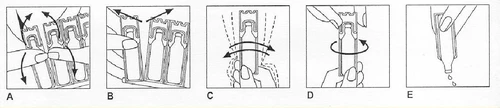
- Bend the vial forward and backward to loosen it from the strip (Figure A).
- Carefully separate the vial from the strip, starting from the top, then the center (Figure B), leaving the other vials in the pouch.
- Shake vigorously and turn the vial upside down to mix the suspension. Repeat this procedure until the entire contents are completely dissolved and mixed (Figure C).
- Open the vial by rotating the opening wings as indicated by the arrow (Figure D).
- Gently squeeze the vial and pour the contents into the nebulizer chamber (Figure E).
The vial must be opened immediately before administration.
The 400 microgram vial is for single use only.
Dilution:
Your doctor may decide that the dose should be diluted.
In this case, empty the contents of the vial into the nebulizer chamber, then add the amount of sterile sodium chloride 9 mg/ml (0.9%, physiological solution) as prescribed by your doctor.
After closing the chamber, gently shake to mix the contents.
Dilution of the dose may be necessary to obtain a final volume suitable for the specific nebulizer used, to assist in administering small volumes, or if a longer administration time is preferred.
During nebulization
Place the mask or mouthpiece.
Turn on the nebulizer.
Breathe normally. Nebulization should not last longer than 10–15 minutes.
After nebulization
Do not forget to rinse your mouth, lips, and the area of the face covered by the mask with water.
After inhalation, any unused suspension remaining in the nebulizer chamber must be discarded.
Cleaning:
For cleaning the nebulizer, follow the manufacturer's instructions. It is important that the nebulizer is kept clean.
If you use more CLENIL than you should:
It is important to use the dose as recommended by your doctor. Do not increase or reduce the dose without consulting your doctor.
If you have used more CLENIL than you should, inform your doctor as soon as possible. The doctor may decide to monitor corticosteroid levels in the blood and may need to take a blood sample.
If you forget to use CLENIL:
If you forget to take a dose, take it as soon as you remember. If it is almost time for your next dose, do not take the missed dose; simply take the next dose at the scheduled time. Do not use a double dose to make up for the forgotten dose.
If you have any doubts about the use of this medicine, consult your doctor or pharmacist.
4. POSSIBLE SIDE EFFECTS
Like all medicines, this medicine can cause side effects, although not everyone experiences them.
The following side effects have been reported. Inform your doctor as soon as possible if you notice any
of these side effects, but do not stop treatment unless instructed to do so. Your doctor will try to avoid these side effects by prescribing CLENIL at the lowest effective dose possible.
Very common side effects (may affect more than 1 in 10 people):
- sore throat (pharyngitis, laryngitis). Gargling with water immediately after inhalation may help prevent this effect.
Common side effects (may affect up to 1 in 10 people):
- cough
- nausea and stomach discomfort
- oral thrush (in the mouth, tongue, and throat). Rinsing the mouth or gargling with water immediately after inhalation may help prevent these effects.
Uncommon side effects (may affect up to 1 in 100 people):
- headache
- throat irritation, hoarseness
- worsening of shortness of breath, cough, and wheezing (known as paradoxical bronchospasm). In this case, do not take another dose of CLENIL. Contact your doctor immediately. The doctor will likely assess the asthma or recurrent wheezing and, if necessary, initiate another treatment regimen. You may be advised not to use CLENIL again.
- blurred vision.
Rare side effects (may affect up to 1 in 1,000 people):
- cold sores (herpes simplex), painful blisters on the lips and in the mouth
- tremor (involuntary trembling)
- fatigue
- allergic reaction (swelling of the eyes, face, lips, and throat leading to severe breathing difficulties, skin rash, hives, itching, or redness).
The following effects may additionally occur more frequently in children:
- Sleep disturbances, depression or anxiety, restlessness, nervousness, overexcitement, or irritability.
With long-term use at high doses, CLENIL may alter the normal production of corticosteroids in the body. In children and adolescents, this may result in delayed growth; therefore, it is important that their height is regularly monitored by a doctor. Thinning of the bones and eye problems such as clouding of the eye's lens (cataract) and increased pressure in the eye (glaucoma) have also been reported.
Reporting of side effects
If you experience any side effect, including those not listed in this leaflet, talk to your doctor or pharmacist. You can also report side effects directly through the national reporting system at the following website:
http://www.agenziafarmaco.gov.it/content/come-segnalare-una-sospetta-reazione-avversa
By reporting side effects, you can help provide more information on the safety of this medicine.
5. HOW TO STORE CLENIL
Keep this medicine out of the sight and reach of children.
Do not use CLENIL after the expiry date stated on the carton, sachet, and vial.
Store the vials in an upright position inside the original packaging (cardboard box) in order to protect
the medicine from light.
After first opening the sachet, write the date in the designated space on the sachet. Do not use the vials
more than 3 months after the date of first opening of the sachet.
Do not use CLENIL if you notice that the packaging is damaged.
Do not dispose of any medicine via wastewater or household waste. Ask your pharmacist how to
dispose of medicines no longer in use. This will help protect the environment.
6. PACKAGING CONTENTS AND OTHER INFORMATION
What CLENIL contains
The active substance is beclometasone dipropionate.
Each 1 ml vial contains 400 micrograms of beclometasone dipropionate.
The other excipients are polysorbate 20, sorbitan laurate, sodium chloride, water for injectable preparations.
Description of the appearance of CLENIL and packaging contents
CLENIL is a white or almost white suspension for nebulizer.
The CLENIL suspension is supplied in polyethylene vials containing 1 ml (CLENIL 400 micrograms). Strips of 5 vials are packed in a sealed pouch, available in pack sizes of 10 vials (2 pouches), 20 vials (4 pouches) or 40 vials (8 pouches).
Not all pack sizes may be marketed.
Marketing Authorization Holder
CHIESI FARMACEUTICI S.p.A., Via Palermo 26/A, Parma
Manufacturer:
CHIESI FARMACEUTICI S.p.A., Parma plant, Via S. Leonardo 96
This medicinal product is authorized in the Member States of the European Community under the following names:
Ireland Beclospin/Becloneb
Germany Sanasthmax
Greece Beclospin/Becloneb
France Beclospin
Italy Clenil
.