Clarityn
Italy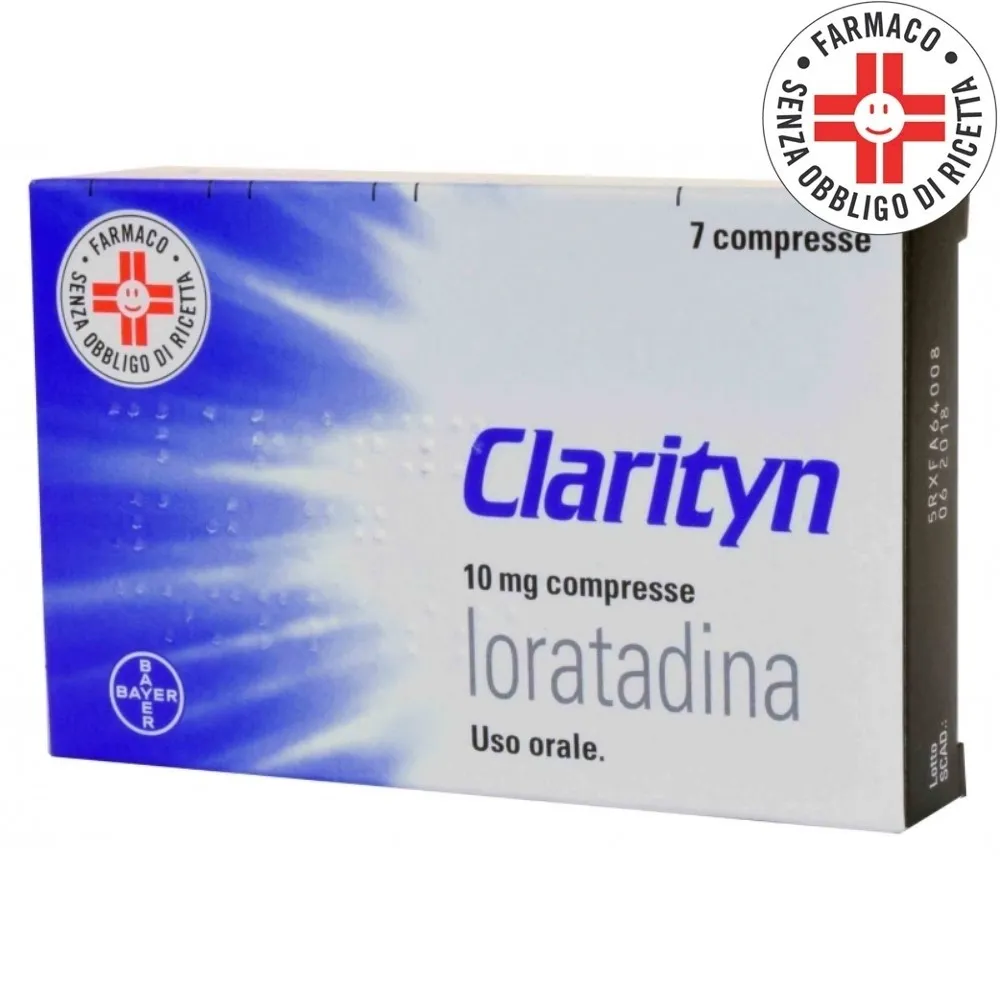
Table of Contents
- Patient Information Leaflet: Information for the User
- Clarityn 10 mg tablets
- 1. What Clarityn is and what it is used for
- 2. What you need to know before taking Clarityn
- 3. How to take Clarityn
- 4. Possible side effects
- 5. How to store Clarityn
- 6. Package contents and other information
- Clarityn 10 mg oral lyophilisate
- 1. What Clarityn is and what it is used for
- 2. What you need to know before taking Clarityn
- 3. How to take Clarityn
- 4. Possible side effects
- 5. How to store Clarityn
- 6. Package contents and other information
- Package leaflet: information for the user
- Clarityn 1 mg/ml syrup
- 1. What Clarityn is and what it is used for
- 2. What you need to know before taking Clarityn
- 3. How to take Clarityn
- 4. Possible side effects
- 5. How to store Clarityn
- 6. Package contents and other information
Patient Information Leaflet: Information for the User
Clarityn 10 mg tablets
Loratadine
Please read all of this leaflet carefully before taking this medicine because it contains important information for you.
Always take this medicine exactly as described in this leaflet or as your doctor, pharmacist or nurse has instructed you.
- Keep this leaflet. You may need to read it again.
- If you need more information or advice, consult your pharmacist.
- If you experience any side effects, including those not listed in this leaflet, talk to your doctor, pharmacist or nurse. See section 4.
- Talk to your doctor if you do not notice any improvement or if your symptoms worsen. See section 4.
- Keep this leaflet. You may need to read it again.
- If you have any doubts, consult your doctor, pharmacist or nurse.
- This medicine has been prescribed for you only. Do not give it to others, even if they have the same symptoms as yours, as it could be harmful.
- If you experience any side effect, including those not listed in this leaflet, talk to your doctor, pharmacist or nurse. See section 4.
Contents of this leaflet:
- What Clarityn is and what it is used for
- What you need to know before taking Clarityn
- How to take Clarityn
- Possible side effects
- How to store Clarityn
- Contents of the pack and other information
1. What Clarityn is and what it is used for
The full name of this medicine is Clarityn tablets.
What Clarityn is
Clarityn tablets contain the active substance loratadine, which belongs to a class of medicines called "antihistamines".
How Clarityn works
Clarityn helps reduce allergic symptoms by blocking the effects of a substance called "histamine" that is produced by the human body when you are allergic to something.
When to take Clarityn
Clarityn relieves symptoms associated with allergic rhinitis (for example, hay fever), such as sneezing, runny nose, itchy nose, and burning and itchy eyes.
Clarityn is also used to relieve symptoms of urticaria (itching, redness, and number and size of wheals).
The effect of Clarityn lasts for a full day and should help you continue your normal daily activities and sleep.
Consult your doctor if you do not notice any improvement or if your symptoms worsen.
2. What you need to know before taking Clarityn
Do not take Clarityn if
- you are allergic (hypersensitive) to loratadine or to any of the other ingredients of this medicine (listed in section 6).
Warnings and precautions
Talk to your doctor, pharmacist, or nurse before taking Clarityn if:
- you have liver problems
- you are due to undergo skin allergy tests. Do not take Clarityn within the two days prior to such tests, as this medicine may interfere with the results.
If any of the above apply to you (or if you have any doubts), consult your doctor, pharmacist, or nurse before taking Clarityn.
Children
Do not give Clarityn tablets to children under 6 years of age or to children weighing 30 kg or less. Alternative formulations more suitable for children under 6 years of age or weighing 30 kg or less are available.
Children under 2 years of age
The safety and efficacy of Clarityn have not been established. No data are available.
Other medicines and Clarityn
The risk of side effects with Clarityn may increase when taken together with medicines that affect the function of certain enzymes involved in drug metabolism in the liver.
However, in clinical studies, no increase in side effects of loratadine has been observed with products affecting these enzymes.
Tell your doctor, pharmacist, or nurse if you are taking, have recently taken, or might take any other medicines, including those not requiring a prescription.
Clarityn and alcohol
Concomitant intake of Clarityn with alcoholic beverages has not been shown to enhance its effects.
Pregnancy and breastfeeding
If you are pregnant, think you may be pregnant, or are planning to become pregnant, consult your doctor or pharmacist before taking this medicine.
As a precautionary measure, it is preferable to avoid using Clarityn during pregnancy. Do not take Clarityn if you are breastfeeding.
Loratadine is excreted in breast milk.
Driving and using machines
In clinical studies assessing driving ability, no negative effects were observed in patients treated with loratadine. At the recommended dose, Clarityn is not expected to cause drowsiness or impair attention. However, drowsiness has very rarely occurred in some individuals, which could affect the ability to drive or operate machinery.
Clarityn contains lactose
Clarityn contains lactose; therefore, if your doctor has diagnosed you with an intolerance to certain sugars, consult them before taking this medicine.
3. How to take Clarityn
Take this medicine exactly as stated in this leaflet or as directed by your doctor, pharmacist, or nurse. If you have any doubts, consult your doctor, pharmacist, or nurse.
Take this medicine exactly as stated in this leaflet or as directed by your doctor or pharmacist. If you have any doubts, consult your doctor or pharmacist.
The score line is intended only to facilitate breaking the tablet if you have difficulty swallowing it whole.
Dosage for Clarityn:
Adults and children aged 6 years and older with body weight above 30 kg:
Take one tablet once daily with a glass of water, with or without food.
Body weight equal to or below 30 kg:
Do not administer Clarityn. Other formulations are more suitable for children under 6 years of age or for those with body weight equal to or below 30 kg.
Clarityn is not recommended for children under 2 years of age.
Adults and children with severe liver problems:
Adults and children weighing more than 30 kg:
Take one tablet every other day with a glass of water, with or without food. However, before taking this medicine, you should consult your doctor, pharmacist, or nurse.
If you take more Clarityn than you should
If you take more Clarityn than you should, contact your doctor or pharmacist immediately.
Serious problems are unlikely, but symptoms such as headache, rapid heartbeat, or drowsiness may occur.
If you forget to take Clarityn
- If you forget to take the medicine, take it as soon as you remember, then continue your treatment as usual.
- Do not take a double dose to make up for the missed dose.
If you have any questions about the use of this medicine, consult your doctor, pharmacist, or nurse.
4. Possible side effects
Like all medicines, this medicine can cause side effects, although not everybody gets them.
The side effects most commonly reported in adults and children over 12 years of age are:
- drowsiness
- headache
- increased appetite
- difficulty sleeping.
The side effects most commonly reported in children aged between 2 and 12 years are:
- headache
- nervousness
- fatigue.
The following very rare side effects (may affect up to 1 in 10,000 people) have also been observed during post-marketing experience with loratadine:
- severe allergic reaction (including swelling)
- dizziness
- seizures
- fast or irregular heartbeat
- nausea (feeling unwell)
- dry mouth
- stomach discomfort
- liver disorders
- hair loss
- skin rash
- fatigue.
Frequency not known:
- Weight gain
Reporting of side effects
If you experience any side effect, including those not listed in this leaflet, please inform your doctor, pharmacist or nurse. You can also report side effects directly via the national reporting system at: www.aifa.gov.it/content/segnalazioni-reazioni-avverse.
By reporting side effects, you can help provide more information on the safety of this medicine.
5. How to store Clarityn
- Keep this medicine out of the sight and reach of children.
- This medicine does not require any special storage conditions.
- Do not use this medicine after the expiry date stated on the blister after EXP. The expiry date refers to the last day of that month.
- Do not use this medicine if you notice any changes in the appearance of the tablet.
- Do not dispose of medicines via wastewater or household waste. Ask your pharmacist how to dispose of medicines you no longer use. This will help protect the environment.
6. Package contents and other information
What Clarityn contains
- The active substance is loratadine. Each tablet contains 10 mg of loratadine.
- The other components are monohydrate lactose, corn starch and magnesium stearate.
Description of the appearance of Clarityn and contents of the pack
Tablet.
Oval tablet, white to almost white in colour, with a beaker and mortar imprinted on one side, a break line and the number "10".
Clarityn tablets are available in packs containing 2, 5, 7, 10, 14, 15, 20, 21, 28, 30, 50, 60 or 100 tablets.
Not all pack sizes may be marketed.
Marketing Authorisation Holder and Manufacturer
Bayer Spa
Viale Certosa 130, 20156 Milano, Italy
Manufacturers:
Schering-Plough Labo NV,
Industriepark, 30
B-2220 Heist-op-den-Berg,
Belgium
Schering-Plough
Rue Louis Pasteur, 2
F-14200 Herouville Saint Clair,
France
This medicinal product is authorised in the European Economic Area countries under the following names:
Austria, Denmark, Finland, Iceland, Ireland, Norway, Sweden: Clarityn
Belgium, Luxembourg: Claritine
Italy: Clarityn
France, Greece, Spain: Clarityne
Germany: Lisino S
Netherlands: Claritine
Portugal: Claritine, Alertrin
United Kingdom: Clarityn (Allergy)
Package leaflet: Information for the user
Clarityn 10 mg oral lyophilisate
Loratadine
Please read this leaflet carefully before taking this medicine because it contains
important information for you.
Always take this medicine exactly as described in this leaflet or as your doctor,
pharmacist, or nurse has instructed you.
- Keep this leaflet. You may need to read it again.
- If you need more information or advice, consult your pharmacist.
- If you experience any side effects, including those not listed in this leaflet, contact your doctor, pharmacist, or nurse. See section 4.
- Contact your doctor if you do not notice improvement or if your symptoms worsen. See section 4.
Please read this leaflet carefully before taking this medicine because it contains
important information for you.
- Keep this leaflet. You may need to read it again.
- If you have any doubts, consult your doctor, pharmacist, or nurse.
- This medicine has been prescribed for you only. Do not give it to others, even if their symptoms are the same as yours, because it could be harmful.
- If you experience any side effects, including those not listed in this leaflet, contact your doctor, pharmacist, or nurse. See section 4.
Contents of this leaflet:
- What Clarityn is and what it is used for
- What you need to know before taking Clarityn
- How to take Clarityn
- Possible side effects
- How to store Clarityn
- Contents of the pack and other information
1. What Clarityn is and what it is used for
The full name of this medicine is Clarityn oral lyophilisate. Clarityn is an "oral lyophilisate",
that is, a tablet that dissolves instantly in the mouth.
What Clarityn is
Clarityn contains the active substance loratadine, which belongs to a class of medicines called
"antihistamines".
How Clarityn works
Clarityn helps reduce allergic symptoms by blocking the effects of a substance called "histamine" that
is produced by the human body when you are allergic to something.
When to take Clarityn
Clarityn relieves symptoms associated with allergic rhinitis (for example, hay fever) such as sneezing,
runny nose, nasal itching, and eye burning and itching in adults and children aged 2 years and older
weighing more than 30 kg.
Clarityn is also used to relieve symptoms associated with urticaria (itching, redness, and number and size of wheals).
The effect of Clarityn lasts for a full day and should help you carry on with your normal daily
activities and sleep.
Consult your doctor if you do not notice any improvement or if your symptoms worsen.
2. What you need to know before taking Clarityn
Do not take Clarityn if
- you are allergic (hypersensitive) to loratadine or to any of the other ingredients of this medicine (listed in section 6).
Warnings and precautions
Talk to your doctor, pharmacist, or nurse before taking Clarityn if:
- you have liver problems
- you are due to have skin allergy tests. Do not take Clarityn within the two days prior to the tests, as this medicine could affect the results.
If any of the above apply to you (or if you are unsure), talk to your doctor, pharmacist, or nurse before taking Clarityn.
Children
Do not give Clarityn to children under 2 years of age or to children aged between 2 and 12 years who weigh less than 30 kg. For children aged between 2 and 12 years who weigh less than 30 kg, other more suitable formulations are available.
Other medicines and Clarityn
The side effects of Clarityn may increase when taken together with medicines that alter the function of certain enzymes responsible for drug metabolism in the liver.
However, in clinical studies, no increase in the side effects of loratadine has been observed with products that affect these enzymes.
Tell your doctor, pharmacist, or nurse if you are taking, have recently taken, or might take any other medicines, including those without a prescription.
Clarityn and alcohol
It has not been shown that taking Clarityn together with alcoholic drinks enhances its effects.
Pregnancy and breastfeeding
If you are pregnant, think you may be pregnant, or are planning to become pregnant, consult your doctor or pharmacist before taking this medicine.
As a precautionary measure, it is preferable to avoid using Clarityn during pregnancy.
Do not take Clarityn if you are breastfeeding. Loratadine is excreted in breast milk.
Driving and using machines
In clinical studies assessing driving ability, no negative effects were observed in patients treated with loratadine. At the recommended dose, Clarityn is not expected to cause drowsiness or reduced attention. However, drowsiness has very rarely occurred in some individuals, which may affect the ability to drive or use machinery.
3. How to take Clarityn
Take this medicine exactly as described in this leaflet or as directed by your doctor, pharmacist, or nurse. If you have any doubts, consult your doctor, pharmacist, or nurse.
Take this medicine exactly as described in this leaflet or as directed by your doctor or pharmacist. If you have any doubts, consult your doctor or pharmacist.
What dose to take Clarityn:
Adults and children over 12 years of age:
Take one orally disintegrating tablet once daily.
Children aged 2 to 12 years:
Dosage is based on body weight:
Body weight above 30 kg:
Take one orally disintegrating tablet once daily.
Body weight less than or equal to 30 kg:
Do not administer Clarityn. Other formulations are more suitable for children aged 2 to 12 years with body weight less than or equal to 30 kg.
Clarityn is not recommended for children under 2 years of age.
Adults and children with severe liver problems:
Adults and children weighing more than 30 kg:
Take one dose of the orally disintegrating tablet on alternate days. However, before taking this medicine, you should consult your doctor, pharmacist, or nurse.
How to take this medicine:
- Carefully open one blister unit by removing the foil.
- Remove the orally disintegrating tablet from the blister unit without breaking it.
- Place the orally disintegrating tablet in the mouth: it will dissolve instantly.
- No water or other liquid is needed to swallow the orally disintegrating tablet.
- The orally disintegrating tablet may be taken with or without food.
If you take more Clarityn than you should
If you take more Clarityn than recommended, contact your doctor or pharmacist immediately.
Serious problems are unlikely, but symptoms such as headache, rapid heartbeat, or drowsiness may occur.
If you forget to take Clarityn
- If you forget to take the medicine, take it as soon as you remember, then continue your treatment as usual.
- Do not take a double dose to make up for the missed dose.
If you have any further questions about the use of this medicine, consult your doctor, pharmacist, or nurse.
4. Possible side effects
Like all medicines, this medicine can cause side effects, although not everybody gets them.
The side effects most commonly reported in adults and children over 12 years of age are:
- drowsiness
- headache
- increased appetite
- difficulty sleeping.
The side effects most commonly reported in children aged 2 to 12 years are:
- headache
- nervousness
- fatigue.
The following very rare side effects (may affect up to 1 in 10,000 people) have also been observed during post-marketing experience with loratadine:
- severe allergic reaction (including swelling)
- dizziness
- seizures
- fast or irregular heartbeat
- nausea (feeling unwell)
- dry mouth
- stomach discomfort
- liver disorders
- hair loss
- skin rash
- fatigue. Frequency not known:
- Weight gain
Reporting of side effects
If you experience any side effect, including those not listed in this leaflet, talk to your doctor, pharmacist or nurse.
You can also report side effects directly via the national reporting system at
http://www.agenziafarmaco.gov.it/it/responsabili.
By reporting side effects, you can help provide more information on the safety of this medicine.
5. How to store Clarityn
- Keep this medicine out of the sight and reach of children.
- Store in the original container to protect it from moisture; this medicine does not require any special storage temperature.
- Do not use this medicine after the expiry date stated on the blister after EXP. The expiry date refers to the last day of that month.
- Do not use this medicine if you notice any changes in the appearance of the oral lyophilisate.
- Do not dispose of any medicine via wastewater or household waste. Ask your pharmacist how to dispose of medicines you no longer use. This will help protect the environment.
6. Package contents and other information
What Clarityn contains
- The active substance is loratadine. Each oral lyophilisate contains 10 mg of loratadine.
- The other components are gelatin, mannitol (E421), anhydrous citric acid and peppermint flavouring.
Description of the appearance of Clarityn and package contents
Oral lyophilisate.
White, round tablet-shaped units, marked with "C10".
Clarityn is available in packs containing 7, 8, 10, 20 or 30 oral lyophilisates.
Not all pack sizes may be marketed.
Marketing Authorisation Holder and Manufacturer
Marketing Authorisation Holder:
BAYER S.P.A Viale Certosa, 130 – Milan, Italy
Manufacturer:
Schering-Plough Labo NV,
Industriepark, 30
B-2220 Heist-op-den-Berg,
Belgium
This medicinal product is authorised in the European Economic Area countries under the following names:
Belgium, Luxembourg: Claritine Reditabs
Greece: Clarityne
Ireland: Clarityn Rapide Allergy
Italy: Clarityn
Portugal: Claritine Zydis
United Kingdom: Clarityn Rapide (Allergy)
Package leaflet: information for the user
Clarityn 1 mg/ml syrup
Loratadine
Please read this entire leaflet carefully before taking this medicine because it contains important information for you.
- Keep this leaflet. You may need to read it again.
- If you have any questions, consult your doctor, pharmacist, or nurse.
- This medicine has been prescribed for you only. Do not give it to others, even if their symptoms are the same as yours, as it could be harmful.
- If you experience any side effect, including those not listed in this leaflet, contact your doctor, pharmacist, or nurse. See section 4.
Contents of this leaflet:
- What Clarityn is and what it is used for
- What you need to know before taking Clarityn
- How to take Clarityn
- Possible side effects
- How to store Clarityn
- Contents of the pack and other information
1. What Clarityn is and what it is used for
The full name of this medicine is Clarityn syrup.
What Clarityn is
Clarityn syrup contains the active substance loratadine, which belongs to a class of medicines called "antihistamines".
How Clarityn works
Clarityn helps reduce allergic symptoms by blocking the effects of a substance called "histamine", which is produced by the human body when allergic to something.
When to take Clarityn
Clarityn relieves symptoms associated with allergic rhinitis (for example, hay fever), such as sneezing, runny nose, nasal itching, and eye burning and itching, in adults and children aged 2 years and above.
Clarityn is also used to relieve symptoms associated with urticaria (itching, redness, and number and size of wheals).
The effect of Clarityn lasts for a full day and should help you continue your normal daily activities and sleep.
Consult your doctor if you do not notice any improvement or if you notice a worsening of symptoms.
2. What you need to know before taking Clarityn
Do not take Clarityn if
- you are allergic (hypersensitive) to loratadine or to any of the other ingredients of this medicine (listed in section 6).
Warnings and precautions
Talk to your doctor, pharmacist or nurse before taking Clarityn if:
- you have liver problems
- you are due to have skin allergy tests. Do not take Clarityn within the two days before the tests, as this medicine may affect the test results.
If any of the above apply to you (or if you have any doubts), consult your doctor, pharmacist or nurse before taking Clarityn.
Children
Do not give Clarityn to children under 2 years of age.
Other medicines and Clarityn
The side effects of Clarityn may increase when taken together with medicines that affect the function of certain enzymes responsible for drug metabolism in the liver.
However, in clinical studies, no increase in side effects of loratadine has been observed with products that alter the function of these enzymes.
Inform your doctor, pharmacist or nurse if you are taking, have recently taken, or might take any other medicines, including those without a prescription.
Clarityn and alcohol
It has not been shown that taking Clarityn together with alcoholic beverages enhances its effects.
Pregnancy and breastfeeding
If you are pregnant, think you might be pregnant or are planning to become pregnant, ask your doctor or pharmacist for advice before taking this medicine.
As a precautionary measure, it is preferable to avoid using Clarityn during pregnancy.
Do not take Clarityn if you are breastfeeding.
Loratadine is excreted in breast milk.
Driving and using machines
In clinical studies assessing the ability to drive, no negative effects were observed in patients treated with loratadine. At the recommended dose, Clarityn is not expected to cause drowsiness or reduced alertness. However, drowsiness has very rarely occurred in some individuals, which may affect the ability to drive or operate machinery.
Clarityn contains sucrose
Clarityn syrup contains 6 g of sucrose per dose; this should be taken into consideration in patients with diabetes. Therefore, if your doctor has diagnosed you with an intolerance to certain sugars, consult him or her before taking this medicine.
3. How to take Clarityn
Take this medicine exactly as described in this leaflet or as instructed by your doctor, pharmacist, or nurse. If you have any doubts, consult your doctor, pharmacist, or nurse.
Take this medicine exactly as described in this leaflet or as instructed by your doctor or pharmacist. If you have any doubts, consult your doctor or pharmacist.
What dose to take of Clarityn:
Adults and children over 12 years of age:
Take two teaspoonfuls (10 ml) once daily.
For children aged 2 to 12 years, the dosage is based on body weight:
Body weight above 30 kg:
Take two teaspoonfuls (10 ml) once daily.
Body weight less than or equal to 30 kg:
Administer one teaspoonful (5 ml) once daily.
Clarityn is not recommended for children under 2 years of age.
Adults and children with severe liver problems:
Adults and children weighing over 30 kg:
Take two teaspoonfuls (10 ml) on alternate days.
Children weighing 30 kg or less:
Administer one teaspoonful (5 ml) on alternate days.
However, before taking this medicine, you should consult your doctor, pharmacist, or nurse.
How to take this medicine
- No water or other liquids are needed when taking the syrup.
- The syrup can be taken with or without food.
If you take more Clarityn than you should
If you take more Clarityn than recommended, contact your doctor or pharmacist immediately.
Serious problems are not expected, but symptoms such as headache, increased heart rate, or drowsiness may occur.
If you forget to take Clarityn
- If you forget to take the medicine, take it as soon as you remember, then continue your treatment as usual.
- Do not take a double dose to make up for the missed dose.
If you have any doubts about how to use this medicine, consult your doctor, pharmacist, or nurse.
4. Possible side effects
Like all medicines, this medicine can cause side effects, although not everybody gets them.
The side effects most commonly reported in adults and children over 12 years of age are:
- drowsiness
- headache
- increased appetite
- difficulty sleeping.
The side effects most commonly reported in children aged between 2 and 12 years are:
- headache
- nervousness
- tiredness.
The following very rare side effects (may affect up to 1 in 10,000 people) have also been observed during post-marketing experience with loratadine:
- severe allergic reaction (including swelling)
- dizziness
- seizures
- rapid or irregular heartbeat
- nausea (feeling unwell)
- dry mouth
- stomach discomfort
- liver disorders
- hair loss
- skin rash
- fatigue.
Reporting of side effects
If you experience any side effect, including those not listed in this leaflet, talk to your doctor, pharmacist or nurse. You can also report side effects directly via the national reporting system at the website
http://www.agenziafarmaco.gov.it/it/responsabili.
By reporting side effects, you can help provide more information on the safety of this medicine.
5. How to store Clarityn
- Keep this medicine out of the sight and reach of children.
- This medicine does not require any special storage conditions. Do not freeze. Store the bottle in the outer packaging to protect the medicine from light.
- Do not use this medicine after the expiry date stated on the bottle after EXP. The expiry date refers to the last day of that month.
- Clarityn syrup should be used within 1 month after opening.
- Do not use this medicine if you notice any changes in the appearance of the syrup.
- Do not dispose of any medicine via wastewater or household waste. Ask your pharmacist how to dispose of medicines you no longer use. This will help protect the environment.
6. Package contents and other information
What Clarityn contains
- The active substance is loratadine. 10 ml of syrup contain 10 mg of loratadine.
- The other components are propylene glycol (E1520), glycerol (E422), anhydrous citric acid, sodium benzoate (E211), sucrose, artificial peach flavour, and purified water.
Description of the appearance of Clarityn and contents of the pack
Syrup.
Clear, colourless to pale yellow syrup.
Clarityn syrup is available in amber glass bottles of 60, 70, 100 or 120 ml with tamper-evident cap made of polypropylene and child-resistant closure. A 5 ml plastic dosing spoon is included.
Not all bottle sizes may be marketed.
Marketing Authorisation Holder and Manufacturer
BAYER S.P.A. Viale Certosa, 130 – Milan
Manufacturer:
Schering-Plough Labo NV,
Industriepark, 30
B-2220 Heist-op-den-Berg,
Belgium
Schering-Plough S. A.
Km. 36, A-1
28750 San Agustin de Gaudalix
Madrid
Spain
This medicinal product is authorised in the European Economic Area countries under the
following names:
Belgium, Luxembourg, Netherlands, Portugal: Claritine
Denmark, Iceland, Ireland, Italy, Sweden: Clarityn
France, Greece, Spain: Clarityne
United Kingdom: Clarityn (Allergy)