Clarithromycin Doc Generici
Italy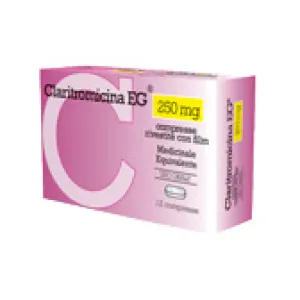
Table of Contents
- Package leaflet: Information for the user
- CLARITROMICINA DOC Generici 250 mg film-coated tablets, 500 mg film-coated tablets
- 1. What CLARITROMICINA DOC Generici is and what it is used for
- 2. What you need to know before taking CLARITROMICINA DOC Generici
- 3. How to take CLARITROMICINA DOC Generici
- 4. Possible side effects
- 5. How to store CLARITROMICINA DOC Generici
- 6. Package contents and other information
Package leaflet: Information for the user
CLARITROMICINA DOC Generici 250 mg film-coated tablets, 500 mg film-coated tablets
Generic medicine
Please read this leaflet carefully before taking this medicine because it contains important information for you.
- Keep this leaflet. You may need to read it again.
- If you have any questions, ask your doctor or pharmacist.
- This medicine has been prescribed for you only. Do not give it to other people, even if their symptoms are the same as yours, as it may be harmful.
- If you experience any adverse reaction, including those not listed in this leaflet, contact your doctor or pharmacist. See section 4. Contents of this leaflet:
- What CLARITROMICINA DOC Generici is and what it is used for
- What you need to know before taking CLARITROMICINA DOC Generici
- How to take CLARITROMICINA DOC Generici
- Possible side effects
- How to store CLARITROMICINA DOC Generici
- Contents of the pack and other information
1. What CLARITROMICINA DOC Generici is and what it is used for
Each tablet contains 250 mg or 500 mg of clarithromycin. CLARITROMICINA DOC Generici belongs to a group of medicines called macrolide antibiotics. Antibiotics stop the growth of bacteria that cause infections.
Your medicine can be used to treat infections such as:
- Infections of the upper respiratory tract, such as infections of the tonsils (tonsillitis) and throat (pharyngitis), as an alternative when antibiotics called “β-lactams” are not suitable.
- Acute inflammation of the middle ear (acute otitis media) in children.
- Infections of the lower respiratory tract, such as lung infections (pneumonia).
- Inflammation of the sinuses (sinusitis) and acute exacerbation of chronic bronchitis in adults and adolescents over 12 years of age.
- Mild to moderate skin and soft tissue infections.
In appropriate combination with other antibiotics and a suitable ulcer-healing medicine, CLARITROMICINA DOC Generici is used to eradicate Helicobacter pylori (H. pylori is a bacterium that colonizes the stomach) in adult patients with ulcers associated with Helicobacter pylori (see section 3).
Clarithromycin tablets are indicated in adults and children aged 12 years and older.
For use in children between 6 months and 12 years of age, other pharmaceutical forms are also available, such as clarithromycin oral suspension.
2. What you need to know before taking CLARITROMICINA DOC Generici
Do not take CLARITROMICINA DOC Generici if:
- you are allergic (hypersensitive) to clarithromycin or to any of the other ingredients of this medicine (listed in section 6) or to other macrolide antibiotics, for example erythromycin or azithromycin
- you are taking ergotamine or dihydroergotamine. These medicines are used to treat migraines
- you are taking medicines called terfenadine or astemizole (used to treat hay fever or allergies) or cisapride or pimozide tablets, because combining these medicines with clarithromycin can in some cases cause serious disturbances in heart rhythm. Please consult your doctor for advice on an alternative medicine.
- you are taking other medicines known to cause serious disturbances in heart rhythm
- you are taking ticagrelor or ranolazine. These are medicines used to prevent stroke or heart attack
- you are taking colchicine. This is a medicine used to treat gout
- you are taking pimozide. This medicine is used to treat mental health problems
- you are taking cisapride. This medicine is used to treat stomach problems
- you are taking HMG-CoA reductase inhibitors commonly known as statins, such as lovastatin or simvastatin, used to treat blood cholesterol. Your muscles may become weaker
- you have a heart condition that causes disturbances in heart rhythm (known as QT interval prolongation)
- you have severe liver failure associated with reduced kidney function
- you have abnormally low levels of potassium or magnesium in the blood (hypokalemia and hypomagnesemia)
- you, or someone in your family, has a history of heart rhythm disorders (ventricular cardiac arrhythmia, including torsades de pointes) or an abnormality on the electrocardiogram (ECG, an electrical recording of the heart's activity) called "long QT syndrome". If any of the above apply to you, do not take this medicine and speak to your doctor.
Warnings and precautions
Talk to your doctor or pharmacist before taking CLARITROMICINA DOC Generici:
- if you have mild to moderate liver problems and also have kidney problems. Your doctor may need to adjust your dose. Contact your doctor if you develop signs and symptoms of liver problems such as loss of appetite, jaundice, dark urine, itching or abdominal pain
- if you have an infection with H. pylori – follow your doctor’s advice carefully, as inappropriate use of clarithromycin may lead to the development of resistant microorganisms
- if you have an allergic reaction to certain other antibiotics (lincomycin and clindamycin). There is a risk of an allergic reaction similar to that with clarithromycin (cross-sensitivity)
- if you have a severe acute allergic reaction with fever (high), red skin rashes, joint pain and/or eye inflammation known as Stevens-Johnson syndrome. Treatment with clarithromycin must be stopped immediately and appropriate treatment started urgently
- if you have a severe allergic reaction with blisters and skin peeling known as toxic epidermal necrolysis (TEN). Treatment with clarithromycin must be stopped immediately and appropriate treatment started urgently
- if you suspect that during prolonged or repeated use of CLARITROMICINA DOC Generici you have developed a new infection. This could be a so-called "superinfection" caused by microorganisms resistant to clarithromycin
- if you experience severe or prolonged diarrhoea during or after taking CLARITROMICINA DOC Generici. Tell your doctor immediately, as clarithromycin in very rare cases can cause a serious inflammation of the large intestine (pseudomembranous colitis)
- if you know you have heart blood vessel disease
- if you have/have had a slow or irregular heartbeat
- if you have a weak heart
- if you have low levels of magnesium in the blood. Your heart rhythm may be affected in such cases
- if you are pregnant. You should not take these tablets without a thorough assessment of benefits and risks, particularly during the first three months of pregnancy (see section “Pregnancy and breastfeeding”)
- if you are taking medicines containing colchicine. The combination of clarithromycin and colchicine is contraindicated
- if you are taking atorvastatin or rosuvastatin for cholesterol and have signs of muscle weakness. Your doctor may need to reduce the dose of these statins
- if you are taking a combination of clarithromycin and benzodiazepines such as alprazolam, triazolam and midazolam (see section “Other medicines and CLARITROMICINA DOC Generici”)
- if you are taking other medicines that may affect your hearing. Hearing loss will be monitored during and after treatment
- if you suffer from pneumonia. Your doctor will check for possible resistance to certain antibiotics
- if you are using oral hypoglycaemics or insulin. Blood glucose levels must be closely monitored
- if you are taking oral anticoagulants together with clarithromycin. There is a risk of serious bleeding.
If you are unsure whether any of these cases apply to you, talk to your doctor or pharmacist before taking clarithromycin.
Other medicines and CLARITROMICINA DOC Generici
Talk to your doctor if you are taking any of the following medicines:
- While taking CLARITROMICINA DOC Generici, do not take cisapride, a medicine used to treat stomach problems, pimozide, used to treat mental health problems, terfenadine or astemizole, medicines used to treat hay fever and other allergies, or ergotamine or dihydroergotamine, medicines used to treat migraine. Combining CLARITROMICINA DOC Generici with these medicines can cause serious disturbances in heart rhythm.
- Do not take lovastatin or simvastatin, medicines used to lower cholesterol. Your muscles could become weaker.
- Be cautious with atorvastatin and rosuvastatin due to the risk of muscle weakness mentioned above.
- Do not take ergotamine or dihydroergotamine, medicines used to treat migraine.
- Warfarin, a coumarin anticoagulant used to thin the blood.
- Nateglinide, repaglinide or insulin, used to treat diabetes. Your doctor will monitor your blood glucose.
- Medicines used to treat irregular heartbeat, such as disopyramide, quinidine or digoxin.
- Medicines used to treat epilepsy such as phenytoin, phenobarbital, valproic acid or carbamazepine.
- Theophylline, used to treat asthma.
- Benzodiazepines used as sedatives, such as midazolam or triazolam, or used to treat anxiety and depression such as alprazolam. You may experience drowsiness and confusion; you must report in detail to your doctor any undesirable effects affecting your nervous system.
- Rifabutin, rifapentine or rifampicin, used to treat certain infections.
- Cyclosporine, tacrolimus, used after organ transplantation.
- Ritonavir, zidovudine, nevirapine, atazanavir, efavirenz or etravirine used to treat HIV-infected patients.
- Omeprazole or lansoprazole, used to reduce acid production in the stomach.
- Antacids and ranitidine, used to treat stomach problems/heartburn.
- Colchicine, a medicine used to treat gout.
- Aminoglycosides, medicines used to treat infections; they may cause deafness.
- Sildenafil, tadalafil and vardenafil, medicines used to treat erectile dysfunction. A lower dose of these medicines may be needed.
- Tolterodine, used to treat urinary incontinence. A lower dose of this medicine may be needed.
- Itraconazole, used to treat fungal infections. The effects of both itraconazole and clarithromycin may be prolonged.
- Verapamil, amlodipine and diltiazem, used to treat hypertension. Hypotension and increased heart rate may occur.
- St. John’s wort, a herbal product used to treat depression.
If any of the above apply to you, talk to your doctor or pharmacist.
Inform your doctor or pharmacist if you are taking or have recently taken any other medicines, including those not requiring a prescription. This also includes herbal medicines.
CLARITROMICINA DOC Generici with food and drinks
You may take this medicine with or without food.
Pregnancy and breastfeeding
If you are pregnant, suspect you may be pregnant, planning to become pregnant, or breastfeeding, ask your doctor for advice before taking this medicine, as the safety of its use during pregnancy and breastfeeding is not known.
Driving and using machines
It is not yet known how this medicine affects your ability to drive or use machinery.
You may feel dizzy, confused, or unbalanced after taking this medicine. If this happens, do not drive and do not operate machinery.
3. How to take CLARITROMICINA DOC Generici
Your doctor has decided the appropriate dose for you. The dose depends on the type and severity of the infection.
Always follow exactly your doctor's instructions and those indicated on the label of the medicine package.
If you do not understand these instructions or have any doubts, you must consult your doctor or pharmacist.
The tablets should be swallowed with at least half a glass of water.
The usual dosage instructions are given below:
Adults, elderly patients and children over 12 years of age:
- Usual dose: 250 mg twice daily (once in the morning and once in the evening) for 6 to 14 days.
- High-dose treatment: your doctor may increase the dose to 500 mg twice daily or extend the treatment to 14 days if you have a severe infection. Treatment should be continued for at least 2 days after symptoms have disappeared.
Use in peptic ulcers caused by H. pylori infections:
500 mg of clarithromycin twice daily for 7 days is generally used in combination with other medicines.
Patients with kidney problems:
If you have severe kidney problems, your doctor will halve the dose, for example 250 mg once daily or, in case of severe infections, 250 mg twice daily, and will reduce the treatment duration to a maximum of 14 days.
Use in children up to 12 years of age:
The recommended dose is 7.5 mg/kg twice daily (once in the morning and once in the evening) for 5 to 10 days.
Treatment should be continued for at least 2 days after symptoms have disappeared.
Weight | Dose
-------|------
30 – 40 kg | 250 mg twice daily
If your child has severe kidney problems, your doctor will halve the dose, for example 7.5 mg/kg once daily, and reduce the treatment duration to a maximum of 14 days.
The tablet form of clarithromycin is not suitable for children under 12 years of age weighing less than 30 kg. Other pharmaceutical forms are more appropriate for these patients, such as oral suspension.
If you take more CLARITROMICINA DOC Generici than you should
If you or someone else takes many tablets at once, or if you suspect a child has ingested a tablet, contact immediately the nearest emergency department or your doctor.
An overdose of this medicine may cause vomiting and stomach pain.
Please bring this leaflet, any remaining tablets, and the container with you to the hospital or doctor, so that it can be determined which tablets have been taken.
If you forget to take CLARITROMICINA DOC Generici
If you forget to take a tablet, take one as soon as you remember, unless it is almost time for your next dose. Do not take a double dose to make up for the forgotten tablet.
If you stop taking CLARITROMICINA DOC Generici
Do not stop taking your medicine just because you feel better. It is important that you complete the prescribed treatment, otherwise the condition may return.
If you have any doubts about how to use this medicine, consult your doctor or pharmacist.
4. Possible side effects
Like all medicines, CLARITROMICINA DOC Generici may cause side effects, although not
all people experience them.
The most frequent and common adverse reactions associated with clarithromycin therapy in both adults and
children are abdominal pain, diarrhea, nausea, vomiting and altered taste. These adverse reactions
are usually mild in intensity and are also known with other macrolide antibiotics (see list below).
The following list shows adverse reactions reported from clinical studies and post-marketing experience
with clarithromycin immediate-release tablets, oral suspension granules, powder for injectable solution,
prolonged-release tablets and modified-release tablets; therefore, not all of the following side effects may apply to the tablets you are taking.
Adverse reactions considered at least possibly related to clarithromycin are listed by frequency using the following convention: very common (more than 1 in 10 people treated), common (less than 1 in 10 people treated but more than 1 in 100 people treated), uncommon (less than 1 in 100 people treated but more than 1 in 1,000 people treated), very rare (less than 1 in 10,000 people treated) and not known (frequency cannot be estimated from the available data).
The frequency, type and severity of adverse reactions in children are expected to be the same as those observed in adults.
If any of these symptoms occur, stop taking clarithromycin, inform your doctor immediately or go to the nearest hospital emergency department:
-
You may have an allergic reaction after taking this medicine. This allergic reaction may include: difficulty breathing and swelling of lips, face and throat, hives, which may vary in severity from skin hives with itching to severe blisters on the skin or ulcers on lips, eyes, nose, mouth and genitals up to life-threatening shock (anaphylactic shock). This occurs in less than 1 in 100 people treated, but in more than 1 in 1,000.
-
You may experience severe and prolonged diarrhea. The diarrhea may contain blood or mucus. This may indicate inflammation of the large intestine (pseudomembranous colitis, frequency not known).
-
You may develop a severe hypersensitivity reaction affecting mucous membranes, fever (high), red skin rash, joint pain and/or eye inflammation (Stevens-Johnson syndrome) or a severe and sudden hypersensitivity reaction with fever, skin blisters/skin peeling (toxic epidermal necrolysis), drug rash with blood cell abnormalities (eosinophilia) and systemic symptoms (known as DRESS) (see section 2 “Take special care with CLARITROMICINA DOC Generici especially if” and “Taking CLARITROMICINA DOC Generici with other medicines”).
-
You may develop liver failure. This has occurred in very rare cases, sometimes fatal, particularly in patients with pre-existing liver disease or patients taking other medicines harmful to the liver (see section 2 “Take special care with CLARITROMICINA DOC Generici especially if”).
-
You may experience severe blood abnormalities with high fever, sore throat and mouth ulcers (agranulocytosis). The frequency of occurrence is not known.
Other possible side effects that may occur with clarithromycin are:
Common side effects (less than 1 in 10 people treated, but more than 1 in 100)
- Headache, difficulty sleeping (insomnia).
- Stomach problems such as nausea, vomiting, indigestion (dyspepsia), stomach pain (abdominal pain) or diarrhea, altered taste, unusual taste in mouth (metallic or bitter taste).
- Oral thrush (moniliasis). This causes sores in the mouth sometimes accompanied by white spots.
- Rash, edema (hyperhidrosis).
- Changes in blood tests used to monitor kidney and liver function.
Uncommon side effects (less than 1 in 100 people treated, but more than 1 in 1,000)
- Unusual bleeding or unexplained bruising (prolongation of prothrombin time).
- Reduction in the number of circulating white blood cells (leukopenia, neutropenia), leading to an increased risk of infections, reduction in the number of circulating cells that allow blood to clot, resulting in increased tendency to bleed (thrombocytopenia), abnormalities in blood cells (eosinophilia).
- Joint pain and muscle pain (arthralgia, myalgia), muscle spasms, stiffness.
- Liver and gallbladder problems (usually temporary and reversible) with inflammation of the liver (hepatitis) and impairment of bile flow (cholestasis), with or without yellowing of the skin and whites of the eyes (jaundice).
- Inflammation of the mouth (stomatitis), intestine or stomach.
- Infection, vaginal infection.
- Hypersensitivity.
- Anxiety, nervousness, dizziness, drowsiness, tremor, spinning sensation (vertigo), hearing loss, ringing in the ears (tinnitus), asthma, nosebleeds.
- Changes in heart rate and/or heart rhythm (prolongation of QT interval, atrial fibrillation, cardiac arrest).
- Severe abdominal pain and back pain, inflammation of the stomach (gastritis), mouth (stomatitis), tongue (glossitis) or esophagus (esophagitis), constipation, dry mouth, belching and flatulence.
- Blistering skin inflammation, itching, hives, rash with small flat discolored spots, swelling.
- Anorexia, decreased appetite, malaise, flushed skin, weakness, chest pain, chills, fatigue.
Very rare side effects (less than 1 in 10,000 people treated)
- Numbness and tingling in arms and legs (paresthesia).
Side effects with unknown frequency:
- Inflammation of the intestine with severe diarrhea known as pseudomembranous colitis.
- Erysipelas, acne.
- Unusual bleeding or bruising (prolongation of prothrombin time), alteration of blood clotting, abnormal urine color.
- Severe allergic reactions causing swelling of the face or throat (angioedema).
- Psychosis, confusion, depersonalization, depression, disorientation, hallucinations, nightmares, mania, seizures, loss of taste, alteration or loss of smell, deafness, tingling or numbness in hands or feet.
- Cardiac arrest.
- Inflammation of the pancreas, discoloration of the tongue, discoloration of teeth.
- Yellowing of the skin and whites of the eyes (jaundice), inflammation or kidney failure.
- Muscle weakness with loss of muscle tissue.
- Ventricular fibrillation.
- Contact your doctor immediately if you notice a severe skin reaction: red, scaly rash with formation of pustules and blisters (exanthematous pustulosis). The frequency of this reaction is not known (cannot be estimated from the available data).
Reporting of side effects
If you experience any side effect, including those not listed in this leaflet, talk to your
doctor or pharmacist. You may also report side effects directly via the national reporting system at www.agenziafarmaco.gov.it/content/come-segnalare-una-sospetta-reazione-avversa.
By reporting side effects, you can help provide more information on the safety of this medicine.
5. How to store CLARITROMICINA DOC Generici
Keep this medicine out of the sight and reach of children.
Do not use CLARITROMICINA DOC Generici after the expiry date stated on the packaging after “Exp.”.
The expiry date refers to the last day of that month.
Store below 30°C.
Do not dispose of any medicine via wastewater or household waste. Ask your pharmacist how to dispose of
medicines you no longer use. This will help protect the environment.
6. Package contents and other information
What CLARITROMICINA DOC Generici contains
- The active substance is clarithromycin.
- The other components are: Tablet core: croscarmellose sodium (E468), microcrystalline cellulose PH 102, magnesium stearate (E572), anhydrous colloidal silica (E551). Film coating: hypromellose 2910 E5 (E464), macrogol 8000, titanium dioxide (E171), iron oxide yellow (E172).
Description of the appearance of CLARITROMICINA DOC Generici and contents of the pack
CLARITROMICINA DOC Generici 250 mg film-coated tablets are available in blisters containing
12 and 14 film-coated tablets.
CLARITROMICINA DOC Generici 500 mg film-coated tablets are available in blisters containing
14 film-coated tablets.
It is possible that not all pack sizes are marketed.
Marketing Authorization Holder
DOC Generici S.r.l.
Via Turati 40
20121 Milan
Italy
Manufacturer
Special Product’s Line S.p.A.
Via Fratta Rotonda Vado Largo 1
03012 Anagni (Frosinone)
Italy
Apotex Nederland B.V.
Archimedesweg 2
2333 CN Leiden
The Netherlands
This medicinal product is authorized in the Member States of the European Economic Area under the following names:
Italy: CLARITROMICINA DOC Generici 250 mg film-coated tablets
CLARITROMICINA DOC Generici 500 mg film-coated tablets
Netherlands: Claritromycine Apotex 250 mg, filmomhulde tabletten
Claritromycine Apotex 500 mg, filmomhulde tabletten