Cilodex
Italy
Table of Contents
- Package leaflet: Information for the user
- CILODEX 3 mg/ml / 1 mg/ml ear drops, suspension
- 2. What you need to know before using CILODEX
- 3. How to use CILODEX
- 1. Wash hands
- 2. Warm and shake the bottle
- 3. Administering the drops
- 6. Remaining lying on your side
- 4. Possible side effects
- 5. How to store CILODEX
- 6. Package contents and other information
Package leaflet: Information for the user
CILODEX 3 mg/ml / 1 mg/ml ear drops, suspension
Ciprofloxacin/dexamethasone
Please read all of this leaflet carefully before using this medicine because it contains important information for you.
- Keep this leaflet. You may need to read it again.
- If you have any questions, ask your doctor or pharmacist.
- This medicine has been prescribed for you only. Do not pass it on to other people, even if their symptoms are the same as yours, because it may be harmful.
- If you experience any side effects, including those not listed in this leaflet, tell your doctor or pharmacist. See section 4.
Contents of this leaflet:
1. What CILODEX is and what it is used for
2. What you need to know before using CILODEX
3. How to use CILODEX
4. Possible side effects
5. How to store CILODEX
6. Contents of the pack and other information
1. What CILODEX is and what it is used for
CILODEX is a suspension for otic use (in the ear). It contains:
ciprofloxacin, an antibiotic belonging to the group of fluoroquinolones. Ciprofloxacin works by killing bacteria responsible for infections;
dexamethasone, a corticosteroid or anti-inflammatory agent that helps relieve inflammation and redness.
CILODEX is formulated as ear drops. This medicine is used to treat acute infections of the middle ear (otitis media) in patients with otologic drainage tubes (tympanostomy tubes or "grommets"), or to treat infection of the outer ear (acute otitis externa). It has been shown to be safe and effective in pediatric patients aged 6 months and older for the treatment of middle ear infections (AOMT) and in patients aged 1 year and older for the treatment of outer ear infections (AOE).
2. What you need to know before using CILODEX
Do not use CILODEX:
If you are allergic to ciprofloxacin, dexamethasone, or any of the other ingredients of this
medicine (listed in section 6).
If you are allergic to medicines called quinolone antibiotics, as this medicine may cause the same type of allergic reaction.
If the ear infection is caused by a virus or a fungus.
Warnings and precautions
Talk to your doctor or pharmacist before using CILODEX:
This preparation is for ear use only. It is not suitable for ocular use and must not be ingested, injected, or inhaled.
Once treatment has started, if you notice the first signs of a skin rash or any other allergic symptoms (e.g. hives (wheals), sudden swelling of the face, throat, or eyelids, breathing difficulties), stop using the medicine immediately and consult your doctor. Severe allergic reactions may require immediate emergency treatment.
Inform your doctor if symptoms do not improve within one week of starting treatment, worsen, or suddenly reappear. As with all antibiotics, additional infections caused by organisms not sensitive to ciprofloxacin may sometimes occur. In such cases, appropriate treatment under your doctor's guidance should be initiated.
If you experience pain, swelling, or inflammation of tendons during or shortly after using this medicine, stop treatment and contact your doctor. Pay particular attention if you are over 65 years of age or are currently being treated with corticosteroids.
Contact your doctor if you experience blurred vision or other visual disturbances.
Use in children: Clinical experience with the use of CILODEX for the treatment of middle ear infections in children under 6 months of age and for the treatment of external ear infections in children under 1 year of age is insufficient; therefore, consult your doctor before administering this medicine to your child if they fall within these age groups.
If any of these situations apply to you, seek advice from your doctor.
Other medicines and CILODEX
Inform your doctor or pharmacist if you are currently using, have recently used, or might use any other medicines.
Pregnancy and breastfeeding
If you are pregnant, suspect you may be pregnant, planning a pregnancy, or breastfeeding, consult your doctor before taking this medicine.
Driving and using machines
There are no known effects of CILODEX on the ability to drive vehicles or operate machinery.
This medicine contains benzalkonium chloride, which is a known irritant and may cause local skin reactions.
3. How to use CILODEX
Use this medicine exactly as instructed by your doctor. If you have any doubts, consult your doctor.
The recommended dose for adults and children is 4 drops into the ear canal, twice daily – morning and
evening – for 7 days. This medicine is intended for ear use only (otic use).
Remove the loose protective ring from the cap when opening the bottle for the first time.
Your doctor will advise you on how long to use this medicine. To prevent the infection from returning, do not stop treatment early, even if you notice improvement in the condition of your ear(s).
Use this medicine in both ears only if your doctor has specifically instructed you to do so.
Instructions for use
It is preferable for another person to administer the drops for you. Children should never be allowed to administer the drops themselves.
1. Wash hands
The person administering CILODEX must wash their hands with water and soap.
2. Warm and shake the bottle
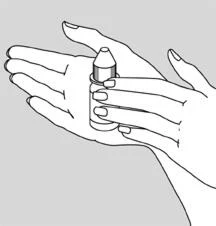
The person administering CILODEX should hold the bottle in their hands for a few minutes to warm its contents (Figure 1), in order to avoid dizziness caused by instilling a cold solution into the ear canal. Then shake the bottle well before use.
3. Administering the drops
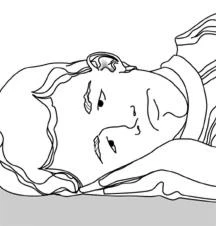
The patient should lie down with the infected ear facing upward (Figure 2).
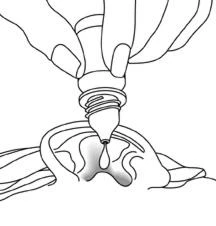
Instill 4 drops of CILODEX into the affected ear (Figure 3). Do not touch the fingers, the ear, or any other surface with the tip of the bottle, as this could contaminate the drops.
After administering the drops, follow the instructions below according to the patient's specific ear infection.
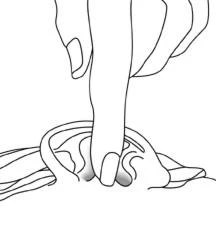
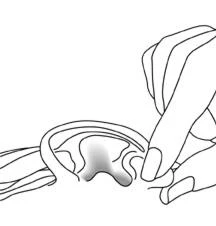
- For patients with middle ear infection and drainage ear tubes (tympanostomy tubes or "grommets"): while the patient remains lying on their side, the person administering CILODEX should gently press the skin flap at the entrance of the ear canal (Figure 4) 5 times using a pumping motion. This will help the drops pass through the tube and reach the eardrum and middle ear.
- For patients with outer ear infection (otitis externa): while the patient is lying on their side, the person administering CILODEX should gently pull the outer ear upward and backward (Figure 5). This will allow the ear drops to flow into the ear canal.
6. Remaining lying on your side
The patient is advised to remain lying on their side for about 5 minutes to facilitate
the penetration of the drops into the ear.
When raising the head again, some drops may leak out. These can be wiped away using a non-sterile absorbent tissue.
It is essential to follow these instructions in order to achieve good effectiveness of the
medicinal product in the ear. Keeping the head upright or moving the head too
quickly after instillation of the ear drops may result in partial loss of the
medication, as the drops may run out onto the face instead of penetrating deeply into the ear canal.
Keep the bottle tightly closed when not in use.
Keep the bottle until the end of the treatment. Do not keep it for future use.
During application, take care to ensure that the dropper does not come into contact with the ear or fingers, to avoid contamination.
Repeat steps 2 to 5 for the other ear if both ears are infected.
If you use more of this medicine than you should, contact your doctor or pharmacist.
If you forget to use this medicine, do not worry; simply continue with the next dose.
Do not use a double dose to make up for the forgotten dose.
If you stop using CILODEX
Do not stop using this medicine without informing your doctor or pharmacist. If the condition of your ear does not improve after 1 week of treatment, consult your doctor again.
If you have any doubts about how to use this medicine, consult your doctor or pharmacist.
4. Possible side effects
Like all medicines, CILODEX can cause side effects, although not everybody gets them.
If you experience a severe allergic reaction or any of the following, stop using the medicine and contact your doctor immediately: swelling of the hands, feet, ankles, face, lips, mouth or throat, difficulty swallowing or breathing, skin rash or hives, sores, ulcers.
Common: may affect up to 1 in 10 people
Ear-related effects: ear pain.
Uncommon: may affect up to 1 in 100 people
Ear-related effects: ear discomfort, ear drainage catheter blockage, tingling, ear congestion, ear itching, fungal infection of the outer ear, ear discharge, ear swelling.
General side effects: candida infection, irritability, crying, skin redness, vomiting, bad taste sensation, fatigue.
Rare side effects: may affect up to 1 in 1,000 people
Ear-related effects: hearing reduction, tinnitus (ringing in the ears), drug residue.
General side effects: dizziness, headache, ear redness.
The following side effects have been reported with Cilodex ear drops. The frequency cannot be estimated from the available data:
Ear-related effects: ear inflammation
General side effects: allergy
Eye-related effects: blurred vision
Reporting of side effects
If you experience any side effect, including those not listed in this leaflet, talk to your doctor or pharmacist. You can also report side effects directly (see details below). By reporting side effects, you help provide more information on the safety of this medicine.
Website: http://www.aifa.gov.it/content/segnalazioni-reazioni-avverse
5. How to store CILODEX
Keep this medicine out of the sight and reach of children.
Do not use this medicine after the expiry date stated on the bottle and the outer carton. The expiry date refers to the last day of that month.
Do not freeze.
Keep the bottle in the outer packaging to protect the medicine from light.
Discard the bottle 4 weeks after first opening.
Do not dispose of medicines via wastewater or household waste. Ask your pharmacist how to dispose of medicines you no longer use. This will help protect the environment.
6. Package contents and other information
What CILODEX contains
The active substances are ciprofloxacin and dexamethasone.
Each ml of suspension contains 3 mg of ciprofloxacin as hydrochloride and 1 mg of dexamethasone.
The other components are benzalkonium chloride, hydroxyethylcellulose, sodium acetate trihydrate, acetic acid,
sodium chloride, disodium edetate, tyloxapol, boric acid, hydrochloric acid/sodium hydroxide (for pH adjustment), purified water.
Description of the appearance of CILODEX and pack contents
CILODEX is a uniform suspension ranging in colour from white to off-white; it is supplied in a pack containing one 5 ml bottle (LPDE) with a white closure (PP).
Marketing Authorization Holder
INFECTOPHARM Arzneimittel und Consilium GmbH
Von-Humboldt-Str. 1
64646 Heppenheim
Germany
Selling Concessionaire
Bruno Farmaceutici S.p.A.
Via delle Ande, 15
00144 Rome
Italy
Responsible manufacturer for batch release
S.A. Alcon - Couvreur N.V.
Rijksweg 14, B-2870 Puurs
Belgium
This medicinal product is authorized in the Member States of the European Economic Area under the following names:
Denmark Cilodex
France Ciloxadex
Italy Cilodex
Germany Cilodex 3 mg/ml / 1 mg/ml Ohrentropfen, Suspension
Spain Ciloxadex
United Kingdom Cilodex
Other sources of information
More detailed information on this medicinal product is available on the website
www.agenziafarmaco.gov.it/it
Advice/health education
Antibiotics are used to treat bacterial infections. They are ineffective against viral infections. If your
doctor has prescribed antibiotics for you, they are specifically intended for your current condition. Despite antibiotic treatment, some resistant bacteria may survive or multiply; therefore, certain antibiotic treatments may not be effective. Inappropriate use of antibiotics may increase resistance.
It could even help bacteria become resistant, thereby delaying your recovery or reducing antibiotic effectiveness if you do not properly adhere to:
- dosage,
- dosing schedule,
- duration of treatment.
Therefore, to preserve the effectiveness of this medicine:
- Use antibiotics only when prescribed.
- Follow the prescription exactly.
- Do not reuse an antibiotic without a medical prescription, even if you wish to treat a similar condition.
- Never give your antibiotic to another person; it may not be suitable for their condition.
- At the end of treatment, return all unused medicines to your pharmacy to ensure they are properly disposed of.