Chenpen
ItalyTable of Contents
- Package leaflet: Information for the user
- Chenpen 150 micrograms in 0.3 ml solution for injection in a pre-filled syringe
- 1. What is Chenpen 150 micrograms and what is it used for
- 2. What you need to know before using Chenpen 150 micrograms
- 3. How to use Chenpen 150 micrograms
- 4. Possible side effects
- 5. How to store Chenpen 150 micrograms
- 6. Package contents and other information
- Package leaflet: Information for the user
- Chenpen 300 micrograms in 0.3 ml solution for injection in a pre-filled syringe
- 1. What Chenpen 300 micrograms is and what it is used for
- 2. What you need to know before using Chenpen 300 micrograms
- 3. How to use Chenpen 300 micrograms
- 4. Possible side effects
- 5. How to store Chenpen 300 micrograms
- 6. Package contents and other information
Package leaflet: Information for the user
Chenpen 150 micrograms in 0.3 ml solution for injection in a pre-filled syringe
Adrenaline (epinephrine)
Please read all of this leaflet carefully before you use this medicine because it contains important information for you.
- Keep this leaflet. You may need to read it again.
- If you have any questions, ask your doctor or pharmacist.
- This medicine has been prescribed for you only. Do not give it to other people, even if they have the same symptoms as yours, as it may be harmful to them.
- If you experience any side effects, including those not listed in this leaflet, tell your doctor or pharmacist. See section 4.
Contents of this leaflet
- What Chenpen 150 micrograms is and what it is used for
- What you need to know before using Chenpen 150 micrograms
- How to use Chenpen 150 micrograms
- Possible side effects
- How to store Chenpen 150 micrograms
- Contents of the pack and other information
1. What is Chenpen 150 micrograms and what is it used for
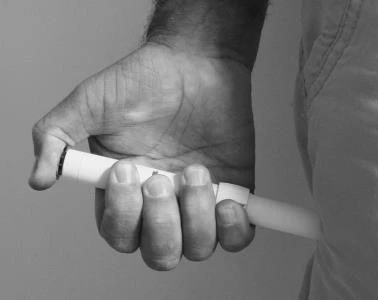
- Chenpen 150 micrograms consists of a pre-filled syringe containing adrenaline in an automatic injection device (Auto-Injector). This device delivers a single dose of adrenaline into the muscle.
- This medicine is for emergency use only and, after administration, immediate medical assistance must be sought.
- Adrenaline is a hormone naturally released in response to stress. In acute allergic reactions, it improves blood pressure, heart function, and breathing, and reduces swelling. Adrenaline is also known as epinephrine.
- Chenpen 150 micrograms is used for the emergency treatment of severe allergic reactions or anaphylaxis caused by peanuts or other foods, medicines, insect bites or stings, and other allergens, as well as by exercise or unknown causes.
2. What you need to know before using Chenpen 150 micrograms
Do not use Chenpen 150 micrograms
There is no known reason not to use Chenpen 150 micrograms in case of an allergic emergency.
Warnings and precautions
Talk to your doctor or pharmacist before using Chenpen 150 micrograms.
- Your doctor should have explained to you when and how to correctly use the Chenpen Auto-Injector.
- Inform your doctor if you have any heart condition, including angina, hyperthyroidism, high blood pressure, low potassium levels, elevated calcium levels in the blood, circulatory disorders, pheochromocytoma (a type of tumor of the adrenal gland), increased intraocular pressure (glaucoma), kidney or prostate disease, diabetes, or any other medical condition.
- If you have asthma, you may be at increased risk of developing a severe allergic reaction.
- Anyone who has experienced an episode of anaphylaxis should consult a doctor to undergo tests to identify the substances causing the allergy, so they can be strictly avoided in the future. It is important to be aware that an allergy to one substance may lead to allergies to related substances.
- In case of food allergies, it is essential to check the ingredients of everything you ingest (including medications), as even small amounts may trigger severe reactions.
- Repeated injections at the same site may cause skin damage at the injection site. Accidental injection into a blood vessel may cause a sudden increase in blood pressure. Accidental injection into the hand or foot may result in loss of blood flow to the affected area.
- Seek immediate medical assistance at the nearest hospital.
Other medicines and Chenpen 150 micrograms
Inform your doctor or pharmacist if you are taking, have recently taken, or might take any other medicines, especially:
- Medicines for heart conditions, such as digitalis (digoxin), beta-blockers, quinidine.
- Medicines for depression, such as tricyclic antidepressants, monoamine oxidase inhibitors (MAOIs), serotonin and norepinephrine reuptake inhibitors (SNRIs).
- Medicines for diabetes; your doctor may need to adjust their dosage after using Chenpen 150 micrograms.
- Medicines for Parkinson’s disease.
- Medicines for thyroid disorders.
- Other medicines: antihistamines, such as diphenhydramine or chlorpheniramine, theophylline, ipratropium, and oxitropium (used to treat respiratory diseases, including asthma), oxytocin (used to induce labor), inhaled anesthetics, alpha-blockers (used to treat high blood pressure), sympathomimetics (used to treat asthma, other respiratory diseases, and nasal congestion).
Chenpen 150 micrograms and alcohol
Alcohol taken concomitantly with this medicine may have negative effects, as it enhances its actions.
Pregnancy and breastfeeding
If you are pregnant, think you may be pregnant, planning a pregnancy, or breastfeeding, consult your doctor or pharmacist before taking this medicine.
- It is unclear whether adrenaline use during pregnancy poses a risk to the fetus. However, this should not prevent you from using Chenpen 150 micrograms in an emergency during pregnancy, as your life could be at risk. You should discuss this with your doctor before an emergency occurs.
- Adrenaline is not expected to have any effect on a breastfed infant.
Driving and using machines
Do not drive or operate machinery after injecting this medicine until symptoms related to anaphylactic shock have resolved.
Chenpen 150 micrograms contains sodium metabisulfite (E223)
Sodium metabisulfite may cause allergic-type reactions and breathing difficulties, especially in individuals with a history of asthma.
Inform your doctor or pharmacist if you know you are allergic to sodium metabisulfite.
Chenpen 150 micrograms contains a small amount of sodium chloride (salt)
This medicine contains less than 1 mmol of sodium (23 mg) per dose, i.e., it is practically 'sodium-free'.
For athletes: using this medicine without therapeutic need constitutes doping and may lead to a positive anti-doping test.
3. How to use Chenpen 150 micrograms
Always carry 2 auto-injectors with you because the first administration might fail or might not be sufficient.
- Always use this medicine exactly as instructed by your doctor.
- If you have any doubts, consult your doctor or pharmacist.
- Inject it only into the thigh muscles.
- For single use only. Please ensure safe disposal of the product immediately after use. Chenpen 150 micrograms delivers a single dose of 0.3 ml of solution, equivalent to 0.15 mg (150 micrograms) of adrenaline. After use, a volume of 0.77 ml remains in the auto-injector but cannot be reused.
Anaphylactic reaction usually begins within a few minutes of exposure to the allergen, and symptoms include:
- Skin itching, urticarial rash (hives), flushing, and swelling of the eyes, lips, or tongue.
- Breathing difficulties due to throat swelling. Wheezing, shortness of breath, and coughing may result from bronchoconstriction.
- Other symptoms of anaphylaxis include headache, vomiting, and diarrhea.
- Collapse and loss of consciousness due to a sudden drop in blood pressure.
If you experience these signs and symptoms, use the Chenpen Auto-Injector immediately. You must inject this medicine only into the outer thigh muscle, not into the buttock.
Sometimes a single dose of adrenaline may not be sufficient to counteract the effects of a severe allergic reaction. For this reason, your doctor may prescribe more than one Chenpen 150 micrograms auto-injector. If your symptoms do not improve or worsen within 5–15 minutes after the first injection, you or the people with you should administer a second injection. For this reason, you should always carry more than one Chenpen 150 micrograms auto-injector with you.
Use in adults
- The usual dose is 300 micrograms.
- Adults with higher body weight may require more than one injection to counteract the effects of a severe allergic reaction.
Use in children and adolescents
- The appropriate dose is 150 micrograms or 300 micrograms.
- This depends on the child’s body weight and is at the discretion of the doctor.
- Chenpen 300 micrograms should be prescribed for children and adolescents weighing more than 30 kg.
- An auto-injector delivering 300 micrograms of adrenaline is also available. A dose lower than 150 micrograms cannot be administered with sufficient accuracy in children weighing less than 15 kg; therefore, use is not recommended unless the child is in life-threatening danger and administration occurs under medical supervision.
Children between 15 kg and 30 kg body weight
The usual dose is 150 micrograms.
Children over 30 kg body weight
The usual dose is 300 micrograms.
Chenpen 150 micrograms is designed as an emergency treatment. Immediately after using Chenpen 150 micrograms, you must always seek medical assistance. Call 112 or 118, request an ambulance, and state “anaphylaxis,” even if symptoms appear to be improving. You will need to go to hospital for monitoring and further treatment if necessary. This is because the reaction could recur at a later time.
While waiting for the ambulance, lie down with your legs elevated, unless this causes breathing difficulties—in which case, sit up. Ask someone to stay with you until the ambulance arrives, in case your condition worsens again.
Unconscious patients should be placed on their side in the recovery position.
Instructions for use
It is recommended that family members, caregivers, or teachers also be trained in the correct use of Chenpen 150 micrograms.
A. Parts of the Chenpen Auto-Injector
Before using the Chenpen Auto-Injector, the patient should be familiar with its parts. These are shown in the figure.
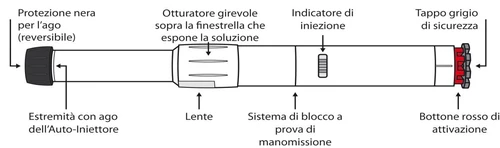
Rotating cap of the solution viewing window: rotate the rotating cap of the solution viewing window to align the lenses with the window on the auto-injector.
Solution viewing window: look through the lenses in the solution viewing window before injection to check that the solution is clear and ready for use.
Injection indicator: before injection, you can see a white plastic plunger through the window. This means the Chenpen Auto-Injector has not been accidentally activated or tampered with. After injection, the indicator turns red. This indicates that the Chenpen Auto-Injector has been correctly activated.
Black needle shield (reversible): this protects the needle when the Chenpen Auto-Injector is not in use. Remove the shield before injection. After injection, rotate the black needle shield and replace it over the same end of the Chenpen Auto-Injector to cover the needle.
Grey safety cap: this covers the red activation button and prevents accidental pressing.
Do not remove the black needle shield or the grey safety cap until you need to use the Chenpen Auto-Injector.
B. Checking the Chenpen Auto-Injector
Before using the Chenpen Auto-Injector, check it as follows:
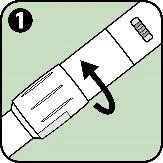
- Rotate the rotating cap of the solution viewing window fully counterclockwise, as shown by the arrow, to align the lenses with the auto-injector window.
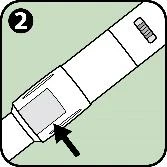
- Look through the lenses in the solution viewing window. Check that the solution is clear and colorless. If it is cloudy, discolored, or contains particles, discard the Chenpen Auto-Injector.
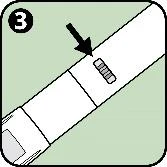
- Ensure that the injection indicator is not red. If it is red, this means the Chenpen Auto-Injector has already been used and must be discarded.
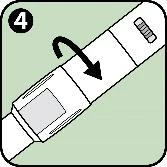
- Rotate the movable cover of the solution viewing window fully clockwise, as shown by the arrow, to ensure both viewing windows are covered. Return the Chenpen Auto-Injector to its case until needed.
C. Using the Chenpen Auto-Injector
If the black needle shield has been removed, do not place your thumb, fingers, or hand over the exposed end (the needle end) of the Chenpen Auto-Injector.
To use the Chenpen Auto-Injector, follow these instructions:
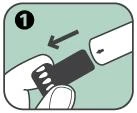
- Remove the black needle shield by pulling firmly in the direction indicated by the arrow. This also removes the grey needle protector.
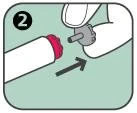
- Remove the grey safety cap from the red activation button by pulling as indicated by the arrow.
- Place the open end (the needle end) of Chenpen against the outer thigh. If necessary, Chenpen can be used through light clothing, such as denim, cotton, or polyester.
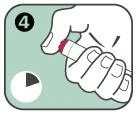
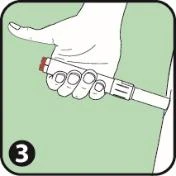
- Press the red activation button firmly until it clicks. Hold the Chenpen Auto-Injector against the outer thigh for 10 seconds. Remove Chenpen slowly from the thigh. Gently massage the injection site.
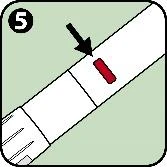
- The injection indicator will have turned red. This shows that the injection has been completed. If the injection indicator is not red, repeat the injection with a new Chenpen.
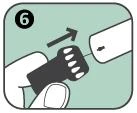
- After injection, the needle will be exposed. To cover it, snap the wide end of the black needle shield back into place over the open end (the needle end) of the Chenpen Auto-Injector (as indicated by the arrow).
Hand the used Chenpen Auto-Injector to hospital staff or your pharmacist for proper disposal.
If you use more Chenpen 150 micrograms than you should
- If you inject too much adrenaline or accidentally inject the medicine into a blood vessel or a finger,
- seek immediate medical assistance at the nearest hospital.
- If you have further questions about the use of this product, consult your doctor or pharmacist.
4. Possible side effects
Like all medicines, this medicine can cause side effects, although not everyone gets them.
-
Chenpen 150 micrograms contains metabisulphite (E223), which may cause allergic-type reactions and breathing difficulties, especially in individuals with a history of asthma. Seek immediate medical assistance if you experience these side effects.
-
Frequent side effects of adrenaline include a sensation of rapid heartbeat (palpitations), fast or irregular heartbeat, sweating, nausea, vomiting, breathing difficulties,
dizziness, weakness, pale skin (pallor), tremor, headache, apprehension, nervousness, anxiety and coldness in the extremities. -
Other less common side effects include hallucinations, fainting, dilated pupils, difficulty urinating, muscle twitching, increased blood pressure and blood abnormalities, such as elevated blood sugar levels, low potassium levels and increased acid content.
-
Occasionally, at high doses or in susceptible patients, a sudden increase in blood pressure may occur, which could lead to bleeding in the brain, irregular heartbeat, heart attack and reduced blood flow to the skin, mucous membranes and kidneys.
Reporting of side effects
If you experience any side effect, including those not listed in this leaflet, talk to your doctor or pharmacist. You can also report side effects directly via the national reporting system at: www.aifa.gov.it/content/segnalazioni-reazioni-avverse.
By reporting side effects, you can help provide more information on the safety of this medicine.
5. How to store Chenpen 150 micrograms
Keep this medicine out of the sight and reach of children.
Do not use this medicine after the expiry date which is stated on the packaging and on the auto-injector after
exp. The expiry date refers to the last day of that month.
Do not store above 25°C.
Do not use this medicine if the solution appears cloudy, discoloured or contains particles. See the “Instructions
for use” for guidance on checks to be performed on this medicine.
Keep the auto-injector in the original packaging to protect it from light.
Do not dispose of any medicine via wastewater or household waste. Ask your pharmacist how to dispose of
medicines no longer in use. This will help protect the environment.
6. Package contents and other information
What Chenpen 150 micrograms contains
- The active substance is 150 micrograms of adrenaline (epinephrine) in 0.3 ml.
- The other components are: sodium metabisulfite (E223), sodium chloride, hydrochloric acid, water for injections.
Description of the appearance of Chenpen 150 micrograms and package contents
Chenpen consists of a pre-filled syringe* containing an adrenaline solution for injection, housed in an auto-injection device (Auto-Injector).
Chenpen is supplied in packs containing 1 or 2 auto-injectors, placed in a thermoformed protective tray inside a cardboard carton.
Not all pack sizes may be marketed.
*Length of exposed needle portion: 10 mm ± 1.5 mm
Marketing Authorization Holder and Manufacturer
Marketing Authorization Holder:
Bioprojet Pharma
9, rue Rameau
75002 Paris
France
Manufacturer:
Owen Mumford Limited
Primsdown Industrial Estate,
Worcester Road, Chipping Norton,
Oxfordshire OX7 5XP,
UK.
LYOFAL – Salon de Provence, ZA La Gandonne,
452 rue du Rémoulaire, Salon de Provence,
13300 France
Sales Licensee:
Bioprojet Italia S.r.l.
Via G. Battista Pirelli, 11 – Milan
This medicinal product is authorized in the European Economic Area (EEA) member states under the following names:
Anapen Junior: Austria, Cyprus, Czech Republic, Denmark, France, Germany, Greece, Hungary, Iceland, Ireland, Luxembourg, Malta, Portugal, Sweden, Netherlands.
Anapen (junior): Norway
Anapen: Finland, Luxembourg, Spain
Chenpen: Belgium, Italy
Anapen/Chenpen is a registered trademark
Package leaflet: Information for the user
Chenpen 300 micrograms in 0.3 ml solution for injection in a pre-filled syringe
Adrenaline (epinephrine)
Please read this leaflet carefully before using this medicine as it contains important information for you.
- Keep this leaflet. You may need to read it again.
- If you have any questions, ask your doctor or pharmacist.
- This medicine has been prescribed for you only. Do not give it to others, even if their symptoms are the same as yours, as it could be dangerous.
- If you experience any side effects, including those not listed in this leaflet, contact your doctor or pharmacist. See section 4.
Contents of this leaflet
- What Chenpen 300 micrograms is and what it is used for
- What you need to know before using Chenpen 300 micrograms
- How to use Chenpen 300 micrograms
- Possible side effects
- How to store Chenpen 300 micrograms
- Contents of the pack and other information
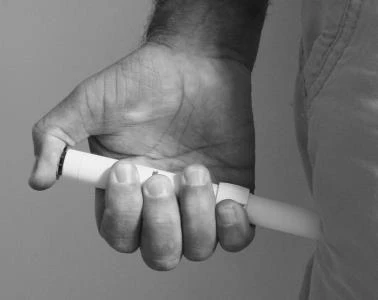
1. What Chenpen 300 micrograms is and what it is used for
- Chenpen 300 micrograms consists of a pre-filled syringe containing adrenaline, contained in an automatic injection device (Auto-Injector). This device delivers a single dose of adrenaline into the muscle.
- This medicine is for emergency use only, and after using it, you must immediately seek medical assistance.
- Adrenaline is a hormone naturally released in response to stress. In acute allergic reactions, it improves blood pressure, heart function, and breathing, and reduces swelling. Adrenaline is also known as epinephrine.
- Chenpen 300 micrograms is used for the emergency treatment of severe allergic reactions or anaphylaxis caused by peanuts or other foods, medicines, insect bites or stings, and other allergens, as well as by exercise or unknown causes.
2. What you need to know before using Chenpen 300 micrograms
Do not use Chenpen 300 micrograms
There is no known reason not to use Chenpen 300 micrograms in case of an allergic emergency.
Warnings and precautions
Talk to your doctor or pharmacist before using Chenpen 300 micrograms.
- Your doctor should have explained to you when and how to correctly use the Chenpen Auto-Injector.
- Inform your doctor if you have a heart condition, including angina, hyperthyroidism, high blood pressure, low potassium levels, or elevated calcium levels in the blood, circulatory disorders, pheochromocytoma (a type of tumor of the adrenal gland), increased pressure within the eye (glaucoma), kidney or prostate disease, diabetes, or any other medical condition.
- If you have asthma, you may be at increased risk of developing a severe allergic reaction.
- Anyone who has experienced an episode of anaphylaxis should consult a doctor to undergo tests to identify the substances to which they are allergic, so they can be strictly avoided in the future. It is important to be aware that an allergy to one substance may lead to allergy to other related substances.
- In case of food allergies, it is essential to check the ingredients of everything you ingest (including medications), as even small amounts may trigger severe reactions.
- Repeated local injections may cause skin damage at the injection site. Accidental injection into a blood vessel may cause a sudden increase in blood pressure. Accidental injection into the hand or foot may result in loss of blood flow to the affected area. Seek immediate medical assistance at the nearest hospital.
Other medicines and Chenpen 300 micrograms
Inform your doctor or pharmacist if you are taking, have recently taken, or might take any other medicines, especially:
- Medicines for heart conditions, such as digitalis (digoxin), beta-blockers, quinidine.
- Medicines for depression, such as tricyclic antidepressants, monoamine oxidase inhibitors (MAOIs), serotonin and noradrenaline reuptake inhibitors (SNRIs).
- Medicines for diabetes; your doctor may need to adjust their dosage after using Chenpen 300 micrograms.
- Medicines for Parkinson’s disease.
- Medicines for thyroid disorders.
- Other medicines: antihistamines, such as diphenhydramine or chlorpheniramine, theophylline, ipratropium, and oxitropium (used to treat respiratory diseases, including asthma), oxytocin (used during labor), inhaled anesthetics, alpha-blockers (used to treat high blood pressure), sympathomimetics (used to treat asthma, other respiratory diseases, and nasal congestion).
Chenpen 300 micrograms and alcohol
Alcohol taken concomitantly with this medicine may have negative effects, as it can enhance its effects.
Pregnancy and breastfeeding
If you are pregnant, suspect you may be pregnant, planning a pregnancy, or are breastfeeding, consult your doctor or pharmacist before taking this medicine.
- It is unclear whether adrenaline administration during pregnancy poses a risk to the fetus. However, this should not prevent you from using Chenpen 300 micrograms in an emergency during pregnancy, as your life could be at risk. Discuss this with your doctor before an emergency occurs.
- Adrenaline is not expected to have any effect on the breastfed infant.
Driving and using machinery
Do not drive or operate machinery after injecting this medicine until symptoms related to anaphylactic shock have resolved.
Chenpen 300 micrograms contains sodium metabisulfite (E223)
Sodium metabisulfite may cause allergic-type reactions and breathing difficulties, particularly in individuals with a history of asthma.
Inform your doctor or pharmacist if you know you are allergic to sodium metabisulfite.
Chenpen 300 micrograms contains a small amount of sodium chloride (salt)
This medicine contains less than 1 mmol of sodium (23 mg) per dose, i.e., it is practically 'sodium-free'.
For athletes: Using this medicine without therapeutic need constitutes doping and may result in a positive anti-doping test.
3. How to use Chenpen 300 micrograms
Always carry 2 auto-injectors with you, as the first administration might fail or may not be sufficient.
- Always use this medicine exactly as directed by your doctor.
- If in doubt, consult your doctor or pharmacist.
- Inject it only into the thigh muscles.
- For single use only. Please ensure safe disposal of the product immediately after use. Chenpen 300 micrograms delivers a single dose of 0.3 ml solution, equivalent to 0.3 mg (300 micrograms) of adrenaline. After use, a volume of 0.77 ml remains in the auto-injector but cannot be reused.
Anaphylactic reaction usually begins within minutes of exposure to the allergen, and symptoms include:
- Skin itching, a red, hives-like skin rash (urticaria), flushing, and swelling of the eyes, lips, or tongue.
- Difficulty breathing due to throat swelling. Wheezing, shortness of breath, and coughing may be due to bronchoconstriction.
- Other symptoms of anaphylaxis include headache, vomiting, and diarrhea.
- Collapse and loss of consciousness due to sudden drop in blood pressure.
If you experience these signs and symptoms, use the Chenpen Auto-injector immediately. You must inject this medicine only into the outer thigh muscle, not into the buttock.
Sometimes a single dose of adrenaline may not be sufficient to counteract the effects of a severe allergic reaction. For this reason, your doctor may prescribe more than one Chenpen 300 micrograms auto-injector. If, within 5–15 minutes after the first injection, your symptoms do not improve or worsen, you or the people around you should administer a second injection. For this reason, you should always carry more than one Chenpen 300 micrograms auto-injector with you.
Use in adults
The recommended dose is 300 micrograms for individuals weighing less than 60 kg.
The recommended dose is 300 to 500 micrograms for individuals weighing more than 60 kg, based on clinical assessment.
Adults weighing over 60 kg may require more than one injection to counteract the effects of an allergic reaction, depending on clinical evaluation.
Use in children and adolescents
- The appropriate dose is 150 micrograms or 300 micrograms.
- This depends on the child's body weight and is at the discretion of the physician.
- An auto-injector delivering 150 micrograms of adrenaline is also available. A dose lower than 150 micrograms cannot be administered with sufficient accuracy in children weighing less than 15 kg; therefore, use is not recommended unless the child is in life-threatening danger and administration occurs under medical supervision.
Children between 15 kg and 30 kg body weight
The usual dose is 150 micrograms.
Children over 30 kg body weight
The usual dose is 300 micrograms.
Chenpen 300 micrograms is designed as an emergency treatment. Immediately after using Chenpen 300 micrograms, you must always seek medical assistance. Call 112 or 118, request an ambulance, and state “anaphylaxis,” even if symptoms appear to be improving. You will need to go to hospital for monitoring and further treatment if necessary. This is because the reaction could recur at a later time.
While waiting for the ambulance, lie down with your legs elevated, unless this causes difficulty breathing—in which case, sit up. Ask someone to stay with you until the ambulance arrives, in case your condition worsens again.
Unconscious patients should be placed on their side in the recovery position.
Instructions for use
It is recommended that family members, caregivers, or teachers also be trained in the correct use of Chenpen 300 micrograms.
A. Parts of the Chenpen Auto-injector
Before using the Chenpen Auto-injector, the patient should become familiar with its parts. These are shown in the figure.
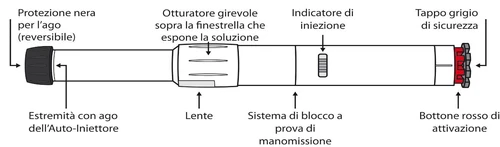
Rotatable cap of the viewing window exposing the solution: rotate the rotatable cap of the viewing window to align the lenses with the window on the auto-injector.
Viewing window exposing the solution: look through the lenses into the viewing window before injection to check that the solution is clear and ready for use.
Injection indicator: before injection, you can see a white plastic plunger through the viewing window. This indicates that the Chenpen Auto-injector has not been accidentally activated or tampered with. After injection, the indicator turns red, indicating that the Chenpen Auto-injector has been correctly activated.
Black needle shield (reversible): this protects the needle when the Chenpen Auto-injector is not in use. Remove the shield before injection. After injection, rotate the black shield and replace it over the same end of the Chenpen Auto-injector to cover the needle.
Grey safety cap: this covers the red activation button and prevents accidental pressing.
Do not remove the black needle shield or the grey safety cap until you need to use the Chenpen Auto-injector.
B. Checking the Chenpen Auto-injector
Before using the Chenpen Auto-injector, check it as follows:
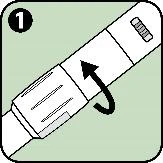
- Rotate the rotatable cap of the viewing window fully counterclockwise, as indicated by the arrow, to align the lenses with the auto-injector window.
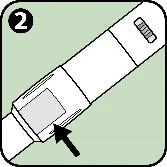
- Look through the lenses in the viewing window exposing the solution. Check that the solution is clear and colourless. If it is cloudy, discoloured, or contains particles, discard the Chenpen Auto-injector.
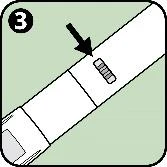
- Ensure that the injection indicator is not red. If it is red, this means the Chenpen Auto-injector has already been used and must be discarded.
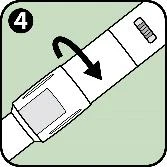
- Rotate the movable cover of the viewing window fully clockwise, as indicated by the arrow, to ensure both viewing windows are covered. Return the Chenpen Auto-injector to its case until needed.
C. Using the Chenpen Auto-injector
If the black needle shield has been removed, do not place your thumb, fingers, or hand over the exposed end (the needle end) of the Chenpen Auto-injector.
To use the Chenpen Auto-injector, follow these instructions:
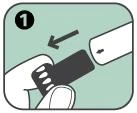
- Remove the black needle shield by pulling firmly in the direction indicated by the arrow. This also removes the grey needle protector.
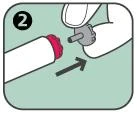
- Remove the grey safety cap from the red activation button by pulling as indicated by the arrow.
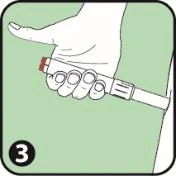
- Place the open end (the needle end) of Chenpen against the outer thigh. If necessary, Chenpen can be used through light clothing such as denim, cotton, or polyester.
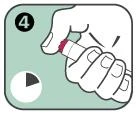
- Press the red activation button firmly until it clicks. Hold the Chenpen Auto-injector against the outer thigh for 10 seconds. Slowly remove Chenpen from the thigh. Gently massage the injection site.
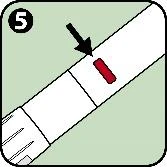
- The injection indicator will have turned red. This shows that the injection has been completed. If the injection indicator is not red, repeat the injection using a new Chenpen.
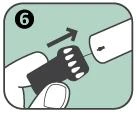
- After injection, the needle will be exposed. To cover it, snap the wide end of the black needle shield back into place over the open end (the needle end) of the Chenpen Auto-injector (as indicated by the arrow).
Hand the used Chenpen Auto-injector to hospital staff or a pharmacist for proper disposal.
If you use more Chenpen 300 micrograms than you should
- If you inject too much adrenaline or accidentally inject the medicine into a blood vessel or finger, seek immediate medical help at the nearest hospital.
- If you have further questions about the use of this product, consult your doctor or pharmacist.
4. Possible side effects
Like all medicines, this medicine can cause side effects, although not everyone gets them.
- Chenpen 300 micrograms contains metabisulphite (E223), which may cause allergic-type reactions and breathing difficulties, especially in people with a history of asthma. Seek immediate medical assistance if you experience these side effects.
- Frequent side effects of adrenaline include a sensation of pounding heartbeats (palpitations), rapid or irregular heartbeat, sweating, nausea, vomiting, breathing difficulties, dizziness, weakness, pale skin (pallor), tremor, headache, apprehension, restlessness, anxiety, and coldness in the extremities.
- Other less common side effects include hallucinations, fainting, dilated pupils, difficulty urinating, muscle tremors, increased blood pressure, and blood abnormalities such as elevated blood sugar levels, low potassium levels, and increased acid content in the blood.
- Occasionally, at high doses or in susceptible patients, a sudden increase in blood pressure may occur, which could lead to bleeding in the brain, irregular heartbeat, heart attack, and reduced blood flow to the skin, mucous membranes, and kidneys.
Reporting of side effects
If you experience any side effect, including those not listed in this leaflet, talk to your doctor or pharmacist. You can also report side effects directly via the national reporting system at: www.aifa.gov.it/content/segnalazioni-reazioni-avverse.
By reporting side effects, you can help provide more information on the safety of this medicine.
5. How to store Chenpen 300 micrograms
Keep this medicine out of the sight and reach of children.
Do not use this medicine after the expiry date stated on the packaging and on the auto-injector,
after exp. The expiry date refers to the last day of that month.
Do not store above 25°C.
Do not use this medicine if the solution appears cloudy, discoloured or contains particles. See the “Instructions
for use” for guidance on checks to be performed on this medicine.
Keep the auto-injector in the original packaging to protect it from light.
Do not dispose of any medicine via wastewater or household waste. Ask your pharmacist how to dispose of
medicines you no longer use. This will help protect the environment.
6. Package contents and other information
What Chenpen 300 micrograms contains
- The active substance is 300 micrograms of adrenaline (epinephrine) in 0.3 ml.
- The other components are: sodium metabisulfite (E223), sodium chloride, hydrochloric acid, water for injections.
Description of the appearance of Chenpen 300 micrograms and package contents
Chenpen consists of a pre-filled syringe* containing an adrenaline solution for injection, housed in an auto-injection device (Auto-Injector).
Chenpen is supplied in packages containing 1 or 2 auto-injectors placed in a protective thermoformed carrier, which is then placed in a cardboard carton. Not all pack sizes may be marketed.
*Length of exposed needle portion: 10 mm ± 1.5 mm
Marketing Authorization Holder and Manufacturer
Marketing Authorization Holder:
Bioprojet Pharma
9, rue Rameau
75002 Paris
France
Manufacturer:
Owen Mumford Limited
Primsdown Industrial Estate, Worcester Road, Chipping Norton, Oxfordshire OX7 5XP, UK.
LYOFAL – Salon de Provence, ZA La Gandonne,
452 rue du Rémoulaire, Salon de Provence,
13300 France
Concessionaire for sale:
Bioprojet Italia S.r.l.
Via G. Battista Pirelli, 11 – Milan
This medicinal product is authorized in the EEA Member States under the following names:
Anapen: Austria, Cyprus, Czech Republic, Denmark, Finland, France, Germany, Greece, Hungary, Iceland, Ireland, Luxembourg, Malta, Norway, Portugal, Slovenia, Spain, Sweden, Netherlands.
Chenpen: Belgium, Italy
Anapen/Chenpen is a registered trademark