Certican
Italy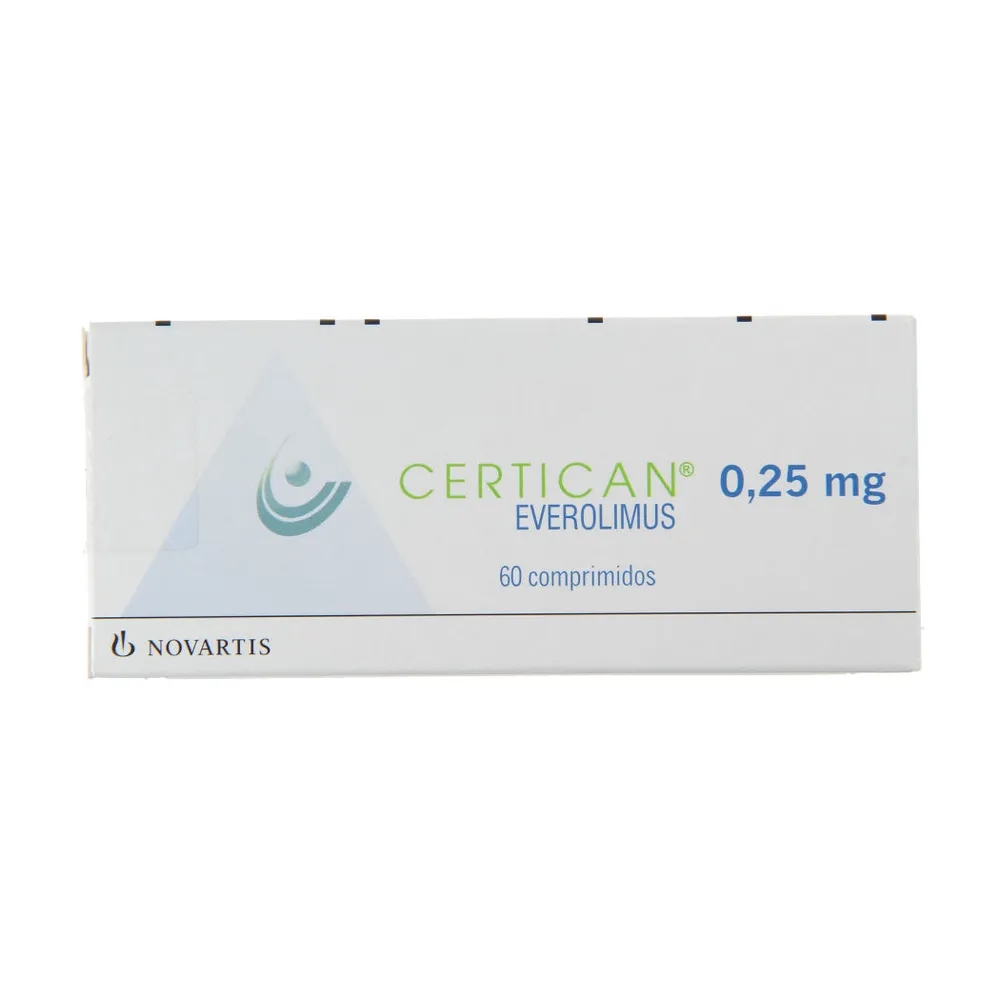
Table of Contents
- Patient Information Leaflet: Information for the patient
- Certican 0.25 mg tablets, 0.5 mg tablets, 0.75 mg tablets, 1.0 mg tablets
- 1. What Certican is and what it is used for
- 2. What you should know before taking Certican
- 3. How to take Certican
- 4. Possible side effects
- 5. How to store Certican
- 6. Package contents and other information
- Package leaflet: Information for the patient
- Certican 0.1 mg dispersible tablets, 0.25 mg dispersible tablets
- 1. What Certican is and what it is used for
- 2. What you should know before taking Certican
- 3. How to take Certican
- 4. Possible side effects
- 5. How to store Certican
- 6. Package contents and other information
Patient Information Leaflet: Information for the patient
Certican 0.25 mg tablets, 0.5 mg tablets, 0.75 mg tablets, 1.0 mg tablets
everolimus
Please read this leaflet carefully before taking this medicine because it contains important information for you.
- Keep this leaflet. You may need to read it again.
- If you have any questions, ask your doctor or pharmacist.
- This medicine has been prescribed for you only. Do not give it to other people, even if their symptoms are the same as yours, as it may be harmful.
- If you experience any side effects, including those not listed in this leaflet, contact your doctor or pharmacist. See section 4.
Contents of this leaflet:
- What Certican is and what it is used for
- What you need to know before taking Certican
- How to take Certican
- Possible side effects
- How to store Certican
- Contents of the pack and other information
1. What Certican is and what it is used for
The active substance of Certican is everolimus.
Everolimus belongs to a group of medicines known as immunosuppressants. It is used in adults to
prevent the immune system from rejecting a transplanted kidney, heart, or liver.
Certican is used in combination with other medicines such as cyclosporine for kidney and heart transplantation,
tacrolimus for liver transplantation, and corticosteroids.
2. What you should know before taking Certican
Do not take Certican
- if you are allergic (hypersensitive) to everolimus or to any of the other ingredients of this medicine (listed in section 6).
- if you are allergic (hypersensitive) to sirolimus. If this applies to you, inform your doctor and do not take Certican.
Warnings and precautions
Talk to your doctor before taking Certican:
-
Medicines that suppress the immune system, such as Certican, reduce your body's ability to fight infections. You should consult your doctor or transplant center if you have a fever or feel generally unwell, or if you develop localized symptoms such as cough or a burning sensation when urinating that are severe or persist for several days. Contact your doctor or transplant center immediately if you feel confused, experience speech difficulties, memory loss, headache, vision problems, or seizures, as these may be symptoms of a rare but serious condition known as progressive multifocal leukoencephalopathy (PML).
-
If you have recently undergone major surgery or have wounds that have not yet healed following surgery, Certican may increase the risk of wound healing complications.
-
Medicines that suppress the immune system, such as Certican, increase the risk of developing malignant tumors, particularly of the skin and lymphatic system. Therefore, you should limit exposure to sunlight and UV light by wearing appropriate protective clothing and frequently applying sunscreen with a high sun protection factor.
-
Your doctor will monitor your kidney function, blood lipid and blood sugar levels, as well as the amount of protein in your urine.
-
If you have liver problems or have had a disease that may have affected your liver, inform your doctor. Your doctor may need to adjust your Certican dose.
-
If you develop respiratory symptoms (e.g., cough, difficulty breathing, wheezing), inform your doctor. Your doctor may decide whether and how to continue Certican, and/or whether additional medicines are needed to manage this problem.
-
Certican may reduce sperm production in men, thereby decreasing the ability to father children. This effect is generally reversible. Male patients who wish to father children should discuss their treatment with their doctor.
Elderly (65 years or older)
Experience with the use of Certican in elderly patients is limited.
Children and adolescents
Certican must not be used in children and adolescents who have undergone kidney, heart, or liver transplantation.
Other medicines and Certican
Inform your doctor or pharmacist if you are taking, have recently taken, or might take any other medicines, including those not requiring a prescription.
Some medicines may interfere with the action of Certican. It is very important that you inform your doctor if you are taking any of the following medicines:
- immunosuppressive medicines other than cyclosporine, tacrolimus, or corticosteroids.
- antibiotics, such as rifampicin, rifabutin, clarithromycin, erythromycin, or telithromycin.
- antiviral medicines, such as ritonavir, efavirenz, nevirapine, nelfinavir, indinavir, or amprenavir, used to treat HIV infection.
- medicines used to treat fungal infections, such as voriconazole, fluconazole, ketoconazole, or itraconazole.
- medicines used to treat epilepsy, such as phenytoin, phenobarbital, or carbamazepine.
- medicines used to treat high blood pressure or heart conditions, such as verapamil, nicardipine, or diltiazem.
- dronedarone, a medicine used to help regulate heart rhythm.
- medicines used to lower cholesterol in the blood, such as atorvastatin or pravastatin, or fibrates.
- medicines used to treat acute seizures or as sedatives before or during surgery or other medical procedures, such as midazolam.
- cannabidiol (uses include, among others, treatment of seizures).
- octreotide, a medicine used to treat acromegaly, a rare hormonal disorder typically occurring in middle-aged adults.
- imatinib, a medicine used to inhibit the growth of abnormal cells.
- St. John’s wort (Hypericum perforatum), a herbal medicine used to treat depression.
- if you need vaccination, discuss this immediately with your doctor.
Certican with food and drink
Food can affect the amount of Certican absorbed. To maintain consistent levels in the body, Certican must always be taken under the same conditions—either always with food or always on an empty stomach.
Do not take Certican with grapefruit juice or grapefruit. These interfere with the action of Certican.
Pregnancy, breastfeeding, and fertility
Do not take Certican during pregnancy unless your doctor considers it absolutely necessary. If you are a woman of childbearing potential, you must use an effective method of contraception during treatment with Certican and for 8 weeks after stopping treatment.
If you suspect you are pregnant, consult your doctor or pharmacist before taking Certican.
You must not breastfeed while taking Certican. It is not known whether Certican passes into breast milk.
Certican may affect male fertility.
Driving and using machines
Certican does not affect or affects negligibly the ability to drive and use machines.
Certican contains lactose
Certican tablets contain lactose. If your doctor has diagnosed you with an intolerance to certain sugars, contact them before taking this medicine.
3. How to take Certican
Your doctor will decide exactly what dose of Certican you should take and when to take it.
Always take Certican exactly as instructed by your doctor or pharmacist. If you have any doubts, consult your doctor or pharmacist.
How much Certican to take
- The usual starting dose is 1.5 mg/day in kidney and heart transplantation, and 2.0 mg/day in liver transplantation.
- It is usually divided into two doses, one in the morning and one in the evening.
How to take Certican
Certican is for oral use only.
Do not crush the tablets.
Swallow the tablets whole with a glass of water.
You should take the first dose of this medicine as soon as possible after kidney and heart transplantation, and approximately four weeks after liver transplantation.
You must take the tablets together with cyclosporine microemulsion in case of kidney and heart transplantation, and with tacrolimus in case of liver transplantation.
Do not switch from Certican tablets to Certican dispersible tablets without first talking to your doctor.
Monitoring during treatment with Certican
Your doctor may adjust the dose depending on the amount of Certican in your blood and on your response to treatment. Your doctor will regularly perform blood tests to measure the levels of everolimus and cyclosporine in your blood. Your doctor will also closely monitor your kidney function, blood lipids, blood sugar levels, as well as the amount of protein in your urine.
If you take more Certican than you should
If you have taken more medicine than you should have, contact your doctor immediately.
If you forget to take Certican
If you forget to take a dose of Certican, take it as soon as you remember, and then take the next dose at the usual time. Ask your doctor for advice. Do not take a double dose to make up for a forgotten dose.
If you stop taking Certican
Do not stop taking the tablets unless your doctor tells you to. You will need to take this medicine for as long as necessary to prevent rejection of the transplanted kidney, heart or liver. If you stop taking Certican, you will have a higher risk of rejection of the transplanted organ.
If you have any questions about the use of this medicine, ask your doctor or pharmacist.
4. Possible side effects
Like all medicines, this medicine can cause side effects, although not everybody gets them.
Since Certican is taken together with other medicines, it is not always clear whether side effects are caused by Certican or by the other medicines.
The following side effects require immediate medical attention:
- infections,
- lung inflammation,
- allergic reactions,
- fever and skin bruising appearing as red spots, with or without unexplained tiredness, confusion, yellowing of the skin or eyes, reduced urine output (thrombotic microangiopathy, haemolytic uraemic syndrome).
If you develop any of the following symptoms:
- persistent or worsening respiratory/lung symptoms such as cough, shortness of breath, or wheezing,
- fever, general feeling of being unwell, chest or abdominal pain, chills, burning sensation when urinating,
- swelling of the face, lips, tongue, or throat,
- difficulty swallowing,
- spontaneous bruising or bleeding without an obvious reason,
- skin rash,
- pain, unusual warmth, swelling, or discharge from the surgical wound,
you must stop taking Certican and contact your doctor immediately.
Other reported side effects include:
Very common (may affect more than 1 in 10 people)
- infections (viral, bacterial, and fungal infections),
- lower respiratory tract infections, such as lung infections including pneumonia,
- upper respiratory tract infections, such as pharyngitis and common cold,
- urinary tract infections,
- anaemia (reduced number of red blood cells),
- low white blood cell counts leading to increased risk of infection, reduced platelet count which may lead to bleeding and/or bruising,
- elevated levels of fats (lipids, cholesterol, and triglycerides) in the blood,
- onset of diabetes (high blood sugar levels),
- reduced potassium levels in the blood,
- anxiety,
- difficulty falling asleep (insomnia),
- headache,
- fluid accumulation around the heart, which, if severe, may reduce the heart's ability to pump blood effectively,
- high blood pressure,
- venous thrombosis (blockage of a large vein due to a blood clot),
- fluid accumulation in the lungs and the chest cavity, which, if severe, may make breathing difficult,
- cough,
- shortness of breath,
- diarrhoea,
- feeling unwell (nausea),
- vomiting,
- stomach ache (abdominal discomfort),
- generalised pain,
- fever,
- fluid retention in tissues,
- impaired wound healing.
Common (may affect up to 1 in 10 people)
- blood poisoning (septicaemia),
- wound infection,
- benign and malignant tumours,
- skin cancer,
- kidney damage with low platelets and low red blood cells, with or without skin rash (thrombotic thrombocytopenic purpura/haemolytic uraemic syndrome),
- breakdown of red blood cells,
- low levels of red blood cells and platelets,
- rapid heartbeat,
- nosebleeds,
- reduced number of red blood cells (symptoms may include weakness, bruising, and frequent infections),
- blood clots in the kidney's blood vessels, which may lead to transplant rejection, mostly within the first 30 days after kidney transplantation,
- bleeding disorders,
- cysts containing lymphatic fluid,
- mouth or throat pain,
- inflammation of the pancreas,
- mouth ulcers,
- acne,
- hives (urticaria) and other allergic symptoms such as swelling of the face or throat (angioedema),
- skin rash,
- joint pain,
- muscle pain,
- protein in the urine,
- kidney disorders,
- impotence,
- surgical site hernia,
- abnormal liver function test results,
- menstrual disorders (including absent periods and heavy menstrual bleeding).
Uncommon (may affect up to 1 in 100 people)
- cancer of the lymphatic tissue (lymphoma/post-transplant lymphoproliferative disorder),
- low testosterone levels,
- lung inflammation,
- liver inflammation,
- jaundice,
- ovarian cysts.
Other side effects
Other side effects have occurred in a small number of people, but their exact frequency is unknown:
- abnormal accumulation of proteins in the lungs (symptoms may include persistent dry cough, fatigue, and difficulty breathing),
- inflammation of blood vessels,
- swelling, heaviness, tightness, pain, or limited mobility in certain body parts (this could occur in any part of the body and may indicate abnormal fluid accumulation in soft tissues due to blockage in the lymphatic system, also known as lymphoedema),
- severe skin rash with swelling of the skin,
- low iron levels in the blood.
If you have any doubts about any of these side effects, consult your doctor.
There may also be side effects you are not aware of, such as abnormal laboratory test results, including kidney function tests. This means your doctor will arrange blood tests to monitor any changes in kidney function during treatment with Certican.
Reporting of side effects
If you experience any side effects, including those not listed in this leaflet, talk to your doctor or pharmacist. You can also report side effects directly via the national reporting system at https://www.aifa.gov.it/content/segnalazioni-reazioni-avverse. By reporting side effects, you can help provide more information on the safety of this medicine.
5. How to store Certican
- Keep Certican out of the sight and reach of children.
- Do not use Certican after the expiry date stated on the carton after "Exp". The expiry date refers to the last day of that month.
- This medicinal product does not require any special storage temperature.
- Store the blisters in the original packaging to protect the medicine from light and moisture.
- Do not use this medicine if you notice that the packaging is damaged or shows signs of tampering.
- Do not dispose of any medicine via wastewater or household waste. Ask your pharmacist how to dispose of medicines no longer required. This will help protect the environment.
6. Package contents and other information
What Certican contains
- The active substance is everolimus. Each tablet contains 0.25, 0.5, 0.75 or 1.0 mg of everolimus.
- The other components are:
- Certican 0.25 mg tablets: butylated hydroxytoluene (E321), magnesium stearate, monohydrate lactose (2 mg), hypromellose, crospovidone and anhydrous lactose (51 mg).
- Certican 0.5 mg tablets: butylated hydroxytoluene (E321), magnesium stearate, monohydrate lactose (4 mg), hypromellose, crospovidone and anhydrous lactose (74 mg).
- Certican 0.75 mg tablets: butylated hydroxytoluene (E321), magnesium stearate, monohydrate lactose (7 mg), hypromellose, crospovidone and anhydrous lactose (112 mg).
- Certican 1.0 mg tablets: butylated hydroxytoluene (E321), magnesium stearate, monohydrate lactose (9 mg), hypromellose, crospovidone and anhydrous lactose (149 mg).
Description of the appearance of Certican and contents of the pack
- Certican 0.25 mg tablets are white to yellowish, scored, round, flat tablets, 6 mm in diameter, with bevelled edges, marked with “C” on one side and “NVR” on the other.
- Certican 0.5 mg tablets are white to yellowish, scored, round, flat tablets, 7 mm in diameter, with bevelled edges, marked with “CH” on one side and “NVR” on the other.
- Certican 0.75 mg tablets are white to yellowish, scored, round, flat tablets, 8.5 mm in diameter, with bevelled edges, marked with “CL” on one side and “NVR” on the other.
- Certican 1.0 mg tablets are white to yellowish, scored, round, flat tablets, 9 mm in diameter, with bevelled edges, marked with “CU” on one side and “NVR” on the other.
Certican tablets are supplied in packs containing 50, 60, 100 or 250 tablets.
Not all pack sizes may be marketed. Certican is also available as dispersible tablets.
Marketing Authorization Holder and Manufacturer
Novartis Farma S.p.A.
Viale Luigi Sturzo 43
20154 Milano MI
Italy
Manufacturer
Novartis Farmacéutica S.A.
Gran Via de les Corts Catalanes, 764
08013 Barcelona
Spain
Novartis Farma S.p.A.
Via Provinciale Schito 131
Torre Annunziata (Na)
Italy
Novartis Farma S.p.A.
Viale Luigi Sturzo 43
20154 Milano MI
Italy
Sandoz S.R.L.
Livezeni Street Nr. 7A
Targu Mures, 540472
Romania
This medicinal product is authorized in the Member States of the European Economic Area and in the United Kingdom (Northern Ireland) under the following names:
| Member State Name | Medicinal Product Name |
| Austria, Belgium, Bulgaria, Croatia, Cyprus, Czech Republic, Denmark, Estonia, Finland, France, Germany, Greece, Hungary, Iceland, Ireland, Italy, Latvia, Lithuania, Luxembourg, Malta, Netherlands, Norway, Poland, Portugal, Romania, Slovakia, Slovenia, Spain, Sweden, United Kingdom (Northern Ireland). | Certican |
Other sources of information
More detailed information on this medicinal product is available on the website of the Italian Medicines Agency (http://www.aifa.gov.it/)
Package leaflet: Information for the patient
Certican 0.1 mg dispersible tablets, 0.25 mg dispersible tablets
everolimus
Please read this leaflet carefully before taking this medicine because it contains important information for you.
- Keep this leaflet. You may need to read it again.
- If you have any questions, ask your doctor or pharmacist.
- This medicine has been prescribed for you only. Do not give it to others, even if their symptoms are the same as yours, as it may be harmful.
- If you experience any adverse reaction, including those not listed in this leaflet, contact your doctor or pharmacist. See section 4.
Contents of this leaflet:
- What Certican is and what it is used for
- What you need to know before taking Certican
- How to take Certican
- Possible side effects
- How to store Certican
- Contents of the pack and other information
1. What Certican is and what it is used for
The active substance of Certican is everolimus.
Everolimus belongs to a group of medicines known as immunosuppressants. It is used in adults to
prevent the immune system from rejecting a transplanted kidney or heart.
Certican is used in combination with other medicines such as cyclosporine for kidney and heart transplantation,
tacrolimus for liver transplantation, and corticosteroids.
2. What you should know before taking Certican
Do not take Certican
- if you are allergic (hypersensitive) to everolimus or to any of the other ingredients of this medicine (listed in section 6).
- if you are allergic (hypersensitive) to sirolimus.
If any of the above applies to you, inform your doctor and do not take Certican.
Warnings and precautions
Talk to your doctor before taking Certican:
- Medicines that suppress the immune system, such as Certican, reduce your body’s ability to fight infections. You should consult your doctor or transplant center if you have a fever or do not feel generally well, or if you develop localized symptoms such as cough or a burning sensation when urinating, especially if they are severe or persist for several days. Contact your doctor or transplant center immediately if you feel confused, experience speech disturbances, memory loss, headache, vision problems, or seizures, as these may be symptoms of a rare but serious condition known as progressive multifocal leukoencephalopathy (PML).
- If you have recently undergone major surgery or have unhealed surgical wounds, Certican may increase the risk of wound healing complications.
- Medicines that suppress the immune system, such as Certican, increase the risk of developing malignant tumors, particularly of the skin and lymphatic system. Therefore, you should limit exposure to sunlight and UV light by wearing appropriate protective clothing and frequently applying sunscreen with a high sun protection factor.
- Your doctor will monitor your kidney function, blood lipid and blood sugar levels, as well as the amount of protein in your urine.
- If you have liver problems or have had a disease that may have affected your liver, inform your doctor. Your doctor may need to adjust your Certican dose.
- If you develop respiratory symptoms (e.g., cough, difficulty breathing, or wheezing), inform your doctor. Your doctor may decide whether and how to continue Certican, and/or whether additional medicines are needed to manage this issue.
- Certican may reduce sperm production in men, thereby decreasing the ability to father children. This effect is generally reversible. Male patients who wish to father children should discuss their treatment with their doctor.
Elderly (aged 65 years or older)
Experience with the use of Certican in elderly patients is limited.
Children and adolescents
Certican must not be used in children and adolescents who have undergone kidney, heart, or liver transplantation.
Other medicines and Certican
Inform your doctor or pharmacist if you are taking, have recently taken, or might take any other medicines, including those not requiring a prescription.
Some medicines may interfere with the action of Certican. It is very important that you inform your doctor if you are taking any of the following medicines:
- immunosuppressive medicines, excluding cyclosporine, tacrolimus, or corticosteroids.
- antibiotics, such as rifampicin, rifabutin, clarithromycin, erythromycin, or telithromycin.
- antiviral medicines, such as ritonavir, efavirenz, nevirapine, nelfinavir, indinavir, or amprenavir, used to treat HIV infection.
- medicines used to treat fungal infections, such as voriconazole, fluconazole, ketoconazole, or itraconazole.
- medicines used to treat epilepsy, such as phenytoin, phenobarbital, or carbamazepine.
- medicines used to treat high blood pressure or heart conditions, such as verapamil, nicardipine, or diltiazem.
- dronedarone, a medicine used to help regulate heartbeat.
- medicines used to lower blood cholesterol, such as atorvastatin or pravastatin, or fibrates.
- medicines used to treat acute seizures or as sedatives before or during surgery or other medical procedures, such as midazolam.
- cannabidiol (used, among other things, for the treatment of seizures).
- octreotide, a medicine used to treat acromegaly, a rare hormonal disorder usually occurring in middle-aged adults.
- imatinib, a medicine used to inhibit the growth of abnormal cells.
- St. John’s wort (Hypericum perforatum), a herbal medicine used to treat depression.
- if you need vaccination, discuss this immediately with your doctor.
Certican with food and drink
Food can affect the amount of Certican absorbed. To maintain consistent levels in the body, Certican must always be taken under the same conditions—either always with food or always on an empty stomach.
Do not take Certican with grapefruit juice or grapefruit. These interfere with the action of Certican.
Pregnancy, breastfeeding, and fertility
Do not take Certican during pregnancy unless your doctor considers it absolutely necessary. If you are a woman of childbearing age, you must use an effective method of contraception during treatment with Certican and for 8 weeks after stopping treatment.
If you suspect you are pregnant, consult your doctor or pharmacist before taking Certican.
You must not breastfeed while taking Certican. It is not known whether Certican passes into breast milk.
Certican may affect male fertility.
Driving and using machines
Certican does not affect or has negligible effect on the ability to drive or operate machinery.
Certican contains lactose
Certican dispersible tablets contain lactose. If your doctor has diagnosed you with an intolerance to certain sugars, contact your doctor before taking this medicine.
3. How to take Certican
Your doctor will decide exactly what dose of Certican you should take and when you should take it.
Always take Certican exactly as instructed by your doctor or pharmacist. If you have any doubts, consult your doctor or pharmacist.
How much Certican to take
- The usual starting dose is 1.5 mg/day in kidney and heart transplantation and 2.0 mg/day in liver transplantation.
- It is usually divided into two doses, one in the morning and one in the evening.
How to take Certican
Certican is for oral use only.
You should take the first dose of this medicine as soon as possible after kidney and heart transplantation and approximately four weeks after liver transplantation.
You must take the tablets together with cyclosporine microemulsion in case of kidney and heart transplantation and with tacrolimus in case of liver transplantation.
Do not switch from Certican dispersible tablets to Certican tablets without first discussing it with your doctor.
- Place the Certican dispersible tablets in a plastic dosing cup containing about 25 ml of water.
- The maximum amount of Certican that can be dispersed in 25 ml of water is 1.5 mg.
- Leave the dosing cup for about 2 minutes to allow the tablets to disperse, then gently shake before drinking.
- Immediately rinse the dosing cup with an additional 25 ml of water and drink the entire contents.
Monitoring during treatment with Certican
Your doctor may adjust your dose based on the amount of Certican in your blood and your response to treatment. Your doctor will regularly perform blood tests to measure the levels of everolimus and cyclosporine in your blood. Your doctor will also closely monitor your kidney function, blood lipids, blood sugar, and the amount of protein in your urine.
If you take more Certican than you should
If you have taken more medicine than you should have, contact your doctor immediately.
If you forget to take Certican
If you forget to take a dose of Certican, take it as soon as you remember, then take your next dose at the usual time. Ask your doctor for advice. Do not take a double dose to make up for a forgotten dose.
If you stop taking Certican
Do not stop taking the tablets unless instructed by your doctor. You will need to take this medicine for as long as necessary to prevent rejection of the transplanted kidney, heart, or liver. If you stop taking Certican, you will have a higher risk of rejection of the transplanted organ.
If you have any questions about the use of this medicine, consult your doctor or pharmacist.
4. Possible side effects
Like all medicines, this medicine can cause side effects, although not everyone will experience them.
Since Certican is taken together with other medicines, it is not always clear whether side effects are caused by Certican or by the other medicines.
The following side effects require immediate medical attention:
- infections,
- lung inflammation,
- allergic reactions,
- fever and bruising under the skin that may appear as red spots, with or without unexplained tiredness, confusion, yellowing of the skin or eyes, reduced urine output (thrombotic microangiopathy, haemolytic uraemic syndrome).
If you develop any of the following symptoms:
- persistent or worsening respiratory symptoms such as cough, shortness of breath or wheezing,
- fever, general feeling of illness, chest or abdominal pain, chills, burning sensation when urinating,
- swelling of the face, lips, tongue and throat,
- difficulty swallowing,
- spontaneous bruising or bleeding without an obvious reason,
- skin rash,
- pain, unusual warmth, swelling or discharge from the surgical wound,
you must stop taking Certican and contact your doctor immediately.
Other reported side effects include:
Very common (may affect more than 1 in 10 people)
- infections (viral, bacterial and fungal infections),
- lower respiratory tract infections, such as lung infections, including pneumonia,
- upper respiratory tract infections, such as pharyngitis and common cold,
- urinary tract infections,
- anaemia (reduced number of red blood cells),
- low white blood cell counts leading to increased risk of infection, reduced platelet count which may lead to bleeding and/or bruising under the skin,
- high levels of fats (lipids, cholesterol and triglycerides) in the blood,
- onset of diabetes (high blood sugar levels),
- low levels of potassium in the blood,
- anxiety,
- difficulty falling asleep (insomnia),
- headache,
- fluid accumulation around the heart, which, if severe, may reduce the heart's ability to pump blood,
- high blood pressure,
- venous thrombosis (blockage of a large vein due to a blood clot),
- fluid accumulation in the lungs and the chest cavity, which, if severe, may make breathing difficult,
- cough,
- shortness of breath,
- diarrhoea,
- feeling unwell (nausea),
- vomiting,
- stomach ache (abdominal discomfort),
- generalised pain,
- fever,
- fluid accumulation in tissues,
- impaired wound healing.
Common (may affect up to 1 in 10 people)
- blood poisoning (sepsis),
- wound infection,
- benign and malignant tumours,
- skin cancer,
- kidney damage with low platelets and low red blood cells, with or without skin rash (thrombotic thrombocytopenic purpura/haemolytic uraemic syndrome),
- breakdown of red blood cells,
- low levels of red blood cells and platelets,
- rapid heartbeat,
- nosebleeds,
- reduced number of red blood cells (symptoms may include weakness, bruising and frequent infections),
- blood clots in blood vessels of the kidney, which may lead to transplant rejection, mostly within the first 30 days after kidney transplantation,
- bleeding disorders,
- cysts containing lymphatic fluid,
- mouth or throat pain,
- inflammation of the pancreas,
- mouth ulcers,
- acne,
- hives (urticaria) and other allergy symptoms such as swelling of the face or throat (angioedema),
- skin rash,
- joint pain,
- muscle pain,
- protein in the urine,
- kidney disorders,
- impotence,
- surgical site hernia,
- abnormal liver function tests,
- menstrual disorders (including absent menstruation and heavy menstrual bleeding).
Uncommon (may affect up to 1 in 100 people)
- cancer of the lymphatic tissue (lymphoma/post-transplant lymphoproliferative disorder),
- low testosterone levels,
- lung inflammation,
- liver inflammation,
- jaundice,
- ovarian cysts.
Other side effects
Other side effects have occurred in a small number of people, but their exact frequency is unknown:
- abnormal accumulation of protein in the lungs (symptoms may include persistent dry cough, fatigue and difficulty breathing),
- inflammation of blood vessels,
- swelling, heaviness or tightness, pain, limited mobility in certain body parts (this could occur in any part of the body and may be a potential sign of abnormal fluid accumulation in soft tissues due to blockage in the lymphatic system, also known as lymphoedema),
- severe skin rash with skin swelling,
- low levels of iron in the blood.
If you have any doubts about any of these side effects, consult your doctor.
There may also be side effects you are not aware of, such as abnormal laboratory test results, including kidney function tests. This means your doctor will arrange for you to have blood tests to monitor any changes in kidney function during treatment with Certican.
Reporting of side effects
If you experience any side effect, including those not listed in this leaflet, talk to your doctor or pharmacist. You can also report side effects directly via the national reporting system at https://www.aifa.gov.it/content/segnalazioni-reazioni-avverse. By reporting side effects, you can help provide more information on the safety of this medicine.
5. How to store Certican
- Keep Certican out of the sight and reach of children.
- Do not use Certican after the expiry date stated on the carton after "Exp". The expiry date refers to the last day of that month.
- This medicinal product does not require any special temperature storage conditions.
- Store the blisters in the original packaging to protect the medicine from light and moisture.
- Do not use this medicine if you notice that the packaging is damaged or shows signs of tampering.
- Do not dispose of any medicine via wastewater or household waste. Ask your pharmacist how to dispose of medicines you no longer use. This will help protect the environment.
6. Package contents and other information
What Certican contains
- The active substance is everolimus. Each dispersible tablet contains 0.1 mg or 0.25 mg of everolimus.
- The other components are:
- Certican 0.1 mg dispersible tablets: butylated hydroxytoluene (E321), magnesium stearate, lactose monohydrate (1 mg), hypromellose, crospovidone, colloidal anhydrous silica and anhydrous lactose (72 mg).
- Certican 0.25 mg dispersible tablets: butylated hydroxytoluene (E321), magnesium stearate, lactose monohydrate (2 mg), hypromellose, crospovidone, colloidal anhydrous silica and anhydrous lactose (179 mg).
Description of the appearance of Certican and contents of the pack
- Certican 0.1 mg dispersible tablets are white to yellowish-white, scored, round, flat tablets of 7 mm, with bevelled edges, marked with "I" on one side and "NVR" on the other.
- Certican 0.25 mg dispersible tablets are white to yellowish-white, scored, round, flat tablets of 9 mm, with bevelled edges, marked with "JO" on one side and "NVR" on the other.
Certican dispersible tablets are supplied in packs containing 50, 60, 100 or 250 dispersible tablets.
Not all pack sizes may be marketed. Certican is also available in tablets.
Marketing Authorization Holder and Manufacturer
Novartis Farma S.p.A.
Viale Luigi Sturzo 43
20154 Milano MI
Italy
Manufacturer
Novartis Farmacéutica S.A.
Gran Via de les Corts Catalanes, 764
08013 Barcelona
Spain
Novartis Farma S.p.A.
Via Provinciale Schito 131
Torre Annunziata (Na)
Italy
Novartis Farma S.p.A.
Viale Luigi Sturzo 43
20154 Milano MI
Italy
This medicinal product is authorized in the European Economic Area Member States under the following
names:
| Member State | Medicinal product name |
| Austria, Belgium, Denmark, Finland, France, Germany, Hungary, Ireland, Italy, Luxembourg, Malta, Norway, Portugal, Slovakia, Spain, Sweden | Certican |
| Netherlands | Certican Dispers |
Other sources of information
More detailed information on this medicinal product is available on the website of the Italian Medicines Agency (AIFA) (http://www.aifa.gov.it/)
THE FOLLOWING INFORMATION IS INTENDED FOR HEALTHCARE PROFESSIONALS ONLY
Information on the use and handling of dispersible tablets
Administration using a 10 ml oral dosing syringe: Place Certican dispersible tablets into the syringe. The maximum amount of Certican that can be dispersed in a 10 ml syringe is 1.25 mg. Add water up to the 5 ml mark. Gently agitate and wait for 90 seconds. Once dispersion is complete, administer directly into the mouth. Rinse the syringe with 5 ml of water and administer orally. Drink an additional 10 to 100 ml of water or diluted syrup.
Administration using a plastic dosing cup: Place Certican dispersible tablets into a plastic dosing cup containing approximately 25 ml of water. The maximum amount of Certican that can be dispersed in 25 ml of water is 1.5 mg. Leave the dosing cup for approximately 2 minutes to allow dispersion of the tablets, then gently agitate before drinking. Immediately rinse the dosing cup with an additional 25 ml of water and drink the entire volume.
Administration via nasogastric tube: Place Certican dispersible tablets into a small plastic container containing 10 ml of water, and wait 90 seconds with gentle agitation. Transfer the dispersion into a syringe and slowly inject (within 40 seconds) into the nasogastric tube. Rinse the container (and syringe) 3 times with 5 ml of water each time, injecting each rinse into the tube. Finally, flush the tube with 10 ml of water. After administration of Certican, the nasogastric tube must remain clamped for at least 30 minutes.
If ciclosporin microemulsion is also administered via nasogastric tube, it must be given before Certican. The two medicinal products must not be mixed.