Ceptorin
Italy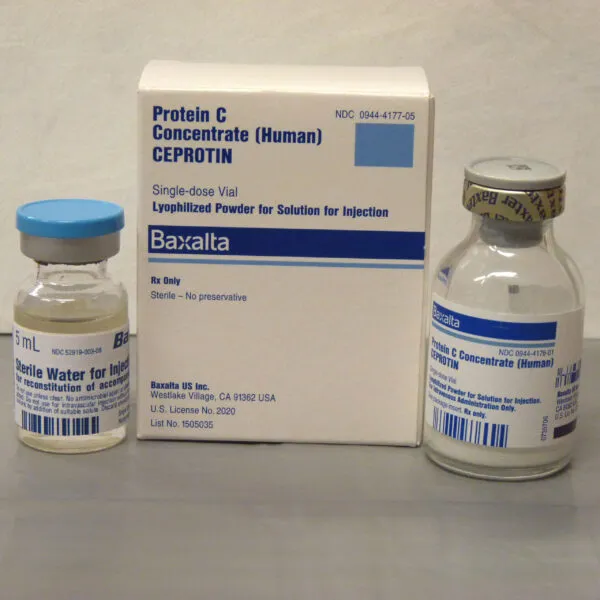
Table of Contents
- Package leaflet: Information for the user
- CEPROTIN 500 IU powder and solvent for solution for injection
- 1. What CEPROTIN is and what it is used for
- 2. What you should know before using CEPROTIN
- 3. How to use CEPROTIN
- 4. Possible adverse reactions
- 5. How to store CEPROTIN
- 6. Package Contents and Other Information
- Package leaflet: Information for the user
- CEPROTIN 1000 IU powder and solvent for solution for injection
- 1. What CEPROTIN is and what it is used for
- 2. What you should know before using CEPROTIN
- 3. How to use CEPROTIN
- 4. Possible side effects
- 5. How to store CEPROTIN
- 6. Package contents and other information
Package leaflet: Information for the user
CEPROTIN 500 IU powder and solvent for solution for injection
Human Protein C
Please read this leaflet carefully before using this medicine because it contains important information for you.
- Keep this leaflet. You may need to read it again.
- If you have any questions, ask your doctor or pharmacist.
- This medicine has been prescribed for you only. Do not give it to others, even if their symptoms are the same as yours, because it may be harmful.
- If you experience any side effects, including those not listed in this leaflet, contact your doctor or pharmacist. See section 4.
Contents of this leaflet:
- What CEPROTIN is and what it is used for
- What you need to know before using CEPROTIN
- How to use CEPROTIN
- Possible side effects
- How to store CEPROTIN
- Contents of the pack and other information
1. What CEPROTIN is and what it is used for
CEPROTIN belongs to a class of medicines called antithrombotics. This medicine
contains Protein C, a natural protein produced in the liver and also present in the blood.
Protein C plays an important role in preventing excessive clot formation
and thus helps prevent and/or treat intravascular thrombosis.
CEPROTIN is used for the treatment and prevention of thrombotic and hemorrhagic skin lesions (called purpura fulminans) in patients with severe congenital protein C deficiency.
Additionally, CEPROTIN may be used to treat a rare complication of a medication used to make the blood less viscous (an anticoagulant drug called warfarin), which can cause severe skin lesions (necrosis).
Furthermore, CEPROTIN is used to prevent thrombosis in patients with severe congenital protein C deficiency, when one or more of the following conditions are present:
- impending surgical or invasive procedures
- initiation of warfarin therapy (anticoagulant medication to make the blood less viscous)
- when warfarin therapy alone is insufficient
- when warfarin therapy is not possible.
2. What you should know before using CEPROTIN
Do not use CEPROTIN:
- if you are allergic (hypersensitive) to human Protein C or to any of the other components of this medicine (listed in section 6), including murine proteins or heparin.
However, in cases of life-threatening complications caused by blood clot formation in blood vessels
(thrombotic complications), your doctor may decide to continue treatment with CEPROTIN anyway.
Warnings and precautions
Talk to your doctor or pharmacist before using CEPROTIN. Be especially careful with
CEPROTIN if symptoms of allergy occur. Such symptoms include skin redness,
itching, difficulty breathing, low blood pressure, chest tightness, and shock. If you
experience these symptoms during administration of CEPROTIN, the infusion must be stopped.
These symptoms may indicate an allergic reaction to one or more of the components,
to murine proteins or to heparin. The product may contain traces of heparin and/or murine proteins
as a result of the manufacturing process. If such a reaction occurs, your doctor
will decide on the most appropriate treatment.
If this product is used in patients with severe congenital protein C deficiency,
antibodies may develop that inhibit protein C, thereby reducing the effectiveness of the product.
However, this has not been observed in clinical studies to date.
For medicines derived from human blood or plasma, certain measures are taken to prevent
transmission of infections to patients. These measures include careful selection of blood
and plasma donors to ensure exclusion of those who might carry infections, and testing
of each donation and plasma sample for signs of viruses/infections. During the processing of blood or plasma, manufacturers of these products also include steps capable of inactivating or eliminating viruses. Despite this, when administering medicines derived from human blood or plasma, it is not possible to completely exclude the risk of infection transmission. This also applies to viruses not yet known or emerging, or other types of infections.
The measures taken are considered effective against enveloped viruses such as HIV, HBV and HCV, and against the non-enveloped virus HAV. The measures taken may have limited effectiveness against non-enveloped viruses such as parvovirus B19. Infection with parvovirus B19 may be serious for pregnant women (fetal infection) and for individuals with weakened immune systems or certain types of anemia (e.g. hemolytic anemia).
Your doctor may recommend vaccination against hepatitis A and B if you are receiving repeated or regular administrations of products containing Protein C derived from human plasma.
Other medicines and CEPROTIN
No interactions with other medicines are currently known.
However, inform your doctor or pharmacist if you are taking or have recently taken any other medicines, including those not requiring a prescription.
If you are switching to oral anticoagulant therapy, you must continue treatment with CEPROTIN until the level of oral anticoagulant in the blood is adequate and stable.
CEPROTIN with food and drink
Not applicable.
Pregnancy and breastfeeding
If you are pregnant, suspect you may be pregnant, plan to become pregnant, or are breastfeeding,
consult your doctor or pharmacist before using this medicine.
Your doctor will decide whether you can be treated with CEPROTIN during
pregnancy and breastfeeding.
Driving and using machines
CEPROTIN does not affect the ability to drive or operate machinery.
Important information about some excipients in CEPROTIN
Since the amount of sodium in the maximum daily dose may exceed 200 mg, this should be taken into account by patients on a low-sodium diet.
3. How to use CEPROTIN
CEPROTIN must be administered intravenously (by infusion into a vein). It will be given to you under the direct supervision of a physician experienced in the treatment of replacement therapy with coagulation factors/inhibitors, where monitoring of protein C activity is possible. The dosage varies depending on your condition and body weight.
Dosage
The dosage, frequency of administration, and duration of treatment depend on the severity of your protein C deficiency, your clinical condition, and your blood levels of protein C. The dosage and frequency of administrations should be adjusted based on clinical efficacy and laboratory test results.
An initial protein C activity level of 100% should be achieved and maintained above 25% throughout the duration of treatment.
A starting dose of 60–80 IU/kg is recommended. Your doctor will perform several blood tests over time to determine the residual amount of protein C in your body.
Measurement of protein C activity using chromogenic substrates is recommended to determine plasma levels of protein C before and during treatment with CEPROTIN.
Dosage should be determined based on laboratory measurements of protein C activity. In cases of blood clot formation in blood vessels (acute thrombotic event), these measurements should be performed every 6 hours until your condition is stable, then twice daily, and always immediately before the next injection.
It should be remembered that the half-life of protein C may be drastically reduced under certain clinical conditions, such as acute thrombosis with purpura fulminans and skin necrosis.
If you have kidney and/or liver disease, you must inform your doctor, who will decide whether or not to modify your treatment.
When switching to long-term prophylactic treatment with oral anticoagulants, replacement therapy with protein C should only be discontinued after a stable level of anticoagulation has been achieved (see “Important information about some components of CEPROTIN”).
If you are receiving prophylactic treatment with protein C, higher baseline levels should be ensured in situations with increased risk of thrombosis (e.g., infections, trauma, or surgical procedures).
In cases of resistance to activated protein C (APC), which represents a thromboembolic risk factor in up to 5% of the population in Europe, your doctor may decide whether or not to modify your treatment.
Administration
CEPROTIN will be administered to you by intravenous injection after reconstitution of the powder for injectable solution with sterile water for injections. It is strongly recommended that each time you receive a dose of Ceprotin, you record the product name and batch number to maintain a history of the batches used.
Reconstitute the lyophilized powder for injectable solution of CEPROTIN with the solvent provided in the package (sterile water for injections), using the sterile needle for reconstitution. Gently rotate the vial until the powder is completely dissolved.
After reconstitution, draw the solution into a sterile, single-use syringe using a sterile filter needle. A separate sterile filter needle should be used to draw the contents from each reconstituted CEPROTIN vial. The solution must be discarded if visible particles are present after reconstitution.
The reconstituted solution should be administered immediately by intravenous injection.
CEPROTIN must be administered at an injection rate not exceeding 2 ml/min. In children with a body weight below 10 kg, the injection rate should not exceed 0.2 ml/kg/min.
Any unused solutions, empty vials, used needles, and syringes must be disposed of carefully.
The frequency and duration of treatment depend on the severity of protein C deficiency, the results of protein C determination in your blood, as well as the location and severity of thrombosis.
In cases of acute thrombosis, CEPROTIN may be administered every 6 hours. The frequency of injections may be reduced as the tendency to form clots decreases.
If you use more CEPROTIN than you should
It is recommended that you follow the dosage and frequency of administration advised by your doctor. If you use more CEPROTIN than recommended, inform your doctor as soon as possible.
If you forget to use CEPROTIN
Not applicable.
If you stop using CEPROTIN
Do not stop using CEPROTIN without consulting your doctor.
If you have any doubts about how to use this medicine, consult your doctor or pharmacist.
4. Possible adverse reactions
Like all medicines, this medicine can cause adverse reactions, although not everyone experiences them.
After administration of CEPROTIN, you may notice one of the following adverse reactions:
- As with any other product administered intravenously, allergic reactions may occur, including severe and potentially life-threatening reactions (anaphylaxis).
You should be aware of early symptoms of allergic reactions such as burning or stinging sensation at the injection site, chills, facial flushing, skin redness, itching, difficulty breathing, nausea, headache, drowsiness, low blood pressure, and chest tightness.
- The following adverse reactions have been observed rarely during clinical studies (less than 1 case per 1,000 doses administered to patients): itching, skin rash, and dizziness.
- In post-marketing experience, reports of restlessness, excessive sweating, as well as pain and redness at the injection site have been recorded.
Reporting of adverse reactions
If you experience any adverse reaction, including those not listed in this leaflet, consult your doctor or pharmacist. You may also report adverse reactions directly via the national reporting system detailed in Annex V. By reporting adverse reactions, you can help provide more information on the safety of this medicine.
5. How to store CEPROTIN
Keep this medicine out of the sight and reach of children.
Do not use this medicine after the expiry date stated on the label after EXP. The expiry date refers to the
last day of that month.
Store in a refrigerator (2°C–8°C). Do not freeze.
Keep the vial in the outer packaging to protect the medicine from light.
The reconstituted solution must be used immediately.
Do not dispose of any medicine via wastewater or household waste. Ask your pharmacist how to
dispose of medicines you no longer use. This will help protect the environment.
6. Package Contents and Other Information
What CEPROTIN Contains
Powder:
- The active substance is human protein C.
- The other components are human albumin, sodium chloride, and sodium citrate.2H₂O. Sterile water for injection is used as the solvent.
Description of the Appearance of CEPROTIN and Contents of the Package
CEPROTIN is supplied as a powder and solvent for injectable solution, appearing white or cream-colored, or as a friable solid. After reconstitution, the solution is colorless or slightly yellowish, clear or slightly opalescent, and practically free from visible particles.
Each package also contains a needle for reconstitution and a filter needle.
Marketing Authorization Holder and Manufacturer
BAXTER AG
Industriestrasse 67
A-1221 Vienna
Austria
For further information about this medicinal product, please contact the local representative of the Marketing Authorization Holder:
België/Belgique/Belgien
Shire Belgium SPRL
Tél/Tel.: +32 2 711 02 30
БЪЛГАРИЯ (Bulgaria)
Баксалта България ЕООД (Baxalta Bulgaria EOOD)
тел. (tel.): +359 2 926 4348
Česká republika (Czech Republic)
SHIRE CZECH s.r.o.
Tel.: +420 225 379 700
Danmark (Denmark)
Shire Denmark A/S
Tlf: +45 32 70 12 00
Deutschland (Germany)
Shire Deutschland GmbH
Tel: +49 (0) 30 206 5820
Eesti (Estonia)
Baxalta Estonia OÜ
Tel.: +370 694 41226
Ελλάδα (Greece)
Baxalta Ελλάς Μ.ΕΠΕ
Τηλ. (Tel.): +30 210 2780 000
España (Spain)
Shire Pharmaceuticals Ibérica S.L.
Tel.: +34 915 500 691
France
Shire France
Tél: +33 1 4067 3300
Hrvatska (Croatia)
Baxalta d.o.o.
Tel.: +386 1 420 16 91
Ireland
Baxalta UK Limited
Tel: +44 1635 798 777
Ísland (Iceland)
Shire Sweden AB
Sími: +46 8 544 964 00
Italia (Italy)
Shire Italia S.p.A
Tel: +39 0265 535 096
Κύπρος (Cyprus)
Proton Medical (Cyprus) Ltd
Τηλ. (Tel.): +357 22 20 4600
Latvija (Latvia)
UAB Baxalta Lithuania
Tel: +370 694 14226
Lietuva (Lithuania)
UAB Baxalta Lithuania
Tel.: +370 694 14226
Luxembourg/Luxemburg
Shire Belgium SPRL
Tél/Tel.: +32 2 711 02 30
Magyarország (Hungary)
Baxalta Hungary Kft
Tel.: +36 1 202 1981
Malta
Baxalta UK Limited
Tel.: +44 1635 798 777
Nederland (Netherlands)
Shire Netherlands B.V.
Tel: +31 203 485 200
Norge (Norway)
Shire Norway AS
Tlf: +47 22 585 000
Österreich (Austria)
Shire Austria GmbH
Tel: +43 (0)1 20100-0
Polska (Poland)
Shire Polska Sp. z o.o.
Tel.: +48 22 223 03 00
Portugal
Shire Pharmaceuticals Portugal, Lda
Tel: +351 213 500 220
România (Romania)
Baxalta S.R.L.
Tel.: +40 31 860 6200
Slovenija (Slovenia)
Baxalta d.o.o.
Tel.: +386 1 420 1691
Slovenská republika (Slovakia)
Baxalta Slovakia, s.r.o.
Tel.: +421 2 2039 9300
Suomi/Finland (Finland)
Shire Finland Oy
Puh/Tel: +358 201 478 200
Sverige (Sweden)
Shire Sweden AB
Tel.: +46 8 544 964 00
United Kingdom
Baxalta UK Limited
Tel.: +44 1635 798 777
More detailed information on this medicinal product is available on the European Medicines Agency website: http://www.ema.europa.eu.
Package leaflet: Information for the user
CEPROTIN 1000 IU powder and solvent for solution for injection
Human Protein C
Please read this leaflet carefully before using this medicine because it contains important information for you.
- Keep this leaflet. You may need to read it again.
- If you have any questions, ask your doctor or pharmacist.
- This medicine has been prescribed for you only. Do not give it to others, even if their symptoms are the same as yours, as it may be harmful.
- If you experience any adverse reactions, including those not listed in this leaflet, consult your doctor or pharmacist. See section 4.
Contents of this leaflet:
- What CEPROTIN is and what it is used for
- What you need to know before using CEPROTIN
- How to use CEPROTIN
- Possible side effects
- How to store CEPROTIN
- Contents of the pack and other information
1. What CEPROTIN is and what it is used for
CEPROTIN belongs to a class of medicines called antithrombotics. This medicine
contains Protein C, a natural protein produced in the liver and also present in the blood.
Protein C plays an important role in preventing excessive clot formation
and thus prevents and/or treats intravascular thrombosis.
CEPROTIN is used for the treatment and prevention of thrombotic and hemorrhagic skin lesions (called purpura fulminans) in patients with severe congenital protein C deficiency.
Additionally, CEPROTIN may be used to treat a rare complication of a drug used to make the blood less thick (an anticoagulant drug called warfarin), which can cause severe skin lesions (necrosis).
Furthermore, CEPROTIN is used to prevent thrombosis in patients with severe congenital protein C deficiency when one or more of the following conditions are present:
- impending surgical or invasive procedures
- initiation of warfarin therapy (anticoagulant drug, to make the blood less thick)
- when warfarin therapy alone is not sufficient
- when warfarin therapy is not possible.
2. What you should know before using CEPROTIN
Do not use CEPROTIN:
- if you are allergic (hypersensitive) to human Protein C or to any of the other ingredients of this medicine (listed in section 6), including murine proteins or heparin.
However, in cases of life-threatening complications due to blood clot formation in blood vessels
(thrombotic complications), your doctor may decide to continue treatment with CEPROTIN despite this.
Warnings and precautions
Talk to your doctor or pharmacist before using CEPROTIN. Be especially careful with
CEPROTIN if symptoms of allergy occur. Such symptoms include skin redness,
itching, difficulty breathing, low blood pressure, chest tightness, and shock. If
you experience any of these symptoms during CEPROTIN administration, the
infusion must be stopped immediately. These symptoms may indicate an allergic reaction to one or more of the components,
to murine proteins or to heparin. The product may contain traces of heparin and/or murine proteins
as a result of the manufacturing process. If such a reaction occurs, your doctor
will decide on the most appropriate treatment.
If this product is used in patients with severe congenital protein C deficiency,
antibodies may develop that inactivate protein C, thereby reducing the effectiveness of the product.
However, this has not been observed in clinical studies to date.
For medicines derived from human blood or plasma, certain measures are taken to prevent transmission of infections to patients. These measures include careful selection of blood and plasma donors to exclude those who might carry infections, and testing of each donation and plasma sample for signs of viruses/infections.
During the processing of blood or plasma, manufacturers include steps capable of inactivating or eliminating viruses. Nevertheless, when administering medicines derived from human blood or plasma, it cannot be completely ruled out that infections might be transmitted. This also applies to viruses not yet known or emerging, or other types of infections.
The measures taken are considered effective against enveloped viruses such as HIV, HBV and HCV, and against the non-enveloped virus HAV. The measures may have limited effectiveness against non-enveloped viruses such as parvovirus B19. Infection with parvovirus B19 may be severe in pregnant women (fetal infection) and in individuals with weakened immune systems or certain types of anemia (e.g. haemolytic anemia).
Your doctor may recommend vaccination against hepatitis A and B if you are regularly/repeatedly administered products containing Protein C derived from human plasma.
Other medicines and CEPROTIN
Currently, no interactions with other medicines are known.
However, inform your doctor or pharmacist if you are taking or have recently taken any other medicines, including those without prescription.
If you switch to treatment with oral anticoagulants, you must continue therapy with CEPROTIN until the level of oral anticoagulant in the blood is adequate and stable.
CEPROTIN with food and drink
Not applicable.
Pregnancy and breastfeeding
If you are pregnant, think you might be pregnant, are planning to become pregnant, or are breastfeeding, consult your doctor or pharmacist before using this medicine.
Your doctor will decide whether you can be treated with CEPROTIN during pregnancy
and breastfeeding.
Driving and using machines
CEPROTIN does not affect the ability to drive or use machinery.
Important information about some CEPROTIN excipients:
Since the amount of sodium in the maximum daily dose may exceed 200 mg, this should be taken into account by patients on a low-sodium diet.
3. How to use CEPROTIN
CEPROTIN is to be administered intravenously (by infusion into a vein). It will be given to you under the direct supervision of a physician experienced in replacement therapy with coagulation factors/inhibitors, particularly in cases where protein C activity can be monitored. The dosage varies depending on your condition and body weight.
Dosage
The dosage, frequency of administration, and duration of treatment depend on the severity of your protein C deficiency, your clinical condition, and your blood levels of protein C. The dosage and frequency of administrations should be adjusted based on clinical efficacy and laboratory test results.
An initial protein C activity level of 100% should be achieved and maintained above 25% throughout the duration of treatment.
An initial dose of 60–80 IU/kg is recommended. Your doctor will perform several blood tests over time to determine the residual amount of protein C in your body.
Measurement of protein C activity using chromogenic substrates is recommended to determine plasma levels of protein C before and during treatment with CEPROTIN. Dosage should be based on laboratory measurements of protein C activity. In the case of blood clot formation in blood vessels (acute thrombotic event), these measurements should be performed every 6 hours until your condition stabilizes, then twice daily, and always immediately before the next injection.
It should be noted that the half-life of protein C may be drastically reduced under certain clinical conditions, such as acute thrombosis with purpura fulminans and skin necrosis.
If you have renal and/or hepatic disease, you must inform your doctor, who will decide whether or not to modify your treatment.
When switching to long-term prophylactic treatment with oral anticoagulants, replacement therapy with protein C should only be discontinued after a stable level of anticoagulation has been achieved (see "Important information about some ingredients of CEPROTIN").
If you are receiving prophylactic treatment with protein C, higher baseline levels should be ensured in situations with increased risk of thrombosis (e.g., infections, trauma, or surgery).
In cases of resistance to activated protein C (APC), which represents a thromboembolic risk factor in up to 5% of the population in Europe, your doctor may decide whether or not to modify your treatment.
Administration
CEPROTIN will be administered to you by intravenous injection after reconstituting the powder for injectable solution with sterile water for injections. It is strongly recommended that each time a dose of Ceprotin is administered, you record the product name and batch number to maintain a history of the batches used.
Reconstitute the lyophilized powder for injectable solution of CEPROTIN with the solvent provided in the package (sterile water for injections), using the sterile needle for reconstitution. Gently rotate the vial until the powder is completely dissolved.
After reconstitution, draw the solution into a sterile disposable syringe using a sterile filter needle. A separate sterile filter needle should be used to draw the contents from each reconstituted CEPROTIN vial. The solution must be discarded if any particles are visible in suspension after reconstitution.
The reconstituted solution should be administered immediately by intravenous injection. CEPROTIN should be administered at an infusion rate not exceeding 2 ml/min. In children weighing less than 10 kg, the infusion rate should not exceed 0.2 ml/kg/min.
Any unused solutions, empty vials, used needles, and syringes must be disposed of carefully.
The frequency and duration of treatment depend on the severity of protein C deficiency, the results of protein C determination in your blood, as well as the location and severity of thrombosis.
In cases of acute thrombosis, CEPROTIN may be administered every 6 hours. The frequency of injections may be reduced as the tendency to form clots decreases.
If you use more CEPROTIN than you should
It is recommended that you strictly follow the dosage and frequency of administration advised by your doctor. If you administer a dose of CEPROTIN greater than recommended, inform your doctor as soon as possible.
If you forget to use CEPROTIN
Not applicable.
If you stop using CEPROTIN
Do not stop using CEPROTIN without consulting your doctor.
If you have any doubts about how to use this medicine, consult your doctor or pharmacist.
4. Possible side effects
Like all medicines, this medicine can cause side effects, although not everybody gets them.
After administration of CEPROTIN, you may experience one or more of the following side effects:
- As with any other product administered intravenously, allergic reactions may occur, including severe and potentially life-threatening reactions (anaphylaxis). You should be aware of early symptoms of allergic reactions such as a burning or stinging sensation at the injection site, chills, facial flushing, skin redness, itching, difficulty in breathing, nausea, headache, drowsiness, low blood pressure, and chest tightness.
- The following side effects have been observed rarely during clinical studies (less than 1 case per 1,000 doses administered to patients): itching, skin rash, and dizziness.
- In post-marketing experience, reports of restlessness, excessive sweating, as well as pain and redness at the injection site have been recorded.
Reporting of side effects
If you experience any side effect, including those not listed in this leaflet, talk to your doctor or pharmacist. You can also report side effects directly via the national reporting system referred to in Annex V. By reporting side effects, you can help provide more information on the safety of this medicine.
5. How to store CEPROTIN
Keep this medicine out of the sight and reach of children.
Do not use this medicine after the expiry date stated on the label after EXP. The expiry date refers to the last day of that month.
Store in the refrigerator (2°C–8°C). Do not freeze.
Keep the vial in the outer packaging to protect the medicine from light.
The reconstituted solution must be used immediately.
Do not dispose of any medicine via wastewater or household waste. Ask your pharmacist how to dispose of medicines you no longer use. This will help protect the environment.
6. Package contents and other information
What CEPROTIN contains
Powder:
- The active substance is human protein C.
- The other components are human albumin, sodium chloride, and sodium citrate.2H₂O. Sterile water for preparations for injection is used as the solvent.
Description of the appearance of CEPROTIN and contents of the pack
CEPROTIN is supplied as a powder and solvent for injectable solution, appearing white or cream-colored, or as a friable solid. After reconstitution, the solution is colorless or slightly yellowish, clear or slightly opalescent, and practically free from visible particles.
Each pack also contains a needle for reconstitution and a filter needle.
Marketing Authorization Holder and Manufacturer
BAXTER AG
Industriestrasse 67
A-1221 Vienna
Austria
For further information about this medicinal product, please contact the local representative of the Marketing Authorization Holder:
België/Belgique/Belgien
Shire Belgium SPRL
Tél/Tel.: +32 2 711 02 30
БЪЛГАРИЯ
Баксалта България ЕООД
тел.: +359 2 926 4348
Česká republika
SHIRE CZECH s.r.o.
Tel.: +420 225379 700
Danmark
Shire Denmark A/S
Tlf: +45 32 70 12 00
Deutschland
Shire Deutschland GmbH
Tel: +49 (0) 30 206 5820
Eesti
Baxalta Estonia OÜ
Tel.: +370 694 14226
Ελλάδα
Baxalta Ελλάς Μ.ΕΠΕ
Τηλ: +30-210-27 80 000
España
Shire Pharmaceuticals Ibérica S.L.
Tel: +34 815 500 691
France
Shire France
Tél: +33-140 67 33 00
Hrvatska
Baxalta d.o.o.
Tel: +386 1 420 1691
Ireland
Baxalta UK Limited
Tel: +44 1635 798 777
Ísland
Shire Sweden AB
Sími: +46 8 544 964 00
Italia
Shire Italia S.p.A.
Tel: +39 02 65 535 096
Κύπρος
Proton Medical (Cyprus) Ltd
Τηλ: +357 22 20 4600
Latvija
UAB Baxalta Lithuania
Tel.: +370 694 14226
Lietuva
UAB Baxalta Lithuania
Tel: +370 694 14226
Luxembourg/Luxemburg
Shire Belgium SPRL
Tél/Tel.: +32 2 711 02 30
Magyarország
Baxalta Hungary Kft
Tel: +36 1 202 1981
Malta
Baxalta UK Limited
Tel.: +44 1635 798 777
Nederland
Shire Netherlands B.V.
Tel: +31 203485 200
Norge
Shire Norway AS
Tlf: +47-22 585 000
Österreich
Shire Austria GmbH
Tel: +43 (0)1 20100-0
Polska
Shire Polska sp. z o.o.
Tel: +48 22 223 03 00
Portugal
Shire Pharmaceuticals Portugal, Lda.
Tel: +351 213 500 220
România
Baxalta S.R.L.
Tel.: +4031 860 6200
Slovenija
Baxalta d.o.o.
Tel.: +386 1 420 1691
Slovenská republika
Baxalta Slovakia, s.r.o.
Tel: +421 2 2039 9300
Suomi/Finland
Shire Finland Oy
Puh/Tel: +358 201 478 200
Sverige
Shire Sweden AB
Tel: +46-8-544 964 00
United Kingdom
Baxalta UK Limited
Tel: +44 1635 798 777
More detailed information on this medicinal product is available on the European Medicines Agency website: http://www.ema.europa.eu.