Cardioaspirin
Italy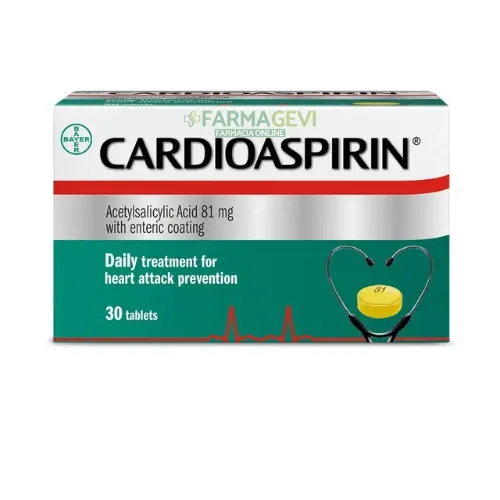
Table of Contents
- Package leaflet: Information for the patient
- Cardioaspirin 100 mg gastro-resistant tablets
- 1. What Cardioaspirin is and what it is used for
- 2. What you should know before taking Cardioaspirin
- 3. How to take Cardioaspirin
- 4. Possible side effects
- 5. How to store Cardioaspirin
- 6. Package contents and other information
Package leaflet: Information for the patient
Cardioaspirin 100 mg gastro-resistant tablets
acetylsalicylic acid
Please read this leaflet carefully before taking this medicine, as it contains
important information for you.
- Keep this leaflet. You may need to read it again.
- If you have any questions, ask your doctor or pharmacist.
- This medicine has been prescribed for you only. Do not give it to others, even if their symptoms are the same as yours, as it could be harmful.
- If you experience any adverse reaction, including those not listed in this leaflet, contact your doctor or pharmacist. See section 4.
Contents of this leaflet:
- What Cardioaspirin is and what it is used for
- What you need to know before taking Cardioaspirin
- How to take Cardioaspirin
- Possible side effects
- How to store Cardioaspirin
- Contents of the pack and other information
1. What Cardioaspirin is and what it is used for
Cardioaspirin is an antiplatelet agent, i.e. a medicine that prevents the formation of blood clots (thrombi) in blood vessels.
Cardioaspirin is used for:
- Prevention of major atherothrombotic events:
- after myocardial infarction (heart attack);
- after cerebral stroke (sudden interruption of blood flow to the brain) or transient ischaemic attacks (TIA) (temporary interruption or reduction of blood flow to the brain);
- in patients with unstable angina pectoris (attacks causing chest pain and a feeling of pressure behind the sternum at rest);
- in patients with chronic stable angina pectoris (or effort angina, characterised by severe chest pain and a feeling of pressure behind the sternum, usually occurring after physical exertion).
- Prevention of re-occlusion of aortocoronary bypass grafts (a surgical technique used to restore adequate blood flow to the heart) and in percutaneous transluminal coronary angioplasty (PTCA) (a non-surgical interventional technique used to restore adequate blood flow to the heart).
- Prevention of cardiovascular events in patients with established atheromatous disease (a condition leading to hardening and deposition of fats within the arteries), in patients undergoing blood dialysis, and prevention of thrombosis during extracorporeal circulation.
- Prevention of cardiovascular events in patients at high risk.
2. What you should know before taking Cardioaspirin
Do not take Cardioaspirin
- if you are allergic to acetylsalicylic acid, salicylates, or any of the other ingredients of this medicine (listed in section 6);
- if you suffer from mastocytosis (a blood tumor), because the use of acetylsalicylic acid may cause you severe allergic reactions (including circulatory shock with hot flushes, hypotension, tachycardia, and vomiting);
- if you have previously experienced asthma triggered by salicylates or substances with similar activity, particularly non-steroidal anti-inflammatory drugs (NSAIDs);
- if you suffer from gastroduodenal ulcer (ulcer of the stomach or the first part of the intestine);
- if you suffer from haemorrhagic diathesis (tendency to bleed);
- if you suffer from severe renal (reduced kidney function), hepatic (liver), or cardiac (heart) insufficiency;
- if you are receiving concomitant treatment with methotrexate at doses of 15 mg/week or higher (see "Other medicines and Cardioaspirin");
- if you are in the last trimester of pregnancy (see "Pregnancy and breastfeeding").
Warnings and precautions
Talk to your doctor or pharmacist before taking Cardioaspirin:
- If you are allergic to analgesic (painkillers), anti-inflammatory, or antirheumatic medicines, and/or suffer from other allergies. Discontinue use of Cardioaspirin at the first signs of skin reactions, mucosal lesions, or other allergy symptoms.
- If you have previously had gastrointestinal ulcers or gastrointestinal bleeding;
- If you are receiving concomitant treatment with anticoagulants, medicines to thin the blood/prevent blood clots (see "Other medicines and Cardioaspirin");
- If you have kidney or cardiovascular problems, such as renal vasculopathy (abnormalities in the blood vessels of the kidneys), congestive heart failure, volume depletion (reduced blood volume), major surgery, sepsis (severe generalized infection), or major bleeding, because acetylsalicylic acid may further increase the risk of impaired kidney function and acute renal failure (rapid reduction in kidney function);
- If you suffer from severe glucose-6-phosphate dehydrogenase (G6PD) deficiency (an enzyme deficiency, genetically determined, leading to a disease characterized by reduced survival of red blood cells, known as favism). Acetylsalicylic acid may induce haemolysis (destruction of red blood cells) or haemolytic anaemia.
- If you have liver problems;
- If you are taking certain non-steroidal anti-inflammatory drugs (NSAIDs) such as ibuprofen or naproxen (medicines for pain, fever, or inflammation) (see "Other medicines and Cardioaspirin");
- If you suffer from asthma, hay fever, nasal polyposis (small growths along the nasal mucosa or within the paranasal sinuses, called polyps), or chronic respiratory diseases. These conditions increase the likelihood that acetylsalicylic acid may cause bronchospasm (contraction of airway muscles obstructing airflow) and trigger asthma attacks or other allergic reactions. These reactions may also occur in patients who have allergic reactions (e.g. skin reactions, itching, urticaria (small skin spots and itching)) to other substances.
- If you are over 70 years of age, especially if you are also undergoing other treatments;
- If you are scheduled for surgery, even minor procedures such as tooth extraction, because, due to its inhibitory effect on platelet aggregation, which persists for several days after administration, acetylsalicylic acid may increase the tendency to bleed during and after surgical procedures;
- If you have ever had gout, because, at low doses, acetylsalicylic acid reduces uric acid excretion, which may occasionally trigger gout attacks in predisposed patients.
Children and adolescents
Cardioaspirin is not indicated for use in the paediatric population. Medicines containing acetylsalicylic acid must not be used in children and adolescents under 16 years of age with viral infections (such as influenza or varicella), regardless of the presence or absence of fever. Salicylic acid may cause Reye's syndrome, a very rare but life-threatening condition requiring immediate medical intervention. Persistent vomiting in patients with these illnesses may be a sign of Reye's syndrome.
Other medicines and Cardioaspirin
Inform your doctor or pharmacist if you are taking, have recently taken, or might take any other medicine.
The effect of treatment may be altered if Cardioaspirin is taken together with other medicines such as:
- anticoagulants (to thin the blood/prevent blood clots, e.g. warfarin);
- anti-rejection medicines (to prevent rejection of transplanted organs, e.g. cyclosporine, tacrolimus);
- antihypertensives (to treat high blood pressure, e.g. diuretics and ACE inhibitors);
- anti-inflammatory medicines (NSAIDs) (for pain, fever, and inflammation) and other antirheumatic medicines in general;
- medicines for gout (probenecid);
- medicines for cancer and rheumatoid arthritis (methotrexate).
Do not take Cardioaspirin together with methotrexate at doses greater than or equal to 15 mg/week, because it increases methotrexate toxicity in the blood.
Take Cardioaspirin together with the following medicines only under strict medical supervision:
- Methotrexate at doses less than 15 mg/week;
- Certain NSAIDs such as ibuprofen and naproxene: treatment with these medicines in patients with increased cardiovascular risk may limit the cardioprotective effects of acetylsalicylic acid.
- Anticoagulants, thrombolytics/other antiplatelet agents: increased risk of bleeding;
- Medicines containing salicylates: increased risk of gastrointestinal ulcers and bleeding;
- Metamizole (a substance used to reduce pain and fever) may reduce the effect of acetylsalicylic acid on platelet aggregation (blood cells that clump together to form a blood clot) when taken simultaneously. Therefore, this combination should be used with caution in patients taking low-dose aspirin for cardioprotection.
- Selective serotonin re-uptake inhibitors (medicines used for depression): increased risk of upper gastrointestinal bleeding;
- Cyclosporine and other immunosuppressive drugs: increased renal toxicity. Pay particular attention if you are elderly.
- Digoxin (a medicine used in heart failure): increased digoxin concentration in the blood;
- Antidiabetic medicines, e.g. insulin, sulfonylureas, in combination with high-dose acetylsalicylic acid: increased hypoglycaemic effect at higher doses of acetylsalicylic acid;
- Diuretics in combination with high-dose acetylsalicylic acid;
- Systemic glucocorticoids (corticosteroids), except hydrocortisone used as replacement therapy in Addison's disease (adrenal insufficiency): risk of aspirin overdose when glucocorticoid treatment is discontinued. Increased risk of stomach and intestinal ulcers and bleeding with concomitant use of Cardioaspirin and systemic glucocorticoids.
- Angiotensin-Converting Enzyme (ACE) inhibitors in combination with high-dose acetylsalicylic acid: reduced kidney filtration and reduced antihypertensive effect;
- Other antihypertensives (beta-blockers): reduced antihypertensive effect;
- Valproic acid (a medicine used for epilepsy): increased toxicity of valproic acid;
- Phenytoin (a medicine used for epilepsy): increased effect of phenytoin;
- Uricosuric agents (medicines that increase uric acid excretion) such as benzbromarone, probenecid: reduced uricosuric effect.
Cardioaspirin with alcohol
Taking alcohol with Cardioaspirin increases damage to the gastrointestinal mucosa and prolongs bleeding time.
Pregnancy, breastfeeding, and fertility
If you are pregnant, suspect you may be pregnant, are planning to become pregnant, or are breastfeeding, consult your doctor before taking this medicine.
Pregnancy
Inhibition of prostaglandin synthesis may adversely affect pregnancy and/or embryonic/fetal development.
Do not take Cardioaspirin during the third trimester of pregnancy (see "Do not take Cardioaspirin").
During the first and second trimesters of pregnancy, take this medicine only if clearly needed and on medical advice.
If you are planning a pregnancy, take medicines containing acetylsalicylic acid for the shortest possible duration and at the lowest possible dose.
Breastfeeding
Salicylates and some of their derivatives pass into breast milk in small amounts.
Since no adverse effects have been observed in the infant following occasional use, discontinuation of breastfeeding is usually not necessary. However, with regular use or high doses, early weaning should be considered.
Fertility
If you are a woman with fertility problems or undergoing fertility investigations, note that the use of acetylsalicylic acid, like any medicine inhibiting prostaglandin and cyclooxygenase synthesis, may interfere with fertility.
Driving and using machines
Cardioaspirin does not affect the ability to drive or use machines.
Cardioaspirin contains sodium
This medicine contains less than 1 mmol of sodium (23 mg) per gastro-resistant tablet, i.e. essentially "sodium-free".
3. How to take Cardioaspirin
Take this medicine exactly as directed by your doctor or pharmacist. If you have any doubts, consult your doctor or pharmacist.
The recommended dose is: 1 tablet per day as a single dose.
Take the medicine with a generous amount of liquid (½ - 1 glass of water), at least 30 minutes before meals.
Prevention of cardiovascular events in high-risk patients should be carried out with the 100 mg dose (1 tablet).
Do not take Cardioaspirin at higher doses without explicit medical prescription.
Use in children and adolescents
Cardioaspirin is not indicated in children and adolescents under 16 years of age (see "Children and adolescents").
If you take more Cardioaspirin than you should
In case of accidental ingestion of an excessive dose of Cardioaspirin, contact your doctor immediately or go to the nearest hospital.
Salicylate toxicity (a dosage exceeding 100 mg/kg/day for 2 consecutive days may induce toxicity) may result from chronic (long-term) intake of excessive doses, or from acute overdose, which can be potentially life-threatening, including accidental ingestion in children.
Symptoms of mild/moderate overdose may include:
- rapid breathing, sweating, nausea, vomiting, headache, dizziness.
- Symptoms of moderate/severe overdose may include: fever, respiratory failure, asphyxia, pulmonary edema, arrhythmias (changes in heart rhythm), hypotension (low blood pressure), cardiac arrest (cessation of heartbeat), dehydration, oliguria (reduced urine output) progressing to renal failure (reduced kidney function), disturbances in sugar metabolism, ketosis ("acetone"), tinnitus (ringing or buzzing in the ear), deafness, gastrointestinal bleeding, gastric ulcer, impaired blood coagulation, encephalopathy (brain dysfunction), cerebral edema (swelling of brain tissue), and depression of the central nervous system, with manifestations ranging from lethargy (profound drowsiness) and confusion to coma and seizures.
If you have any questions about the use of this medicine, consult your doctor or pharmacist.
4. Possible side effects
Like all medicines, this medicine can cause side effects, although not everyone gets them.
The most common side effects are gastrointestinal disorders, which may or may not be associated with bleeding, and may occur at any dose of acetylsalicylic acid and in patients with or without predictive symptoms and with or without a history of serious gastrointestinal events.
Below is a list of other side effects that have been observed during treatment with Cardioaspirin, grouped according to their frequency:
Common (may affect up to 1 in 10 people)
- dizziness
- ringing in the ears (tinnitus)
- nosebleeds (epistaxis)
- runny nose
- inflammation of the stomach and intestine
- stomach, intestinal and abdominal pain
- indigestion
- mild, non-visible (occult) bleeding from the stomach or intestine
- skin rash
- skin itching
- urinary and genital bleeding
Uncommon (may affect up to 1 in 100 people)
- iron-deficiency anemia due to bleeding
- allergy, drug allergy (including sudden swelling of body parts)
- bleeding within the skull (intracranial haemorrhage)
- bruising or localized blood swelling (haematoma)
- blocked nose (nasal congestion)
- bleeding gums
- erosion and ulceration of the stomach or intestine
- impaired liver function
- urticaria (may affect up to 1 in 1,000 people)
- anaemia due to haemorrhage
- anaphylactic reaction
- bleeding, bleeding into muscles
- perforation of stomach or intestinal ulcer
- blood laboratory tests may show an increase in certain liver enzymes (transaminases)
- impaired kidney function or sudden kidney failure (if you already have kidney or cardiovascular problems)
Not known (frequency cannot be estimated from the available data)
- breakdown of red blood cells, which may cause anaemia (if there is severe deficiency of glucose-6-phosphate dehydrogenase (G6PD))
- anaphylactic shock (severe generalized acute allergic reaction)
- heart and lung disorders (in the context of a severe allergic reaction)
- bleeding during or after surgery
- respiratory disease worsened by acetylsalicylic acid
- narrowing of the intestinal tract (intestinal diaphragm disease)
Reporting of side effects
If you experience any side effect, including those not listed in this leaflet, talk to your doctor or pharmacist. You can also report side effects directly via the national reporting system at www.aifa.gov.it/content/segnalazioni-reazioni-avverse.
By reporting side effects, you can help provide more information on the safety of this medicine.
5. How to store Cardioaspirin
Keep this medicine out of the sight and reach of children.
Do not use this medicine after the expiry date stated on the carton and blister after "expiry". The expiry date refers to the last day of that month.
The expiry date applies to the product in its original packaging, correctly stored.
Store below 30 °C.
Do not dispose of any medicine via wastewater or household waste. Ask your pharmacist how to dispose of medicines no longer in use. This will help protect the environment.
6. Package contents and other information
What Cardioaspirin contains
- The active substance is acetylsalicylic acid. One tablet contains 100 mg of acetylsalicylic acid.
- The other components are: microcrystalline cellulose, maize starch, methacrylic acid copolymers, sodium lauryl sulfate, polysorbate 80, talc, triethyl citrate.
Description of the appearance of Cardioaspirin and package contents
The pack contains 30, 60 or 90 tablets.
Marketing Authorization Holder and Manufacturer
Marketing Authorization Holder
Bayer S.p.A. - Viale Certosa 130 – Milan
Manufacturer
Bayer HealthCare Manufacturing S.r.l. - via delle Groane 126, Garbagnate Milanese (MI)