Bridion
Italy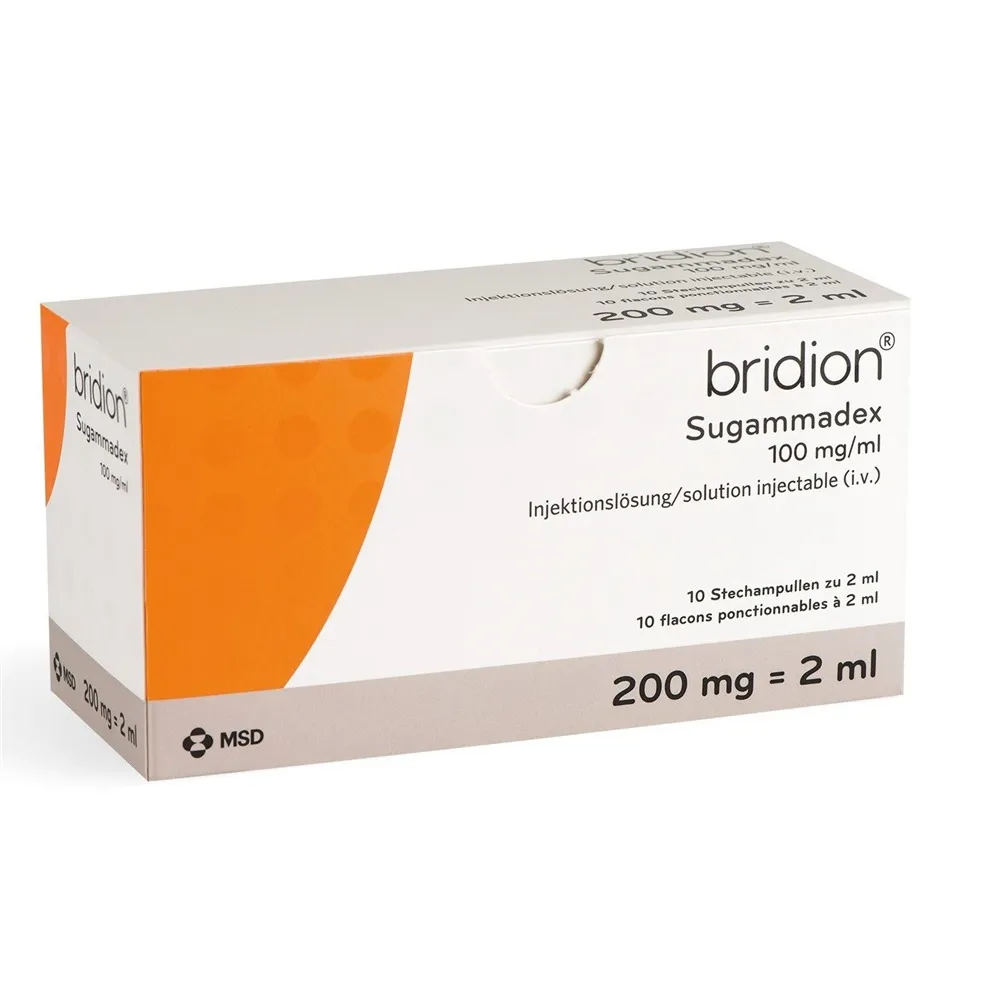
Table of Contents
Patient Information Leaflet
- bio, inform the anaesthetist
- the anaesthetist
What is Bridion
What is
What is Bridion
For this purpose, during and after general anaesthesia (which includes artificial ventilation), it is used
to speed up recovery of muscle function after surgery
the body
→ Inform the anaesthetist if you are in this situation.
Inform the
→ Inform the anaesthetist if you are taking
Some medicines reduce the effect of Bridion
→ important that you inform the
→ If you need to take the
→ If you are using
→ Inform the anaesthetist if you are in
The anaesthetist will help you decide whether to
discontinue breastfeeding or abstain from treatment with sugammadex, taking into account the
benefit of breastfeeding for the
’
Bridion will be administered by the anaesthetist or under the anaesthetist’s supervision.
The
The
Since the anaesthetist will closely monitor your condition, it is unlikely that you will
bio to the anaesthetist or
ro occurring during anaesthesia, the anaesthetist will detect them and
-
or cough at the end of the operation
-
Return of muscle relaxation after surgery
-
Slowing of the heart rate up to cardiac arrest
to the anaesthetist or to the
national reporting system listed on the
and on the label
“Exp.” The expiration date refers to the last day of that month.
’ packaging
Do not dispose of any medicine via wastewater or household waste. Ask your pharmacist how
to dispose of medicines you no longer use. This will help protect the environment.
Description of the
Marketing Authorisation Holder
of the marketing authorisation
България
Merck Sharp & Dohme Bulgaria EOOD
Tel.: +359 2 819 3737
Česká republika
Eλλάδα
MSD A.E.E.
Tel: +
Ι
Κύπρος
Tel: 800 00 673
’
For the paediatric population: sugammadex is recommended only for routine reversal of
It is recommended to use an appropriate neuromuscular monitoring technique to assess recovery
Administration of the recommended doses for routine reversal results in
There are no data to support the use of sugammadex for immediate reversal following neuromuscular block
In the rare event of new-onset neuromuscular blockade in the post-operative setting,
administration of an additional dose of sugammadex 4
The use of sugammadex in
≥
mg/mL to improve dosing accuracy
for reversal of
reversal of
’
monitor the patient closely in the immediate post-operative period
After reversal,
respiratory function until adequate spontaneous respiration is restored. Even though reversal of
If neuromuscular blockade recurs after extubation, appropriate supportive measures must be provided, with
an incidence of 0
’ use of lower doses than recommended may
reversal
of 11% and 22%. These minor prolongations
(≤
for hip fracture/major joint replacement surgery
anticoagulants on the incidence of perioperative bleeding complications
a pharmacodynamic interaction (prolongation of aPTT and PT) has been observed with
the use of sugammadex in
- If there is a medical need to administer sugammadex to these patients, the anaesthetist must
’ haemostasis and coagulation parameters.
| Minimum waiting time | NMBA (neuromuscular blocking agent) and dose to administer |
| 5 minutes | 1.2 mg/kg rocuronium |
| 4 hours | 0.6 mg/kg rocuronium or 0.1 mg/kg vecuronium |
The
'
of the effect of a depolarizing neuromuscular blocking agent
from the
The use of s
In clinical studies, during intentional reversal of neuromuscular blockade under anesthesia,
signs of light anesthesia (movements, coughing, grimacing, and sucking movements) were
observed.
If neuromuscular blockade is reversed while anesthesia persists,
the
must be monitored for hemodynamic changes during and after administration of
anticholinergic agents such as atropine.
coagulopathy, see information regarding the effect on hemostasis.
Use for reversal of blockade induced by muscle relaxants other than rocuronium and vecuronium:
data on efficacy and safety are not available. Limited data are available on reversal of
advanced (for time to recovery in the elderly, see
Physicians must be prepared for the possibility of hypersensitivity reactions to the drug (including
'
'
'
are based on affinity
the pharmacodynamic effect of neuromuscular blocking agents and
pharmacokinetic interaction
For hormonal contraceptives, a clinically relevant sequestration interaction could not be excluded
or compromise the efficacy of sugammadex (i
Regarding toremifene, which has a relatively high binding affinity for sugammadex and
have received toremifene on the same day of surgery.
The use of fusidic acid in the pre
compromise the efficacy of other medicinal products (i
the efficacy of certain medicinal products
the physician should consider the need to re-administer the medicinal product, or
It has been estimated that the interaction between 4
reduction in exposure to the progestin (34% of AUC), similar to the reduction observed
hours, an event that
reduction in efficacy.
the effect may be less pronounced.
Interactions due to prolonged effect of rocuronium or vecuronium:
see the rocuronium or vecuronium summary of product characteristics for a list of specific medicinal products
Oral absorption of cyclodextrins in general is
It should be decided whether to discontinue breastfeeding or to discontinue therapy with
sugammadex, taking into account the benefit of breastfeeding for the infant and the benefit
The effects of sugammadex on human fertility have not been
(≥
[Very common (≥ 1/10), common (≥ 1/10), uncommon (≥
(≥
| System Organ Classification | Frequencies | Adverse Reactions (Preferred Terms) |
| Immune System Disorders | Uncommon | Drug hypersensitivity reactions (see SmPC, section 4.4) |
| Respiratory, Thoracic and Mediastinal Disorders | Common | Cough |
| Injury, Poisoning and Procedural Complications | Common | Respiratory complication of anaesthesia Anaesthetic complication (see SmPC, section 4.4) Procedural hypotension Procedural complication |
, emergence reaction during surgery,
coughing during the anesthetic procedure or during surgery, or spontaneous breathing under
"light anesthesia."
In the
an incidence of 0
'
A randomized, double-blind study examined the incidence of r
blind administration. The incidence of hypersensitivity
mg/kg. There was
(incidence of 0.7%). There was no evidence of an increase in the frequency or
of hypersensitivity with repeated doses (≥
(≥
conducted in humans, sugammadex was administered at doses up to 96
storage conditions prior to are the responsibility of the user; normally not
Keep the vial in the