Atenolol Ratiopharm
Italy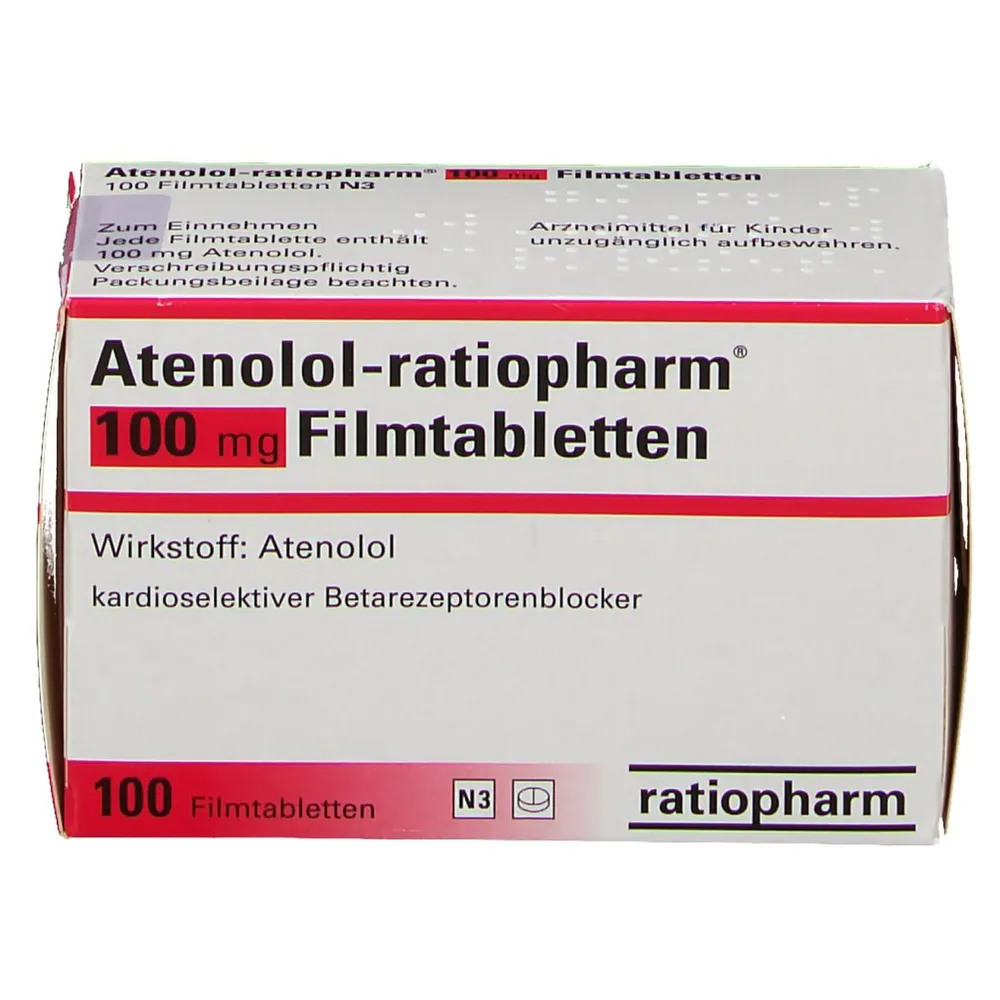
Table of Contents
- Patient Information Leaflet
- Atenolol ratiopharm 100 mg film-coated tablets
- 1. What Atenololo ratiopharm is and what it is used for
- 2. What you should know before taking Atenololo ratiopharm
- 3. How to take Atenololo ratiopharm
- 4. Possible side effects
- 5. How to store Atenololo ratiopharm
- 6. Package contents and other information
Patient Information Leaflet
Atenolol ratiopharm 100 mg film-coated tablets
Generic medicine
Please read all of this leaflet carefully before you start taking this medicine because it contains important information for you.
- Keep this leaflet. You may need to read it again.
- If you have any questions, ask your doctor or pharmacist.
- This medicine has been prescribed for you only. Do not give it to others, even if their symptoms are the same as yours, as it may be harmful.
- If you experience any side effect, including those not listed in this leaflet, talk to your doctor or pharmacist. See section 4.
Contents of this leaflet:
- What Atenolol ratiopharm is and what it is used for
- What you need to know before taking Atenolol ratiopharm
- How to take Atenolol ratiopharm
- Possible side effects
- How to store Atenolol ratiopharm
- Contents of the pack and other information
1. What Atenololo ratiopharm is and what it is used for
Atenololo ratiopharm contains atenolol, a substance that belongs to a group of medicines called beta-blockers, used to treat high blood pressure (hypertension) and certain heart function disorders.
Atenololo ratiopharm is therefore used to treat:
- arterial hypertension, including renal origin hypertension;
- a heart function disorder caused by a temporary reduction in oxygen supply. It manifests as pain or a feeling of tightness in the chest, which may radiate to the shoulder and left arm, extending to the fingers (angina pectoris).
Talk to your doctor if you do not feel better or if you feel worse.
2. What you should know before taking Atenololo ratiopharm
Do not take Atenololo ratiopharm
- if you are allergic to the active substance or to any of the other ingredients of this medicine (listed in section 6);
- if you have any of the following heart function disorders: severe bradycardia, second- or third-degree atrioventricular block, sinoatrial node dysfunction, uncontrolled heart failure, cardiogenic shock;
- if you have an untreated tumour of the adrenal gland called phaeochromocytoma;
- if you have low blood pressure (hypotension);
- if you suffer from a condition characterised by an increase in blood acids, resulting in a decrease in blood pH (metabolic acidosis);
- if you suffer from a rare disease characterised by brief episodes of narrowing of the arteries, the blood vessels carrying blood from the heart to the rest of the body (Raynaud's syndrome);
- if you suffer from severe circulation disorders in the limbs (peripheral arterial circulation);
- if you suffer from severe asthma or severe chronic obstructive pulmonary disease;
- if you are taking medicines containing verapamil (used to treat high blood pressure) or diltiazem (used to treat high blood pressure and angina pectoris), administered intravenously; see section “Other medicines and Atenololo ratiopharm”;
- if you are taking a medicine belonging to the class of monoamine oxidase inhibitors (MAOIs - used to treat depression and certain mental disorders), except MAO-B inhibitors (see section “Other medicines and Atenololo ratiopharm”). Your doctor will inform you if any of the medicines you are taking belong to this class;
- to treat a child;
- during pregnancy and breastfeeding (see section “Pregnancy, breastfeeding and fertility”).
Warnings and precautions
Talk to your doctor or pharmacist before taking Atenololo ratiopharm.
Pay particular attention and consult your doctor before taking Atenololo ratiopharm:
- if you have any of the following heart function disorders: poor cardiac reserve, heart failure controlled by adequate therapy, Prinzmetal's angina, first-degree atrioventricular block;
- if you suffer from a lung disorder characterised by airway obstruction;
- if you have diabetes, and particularly if you suffer from a specific type of diabetes called "labile diabetes";
- if you are prone to developing low blood glucose levels (hypoglycaemia), because atenolol may mask changes in heart rate (tachycardia). Atenolol may also increase the risk of severe hypoglycaemia when used with certain types of antidiabetic medicines called sulphonylureas (e.g. gliquidone, gliclazide, glibenclamide, glipizide, glimepiride or tolbutamide);
- if you are an allergic person who has previously experienced even severe allergic reactions (anaphylactic shock);
- if you suffer from hyperthyroidism;
- if you have severely impaired kidney function, as dose adjustment is necessary because Atenololo ratiopharm is eliminated via the kidneys;
- if you are undergoing dialysis.
Insulin sensitivity may be reduced if you are taking atenolol.
Furthermore, inform your doctor if, during treatment with Atenololo ratiopharm:
- you develop an excessive reduction in heart rate (bradycardia) with symptoms such as dizziness, fainting, and shortness of breath, as dose reduction may be necessary;
- you experience breathing difficulties, as treatment may need to be discontinued;
- you develop worsening of allergic reactions upon repeated exposure to the allergen;
- you are scheduled for surgery requiring general anaesthesia. If you are scheduled for surgery, treatment with Atenololo ratiopharm should be discontinued at least 24 hours before the procedure, as there is an increased risk of low blood pressure (hypotension). Consult your doctor regarding the risk-benefit assessment of discontinuing Atenololo ratiopharm.
If you have liver or kidney disorders and need to take atenolol, your doctor will request periodic tests during treatment with this medicine to monitor the function of these organs.
Always follow your doctor's instructions when taking this medicine.
Treatment with Atenololo ratiopharm must NOT be stopped abruptly, especially if you suffer from inadequate oxygen supply to the heart (ischaemic heart disease). If you need to stop or discontinue treatment with Atenololo ratiopharm after prolonged use, the dose must always be reduced gradually in a stepwise manner, as sudden discontinuation may lead to reduced oxygenated blood supply to a more or less extensive area of the heart (myocardial ischaemia), worsening of angina pectoris (a heart disease characterised by chest pain), myocardial infarction, or may provoke worsening of hypertension.
Children
Atenololo ratiopharm is contraindicated in paediatric patients.
Other medicines and Atenololo ratiopharm
Inform your doctor or pharmacist if you are taking, have recently taken, or might take any other medicines.
Do not take Atenololo ratiopharm at the same time as:
- medicines containing verapamil or diltiazem (used to treat high blood pressure and angina pectoris); you must wait at least 48 hours after stopping verapamil treatment before starting atenolol, and vice versa;
- medicines belonging to the class of monoamine oxidase inhibitors (MAOIs - used to treat depression and certain mental disorders), except MAO-B inhibitors. Your doctor will inform you if any of the medicines you are taking belong to this class.
In addition, take particular care and inform your doctor if you are taking:
- medicines to prevent or correct heart rhythm disorders, i.e. antiarrhythmics, such as disopyramide, quinidine, or amiodarone, as cardiac complications (myocardial depression and bradycardia) may occur;
- medicines belonging to the class of dihydropyridines, used to treat high blood pressure, as this increases the risk of excessive lowering of blood pressure (hypotension) and may lead to heart failure in patients with latent heart failure;
- medicines containing clonidine, as beta-blockers such as atenolol may cause excessive rise in blood pressure when clonidine treatment is discontinued. Your doctor will advise you how many days you should wait before starting atenolol after stopping clonidine. If you need to use both medicines together, your doctor will instruct you to stop clonidine only several days after stopping atenolol;
- other antihypertensive medicines used to treat high blood pressure, as taking these medicines together increases the blood pressure-lowering effect (hypotensive effect) of atenolol;
- medicines with sympathomimetic properties, such as adrenaline, which may counteract the effect of atenolol when taken simultaneously;
- tricyclic antidepressants, barbiturates, and phenothiazines, as taking these medicines together with Atenololo ratiopharm increases the hypotensive effect (blood pressure lowering) of atenolol;
- anti-inflammatory medicines (prostaglandin synthesis inhibitors) such as ibuprofen and indometacin, as they reduce the hypotensive effect of atenolol;
- digitalis glycosides used to treat heart function disorders, as they may increase the time it takes for blood to be pumped to different areas of the heart (prolonged atrioventricular conduction time);
- medicines for the treatment of diabetes such as insulin and oral antidiabetics, as they may increase the hypotensive effect of atenolol and mask symptoms associated with low blood glucose levels (hypoglycaemia), such as tremor and changes in heart rate, as well as medicines called sulphonylureas (e.g. gliquidone, gliclazide, glibenclamide, glipizide, glimepiride or tolbutamide).
Atenololo ratiopharm and alcohol
Consumption of alcohol during treatment with this medicine may increase the blood pressure-lowering effect (hypotensive effect) of atenolol.
Pregnancy and breastfeeding
If you are pregnant, suspect you may be pregnant, plan to become pregnant, or are breastfeeding, consult your doctor or pharmacist before taking this medicine.
Pregnancy
Do not take Atenololo ratiopharm during pregnancy.
Breastfeeding
Atenolol accumulates in breast milk; therefore, its use is contraindicated during breastfeeding.
Driving and using machines
It is unlikely that Atenololo ratiopharm affects the ability to drive vehicles or use machinery.
However, it should be noted that dizziness or fatigue may occasionally occur.
For athletes: using the medicine without therapeutic need constitutes doping and may result in a positive anti-doping test.
Atenololo ratiopharm contains sodium
This medicine contains less than 1 mmol (23 mg) of sodium per tablet, i.e. essentially "sodium-free".
3. How to take Atenololo ratiopharm
Take this medicine exactly as directed by your doctor or pharmacist. If you have any doubts, consult your doctor or pharmacist.
Your doctor will tell you how many tablets to take each day and when, depending on your condition. The recommended starting dose, especially in elderly patients, is the lowest possible dose, so that symptoms of heart failure (the heart's inability to supply sufficient blood to meet the body's actual needs), bradycardia (reduction in heart rate below 60 beats per minute), and bronchial symptoms can be promptly recognized.
Do not chew the tablet; swallow it with sufficient liquid to aid swallowing.
The tablet may be divided into equal doses.
Arterial hypertension (high blood pressure)
The recommended initial dose is ½ tablet (50 mg) daily.
Depending on your therapeutic response, during the second week of treatment your doctor may decide to increase the dose to 1 tablet (100 mg) daily.
The full therapeutic effect becomes evident after 1–2 weeks of treatment.
If necessary, during treatment with atenolol, your doctor may decide to prescribe another medicine to lower blood pressure (e.g. a diuretic) to achieve a better therapeutic effect.
Angina pectoris
The recommended dose is 1 tablet (100 mg) daily.
Elderly patients
If you are elderly, your doctor may decide to reduce your dose, particularly if your kidney function is impaired.
Patients with impaired renal function (renal insufficiency)
If you have impaired kidney function, your doctor may decide to reduce the dose below the standard recommended levels.
If you are undergoing haemodialysis, you will be given ½ tablet (50 mg) after each session. This administration must take place in a hospital setting, as a marked reduction in arterial blood pressure may occur.
Discontinuation of treatment
Stopping treatment with atenolol must be done gradually. Always follow your doctor's instructions.
Use in children
This medicine is contraindicated in children and adolescents.
If you take more Atenololo ratiopharm than you should
In case of accidental ingestion or overdose of this medicine, contact your doctor immediately or go to the nearest hospital.
Symptoms of overdose may include: disturbances in heartbeat and cardiac function (bradycardia, acute heart failure, myocardial infarction, cardiogenic shock), breathing difficulties (dyspnoea), contraction of the bronchial muscles (bronchospasm), vomiting, altered state of consciousness, and rarely seizures.
If you forget to take Atenololo ratiopharm
If you forget to take a dose, take it as soon as you remember, unless it is almost time for your next dose. Do not take a double dose to make up for the missed dose.
If you stop taking Atenololo ratiopharm
Treatment with Atenololo ratiopharm must NOT be stopped abruptly. In all cases, discontinuation of treatment must be gradual.
Always follow your doctor's instructions while taking this medicine, and consult your doctor for advice if you intend to stop treatment.
If you have any questions about the use of this medicine, consult your doctor or pharmacist.
4. Possible side effects
Like all medicines, this medicine can cause side effects, although not everybody will experience them.
Stop taking this medicine and contact your doctor immediately if you experience any of the following:
- widespread red or purple spots on the skin, with or without joint pain, muscle pain, weakness, and fever, as these may be symptoms of inflammation of the blood vessel walls, known as purpura;
- skin lesions (erythematous eruptions);
- excessive reduction in heart rate (bradycardia) with symptoms such as dizziness, fainting, and shortness of breath, as a dose reduction may be required;
- if breathing difficulties occur, as treatment may need to be discontinued.
Other possible side effects include:
Common (may affect up to 1 in 10 people)
- decreased heart rate (bradycardia);
- sensation of coldness in the extremities;
- dizziness;
- sweating;
- gastrointestinal disturbances (nausea, vomiting, diarrhoea, abdominal pain);
- fatigue;
- increased levels of certain liver enzymes in the blood (transaminases).
Uncommon (may affect up to 1 in 100 people)
- heart problems such as heart failure and atrioventricular block;
- worsening of diabetes mellitus;
- masking of symptoms associated with latent diabetes mellitus;
- reduction in blood glucose levels (hypoglycaemia), especially after prolonged fasting or intense physical exercise, with concomitant masking of symptoms associated with this condition (tremor and tachycardia);
- alteration in blood lipid levels (dyslipidaemia), associated with low HDL cholesterol levels and increased triglycerides;
- masking of symptoms associated with overactivity of the thyroid gland (hyperthyroidism) in patients with hyperthyroidism;
- increased dreaming during sleep;
- sleep disturbances;
- conjunctivitis;
- sudden, severe muscle pain caused by involuntary contraction of one or more muscles (spasms).
Rare (may affect up to 1 in 1,000 people)
- severe reduction in the number of blood cells called platelets (thrombocytopenia); in this case, your doctor will discontinue treatment with atenolol;
- severe reduction in the number of white blood cells in the blood (granulocytopenia); in this case, your doctor will discontinue treatment with atenolol;
- worsening of heart function in patients with heart failure;
- alteration of heart function (conduction disorder, slowing of atrioventricular conduction, or worsening of atrioventricular block);
- increased frequency of angina attacks in patients with angina pectoris;
- low blood pressure (hypotension);
- drop in blood pressure upon sudden change from sitting or lying down to standing (postural hypotension), sometimes associated with syncope (transient loss of consciousness);
- worsening of certain pre-existing heart conditions (cardiac block);
- vascular disorders (intermittent claudication and Raynaud's phenomenon);
- headache;
- mood changes;
- nightmares;
- psychosis;
- hallucinations;
- worsening of neurological disorders with manifestations such as mental depression, psychiatric illness characterised by motor, emotional, and behavioural abnormalities (catatonia), confusion, and memory disturbances;
- dry mouth;
- alteration of liver function (hepatotoxicity, including intrahepatic cholestasis);
- hair loss (alopecia);
- dry eyes;
- skin rashes;
- psoriasiform skin reactions (itching, burning, skin lesions, skin peeling, formation of whitish-red and/or scaly pustules, nail deformities, joint stiffness, pain, and joint deformity) and worsening of symptoms associated with psoriasis;
- worsening of vitiligo;
- inability to achieve or maintain an erection (impotence);
- alteration of sexual desire;
- breathing difficulties (bronchospasm or dyspnoea) in patients with asthma or a history of asthma;
- visual disturbances;
- reduced tear production;
- altered sensation in limbs or other parts of the body (paraesthesia).
Very rare (may affect up to 1 in 10,000 people)
- increased allergic reactions unresponsive to cortisone treatment.
Not known (frequency cannot be estimated from available data)
- lupus-like syndrome (a disease in which the immune system produces antibodies that primarily attack the skin and joints);
- worsening of liver or kidney function in patients with pre-existing impairment of these organs;
- masking of symptoms of low blood sugar (hypoglycaemia);
- depression.
An increase in certain antibodies (antinuclear antibodies) has been observed; however, the clinical significance is unclear.
Reporting of side effects
If you experience any side effect, including those not listed in this leaflet, please inform your doctor or pharmacist. You may also report side effects directly via the national reporting system at www.aifa.gov.it/content/segnalazioni-reazioni-avverse.
By reporting side effects, you can help provide more information on the safety of this medicine.
5. How to store Atenololo ratiopharm
Keep this medicine out of the sight and reach of children.
This medicine does not require any special storage conditions.
Do not use this medicine after the expiry date stated on the container after “Exp.”. The expiry date refers to the last day of that month.
Do not dispose of medicines via wastewater or household waste. Ask your pharmacist how to dispose of medicines no longer required. This will help protect the environment.
6. Package contents and other information
What Atenololo ratiopharm contains
- The active substance is atenolol. One film-coated tablet contains 100 mg of atenolol.
- The other ingredients are microcrystalline cellulose, heavy magnesium carbonate, maize starch, sodium lauryl sulfate, magnesium stearate, gelatin, hypromellose, titanium dioxide, 85 per cent glycerol.
Description of the appearance of Atenololo ratiopharm and package contents
Atenololo ratiopharm is available in a carton containing 14, 42 or 50 film-coated tablets in blisters.
Marketing Authorisation Holder and Manufacturer
Marketing Authorisation Holder
ratiopharm GmbH - Graf-Arco Strasse 3 - D-89079 Ulm (Germany)
Manufacturer
Merckle GmbH - Graf-Arco Strasse, 3 - D-89079 Ulm, Germany