AspirinaAct
Italy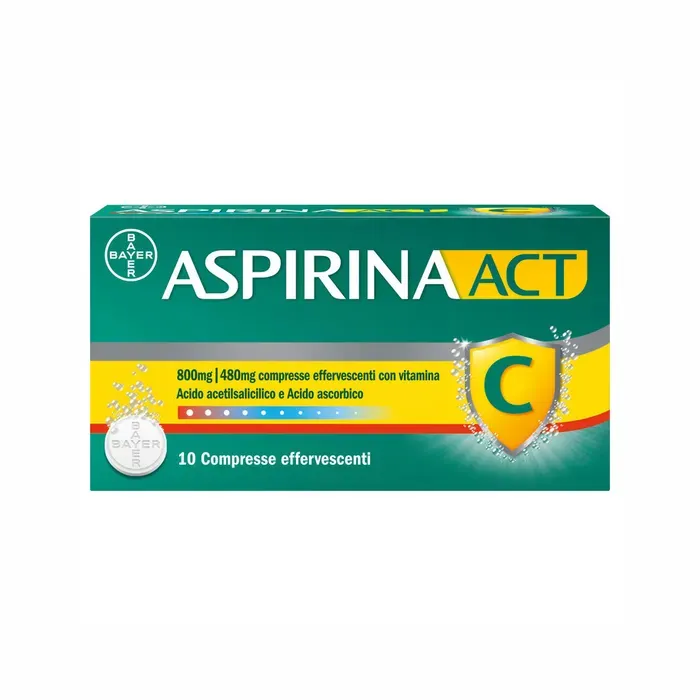
Table of Contents
- Package leaflet: Information for the patient
- Aspirinaact 800 mg / 480 mg effervescent tablets with vitamin C
- 1. What Aspirinaact is and what it is used for
- 2. What you need to know before taking Aspirinaact
- 3. How to take Aspirinaact
- 4. Possible side effects
- 5. How to store Aspirinaact
- 6. Package contents and other information
PACKAGE LEAFLET
Package leaflet: Information for the patient
Aspirinaact 800 mg / 480 mg effervescent tablets with vitamin C
Acetylsalicylic acid and ascorbic acid
Please read this leaflet carefully before taking this medicine because it contains
important information for you.
Always take this medicine exactly as described in this leaflet or as your doctor or
pharmacist has instructed you.
- Keep this leaflet. You may need to read it again.
- If you need more information or advice, consult your pharmacist.
- If you experience any side effect, including those not listed in this leaflet, consult your doctor or pharmacist. See section 4.
- Consult your doctor if you do not notice improvement or if your symptoms worsen after 3 days (for fever) or 3–4 days (for pain).
Contents of this leaflet
- What Aspirinaact is and what it is used for
- What you need to know before taking Aspirinaact
- How to take Aspirinaact
- Possible side effects
- How to store Aspirinaact
- Contents of the pack and other information
1. What Aspirinaact is and what it is used for
Aspirinaact contains:
- acetylsalicylic acid, which relieves pain and reduces fever;
- ascorbic acid, also known as vitamin C.
Aspirinaact is used:
- for the symptomatic treatment of mild to moderate pain, such as headache, toothache and menstrual pain;
- in the common cold or influenza-like symptoms for the symptomatic treatment of pain and fever.
Vitamin C (ascorbic acid) supports the body's defense system by enhancing the activity of white blood cells.
Aspirinaact is used in adults and adolescents over 16 years of age.
2. What you need to know before taking Aspirinaact
Do not take Aspirinaact:
if you are allergic
- to acetylsalicylic acid, ascorbic acid, or to any of the other ingredients of this medicine (listed in section 6); or
- to other non-steroidal anti-inflammatory drugs (NSAIDs), which are medicines used to treat pain, fever, or inflammation.
if you have too many mast cells (pre-existing mastocytosis). The use of acetylsalicylic acid may induce severe
hypersensitivity reactions (including circulatory shock with flushing, low blood pressure, rapid
heart rate, and vomiting).
if you have a history of asthma caused by taking acetylsalicylic acid or a similar medicine (especially NSAIDs);
during the third trimester of pregnancy (if you are pregnant for more than 24 weeks);
if you suffer from gastric or intestinal ulcers;
if you have bleeding or a risk of bleeding (haemorrhagic condition);
if you have severely reduced liver or kidney function;
if you have severely reduced and uncontrolled heart function;
if you are taking methotrexate therapy at doses of 15 mg/week or higher;
if you are taking oral anticoagulant medicines (medicines to thin the blood and prevent clotting) and
have a history of gastric or intestinal ulcers;
if you have kidney stones, a condition in which stones form, or a history of kidney stones (nephrolithiasis);
if you excrete urine with high levels of calcium oxalate crystals (hyperoxaluria);
if you have a condition causing increased iron accumulation in the body (iron overload - haemochromatosis).
Warnings and precautions
Talk to your doctor or pharmacist before taking Aspirinaact
if you are using other medicines containing acetylsalicylic acid, to avoid the risk of overdose.
if you experience headaches while taking high doses of analgesics for a long period.
Do not increase the dose; instead, consult your doctor or pharmacist.
if you are taking analgesics regularly, particularly several analgesics in combination.
This use may lead to persistent kidney damage, with a risk of reduced kidney function.
if you have a history of gastric or intestinal ulcers or bleeding, or stomach inflammation (gastritis).
if you are also taking medicines that thin the blood and prevent its clotting
(oral anticoagulants).
Stop taking Aspirinaact immediately and contact your doctor if you experience
gastric or intestinal bleeding or ulcers. Signs include vomiting blood, blood in the
stool, or blackish stool coloration.
if you have reduced kidney function, or heart or circulatory problems, such as renal vascular disease, heart failure, recent major surgery, or severe bleeding.
Taking acetylsalicylic acid may further reduce kidney function, potentially leading to acute kidney failure. Do not take Aspirinaact if you have severely reduced kidney function or uncontrolled heart function.
if you have reduced liver function.
Do not take Aspirinaact if you have severely reduced liver function.
if you have heavy menstrual flow (the volume and duration of menstruation may increase).
if you are scheduled for surgery.
Acetylsalicylic acid increases the risk of bleeding, even at low doses or if taken several days
before surgery. Inform your doctor, surgeon, anaesthetist, or dentist if you are scheduled for any
surgical procedure, even minor ones (e.g., tooth extraction).
Acetylsalicylic acid reduces uric acid excretion. This may trigger gout if you already tend to have limited uric acid excretion.
if you have glucose-6-phosphate dehydrogenase (G6PD) deficiency: an inherited condition affecting red blood
cells. Acetylsalicylic acid should be administered under medical supervision.
if you have increased urinary oxalate excretion (hyperoxaluria), a tendency to form calcium oxalate kidney stones, or recurrent kidney stones.
if you have iron overload or disorders of iron metabolism (Mediterranean anaemia, haemochromatosis, sideroblastic anaemia).
if you have asthma.
Do not take this medicine if point 3 in section 2 “Do not take Aspirinaact” applies to you.
Acetylsalicylic acid may cause bronchial muscle spasms and asthma attacks or other hypersensitivity reactions. Risk factors include:
- history of asthma
- hay fever
- nasal polyps, chronic respiratory disease, or
- allergic reactions, such as skin reactions (e.g., itching, hives).
The use of this medicine during breastfeeding is not recommended.
Children and adolescents
Reye's syndrome, a very rare and potentially fatal disease associated with neurological and liver damage,
has been observed in children suffering from viral illnesses (particularly influenza and varicella) when
acetylsalicylic acid is used. Therefore:
- acetylsalicylic acid should be administered to children and adolescents in these conditions only after medical advice and when other measures have proven ineffective.
- if symptoms of dizziness or fainting, unusual behaviour, or vomiting occur, stop treatment and inform the doctor immediately.
Avoid using salicylates for 6 weeks after vaccination against the varicella virus.
This medicine is not indicated for children and adolescents under 16 years of age.
Other medicines and Aspirinaact
Inform your doctor or pharmacist if you are taking, have recently taken, or might take any other medicines.
Do not take Aspirinaact if you are taking therapy with:
- methotrexate at doses of 15 mg/week or higher: a medicine used to treat severe joint inflammation, cancer, and a skin disease called psoriasis. The toxicity of methotrexate increases.
- medicines to prevent blood clotting (oral anticoagulants) and have a history of gastric or intestinal ulcers. The risk of bleeding increases.
Talk to your doctor or pharmacist before taking Aspirinaact if you are using any of the following
medicines:
Combinations not recommended
- medicines to prevent blood clotting (oral anticoagulants) and if you do not have a history of gastric or intestinal ulcers. The risk of bleeding increases.
- clopidogrel (except for approved indications for this combination) and ticlopidine: medicines to inhibit blood clotting. The risk of bleeding increases.
- medicines for the treatment of pain, fever, or inflammation belonging to the group of so-called non-steroidal anti-inflammatory drugs (NSAIDs). The risk of gastric or intestinal ulcers and bleeding increases.
- heparins at therapeutic doses (e.g., for blood clots in a vessel) or in patients aged 65 years or older regardless of heparin dose. The risk of bleeding increases. Another analgesic or antipyretic medicine should be used.
- benzbromarone, probenecid: medicines that increase uric acid excretion to treat gout. The effect of these medicines is reduced.
Combinations requiring precautions in use:
methotrexate used at doses below 15 mg/week
The toxicity of methotrexate increases. Careful monitoring is required in patients with reduced
kidney function and in patients aged 65 years or older. See also the first point in the first paragraph
“Other medicines and Aspirinaact”.
medicines that increase urine excretion (diuretics) and medicines for treating hypertension and
other heart diseases, whose active ingredients end in “pril” or “sartan” (angiotensin-converting enzyme (ACE) inhibitors, angiotensin II receptor antagonists).
Rapid loss of kidney function may occur in dehydrated patients. Additionally, the antihypertensive effect may be reduced.
Clopidogrel (in approved indications for this combination): a medicine to inhibit blood clotting.
The risk of bleeding increases.
medicines acting locally in the stomach or intestine, medicines that neutralize or bind gastric acids (antacids), or activated charcoal, a medicine used to treat diarrhoea and acute poisoning.
Take these medicines acting in the stomach or intestine at least 2 hours apart from Aspirinaact.
Heparins at doses used for prevention (e.g., of blood clots) in patients under 65 years of age.
The risk of bleeding increases.
medicines to dissolve blood clots (thrombolytics), such as streptokinase.
The risk of bleeding increases.
medicines containing cortisone or cortisone-like substances (glucocorticoids), except for hydrocortisone replacement therapy:
The risk of bleeding increases.
selective serotonin reuptake inhibitors (SSRIs), e.g. citalopram, escitalopram, fluoxetine,
fluvoxamine, paroxetine, sertraline: medicines used to treat depression.
The risk of bleeding increases.
digoxin: a medicine used to treat heart failure or irregular heartbeat.
The blood concentration of digoxin increases. Your doctor should monitor digoxin blood levels and, if necessary, adjust the dose.
medicines used to lower blood sugar levels (antidiabetics), such as insulin or sulfonylureas.
Monitoring of blood sugar levels is recommended.
valproic acid: a medicine used to treat epilepsy.
The toxicity of valproic acid increases.
Combinations to be considered:
deferasirox, deferoxamine: medicines used to remove excess iron from the body.
Deferasirox: the risk of gastric or intestinal ulcers and bleeding increases.
The use of deferoxamine and ascorbic acid may increase iron tissue toxicity, especially in the heart.
Iron and aluminium: administration of ascorbic acid increases gastrointestinal absorption. This should be considered if you have reduced kidney function, during iron replacement therapy, or when taking antacids containing aluminium.
Laboratory tests
Inform your doctor if you are taking Aspirinaact.
Acetylsalicylic acid and ascorbic acid in high doses may affect certain laboratory tests,
such as faecal occult blood testing and liver function tests.
Vitamin C may affect laboratory tests, such as measurements of glucose, creatinine,
carbamazepine, urinary and serum uric acid, and faecal occult blood testing.
Vitamin C may interfere with tests measuring glucose in urine and blood, leading to falsely altered results, despite not affecting actual blood glucose levels.
Aspirinaact and alcohol
Avoid alcohol consumption while taking Aspirinaact.
Pregnancy, breastfeeding, and fertility
If you suspect you are pregnant or are planning a pregnancy, consult your doctor or pharmacist before taking
this medicine.
Pregnancy
Pregnancy – last trimester
Do not take this medicine during the last three months of pregnancy, as it may harm the fetus or cause
problems during childbirth. It may cause kidney and heart problems in the fetus. It may affect the tendency to bleeding in both you and the baby and delay or prolong labour beyond expected duration.
Pregnancy – first and second trimesters
You should not take this medicine during the first six months of pregnancy unless absolutely necessary and under medical advice. If treatment is required during this period or during attempts to conceive, the lowest possible dose for the shortest possible time should be used.
From week 20 of pregnancy, acetylsalicylic acid may cause kidney problems in the fetus if taken for more than a few days, reducing the levels of amniotic fluid surrounding the baby (oligohydramnios), or cause narrowing of a blood vessel (ductus arteriosus) in the baby’s heart. If treatment is needed for more than a few days, your doctor may recommend additional monitoring.
Breastfeeding
Treatment with Aspirinaact is not recommended during breastfeeding because it passes into breast milk.
Fertility
Given the limited number of published human data, studies in humans do not show any significant effect of acetylsalicylic acid on fertility impairment, and there is no conclusive evidence from animal studies.
Driving and using machines
This medicine may occasionally cause headache or dizziness. Do not drive or operate machinery if these symptoms occur.
Aspirinaact contains sodium
This medicine contains 438 mg of sodium (the main component of table salt) per effervescent tablet. This corresponds to 21.9% of the maximum daily recommended sodium intake for an adult.
3. How to take Aspirinaact
Take this medicine exactly as described in this leaflet or as directed by your doctor or pharmacist. If you are unsure, consult your doctor or pharmacist.
Dosage
For oral use. The effervescent tablet must be dissolved in a glass of water before taking. The effervescent tablet must not be taken on an empty stomach to reduce gastric irritation.
The recommended dose is:
Adults
Single dose: 1 effervescent tablet
The single dose may be repeated after a minimum interval of 4 hours, if needed.
Maximum daily dose: 3 effervescent tablets
Use in children and adolescents
Adolescents: From 16 years of age and older
Use the lowest effective dose.
Dosage depends on the adolescent's body weight. This medicine should only be used in adolescents weighing more than 53 kg. The indicated age is for informational purposes only.
The recommended single dose is 1 effervescent tablet (800 mg acetylsalicylic acid / 480 mg ascorbic acid), if needed. The total daily dose must not exceed 3 tablets.
The dosage of Aspirinaact (800 mg acetylsalicylic acid / 480 mg ascorbic acid) may not be suitable for the treatment of adolescents.
For use in this age group, other products containing lower doses of acetylsalicylic acid are available.
Children under 16 years of age
Aspirinaact must not be used in children under 16 years of age. In case of accidental administration, see "What you need to know before taking Aspirinaact" and "If you take more Aspirinaact than you should".
Patients aged 65 years and older, and patients with low body weight
Use the lowest effective dose due to possible increased risk of adverse effects. See also section 2 "Do not take Aspirinaact" and "Warnings and precautions".
Patients with impaired liver or kidney function or circulatory problems
Dose reduction or prolonged dosing intervals are recommended for patients with mildly or moderately impaired liver or kidney function, or circulatory problems such as heart failure and severe bleeding.
Do not take Aspirinaact if you have severely impaired kidney or liver function or uncontrolled heart function. See section 2 "Do not take Aspirinaact".
Duration of treatment
Do not take this medicine for more than 3 days for fever or for more than 3–4 days for pain, unless otherwise directed by a doctor.
If you take more Aspirinaact than you should
Stop treatment immediately and contact your doctor without delay if you suspect an overdose.
Signs of overdose may include:
- persistent perception of ringing or noise in the ears (tinnitus), sensation of hearing loss
- sweating
- nausea, vomiting, diarrhoea
- headache
- dizziness
- rapid loss of kidney function
In children, overdose may be fatal starting from a single dose of 100 mg/kg of acetylsalicylic acid.
If you forget to take Aspirinaact
Do not take a double dose to make up for a forgotten dose.
If you have any doubts about how to use this medicine, consult your doctor or pharmacist.
4. Possible side effects
Like all medicines, this medicine can cause side effects, although not everyone gets them.
Stop taking Aspirinaact and contact your doctor immediately or go to the nearest hospital if you notice any of the following symptoms:
- swelling of the face, tongue and trachea causing severe breathing difficulties, which is a sign of a serious allergic reaction (angioedema)
- stomach pain, black stools, haematemesis (vomiting blood), vomit resembling coffee grounds, which are signs of gastric or intestinal bleeding
Side effects may occur with the following frequencies:
Common: may affect up to 1 in 10 people
gastric or intestinal disturbances such as heartburn, diarrhoea, nausea, vomiting, indigestion
Uncommon: may affect up to 1 in 100 people
stomach, intestinal or abdominal pain
urticaria, skin rash, pruritus
Rare: may affect up to 1 in 1,000 people
gastric and intestinal inflammation and ulcers (inflammation and ulcers of the oesophagus, stomach or intestine). These reactions may or may not be associated with bleeding, and may occur at any dose of acetylsalicylic acid in patients with or without warning symptoms or previous history of serious gastrointestinal events.
hypersensitivity reactions such as asthma symptoms, runny nose and nasal congestion
Very rare: may affect up to 1 in 10,000 people
occult or overt bleeding of the stomach or intestine (blood in vomit, black stools, etc.), leading to iron deficiency anaemia. The risk of bleeding is dose-dependent
perforations of the stomach and intestine
reduced excretion of uric acid, which may trigger gout in patients with limited uric acid excretion
Not known: frequency cannot be estimated from the available data
increases in liver enzyme levels known as transaminases, reduced liver function
liver injury, primarily affecting liver cells
reduced red blood cell count (anaemia) due to bleeding
decrease and destruction of red blood cells in patients with severe glucose-6-phosphate dehydrogenase (G6PD) deficiency
decrease in platelet count
low blood sugar (hypoglycaemia)
skin reactions
hypersensitivity reactions, severe allergic reactions (anaphylactic reactions)
Hypersensitivity reactions may affect the skin, airways, circulatory system, stomach and intestine, particularly in patients with asthma. Symptoms include
-
swelling of tissues due to excess fluid
-
drop in blood pressure
-
laboured breathing, dyspnoea
-
cardiac or respiratory distress
-
potentially life-threatening allergic shock reaction
-
skin rash, urticaria, pruritus, severe allergic reaction including swelling of the face or throat
-
asthma symptoms, inflammation inside the nose causing sneezing, runny nose and nasal congestion
bleeding with prolonged bleeding time, such as epistaxis (nosebleeds), bleeding gums, red spots under the skin, genital or urinary tract bleeding
The risk of bleeding persists for 4–8 days after stopping treatment with Aspirinaact. It may increase the risk of bleeding during surgical procedures. Bleeding inside the skull, stomach or intestine may also occur. Intracranial bleeding can be fatal, especially if the medicine is administered to elderly patients.
Severe bleeding, cerebral haemorrhage, particularly in patients with uncontrolled hypertension and/or those taking medicines to inhibit blood coagulation (anticoagulants). In isolated cases, these effects could potentially be fatal.
- fluid in the lungs (non-cardiogenic pulmonary oedema) with chronic use and in the context of a hypersensitivity reaction due to acetylsalicylic acid.
reduced kidney function, up to rapid loss of kidney function, gallstones due to ascorbic acid
diarrhoea with high doses of ascorbic acid
headache, dizziness, sensation of hearing loss, tinnitus (persistent ringing or noise in the ears), which are signs of overdose
Reye's syndrome (disturbance in consciousness or abnormal behaviour, or vomiting) (see section 2. "What you should know before taking Aspirinaact")
Intestinal diaphragm disease (intestinal narrowing) (mainly with long-term treatment).
Reporting of side effects
If you experience any side effects, including those not listed in this leaflet, talk to your doctor or pharmacist.
You can also report side effects directly via the national reporting system at https://www.aifa.gov.it/content/segnalazioni-reazioni-avverse.
Reporting side effects can help provide more information on the safety of this medicine.
5. How to store Aspirinaact
Keep this medicine out of the sight and reach of children.
Do not use this medicine after the expiry date stated on the label. The expiry date refers to the last day of that month.
Do not store above 25 °C.
Do not dispose of any medicine via wastewater or household waste. Ask your pharmacist how to dispose of medicines you no longer use. This will help protect the environment.
6. Package contents and other information
What Aspirinaact contains
- The active substances are acetylsalicylic acid and ascorbic acid. Each effervescent tablet contains:
- 800 mg of acetylsalicylic acid and
- 480 mg of ascorbic acid
- The other components are: sodium hydrogen carbonate (modified), citric acid, povidone, anhydrous colloidal silica
Description of the appearance of Aspirinaact and package contents
Aspirinaact effervescent tablets are white to off-white in colour and round in shape.
The tablets feature the Bayer cross within a circle.
Aspirinaact is available in aluminium/paper strips inside cardboard packages containing 10 or 20 effervescent tablets.
Not all pack sizes may be marketed.
Marketing Authorisation Holder and Manufacturer
Marketing Authorisation Holder
Bayer Spa
Viale Certosa 130, 20156 Milan, Italy
Manufacturer
Bayer Bitterfeld GmbH
Salegaster Chausee 1
06803 Bitterfeld-Wolfen
Germany
This medicinal product is authorised in the European Economic Area countries under the following
names:
Italy Aspirinaact