Anexate
Italy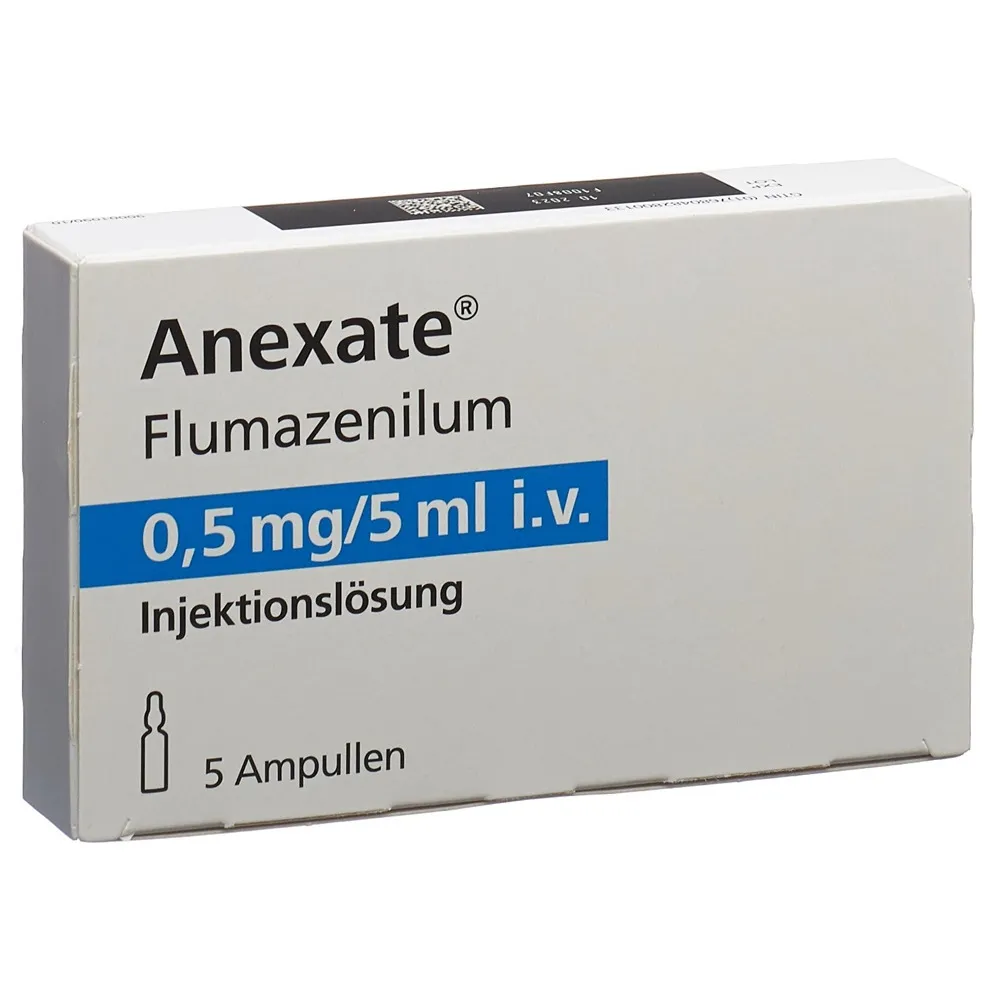
Table of Contents
- Patient Information Leaflet
- Anexate 0.5 mg/5 ml injectable solution for intravenous use, 1 mg/10 ml injectable solution for intravenous use
- 1. What Anexate is and what it is used for
- 2. What you should know before Anexate is administered to you and/or the child
- 3. How Anexate is administered
- 4. Possible side effects
- 5. How to store Anexate
- 6. Package contents and other information
- The following information is intended exclusively for physicians or healthcare professionals
Patient Information Leaflet
Anexate 0.5 mg/5 ml injectable solution for intravenous use, 1 mg/10 ml injectable solution for intravenous use
Flumazenil
Please read this leaflet carefully before this medicine is administered to you and/or your child, as it contains important information for you and/or your child.
- Keep this leaflet. You may need to read it again.
- If you have any questions, ask your doctor, pharmacist, or nurse.
- This medicine has been prescribed for you only. Do not give it to other people, even if they have the same symptoms as you, because it could be harmful.
- If you experience any adverse reactions, including those not listed in this leaflet, contact your doctor, pharmacist, or nurse. See section 4.
Contents of this leaflet:
- What Anexate is and what it is used for
- What you need to know before Anexate is administered
- How Anexate is administered
- Possible side effects
- How to store Anexate
- Contents of the pack and other information
1. What Anexate is and what it is used for
Anexate contains the active substance flumazenil, a medicine that blocks drowsiness and the calming and relaxing effects induced by a class of medicines called "benzodiazepines" with sedative and anxiolytic properties, capable of inducing sleep and muscle relaxation. Anexate works by reducing sedation and drowsiness, promoting awakening and return to consciousness.
- Anexate is indicated in adults for the following:
- to reverse sedation from general anaesthesia (a state of general body numbness with loss of consciousness) induced and maintained by benzodiazepines during a surgical procedure
- to reverse the calming effects and drowsiness caused by benzodiazepines during a medical examination or treatment in a hospital or outpatient setting
- to reverse paradoxical reactions (certain adverse effects that may occur following the use of benzodiazepines). (See section 4.)
- to treat the effects caused by intentional or accidental overdose of benzodiazepines and to counteract their effects on the brain (restoring the ability to breathe independently and regaining consciousness, thereby avoiding the need for insertion of a breathing tube or allowing its removal).
- Anexate is indicated in children over one year of age to reverse drowsiness and the calming and relaxing effects induced by benzodiazepines.
2. What you should know before Anexate is administered to you and/or the child
Anexate must not be administered to you and/or the child
- if you are allergic to flumazenil or to any of the other ingredients of this medicine (listed in section 6)
- if you have taken or have been administered a benzodiazepine to treat a life-threatening condition you suffer from, for example: increased pressure inside the skull (intracranial hypertension), continuous epileptic seizures without full recovery of consciousness (status epilepticus).
Warnings and precautions
This medicine is available only in a hospital setting. Therefore, this medicine is administered exclusively under close supervision of qualified medical personnel.
- Before this medicine is administered, the doctor will assess your/your child's health status to evaluate the benefits of treatment with Anexate against the potential risks.
- After administration of Anexate, the doctor will monitor you and/or the child for at least 24 hours and check for any adverse effects.
- If you or the child have previously been treated with benzodiazepines at high doses and/or for prolonged periods, the doctor will avoid rapid injection of Anexate at doses equal to or greater than 1 mg, as you/your child may experience withdrawal symptoms such as palpitations (sensation of increased heart rate), agitation, anxiety, emotional disturbances, confusion, and mild sensory disturbances. In any case, the doctor will evaluate the benefits of using Anexate against the possible risks of developing withdrawal symptoms. If the doctor decides to administer Anexate, the dose will be carefully considered, and appropriate therapy will be adopted if you/your child develop withdrawal symptoms.
Before Anexate is administered, inform the doctor if you and/or the child:
- suffer from any illness, for example, if you have heart problems
- suffer from anxiety, as the doctor will need to carefully evaluate the dose of Anexate to be administered
- suffer from liver disorders, as the doctor will need to carefully evaluate the dose of Anexate to be administered
- abuse or have abused multiple drugs, especially benzodiazepines and cyclic antidepressants (medicines for depression), as you may experience seizures and disturbances in heart rhythm
- suffer from epilepsy and have been treated with benzodiazepines for a long time, as you/your child may experience seizures
- have brain lesions and are being treated with benzodiazepines, as you may experience seizures and alterations in blood flow and pressure in the brain.
Children and adolescents
Children under one year of age
In children under one year of age, use of Anexate requires caution, as available data are limited. Until sufficient data become available, the doctor will administer Anexate to children under one year of age only after carefully evaluating the benefits of treatment with Anexate against the potential risks for the child, especially in cases of accidental overdose.
Children over one year of age
Anexate may be administered to children over one year of age to reverse sedation and the calming and relaxing effects caused by benzodiazepines.
Other medicines and Anexate
Inform the doctor, nurse, or pharmacist if you/your child are taking, have recently taken, or might take any other medicines.
In particular, inform the doctor if you/your child are taking the following medicines:
- benzodiazepines (especially if at high doses and/or for prolonged periods) or medicines similar to benzodiazepines such as zopiclone, triazolopyridazine. No interactions have been observed with other medicines that depress the Central Nervous System. Blood levels of Anexate are not affected when Anexate is administered concurrently with the benzodiazepines midazolam, flunitrazepam, and lormetazepam. There are no interactions between ethanol and Anexate affecting Anexate blood levels.
Pregnancy and breastfeeding
If you are pregnant, suspect you may be pregnant, planning to become pregnant, or breastfeeding, inform your doctor or nurse before this medicine is administered.
Pregnancy
The safety of using Anexate during pregnancy has not been established. If you are pregnant, the doctor will evaluate the benefits of using Anexate for the mother against the potential risks for the fetus.
Breastfeeding
It is not known whether Anexate passes into breast milk. If you are breastfeeding, the doctor will evaluate whether to administer Anexate to you based on your condition and the severity of the case.
Driving and using machines
Do not undertake activities requiring alertness, such as driving vehicles (including bicycles) or operating machinery, during the first 24 hours after Anexate has been administered.
The doctor will assess whether you should be accompanied when leaving the hospital.
Anexate contains sodium
This medicine contains less than 1 mmol of sodium (23 mg) per usual dose (0.3–0.6 mg of flumazenil), i.e., essentially "sodium-free."
This medicine contains 36.8 mg of sodium (the main component of table salt) per 1 mg dose and 73.6 mg per 2 mg dose. This corresponds to 1.9% and 3.7%, respectively, of the maximum daily recommended dietary intake of sodium for an adult.
3. How Anexate is administered
This medicine is available only in a hospital setting. Therefore, this medicine is administered
exclusively under the close supervision of qualified medical personnel.
Adults and children over one year of age
The appropriate dose is determined by the doctor based on age, body weight, general health status,
the patient's/child's response to treatment, any adverse effects the patient/child may experience, and
the possible use of other medicinal products.
The dose and rate of administration will be individually adjusted until the desired level of
awakening is achieved.
Anexate is administered into a vein (by injection or by infusion using an intravenous drip) by qualified
medical personnel (the anaesthetist or an experienced doctor).
If you/your child suffer from liver disorders or anxiety
If you/your child suffer from liver disorders or anxiety, the doctor will carefully evaluate the dose of
Anexate to be administered.
If more Anexate is administered than intended
In the event of an overdose of Anexate, the doctor will implement general supportive measures (such as monitoring vital signs and overall health status).
4. Possible side effects
Like all medicines, this medicine can cause side effects, although not everybody gets them.
Anexate is well tolerated both in adults and children. Side effects usually resolve quickly without the need for special treatment.
The side effects that you or the child may experience after administration of Anexate are listed below, according to the following frequency:
Common (may affect up to 1 in 10 people)
- nausea
- vomiting
These side effects may occur when Anexate is used to wake you up after surgery, especially if opioids (medicines used to prevent and relieve pain during surgical procedures) were also used for anaesthesia.
Uncommon (may affect up to 1 in 100 people)
- anxiety and fear. These side effects occur following too rapid injection of the Anexate solution
- palpitations (sensation of increased heartbeat). This side effect occurs following too rapid injection of the Anexate solution and generally does not require treatment.
Not known (frequency cannot be estimated from available data)
- allergic reactions (including anaphylactic reactions)
- withdrawal symptoms (e.g. agitation, anxiety, emotional disturbances, confusion, sensory disturbances). These effects occur following too rapid injection of the Anexate solution and if you are being treated with high doses of benzodiazepines and/or for prolonged periods.
- panic attacks. This side effect may occur if you have previously suffered from panic attacks.
- abnormal crying
- agitation
- aggressive reactions
- seizures. This effect may occur if you have epilepsy or severe liver disorders, and particularly if you have previously taken benzodiazepines for a long time or have abused multiple drugs.
- temporary increase in blood pressure. This side effect may occur upon waking up.
- flushing
- chills. This side effect occurs following too rapid injection of the Anexate solution and generally does not require treatment.
Reporting of side effects
If you experience any side effect, including those not listed in this leaflet, talk to your doctor, nurse, or pharmacist.
You can also report side effects directly via the national reporting system at:
http://www.aifa.gov.it/content/segnalazioni-reazioni-avverse.
By reporting side effects, you can help provide more information on the safety of this medicine.
5. How to store Anexate
Keep this medicine out of the sight and reach of children.
This medicine requires no special storage conditions.
Do not use this medicine after the expiry date stated on the carton after "Exp".
The expiry date refers to the last day of that month.
Do not dispose of medicines via wastewater or household waste. Ask your pharmacist how to dispose of medicines you no longer use. This will help protect the environment.
6. Package contents and other information
What Anexate contains
Anexate 0.5 mg/5 ml injectable solution for intravenous use
- The active substance is: flumazenil (one 5 ml vial contains 0.5 mg of flumazenil)
- The other components are: sodium edetate, glacial acetic acid, sodium chloride (see section “Anexate contains sodium”), water for injectable preparations.
Anexate 1 mg/10 ml injectable solution for intravenous use
- The active substance is: flumazenil (one 10 ml vial contains 1 mg of flumazenil)
- The other components are: sodium edetate, glacial acetic acid, sodium chloride (see section “Anexate contains sodium”), water for injectable preparations.
Description of the appearance of Anexate and contents of the pack
Anexate is a clear, transparent solution for administration into a vein, contained in a transparent glass vial of 5 ml or 10 ml. Each Anexate pack contains 1 vial.
It is possible that not all pack sizes are marketed.
Marketing Authorization Holder and Manufacturer
Marketing Authorization Holder
CHEPLAPHARM Arzneimittel GmbH
Ziegelhof 24
17489 Greifswald
Germany
Manufacturer
CHEPLAPHARM Arzneimittel GmbH
Ziegelhof 23-24
17489 Greifswald
Germany
The following information is intended exclusively for physicians or healthcare professionals
Precautions for use
Rapid injection of the drug in doses equal to or greater than 1 mg in patients who have received high-dose and/or prolonged benzodiazepine treatment, discontinued at any time within the preceding weeks before Anexate administration, may cause withdrawal symptoms such as palpitations, agitation, anxiety, emotional lability, as well as confusion and mild sensory disturbances, and should therefore be avoided.
Anexate is not indicated for the treatment of benzodiazepine dependence nor for the management of prolonged benzodiazepine withdrawal syndromes.
In high-risk patients, the benefits of benzodiazepine-induced sedation must be weighed against the risks of a rapid return of consciousness. In patients (e.g., those with cardiac conditions), maintaining a certain level of sedation during the early postoperative period may be preferable over full alertness.
In anxious patients during the preoperative phase or in patients known to suffer from chronic or transient anxiety, the dosage of Anexate must be carefully adjusted.
For patients who have been chronically treated with high doses of benzodiazepines, the benefits of using Anexate must be carefully weighed against the potential risks of withdrawal symptoms. If, despite careful dosing, withdrawal symptoms occur, treatment with low doses of benzodiazepines may be considered as necessary, administered intravenously and titrated according to the patient's response.
However, post-surgical pain should also be taken into account, and it may be preferable to keep the patient slightly sedated.
Special warnings
In anesthesia, at the end of a surgical procedure, Anexate must not be administered before the disappearance of the peripheral muscle relaxant effect.
Dosage, method and timing of administration
Anexate must be administered intravenously by an anesthesiologist or otherwise by an experienced clinician.
It can be administered undiluted or diluted.
For intravenous infusion, it can be diluted in 5% glucose solution or 0.9% sodium chloride solution and may also be used concomitantly with other resuscitation procedures.
Anesthesia
The recommended initial dose is 0.2 mg administered intravenously over approximately 15 seconds.
If the desired level of consciousness is not achieved within 60 seconds, a second dose of 0.1 mg may be injected, which can be repeated every 60 seconds if necessary, up to a total dose of 1 mg. The usual dose is 0.3–0.6 mg.
Intensive care
The recommended initial dose is 0.3 mg intravenously. If the desired level of consciousness is not achieved within 60 seconds, Anexate may be repeated with a dose of 0.1 mg, repeated every 60 seconds as needed, up to a total dose of 2 mg.
If drowsiness recurs, 0.1–0.4 mg of the drug may be administered via intravenous infusion over one hour.
Dosage and infusion rate must be individually adjusted until the desired level of awakening is achieved.
In intensive care units, when Anexate is administered by slow infusion and appropriately diluted, it should not cause withdrawal symptoms in patients treated for prolonged periods with high doses of benzodiazepines. If unexpected signs of excessive stimulation occur, 5 mg of diazepam or 5 mg of midazolam should be administered intravenously.
If repeated doses of Anexate do not improve respiratory function and level of consciousness, a different (non-benzodiazepine) etiology should be considered.
Hepatic impairment:
Since flumazenil is primarily metabolized in the liver, careful dose titration is recommended in patients with impaired hepatic function.
Children over one year of age
To reverse benzodiazepine-induced sedative effects in children over one year of age, the recommended initial dose is 0.01 mg/kg (up to 0.02 mg) administered intravenously over 15 seconds. If the desired level of consciousness is not achieved after an additional 45 seconds, a further injection of 0.01 mg/kg (up to 0.02 mg) may be given, repeated at 60-second intervals if necessary (up to a maximum of 4 times), to a maximum total dose of 0.05 mg/kg or 1 mg, whichever is lower. The dose should be individualized according to the patient's response. There are no data available on the safety and efficacy of repeated administration of Anexate in children for re-sedation.
Overdose
In cases of overdose with multiple drugs, particularly tricyclic antidepressants, toxic effects (such as seizures and cardiac rhythm disturbances) may occur when the effects of benzodiazepines are reversed by Anexate.
Experience with acute Anexate overdose in humans is very limited.
There is no specific antidote for Anexate overdose. Management of overdose should consist of general supportive measures, including monitoring of vital signs and the patient's clinical status.
No overdose symptoms have been reported even with doses higher than recommended, including intravenous doses of up to 100 mg.