Aldactazide
Italy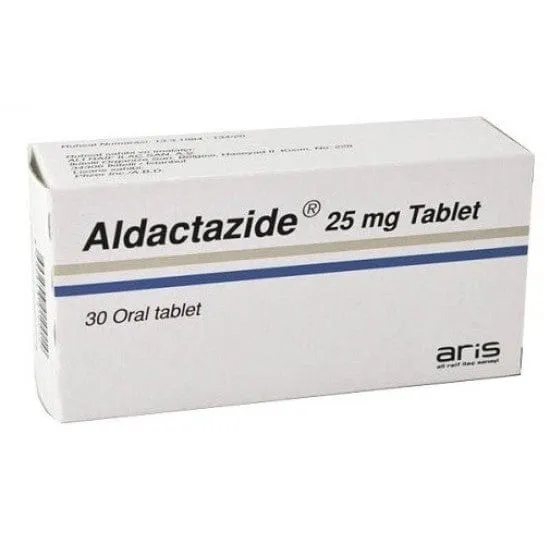
Table of Contents
Package leaflet: Information for the patient
ALDACTAZIDE 25 mg + 25 mg tablets
Hydrochlorothiazide + Spironolactone
Please read this leaflet carefully before taking this medicine because it contains important information for you.
- Keep this leaflet. You may need to read it again.
- If you have any questions, ask your doctor or pharmacist.
- This medicine has been prescribed for you only. Do not give it to other people, even if their symptoms are the same as yours, as it may be harmful.
- If you experience any adverse reaction, including those not listed in this leaflet, contact your doctor or pharmacist. See section 4.
Contents of this leaflet:
- What ALDACTAZIDE is and what it is used for
- What you need to know before taking ALDACTAZIDE
- How to take ALDACTAZIDE
- Possible side effects
- How to store ALDACTAZIDE
- Contents of the pack and other information
1. What ALDACTAZIDE is and what it is used for
ALDACTAZIDE contains two active substances, hydrochlorothiazide and spironolactone, in a fixed-dose combination.
Hydrochlorothiazide belongs to a group of medicines called thiazide diuretics, which increase urine production, resulting in a reduction of blood pressure.
Spironolactone belongs to a group of medicines called potassium-sparing diuretics, which also increase urine production and help prevent excessive loss of potassium in the urine.
This medicine is indicated for the treatment of diseases of the heart (congestive heart failure), liver (hepatic cirrhosis with ascites), and kidneys (nephrotic syndrome), characterized by fluid accumulation in the body due to an increase in the production of the hormone aldosterone (secondary hyperaldosteronism).
2. What you should know before taking ALDACTAZIDE
Do not take ALDACTAZIDE
- if you are allergic to hydrochlorothiazide, spironolactone, or any of the other ingredients of this medicine (listed in section 6);
- if you are allergic to other thiazides or sulfonamide drugs;
- if you have difficulty urinating (anuria);
- if you have kidney problems (acute renal failure, deterioration of renal excretory function);
- if you have high levels of potassium in your blood (hyperkalemia);
- if you suffer from a disease of the adrenal gland (Addison's disease) or other conditions associated with hyperkalemia;
- if you have severe liver problems (severe hepatic insufficiency);
- if you have high levels of calcium in your blood (hypercalcemia);
- if you are breastfeeding;
- if you are taking other medicines to increase potassium levels in the blood, potassium supplements, or potassium-containing salt substitutes.
Warnings and precautions
Talk to your doctor or pharmacist before taking ALDACTAZIDE
- if you have previously had skin cancer or develop an unexpected skin lesion during treatment. Treatment with hydrochlorothiazide, particularly long-term use at high doses, may increase the risk of certain types of non-melanoma skin cancer and lip cancer. Protect your skin from exposure to sunlight and UV radiation while taking ALDACTAZIDE.
- if you have previously experienced respiratory or lung problems (including inflammation or fluid in the lungs) after taking hydrochlorothiazide. If you develop shortness of breath or severe breathing difficulties after taking ALDACTAZIDE, consult a doctor immediately.
Concomitant administration of ALDACTAZIDE with certain medicines, potassium supplements, and potassium-rich foods may cause severe hyperkalemia (increased potassium levels in the blood). Symptoms of severe hyperkalemia may include muscle cramps, irregular heartbeat, diarrhea, nausea, dizziness, or headache.
Take this medicine under medical supervision with caution if you are in any of the following conditions:
- if you have liver problems;
- if you have kidney problems;
- if you have diabetes;
- if you are taking other medicines that may increase potassium levels in the blood (hyperkalemia) (see section “Other medicines and ALDACTAZIDE”);
- if you frequently experience vomiting (profuse emesis);
- if you have refractory edema (accumulation of fluid in the body);
- if you have or have had allergic reactions or bronchial asthma;
- if you have an autoimmune disease called systemic lupus erythematosus (also known as lupus or SLE).
Inform your doctor if, during treatment with this medicine, you experience symptoms such as:
- excessive thirst, dry mouth, general weakness, drowsiness, restlessness, muscle pain or cramps, nausea, vomiting, low blood pressure (hypotension), difficulty urinating, excessively rapid heartbeat, or gastrointestinal disturbances. These symptoms may indicate fluid and electrolyte imbalance (chemical substances present in blood and urine, e.g., sodium, potassium, calcium, magnesium, chloride);
- reduced vision or eye pain. These could be symptoms of fluid accumulation in the vascular layer of the eye (choroidal effusion) or increased intraocular pressure (glaucoma), which may occur within hours or weeks after taking ALDACTAZIDE. If untreated, these may lead to permanent vision damage.
During treatment with this medicine, especially in elderly patients and patients with impaired liver and/or kidney function, your doctor will periodically monitor your kidney function, blood pressure, fluid intake, and levels of certain chemicals in blood and urine called electrolytes (e.g., sodium, potassium, calcium, magnesium, chloride). Monitoring of blood glucose, cholesterol, triglycerides, and urinary uric acid levels may also be necessary.
For athletes: Using this medicine without therapeutic need constitutes doping and may result in a positive anti-doping test.
Children and adolescents
This medicine must not be used in children and adolescents under 18 years of age, as safety and efficacy have not been established.
Other medicines and ALDACTAZIDE
Tell your doctor or pharmacist if you are taking, have recently taken, or might take any other medicines.
Inform your doctor if you are taking abiraterone for the treatment of prostate cancer.
Inform your doctor if you are taking mitotane for the treatment of malignant adrenal gland tumors.
This medicine must not be used concomitantly with mitotane.
Take this medicine with caution and inform your doctor if you are taking:
- other medicines that may increase potassium levels in the blood, potassium supplements, potassium-containing salt substitutes;
- trimethoprim and trimethoprim-sulfamethoxazole;
- medicines used to treat heart and/or blood vessel diseases, such as ACE inhibitors and angiotensin II receptor antagonists;
- aldosterone antagonists, medicines used to control aldosterone levels in the blood;
- anti-inflammatory medicines such as indomethacin or other NSAIDs;
- if you are taking corticosteroids (e.g., cortisone) or medicines containing adrenocorticotropic hormone (ACTH);
- medicines used to control blood clotting such as heparin and low molecular weight heparin;
- medicines used to treat heart problems (digoxin and digitalis);
- medicines used to control blood sugar levels (oral antidiabetics and insulin);
- tubocurarine, a medicine used to relax muscles;
- medicines containing lithium, used to treat mood disorders;
- medicines used for epilepsy (barbiturates).
If you are scheduled for surgery, inform the anesthesiologist that you are taking this medicine, as it may interact with medicines used during surgical procedures (anesthetics).
ALDACTAZIDE and alcohol
Drinking alcohol during treatment with this medicine may cause dizziness when standing up (orthostatic hypotension).
Pregnancy, breastfeeding, and fertility
If you are pregnant, think you may be pregnant, planning to become pregnant, or are breastfeeding, consult your doctor or pharmacist before taking this medicine.
Use of ALDACTAZIDE is not recommended during pregnancy because it may cause potentially harmful effects on the fetus and newborn.
Hydrochlorothiazide must not be used during pregnancy to treat symptoms such as swelling and high blood pressure (gestational edema and hypertension, preeclampsia).
Do not use ALDACTAZIDE if you are breastfeeding, because hydrochlorothiazide and spironolactone may be excreted in breast milk.
ALDACTAZIDE may reduce fertility in women.
Driving and using machines
ALDACTAZIDE may have a slight to moderate effect on the ability to drive vehicles or operate machinery. If you experience drowsiness or dizziness, avoid driving or operating machinery.
3. How to take ALDACTAZIDE
Take this medicine exactly as directed by your doctor or pharmacist. If you have
any doubts, consult your doctor or pharmacist.
Your doctor will adjust the dose according to your health condition and your response to treatment.
The recommended dose is 2–4 tablets daily, taken in divided doses.
If you take more ALDACTAZIDE than you should
If you ingest an excessive amount of this medicine, seek immediate medical attention from your doctor or
the nearest hospital.
An overdose of this medicine may cause excessive lowering of blood pressure (hypotension) and symptoms such as drowsiness, mental confusion, skin irritation (erythematous or maculopapular rash), nausea, vomiting, dizziness or diarrhoea, disturbances in blood levels of sodium and potassium (hyponatremia, hyperkalemia/hypokalemia), depression of the central nervous system, and in patients with liver problems, hepatic coma.
If you experience any of these symptoms, stop taking the medicine immediately and consult your doctor without delay.
In case of overdose, your doctor may induce vomiting or perform gastric lavage. Additionally, supportive treatment will be initiated to maintain hydration, restore electrolyte balance (chemical substances present in blood and urine, e.g. sodium, potassium, calcium, magnesium, chloride), and vital functions will be closely monitored.
If you forget to take ALDACTAZIDE
Do not take a double dose to make up for the forgotten tablet.
If you have any doubts about how to use this medicine, consult your doctor or pharmacist.
4. Possible side effects
Like all medicines, this medicine can cause side effects, although not everyone experiences them.
Due to the presence of hydrochlorothiazide, the following side effects may occur:
Very common (may affect more than 1 in 10 people):
- decrease in blood potassium levels (hypokalaemia);
- increase in blood cholesterol and triglyceride levels.
Common (may affect up to 1 in 10 people):
- increase in blood uric acid levels (hyperuricaemia);
- decrease in blood magnesium (hypomagnesaemia) and sodium (hyponatraemia) levels;
- dizziness upon standing up from a lying or sitting position (orthostatic hypotension);
- nausea, vomiting, and loss of appetite;
- skin allergic reactions (urticaria);
- problems with sexual performance (impotence).
Rare (may affect up to 1 in 1,000 people):
- decrease in the number of platelets in the blood (thrombocytopenia);
- increase in blood calcium levels (hypercalcaemia);
- increase in blood sugar levels (hyperglycaemia) and worsening of diabetic metabolic status;
- depression and sleep disorders;
- dizziness, headache (cephalaea);
- altered sensation in the legs or arms (paraesthesia);
- visual disturbances;
- changes in heart rhythm (arrhythmias);
- stomach problems (abdominal disturbances), constipation, or diarrhoea;
- liver problems (intrahepatic cholestasis) and yellowing of the skin and whites of the eyes due to liver problems (jaundice);
- light sensitivity reactions (photosensitivity);
- presence of sugar in the urine (glycosuria).
Very rare (may affect up to 1 in 10,000 people):
- decrease in the number of red and white blood cells in the blood (haemolytic anaemia, leucopenia), reduced production of new blood cells by the bone marrow;
- allergic reactions;
- reactivation or worsening of effects of an autoimmune disease affecting various organs and tissues, characterised by redness and skin lesions on the face (systemic lupus erythematosus);
- decrease in blood chloride levels (hypochloraemic alkalosis);
- acute respiratory distress (signs include severe shortness of breath, fever, weakness, and confusion);
- inflammation of the pancreas (pancreatitis);
- redness and skin lesions similar to those caused by a chronic disease (cutaneous lupus erythematosus);
- inflammation of superficial veins leading to tissue death (necrotising vasculitis) and severe skin reactions (toxic epidermal necrolysis).
Other side effects of unknown frequency (frequency cannot be determined from available data):
- skin and lip cancer (non-melanoma skin cancer);
- reduction in blood cells (aplastic anaemia);
- sudden onset of difficulty seeing distant objects (acute myopia), vision loss or eye pain due to increased pressure (possible signs of fluid accumulation in the vascular layer of the eye (choroidal effusion) or acute angle-closure glaucoma) and/or altered colour perception (xanthopsia);
- skin irritation (erythema multiforme);
- pemphigoid (a condition presenting with fluid-filled blisters on the skin);
- involuntary muscle contractions (muscle spasms);
- kidney problems (renal dysfunction, acute renal failure);
- muscle weakness (asthenia);
- fever.
Due to the presence of spironolactone, the following side effects of unknown frequency (frequency cannot be determined from available data) may occur:
- generalized allergic reaction (anaphylactic reaction);
- inflammation of small blood vessels in the skin (vasculitis);
- fever;
- urticaria, skin irritation with red rash, sometimes raised (maculopapular or erythematous skin eruptions);
- pemphigoid (a condition presenting with fluid-filled blisters on the skin);
- stomach or intestinal damage (stomach bleeding, ulcer), inflammation of the stomach (gastritis);
- changes in electrolyte levels (chemical substances present in blood and urine, e.g. sodium, potassium, calcium, magnesium, chloride) in the blood (see section “Warnings and precautions”);
- reduced kidney function (renal failure);
- breast enlargement in males (gynaecomastia), erectile dysfunction;
- menstrual irregularities or complete absence of menstruation (amenorrhoea), post-menopausal bleeding, mild masculinising effects in women (hirsutism, voice lowering);
- reduction in the number of white blood cells in the blood (agranulocytosis);
- mental confusion;
- loss of muscular coordination (ataxia);
- headache (cephalaea);
- drowsiness and lethargy;
- liver toxicity (hepatic toxicity).
Reporting of side effects
If you experience any side effect, including those not listed in this leaflet, talk to your doctor or pharmacist. You can also report side effects directly via the national reporting system at https://www.aifa.gov.it/content/segnalazioni-reazioni-avverse
By reporting side effects, you can help provide more information on the safety of this medicine.
5. How to store ALDACTAZIDE
Keep this medicine out of the sight and reach of children.
Do not use this medicine after the expiry date stated on the packaging after "Expiry".
The expiry date refers to the last day of that month.
Do not dispose of any medicine via wastewater or household waste. Ask your pharmacist how to dispose of
medicines you no longer use. This will help protect the environment.
6. Package contents and other information
What ALDACTAZIDE contains
- The active substances are hydrochlorothiazide and spironolactone. Each tablet contains 25 mg of hydrochlorothiazide and 25 mg of spironolactone.
- The other components are starch, povidone, peppermint flavor, magnesium stearate and calcium sulfate.
Description of the appearance of ALDACTAZIDE and contents of the pack
Carton pack containing 20 white tablets in blister.
Marketing Authorization Holder
SPA - Società Prodotti Antibiotici S.p.A.
Via Biella, 8
20143 MILAN
Manufacturer
DOPPEL Farmaceutici S.r.l.
Via Volturno, 48
20089 Quinto De' Stampi
Rozzano (MI).