Acyclovir Sandoz
Italy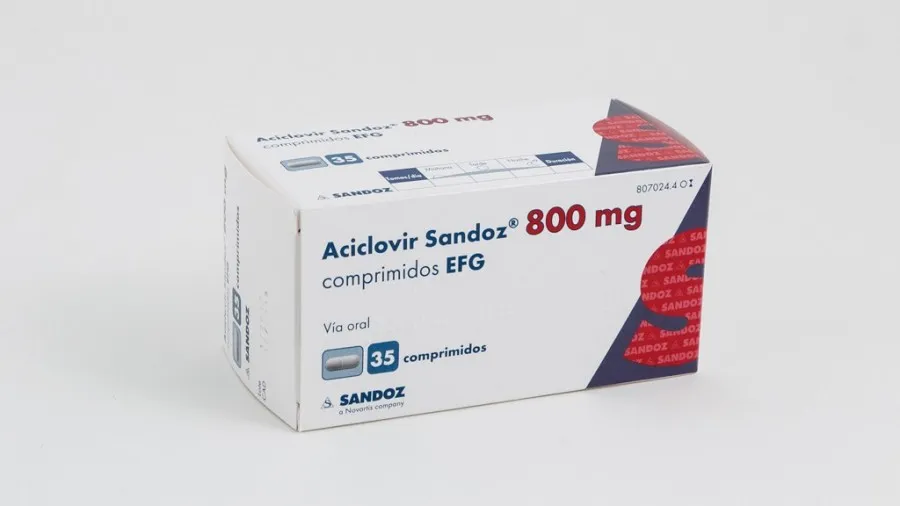
Table of Contents
- Package leaflet: Information for the user
- Aciclovir Sandoz 5% cream
- 1. What Aciclovir Sandoz is and what it is used for
- 2. What you need to know before using Aciclovir Sandoz
- 3. How to use Aciclovir Sandoz
- 4. Possible side effects
- 5. How to store Aciclovir Sandoz
- 6. Package contents and other information
- Patient Information Leaflet
- ACICLOVIR SANDOZ 400 mg tablets, 800 mg tablets, 400 mg/5 ml oral suspension
- 1. What ACICLOVIR SANDOZ is and what it is used for
- 2. What you need to know before taking ACICLOVIR SANDOZ
- 3. How to take ACICLOVIR SANDOZ
- 4. Possible side effects
- 5. How to store ACICLOVIR SANDOZ
- 6. Package contents and other information
Package leaflet: Information for the user
Aciclovir Sandoz 5% cream
Generic medicine
Please read this leaflet carefully before using this medicine because it contains important information for you.
Always use this medicine exactly as described in this leaflet or as your doctor or pharmacist has instructed.
- Keep this leaflet. You may need to read it again.
- If you need more information or advice, consult your pharmacist.
- If you experience any side effects, including those not listed in this leaflet, contact your doctor or pharmacist. See section 4.
- Contact your doctor if you do not notice improvement or if symptoms worsen after a few days.
Contents of this leaflet:
- What Aciclovir Sandoz is and what it is used for
- What you need to know before using Aciclovir Sandoz
- How to use Aciclovir Sandoz
- Possible side effects
- How to store Aciclovir Sandoz
- Contents of the pack and other information
1. What Aciclovir Sandoz is and what it is used for
Aciclovir Sandoz is a topical cream containing the active substance aciclovir, which belongs to a group of medicines used to treat viral infections (antivirals).
Aciclovir Sandoz is used to treat infections caused by the Herpes simplex virus, both on the lips (cold sores) and in the genital area (primary or recurrent genital herpes).
If you do not feel better or feel worse after a few days, consult your doctor.
2. What you need to know before using Aciclovir Sandoz
Do not use Aciclovir Sandoz
- if you are allergic to aciclovir, valaciclovir, propylene glycol, or any of the other ingredients of this medicine (listed in section 6).
- if you are pregnant or breastfeeding (See section Pregnancy and breastfeeding).
Warnings and precautions
Talk to your doctor or pharmacist before using Aciclovir Sandoz.
Aciclovir Sandoz must not be applied to the eyes or to the internal mucous membranes of the mouth or vagina, as it may cause irritation.
Consult your doctor and use this medicine with caution if you have a weakened immune system, as you are more susceptible to infections (for example, if you have AIDS or have undergone a bone marrow transplant). In such cases, oral administration of aciclovir may be required.
Avoid prolonged treatment, as it may cause an allergic reaction (sensitization). If this occurs, stop treatment immediately and consult your doctor.
Other medicines and Aciclovir Sandoz
Inform your doctor or pharmacist if you are using, have recently used, or might use any other medicines.
No interactions with other medicines are known.
Pregnancy and breastfeeding
If you are pregnant, suspect you may be pregnant, are planning a pregnancy, or are breastfeeding, consult your doctor or pharmacist before using this medicine.
If you are pregnant or breastfeeding, use this medicine only if strictly necessary and under the direct supervision of your doctor.
Driving and using machines
There are no data available on the effect of this medicine on the ability to drive or operate machinery.
Aciclovir Sandoz contains propylene glycol
This medicine contains 10 g of propylene glycol per 100 g of cream.
It may cause skin irritation.
Do not use this medicine in children under 4 weeks of age with open wounds or extensive areas of damaged skin (such as burns) without first consulting your doctor or pharmacist.
Aciclovir Sandoz contains sodium lauryl sulfate
This medicine contains 1 g of sodium lauryl sulfate per 100 g of cream.
Sodium lauryl sulfate may cause skin irritation (stinging or burning sensation) or intensify skin reactions caused by other medicines when applied to the same area.
3. How to use Aciclovir Sandoz
Use this medicine exactly as stated in this leaflet or as instructed by your doctor or pharmacist. If you have any doubts, consult your doctor or pharmacist.
Treatment consists of 5 applications per day at approximately 4-hour intervals.
Apply Aciclovir Sandoz cream to the lesions or to areas where lesions are developing as soon as you notice the first symptoms of infection, such as itching, burning sensation, and pain (prodromal symptoms or erythema). Treatment may also be started in later stages, when small skin elevations (papules) or blisters appear.
Treatment should continue for at least 4 days for cold sores, and for 5 days for genital herpes. If healing has not occurred, treatment may continue for up to a maximum of 10 days.
If you use more Aciclovir Sandoz than you should
If you accidentally ingest a larger than recommended amount of Aciclovir Sandoz, contact your doctor immediately or go to the Emergency Department of the nearest hospital.
Cases of overdose have not been reported. Even if the entire contents of the tube of cream were ingested, adverse effects are not expected to occur.
If you have any questions about the use of this medicine, consult your doctor or pharmacist.
4. Possible side effects
Like all medicines, this medicine can cause side effects, although not everybody gets them.
The following side effects may occur:
Uncommon: (may affect up to 1 in 100 people)
- transient burning or pain;
- moderate skin dryness and peeling;
- itching.
Rare: (may affect up to 1 in 1,000 people)
- skin redness (erythema);
- inflammatory skin reaction (contact dermatitis), mainly due to components of the cream base.
Very rare: (may affect up to 1 in 10,000 people)
- allergic reactions such as angioedema (characterized by swelling of the face, lips, mouth, tongue or throat, which may cause difficulty in swallowing or breathing), urticaria.
Reporting of side effects
If you experience any side effect, including those not listed in this leaflet, please consult your doctor or pharmacist. You may also report side effects directly via the national reporting system at https://www.aifa.gov.it/content/segnalazioni-reazioni-avverse.
By reporting side effects, you can help provide more information on the safety of this medicine.
5. How to store Aciclovir Sandoz
Keep this medicine out of the sight and reach of children.
Do not use this medicine after the expiry date which is stated on the packaging after "Exp".
The expiry date refers to the last day of that month.
Do not store above 25°C.
Do not dispose of any medicine via wastewater or household waste. Ask your pharmacist how to dispose of
medicines no longer required. This will help protect the environment.
6. Package contents and other information
What Aciclovir Sandoz contains
- The active substance is aciclovir. Each gram of cream contains 50 mg of aciclovir.
- The other components are: purified water; propylene glycol; tefose; labrafil; mineral oil; poloxamer 407; sodium lauryl sulfate.
Description of the appearance of Aciclovir Sandoz and contents of the pack
Pack containing one tube of 3 g of cream.
Marketing Authorization Holder
Sandoz S.p.A. – Largo U. Boccioni, 1 – 21040 Origgio (VA) – Italy
Manufacturers
Laboratorio Italiano Biochimico Farmaceutico Lisapharma S.p.A. – Via Licino, 11 – 22036 Erba (CO) – Italy.
Patient Information Leaflet
ACICLOVIR SANDOZ 400 mg tablets, 800 mg tablets, 400 mg/5 ml oral suspension
Generic medicine
Please read this leaflet carefully before taking this medicine because it contains important information for you.
- Keep this leaflet. You may need to read it again.
- If you have any questions, ask your doctor or pharmacist.
- This medicine has been prescribed for you only. Do not give it to others, even if their symptoms are the same as yours, as it could be harmful.
- If you experience any side effects, including those not listed in this leaflet, talk to your doctor or pharmacist. See section 4.
Contents of this leaflet:
- What ACICLOVIR SANDOZ is and what it is used for
- What you need to know before taking ACICLOVIR SANDOZ
- How to take ACICLOVIR SANDOZ
- Possible side effects
- How to store ACICLOVIR SANDOZ
- Contents of the pack and other information
1. What ACICLOVIR SANDOZ is and what it is used for
ACICLOVIR SANDOZ contains the active substance aciclovir, which belongs to a group of medicines
used against viral infections (antivirals).
ACICLOVIR SANDOZ is used:
- for the treatment of skin and mucous membrane infections caused by the Herpes simplex virus, including genital herpes (primary or recurrent), except for infections in newborns and severe infections in immunocompromised children;
- to treat symptoms of recurrent Herpes simplex in people with normal immune defenses;
- to prevent Herpes simplex infections in people with weakened immune systems;
- for the treatment of chickenpox and Herpes zoster.
2. What you need to know before taking ACICLOVIR SANDOZ
Do not take ACICLOVIR SANDOZ
- if you are allergic to aciclovir, valaciclovir, or any of the other ingredients of this medicine (listed in section 6);
- if you are pregnant or breastfeeding (see section "Pregnancy and breastfeeding").
Warnings and precautions
Talk to your doctor or pharmacist before taking ACICLOVIR SANDOZ:
Take this medicine with caution if you have kidney problems or if you are elderly, as a dose reduction may be necessary.
Drink plenty of water to maintain adequate hydration if you are taking high oral doses of aciclovir.
Avoid using this medicine for prolonged periods or for repeated treatments, especially if you have a weakened immune system, as this may lead to the development of aciclovir-resistant viruses.
Other medicines and ACICLOVIR SANDOZ
Inform your doctor or pharmacist if you are taking, have recently taken, or might take any other medicines.
In particular, inform your doctor and take this medicine with caution if you are using the following medicines:
- probenecid, used for gout;
- cimetidine, used to treat stomach ulcers;
- mycophenolate mofetil, used in transplant patients;
- theophylline, used for asthma.
Pregnancy and breastfeeding
If you are pregnant, think you might be pregnant, planning to become pregnant, or are breastfeeding, consult your doctor or pharmacist before taking this medicine.
If you are pregnant or breastfeeding, take this medicine only if clearly needed and under direct medical supervision.
Driving and using machines
There are no data available on the effect of this medicine on the ability to drive or operate machinery.
ACICLOVIR SANDOZ tablets contain lactose
If your doctor has diagnosed you with an intolerance to certain sugars, contact him or her before taking this medicine.
ACICLOVIR SANDOZ oral suspension contains sorbitol, parahydroxybenzoates, and glycerol
This medicine contains sorbitol 40 g in 100 ml of suspension, a source of fructose. If your doctor has told you (or your child) that you have an intolerance to certain sugars, or if you have been diagnosed with hereditary fructose intolerance, a rare genetic disorder in which patients cannot metabolize fructose, speak with your doctor before you (or your child) take this medicine.
It may cause gastrointestinal disturbances and has a mild laxative effect.
This medicine contains parahydroxybenzoates, which may cause allergic reactions (including delayed reactions).
3. How to take ACICLOVIR SANDOZ
Take this medicine exactly as directed by your doctor or pharmacist. If you have any doubts, consult your doctor or pharmacist.
Instructions for use of ACICLOVIR SANDOZ oral suspension: shake the suspension well before use. The package includes a dosing syringe.
Treatment of Herpes simplex infections: the recommended dose is 200 mg (2.5 ml of oral suspension), 5 times daily at intervals of approximately 4 hours, excluding the night. Treatment should be continued for 5 days, but may need to be prolonged in cases of severe primary infections.
In patients with very low immune defenses (e.g. after bone marrow transplantation) or in patients with reduced intestinal absorption, the dose may be doubled to 400 mg as tablets or 5 ml of oral suspension.
Treatment should be started as soon as the first symptoms appear, such as itching or burning sensations, or as soon as the first lesions are noticed.
Treatment of recurrent Herpes simplex symptoms in patients with normal immune defenses: the recommended dose is 200 mg (2.5 ml of oral suspension), 4 times daily at intervals of 6 hours.
In some cases, 400 mg as tablets or 5 ml of oral suspension, twice daily at 12-hour intervals, or 200 mg three times daily at 8-hour intervals, or twice daily at 12-hour intervals, may also be effective.
In some patients, recurrence of the infection may occur.
Treatment should be periodically discontinued at intervals of 6 or 12 months to monitor for any changes in the disease.
Prevention of Herpes simplex infections in patients with weakened immune defenses: the recommended dose is 200 mg (2.5 ml of oral suspension), 4 times daily at intervals of 6 hours.
In patients with very low immune defenses (e.g. after bone marrow transplantation) or in patients with reduced intestinal absorption, the dose may be doubled to 400 mg as tablets or 5 ml of oral suspension.
Treatment of Herpes zoster and chickenpox: the recommended dose is 800 mg as tablets or 10 ml of oral suspension, 5 times daily at intervals of approximately 4 hours, excluding the night.
Take the medicine throughout the day according to the following dosing schedule:
| Tablet intake schedule throughout the day | |
| time of day | 7:00 a.m. breakfast 11:00 a.m. late morning 3:00 p.m. early afternoon 7:00 p.m. late afternoon 11:00 p.m. evening |
Treatment should be continued for 7 days.
Therapy should be started as soon as the first symptoms appear, such as itching and burning sensation, or as soon as the first lesions are noticed.
Use in children
Treatment of Herpes simplex infections and prevention of Herpes simplex infections in children with
weakened immune systems:
- Children over 2 years of age: the dosage is the same as for adults.
- Children under 2 years of age: the recommended dose is half that of the adult dose.
Treatment of chickenpox:
- Children over 6 years of age: the recommended dose is 800 mg in tablets (or 10 ml of suspension), 4 times daily.
- Children between 2 and 6 years of age: the recommended dose is 400 mg in tablets (or 5 ml of suspension), 4 times daily.
- Children under 2 years of age: the medicine should not be administered.
Administration of 20 mg/kg body weight (without exceeding 800 mg) 4 times daily allows for a more precise dose adjustment. Treatment should be continued for 5 days.
Use in the elderly
The doctor will adjust the dosage according to kidney function.
It is advisable to drink plenty of fluids to maintain adequate hydration.
Use in patients with kidney problems
Aciclovir should be used with caution in patients with kidney problems.
For the treatment of Herpes simplex infections in patients with severe kidney problems, the recommended dose is 200 mg (2.5 ml of oral suspension), twice daily at approximately 12-hour intervals.
For the treatment of chickenpox and Herpes zoster, the recommended dose is 800 mg of aciclovir in tablets or 10 ml of suspension, twice daily at approximately 12-hour intervals or three times daily at approximately 8-hour intervals, depending on the severity of kidney problems.
It is advisable to drink plenty of fluids to maintain adequate hydration.
If you take more ACICLOVIR SANDOZ than you should
In case of accidental and prolonged overdose, symptoms such as nausea, vomiting, headache, and confusion may occur.
If you take an excessive dose of ACICLOVIR SANDOZ, contact your doctor immediately or go to the Emergency Room of the nearest hospital.
If you forget to take ACICLOVIR SANDOZ
Do not take a double dose to make up for the missed dose.
If you have any doubts about the use of this medicine, consult your doctor or pharmacist.
4. Possible side effects
Like all medicines, this medicine can cause side effects, although not everyone experiences them.
The following side effects may occur:
Common: (may affect up to 1 in 10 people)
- headache, dizziness;
- nausea, vomiting;
- diarrhoea and abdominal pain;
- itching and skin rash;
- sensitivity to light;
- fatigue;
- fever.
Uncommon: (may affect up to 1 in 100 people)
- urticaria;
- rapid and widespread hair loss*.
Rare: (may affect up to 1 in 1,000 people)
- sudden, potentially life-threatening allergic reaction (anaphylaxis);
- breathing problems (dyspnoea);
- liver problems with increased bilirubin and certain liver enzymes;
- swelling of the face, lips, mouth, tongue or throat, which may cause difficulty in swallowing and breathing (angioedema);
- increased levels of nitrogen and creatinine in the blood. Very rare: (may affect up to 1 in 10,000 people)
- reduction in the number of red blood cells (anaemia), white blood cells (leucopenia) and platelets (thrombocytopenia) in the blood;
- agitation, confusion, tremor;
- problems with motor muscles (ataxia) and speech (dysarthria);
- hallucinations, psychotic symptoms, seizures;
- somnolence;
- brain damage (encephalopathy) and coma;
- liver problems (hepatitis and jaundice);
- severe kidney problems (renal failure) and kidney pain.
*Rapid and widespread hair loss has been associated with a wide range of medical conditions and with the use of various medications; therefore, the relationship of this event to aciclovir therapy is uncertain.
Reporting of side effects
If you experience any side effect, including those not listed in this leaflet, please inform your doctor or pharmacist. You may also report side effects directly via the national reporting system at https://www.aifa.gov.it/content/segnalazioni-reazioni-avverse.
By reporting side effects, you can help provide more information on the safety of this medicine.
5. How to store ACICLOVIR SANDOZ
Keep this medicine out of the sight and reach of children.
Do not use this medicine after the expiry date stated on the packaging after "Exp".
The expiry date refers to the last day of that month.
Do not dispose of any medicine via wastewater or household waste. Ask your pharmacist how to dispose of
medicines you no longer use. This will help protect the environment.
Tablets: store in a dry place and in the original packaging to protect the medicine from moisture.
6. Package contents and other information
What ACICLOVIR SANDOZ contains
ACICLOVIR SANDOZ 400 mg tablets
- The active substance is aciclovir. Each tablet contains 400 mg of aciclovir.
- The other components are: lactose, microcrystalline cellulose, maize starch, polyvinylpyrrolidone, red iron oxide, magnesium stearate.
ACICLOVIR SANDOZ 800 mg tablets
- The active substance is aciclovir. Each tablet contains 800 mg of aciclovir.
- The other components are: lactose, microcrystalline cellulose, maize starch, polyvinylpyrrolidone, magnesium stearate.
ACICLOVIR SANDOZ 400 mg/5 ml oral suspension
- The active substance is aciclovir. 5 ml of oral suspension contain 400 mg of aciclovir.
- The other components are: purified water, cherry flavour, microcrystalline cellulose and sodium carmellose, methyl p-hydroxybenzoate, propyl p-hydroxybenzoate, sorbitol 70% solution, glycerol.
Description of the appearance of ACICLOVIR SANDOZ and package contents
Aciclovir Sandoz 400 mg tablets
Pack containing 25 tablets of 400 mg.
Aciclovir Sandoz 800 mg tablets
Pack containing 35 tablets of 800 mg.
Aciclovir Sandoz 400 mg / 5 ml oral suspension
Pack containing a bottle with 100 ml of oral suspension and an oral dosing syringe.
Marketing Authorization Holder
Sandoz S.p.A., Largo U. Boccioni 1, 21040 Origgio (VA)
Manufacturer
Laboratorio Farmaceutico CT S.r.l. - Via Dante Alighieri, 71 - 18038 Sanremo (IM)