Zorequin 30 mg/g gel
Spain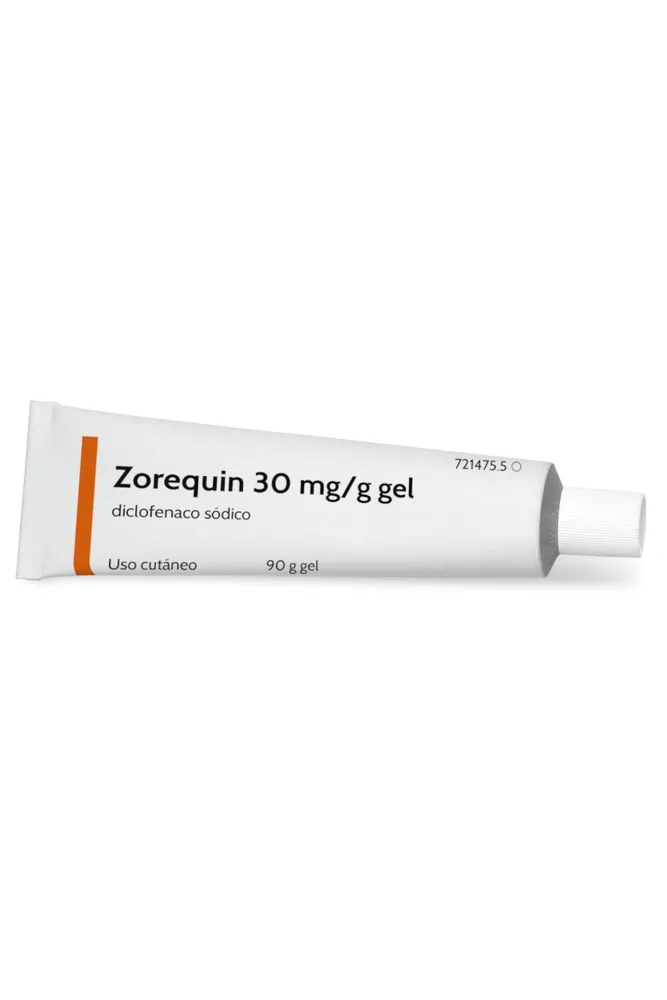
Table of Contents
Package leaflet: Information for the user
Introduction
Package leaflet: information for the user
Zorequin 30 mg/g gel
sodium diclofenac
Read all of this leaflet carefully before you start using this medicine, because it contains important information for you.
- Keep this leaflet, as you may need to read it again. If you have any questions, ask your doctor or pharmacist.
- This medicine has been prescribed for you only, and you should not give it to other people, even if they have the same symptoms as you, because it may harm them.
- If you experience any adverse effects, consult your doctor or pharmacist, even if they are adverse effects not listed in this leaflet. See section 4.
Contents of the leaflet
- What Zorequin is and what it is used for
- What you need to know before using Zorequin
- How to use Zorequin
- Possible adverse effects
- How to store Zorequin
- Contents of the pack and other information
1. What Zorequin is and what it is used for
Zorequin contains sodium diclofenac as the active substance. Sodium diclofenac is a non-steroidal anti-inflammatory active ingredient. This medicine is used, applied to the skin, for the treatment of a skin condition known as actinic or solar keratosis caused by prolonged exposure to solar radiation.
2. What you need to know before using Zorequin
Do not use Zorequin:
- If you are allergic to diclofenac or to any of the other ingredients of this medicine (listed in section 6).
- If you have previously experienced any allergic reaction, such as rash (urticaria), difficulty breathing (wheezing), or runny nose (allergic rhinitis) after taking acetylsalicylic acid or any other non-steroidal anti-inflammatory drug.
- If you are in the last three months of pregnancy.
Warnings and precautions
Consult your doctor or pharmacist before using Zorequin.
-
Systemic adverse effects cannot be ruled out when Zorequin is applied over a large skin surface area for a prolonged period. Consult your doctor in the following cases:
-
if you have or have previously had a stomach ulcer or gastrointestinal bleeding,
-
if you have heart, liver, or kidney problems,
-
if you have any bleeding disorder or are prone to bruising easily.
-
During treatment with Zorequin, avoid exposure to sunlight, including tanning beds. If skin reactions occur, discontinue treatment.
-
Do not apply the product on open wounds, infected skin, or dermatitis.
-
Avoid contact of the gel with the eyes, inside the nose or mouth, and do not ingest it. If diclofenac gel is accidentally swallowed, consult your doctor immediately.
-
If you develop a generalized skin rash, stop treatment with Zorequin and consult your doctor.
-
After applying the gel to the skin, a permeable (non-occlusive) dressing may be applied. Do not use an occlusive airtight dressing.
Children and adolescents
The safety and efficacy of Zorequin in children has not been established. No data are available.
Other medicines and Zorequin
Inform your doctor or pharmacist if you are taking, have recently taken, or might need to take any other medicines.
Pregnancy and breastfeeding
If you are pregnant or breastfeeding, think you may be pregnant, or are planning to become pregnant, consult your doctor or pharmacist before using this medicine.
Pregnancy
You should not use Zorequin during the first 6 months of pregnancy unless absolutely necessary and specifically advised by your doctor. If treatment is required during this period or while trying to become pregnant, the lowest dose (< 30% of body surface area) should be used for the shortest possible duration (no more than 3 weeks).
Do not use Zorequin during the last three months of pregnancy, as it may harm the fetus or cause complications during delivery.
Breastfeeding
Small amounts of diclofenac pass into breast milk. Consult your doctor if you are breastfeeding. Zorequin may be used during breastfeeding, but it should not be applied directly to the breast area or to large skin areas or for prolonged periods.
Driving and using machines
Zorequin does not affect the ability to drive or operate machinery.
Zorequin contains benzyl alcohol
This medicine contains 10 mg of benzyl alcohol per g of gel. Benzyl alcohol may cause allergic reactions and mild local irritation.
3. How to use Zorequin
Follow exactly the instructions for use of this medicine provided by your doctor or pharmacist. If in doubt, consult your doctor or pharmacist again.
- Pierce the membrane at the mouth of the tube with the cap before first use.
- Gently apply a small amount of gel to the area of skin to be treated. The amount of gel required depends on the size of the skin area to be treated. Generally, 0.5 grams of gel (approximately the size of a pea) is sufficient to treat an area of skin (5 cm x 5 cm), but no more than 8 grams should be applied per day.
- The gel may be applied twice daily unless otherwise directed by your doctor. You may feel a slightly refreshing sensation when applying the gel to the skin.
The usual treatment duration is 60 to 90 days. Maximum effect has been observed with treatments lasting close to 90 days. It may take up to 1 month after completion of treatment for complete healing to occur.
- Wash your hands after applying the gel, unless they are the area being treated.
Use in children and adolescents
Diclofenac is not suitable for children or adolescents.
If you use more Zorequin than you should
Remove any excess gel by washing the treated skin area with water.
In case of overdose or accidental ingestion, contact your doctor or pharmacist immediately or call the Toxicology Information Service at: 91 562 04 20, indicating the medicine and the amount ingested.
If you forget to use Zorequin
Continue using the gel as directed, but do not apply a double dose to make up for the missed application.
If you have any further questions about the use of this medicine, ask your doctor or pharmacist.
4. Possible adverse effects
Like all medicines, this medicine can cause adverse effects, although not everyone will experience them.
If you experience any of the following adverse effects, stop using Zorequin and inform your doctor as soon as possible:
Skin rash (urticaria); breathing difficulties (wheezing); swelling of the face, runny nose (allergic rhinitis) (very rare adverse effects, may affect up to 1 in 10,000 people). These symptoms indicate that you may be allergic to Zorequin.
If you consider any of the following adverse effects you are experiencing to be severe or if they persist for several days, stop using Zorequin and inform your doctor: itching, skin reaction, skin redness, swelling, contact dermatitis, pain, and blisters.
Other common adverse effects: (may affect up to 1 in 10 people)
Irritation or tingling at the treated area, conjunctivitis, allergy, painful sensation upon touching the skin, pricking sensations, muscle stiffness, dermatitis, eczema, dry skin, swelling, generalized redness (covered with scales or blisters), skin thickening, and skin ulcer.
Uncommon adverse effects: (may affect up to 1 in 100 people)
Eye pain, excessive tearing/dry eyes, excessive bleeding, abdominal pain, diarrhea, nausea, hair loss, facial edema, excessive hemorrhage, oily skin, or measles-like skin rash.
Rare adverse effects: (may affect up to 1 in 1,000 people)
Dermatitis with large blisters.
Very rare adverse effects: (may affect up to 1 in 10,000 people)
Stomach hemorrhages, kidney problems, breathing difficulties (asthma), skin rash with infection, skin sensitivity to sunlight.
Cases of temporary hair discoloration in the application area have been reported. This effect is usually reversible upon discontinuation of treatment.
Frequency not known (cannot be estimated from available data): Burning sensation at the application site.
Reporting of adverse effects
If you experience any type of adverse effect, consult your doctor, pharmacist, or nurse, even if it is a possible adverse effect not listed in this leaflet. You may also report them directly via the Spanish Pharmacovigilance System for Human Medicines: https://www.notificaram.es. By reporting adverse effects, you can help provide more information on the safety of this medicine.
5. Storage of Zorequin
Keep this medicine out of sight and reach of children.
Do not use this medicine after the expiry date stated on the tube or carton, following CAD or EXP. The expiry date refers to the last day of the month indicated.
Do not store above 25°C.
Keep the tube tightly closed and protected from light.
Once opened, use within: 6 months.
Medicines must not be disposed of via wastewater drains or household waste. Return unused medicines and their containers to the SIGRE collection point at your pharmacy. Ask your pharmacist how to dispose of medicines and containers you no longer need. This helps protect the environment.
6. Contents of the pack and other information
Composition of Zorequin
- The active substance is sodium diclofenac.
- Each gram of gel contains 30 mg of sodium diclofenac.
- The other components are sodium hyaluronate, benzyl alcohol, polyethylene glycol 350 monomethyl ether, and purified water.
Appearance of Zorequin and contents of the pack
Clear, transparent, colourless or pale yellow gel packed in tubes containing 25 grams, 50 grams, 60 grams, 90 grams or 100 grams of gel.
Not all pack sizes may be marketed.
Marketing Authorization Holder
Teva Pharma, S.L.U.
C/ Anabel Segura, 11 - Edificio Albatros B, 1st floor.
28108 – Alcobendas, Madrid
Spain
Manufacturer
Balkanpharma Troyan AD, 1 Krayrechna Str., Troyan 5600,
Bulgaria
Local Representative
Industrial Farmacéutica Cantabria, S.A.
Barrio Solía 30
La Concha de Villaescusa
39690 Cantabria (Spain)
This medicinal product is authorized in the Member States of the European Economic Area under the following names:
DE: Diclofenac-ratiopharm 30mg/g Gel
ES: Zorequin 30 mg/g gel
LU: Diclofenac-ratiopharm Dermagel 30mg/g Gel
Date of the most recent review of this leaflet: December 2023
Detailed information on this medicinal product is available on the website of the Spanish Agency of Medicines and Medical Devices (AEMPS) http://www.aemps.gob.es/