Zolpidem Desgen 10 mg film-coated tablets EFG
Spain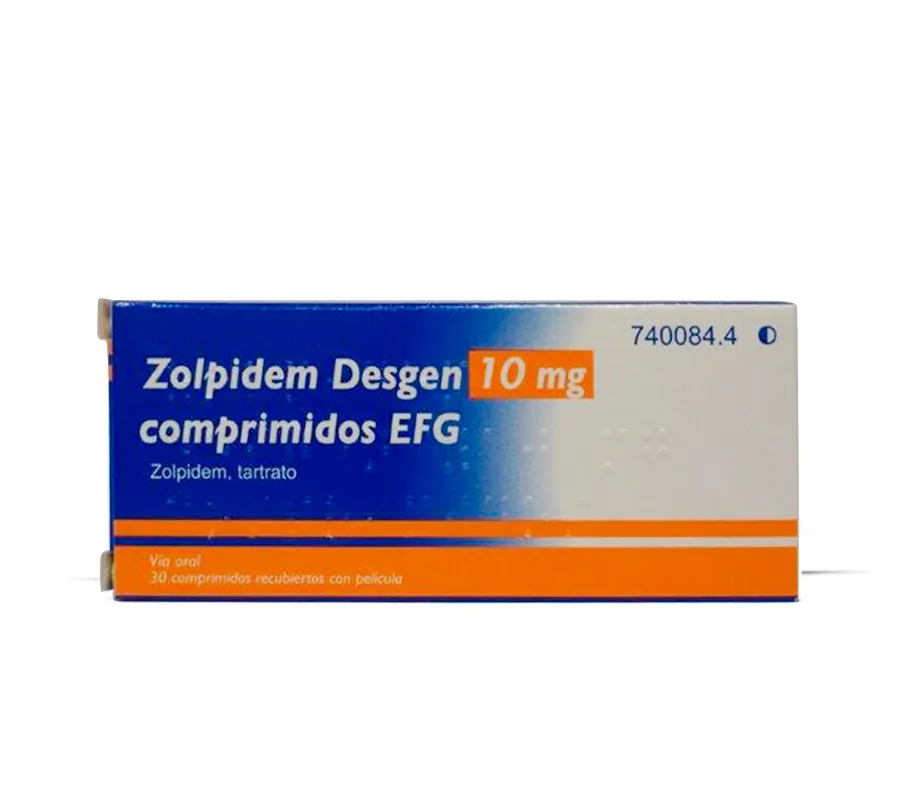
Table of Contents
Patient Information Leaflet
Introduction
Patient Information Leaflet
Zolpidem DESGEN 10 mg Film-coated Tablets EFG
Zolpidem tartrate
Read the entire leaflet carefully before you start taking this medicine, as it contains important information for you.
- Keep this leaflet, as you may need to read it again.
- If you have any questions, ask your doctor or pharmacist.
- This medicine has been prescribed for you and you should not give it to other people, even if they have the same symptoms, as it may harm them.
- If you experience any side effects, consult your doctor or pharmacist, even if they are side effects not listed in this leaflet. See section 4.
Leaflet contents:
- What Zolpidem Desgen is and what it is used for
- What you need to know before taking Zolpidem Desgen
- How to take Zolpidem Desgen
- Possible side effects
- How to store Zolpidem Desgen
- Contents of the pack and other information
1. What Zolpidem Desgen is and what it is used for
Zolpidem Desgen is a hypnotic medicine belonging to a group of medicines known as benzodiazepine analogues.
Zolpidem Desgen is used for the short-term treatment of insomnia in adults, in situations where insomnia is debilitating or causing severe anxiety.
Zolpidem Desgen is indicated for sleep rhythm disorders and for all forms of insomnia, particularly when there are difficulties in falling asleep, either initially or after early awakening.
2. What you need to know before taking Zolpidem Desgen
Do not take Zolpidem Desgen
-
If you are allergic (hypersensitive) to zolpidem or to benzodiazepines in general, or to any of the other components of this medicine (listed in section 6)
-
If you have acute and/or severe breathing difficulties.
-
If you have muscle weakness (myasthenia gravis).
-
If you suffer from breathing problems during sleep (sleep apnea syndrome).
-
If you have severe liver problems (severe hepatic impairment).
Warnings and precautions
Talk to your doctor before starting to use Zolpidem Desgen
- Your doctor should identify the causes of insomnia whenever possible and treat underlying factors before prescribing zolpidem.
- After taking Zolpidem Desgen, it is recommended to sleep through the night or have a full rest period to avoid the possible occurrence of anterograde amnesia (inability to recall events that occurred while awake).
- Risk of dependence: The use of benzodiazepines may lead to physical and psychological dependence. This risk increases with the duration of treatment and with dose. It is also higher in patients with psychiatric disorders and/or a history of alcohol or drug abuse.
To minimize the risk of dependence, the following precautions should be observed:
- These medicines should only be taken under medical prescription (never because they worked in other patients), and should never be recommended to others.
- Do not increase the dose prescribed by your doctor, or extend treatment beyond the recommended duration.
- Consult your doctor regularly so they can decide whether treatment should continue.
Once physical dependence has developed, abruptly stopping treatment may lead to a withdrawal syndrome, which may include restlessness, anxiety, insomnia, difficulty concentrating, headache, muscle pain, confusion, irritability, and tension. Therefore, it is recommended to gradually reduce the dose according to your doctor's instructions.
In severe cases, the following symptoms may occur: altered perception of reality, depersonalization, ear problems (hyperacusis), numbness and tingling in the limbs, hypersensitivity to light, noise, and physical touch, hallucinations, or epileptic seizures.
-
In some cases, a transient syndrome may occur in which the symptoms that led to starting treatment reappear, but in a worsened form. These may be accompanied by other reactions such as mood changes, anxiety, sleep disturbances, and restlessness. It is important to be aware that this rebound phenomenon may occur, to minimize anxiety related to the emergence of these effects when treatment is stopped.
-
It is known that other psychiatric and "paradoxical" reactions such as restlessness, agitation, worsening of insomnia, irritability, aggressiveness, delirium, rage attacks, nightmares, psychosis, hallucinations, abnormal behavior, and other behavioral disturbances may occur with zolpidem. Treatment should be discontinued if any of these reactions appear. These reactions are more likely to occur in elderly patients. Cases of sleepwalking and other behaviors such as driving while asleep, eating, cooking, making phone calls, or having sexual intercourse—without remembering these events—have been reported in patients who had taken zolpidem and were not fully awake.
The use of zolpidem with alcohol and with other medicines acting on the central nervous system, or taking higher than the recommended dose, may increase the risk of these behaviors. Your doctor should consider discontinuing treatment in such cases due to the potential risk to both you and others.
-
This medicine may cause drowsiness and a decrease in the level of consciousness, which may lead to falls and consequently cause serious injuries.
-
After repeated use over several weeks, some tolerance to the product may develop, leading to a reduction in hypnotic efficacy.
-
If you have drug or alcohol dependence, do not take Zolpidem Desgen unless directed by your doctor.
-
In patients with mental illness (psychosis), it is not recommended as primary treatment.
-
If you have depression, use with extreme caution. Consult your doctor before using this medicine, as it may unmask an existing depression.
-
If you have liver disease or respiratory problems, your doctor will decide whether you should take a lower dose of Zolpidem Desgen or avoid it altogether.
-
In elderly patients, the dose should be reduced. See section 3. How to take Zolpidem Desgen.
-
Children and adolescents: Zolpidem Desgen is not recommended for children and adolescents under 18 years of age.
Next-day psychomotor impairment (see also Driving and use of machines)
The risk of next-day psychomotor impairment, including impaired ability to drive, may be increased the day after taking Zolpidem Desgen if:
- You take this medicine with less than 8 hours between dosing and activities requiring mental alertness.
- You take a higher dose than recommended.
- You take zolpidem together with another central nervous system depressant or another medicine that increases zolpidem blood levels, combined with alcohol or illegal substances.
Take the dose all at once and immediately before going to bed at night.
Do not take another dose during the same night.
Taking Zolpidem Desgen with other medicines
Inform your doctor or pharmacist if you are taking, have recently taken, or might need to take any other medicines.
This is extremely important because taking multiple medicines simultaneously may increase or decrease their effects.
Therefore, you should not use other medicines at the same time as Zolpidem Desgen unless your doctor is aware and has approved it.
If you take zolpidem with the following medicines, effects such as drowsiness or next-day psychomotor impairment, including impaired driving ability, may be enhanced:
- Medicines for certain mental disorders (antipsychotics)
- Medicines for sleep problems (hypnotics)
- Medicines to relieve or reduce anxiety
- Medicines for depression
- Medicines for moderate to severe pain (narcotic analgesics)
- Medicines for epilepsy
- Anesthetic medicines
- Medicines for seasonal allergic rhinitis, skin rashes, or other allergies that may cause drowsiness (sedating antihistamines)
If you take zolpidem with antidepressants, including bupropion, desipramine, fluoxetine, sertraline, and venlafaxine, you may see things that are not real (hallucinations).
Concomitant use of zolpidem with fluvoxamine or ciprofloxacin is not recommended.
Some medicines that inhibit/induce certain liver enzymes (CYP450) may affect the action of zolpidem.
Concomitant administration with ketoconazole (used to treat fungal infections) may increase the sedative effect.
Administration with rifampicin (used to treat infections) may reduce the effect of zolpidem.
Concomitant use with medicines containing alcohol is not recommended. This may increase the sedative effect.
Taking Zolpidem Desgen with food, drinks, and alcohol
Avoid alcoholic beverages during treatment. The effect of alcohol may enhance sedation, which may impair your ability to drive or operate machinery. If you need further information on this, consult your doctor.
Pregnancy and breastfeeding
If you are pregnant or breastfeeding, think you may be pregnant, or plan to become pregnant, consult your doctor or pharmacist before using this medicine.
Pregnancy
You should avoid taking Zolpidem Desgen during pregnancy.
Before starting treatment, your doctor must know if you are pregnant, suspect you are pregnant, or wish to become pregnant. Your doctor will then decide whether it is appropriate for you to take Zolpidem Desgen.
Infants born to mothers who chronically use sedative/hypnotic agents during the last stages of pregnancy may develop physical dependence and may be at risk of experiencing withdrawal symptoms in the postnatal period.
Breastfeeding
This medicine passes into breast milk; therefore, Zolpidem Desgen should not be taken during breastfeeding.
Driving and use of machines
Zolpidem Desgen is a medicine that causes drowsiness. Do not drive or operate machinery if you feel sleepy or notice that your attention and reaction ability are reduced.
Pay special attention at the beginning of treatment or if the dose is increased.
Zolpidem Desgen has a significant effect on the ability to drive and operate machinery, such as "driving while drowsy." On days when you take Zolpidem Desgen (as with other hypnotics), you should consider the following:
- You may feel drowsy, dizzy, or confused
- You may take longer to make decisions
- You may experience blurred or double vision
- Your level of alertness may be reduced
To reduce the effects mentioned above, a minimum interval of 8 hours between taking zolpidem and driving, operating machinery, or performing work at heights is recommended.
Do not consume alcohol or any other psychoactive substance while taking Zolpidem Desgen, as this may increase the aforementioned effects.
Zolpidem Desgen contains lactose
This medicine contains lactose. If your doctor has informed you that you have an intolerance to certain sugars, consult with them before taking this medicine.
3. How to take Zolpidem Desgen
Follow exactly the instructions for use of this medicine as given by your doctor. If in doubt, consult your doctor or pharmacist again.
-
The recommended dose is 10 mg of Zolpidem Desgen every 24 hours. A lower dose may be prescribed for some patients. Zolpidem Desgen should be taken:
-
as a single dose; and
-
just before going to bed.
You must ensure that you allow a minimum interval of 8 hours between taking the medicine and performing activities requiring mental alertness.
Do not take more than 10 mg every 24 hours.
- In elderly patients, in debilitated patients, and in patients with liver disorders, your doctor will prescribe a lower dose.
The recommended daily dose is half a tablet, i.e. 5 mg of zolpidem.
- Children (under 18 years of age): use is not recommended.
Treatment should be initiated with the lowest dose. The maximum dose must not be exceeded.
Each individual dose must not exceed the indicated limits, nor must the total daily dose, unless your doctor prescribes a higher dose.
Take Zolpidem Desgen just before going to bed, swallowing the tablet whole with water or another non-alcoholic drink.
Under normal conditions, you should fall asleep within 20 minutes after taking Zolpidem Desgen, and it is advisable to ensure that you can rest undisturbed for at least 8 hours. Otherwise, although this occurs rarely, you may not remember what happened while you were awake.
In most cases, only short-term treatment with Zolpidem Desgen is needed (generally not exceeding two weeks).
To avoid withdrawal symptoms, you must not stop taking Zolpidem Desgen abruptly, especially if you have been taking it for a long time.
If you feel that the effect of Zolpidem Desgen is too strong or too weak, inform your doctor or pharmacist.
If you take more Zolpidem Desgen than you should
If you have taken more Zolpidem Desgen than you should, contact your doctor or pharmacist immediately.
In cases of overdose or accidental ingestion, contact your doctor, pharmacist, or call the Toxicology Information Service immediately at: 91 562 04 20, indicating the medicine and the amount ingested.
In overdose cases involving zolpidem alone or combined with other central nervous system depressants (including alcohol), cases have been reported ranging from altered consciousness to coma, and more severe symptoms including death.
In mild to moderate cases, symptoms include: drowsiness, mental confusion, and feelings of tiredness or exhaustion (lethargy). In more severe cases, symptoms may include lack of coordination in movement (ataxia), decreased muscle tone (hypotonia), low blood pressure (hypotension), respiratory depression, worsening of consciousness up to coma, and more serious symptoms including fatal outcomes.
If you forget to take Zolpidem Desgen
Do not take a double dose to make up for missed doses.
If you stop taking Zolpidem Desgen
Abruptly stopping treatment may cause withdrawal syndrome, manifested by headache or muscle pain, anxiety, tension, restlessness, confusion, and irritability (see "Warnings and precautions").
If you have any further questions about the use of this medicine, ask your doctor or pharmacist.
4. Possible adverse effects
Like all medicines, Zolpidem Desgen may cause adverse effects, although not everyone experiences them.
Most patients tolerate Zolpidem Desgen well, but some, especially at the beginning of treatment, may feel somewhat tired or drowsy during the day.
The following classification has been used to describe the frequency of adverse reactions:
Very common adverse effects (in more than 1 in 10 patients), common adverse effects (in 1 to 10 out of 100 patients), uncommon adverse effects (in 1 to 10 out of 1,000 patients),
rare adverse effects (in 1 to 10 out of 10,000 patients), very rare adverse effects (in less than 1 in 10,000 patients), frequency not known: cannot be estimated from available data.
A dose-dependent relationship has been established for adverse effects. These effects should be minimized if zolpidem is taken immediately before going to bed or once in bed.
These effects are more frequent in elderly patients.
Immune system disorders
Frequency not known: allergic inflammation that may affect feet, hands, throat, lips, and respiratory tract (angioedema).
Psychiatric disorders
Common: hallucinations, agitation, nightmares.
Uncommon: confusion, irritability.
Frequency not known: restlessness, aggressiveness, delusions, rage attacks, psychosis, abnormal behaviour, sleepwalking, dependence (discontinuation of treatment may lead to withdrawal symptoms or rebound effects), changes in sexual desire, depression.
Nervous system disorders
Common: drowsiness, headache, dizziness, worsening of insomnia, anterograde amnesia (inability to recall events that occurred after taking the medicine). Amnesia may be associated with inappropriate behaviour.
Frequency not known: decreased level of consciousness.
Eye disorders
Uncommon: double vision.
Respiratory, thoracic and mediastinal disorders
Frequency not known: breathing difficulty (respiratory depression).
Gastrointestinal disorders
Common: diarrhoea, nausea, vomiting, abdominal pain.
Hepatobiliary disorders
Frequency not known: increased liver enzymes.
Skin and subcutaneous tissue disorders
Frequency not known: itching, skin rashes, urticaria, excessive sweating.
Musculoskeletal and connective tissue disorders
Common: back pain.
Frequency not known: muscle weakness.
Infections and infestations
Common: respiratory tract infection (upper and lower respiratory tract infection).
General disorders and administration site conditions
Common: fatigue.
Frequency not known: gait disturbances, tolerance to the product, falls (predominantly in elderly patients and when the physician's recommendations have not been followed).
Depression
Use of this medicine may unmask an underlying depression. Since insomnia may be a symptom of depression, if insomnia persists, inform your doctor so that your condition can be evaluated.
Reporting of adverse effects
If you experience any type of adverse effect, consult your doctor or pharmacist, even if it is a possible adverse effect not listed in this leaflet. You may also report them directly via the Spanish Pharmacovigilance System for Human Medicinal Products: https://www.notificaram.es. By reporting adverse effects, you can help provide more information on the safety of this medicine.
5. Storage of Zolpidem Desgen
Keep Zolpidem Desgen out of the sight and reach of children.
This medicine does not require any special storage temperature.
Store in the original packaging.
Expiry
Do not use Zolpidem Desgen after the expiry date stated on the container, after EXP. The expiry date refers to the last day of the month indicated.
Medicines should not be disposed of via wastewater or household waste. Dispose of unused medicines and their containers at the SIGRE collection point at your pharmacy. If you are unsure, ask your pharmacist how to dispose of unused medicines and their packaging. This will help protect the environment.
6. Contents of the pack and other information
Composition of Zolpidem Desgen 10 mg film-coated tablets
- The active substance is zolpidem tartrate. Each tablet contains 10 mg of zolpidem as zolpidem tartrate.
- The other components are: monohydrate lactose, microcrystalline cellulose, sodium carboxymethyl starch (type A) from potato, magnesium stearate, hypromellose, titanium dioxide (E-171), and macrogol 400.
Appearance of the product and contents of the pack
Film-coated tablet, white, oval, biconvex, marked with "ZIM" and "10" on one side.
Packs containing 30 tablets and 500 tablets (Hospital pack).
Marketing Authorization Holder and Manufacturer
Marketing Authorization Holder
GENERFARMA, S.L.
Ronda Isaac Peral 6, Parque Tecnológico
Paterna 46980
Valencia (Spain)
Manufacturer
Synthon Hispania S.L.
Polígono Las Salinas
C/Castelló 1
08830 Sant Boi de Llobregat (Barcelona)
Or
Generfarma, S.L.
Los Centelles 7
46006 Valencia (Spain)
Date of the most recent revision of this leaflet: March 2015
Detailed and up-to-date information on this medicinal product is available on the website of the Spanish Agency of Medicines and Medical Devices (AEMPS) http://www.aemps.gob.es/