Ziprasidone Cinfia 20 mg hard capsules EFG
Spain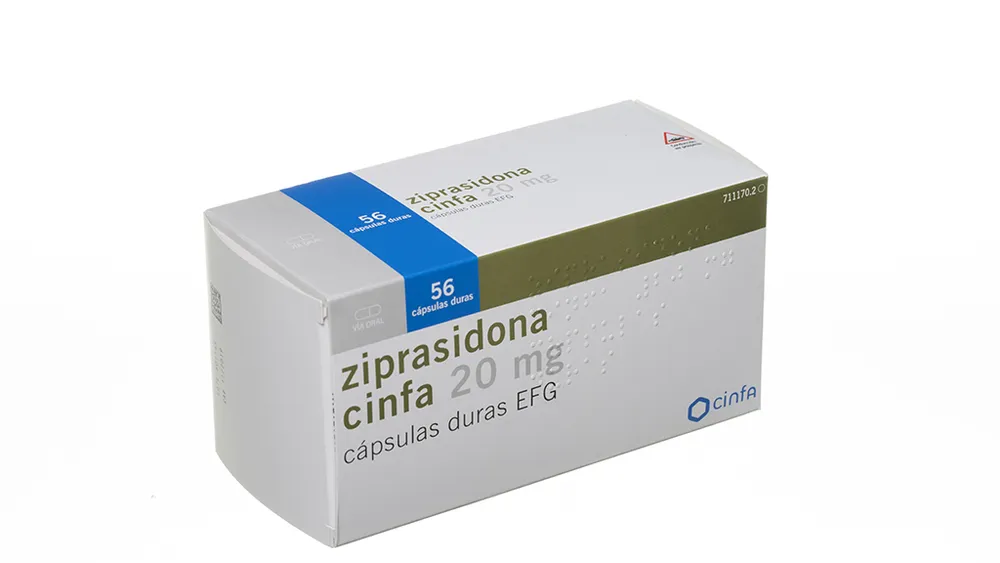
Table of Contents
- Package leaflet: Information for the user
- Introduction
- 1. What Ziprasidona cinfa is and what it is used for
- 2. What you need to know before starting to take Ziprasidona cinfa
- 3. How to take ziprasidone cinfa
- 4. Possible adverse effects
- 5. Storage of ziprasidone cinfa
- 6. Contents of the pack and other information
Package leaflet: Information for the user
Introduction
Package leaflet: information for the user
Ziprasidona cinfa 20 mg hard capsules EFG
hydrochloride ziprasidone
Read all of this leaflet carefully before you start taking this medicine because it contains important information for you.
- Keep this leaflet. You may need to read it again.
- If you have any further questions, ask your doctor or pharmacist.
- This medicine has been prescribed for you only. Do not pass it on to others, even if they have the same symptoms as you, because it may harm them.
- If you experience any adverse effects, talk to your doctor or pharmacist, even if they are effects not listed in this leaflet. See section 4.
Contents of the leaflet
- What ziprasidona cinfa is and what it is used for
- What you need to know before taking ziprasidona cinfa
- How to take ziprasidona cinfa
- Possible side effects
- How to store ziprasidona cinfa
- Contents of the pack and other information
1. What Ziprasidona cinfa is and what it is used for
Ziprasidona cinfa capsules is a medicine belonging to a group of medicines called antipsychotics.
Ziprasidone is indicated for the treatment of schizophrenia in adults, a mental illness characterized by the presence of one or more of the following symptoms: hearing, seeing, or feeling things that do not exist, believing in something that is not true, having unusual suspicions, being withdrawn, having difficulty establishing social relationships, nervousness, depression, or anxiety.
In addition, ziprasidone is used in adults and in children and adolescents aged 10 to 17 years for the treatment of moderate severity manic symptoms in bipolar disorder, which is a mental illness characterized by alternating phases of euphoric (mania) or depressed mood. During manic episodes, the most characteristic symptoms are: euphoric behavior, exaggerated self-esteem, increased energy, reduced need for sleep, lack of concentration, hyperactivity, and repetition of risky behaviors.
2. What you need to know before starting to take Ziprasidona cinfa
Do not take ziprasidona cinfa
- If you are allergic to ziprasidone or to any of the other ingredients of this medicine (listed in section 6). An allergic reaction may be recognized by the appearance of skin rash, itching, swollen face or lips, difficulty breathing.
- If you have or have had heart disease or recently had a heart attack.
- If you are taking medicines for heart rhythm disorders (arrhythmias) or medicines that may affect heart rhythm.
See section “Taking ziprasidona cinfa with other medicines” below.
Warnings and precautions
Consult your doctor or pharmacist before starting to take ziprasidona cinfa:
- if you or someone in your family has a history of blood clots, as this type of medicine has been associated with blood clot formation
- if you have liver problems
- if you have or have had seizures or epilepsy
- if you are over 65 years of age and have dementia and are at high risk of stroke (cerebrovascular accident)
- if you have a significant decrease in resting heart rate and/or know you may have low levels of blood salts as a result of prolonged severe diarrhea and vomiting or due to use of diuretics (which promote elimination of excess fluids)
- if you experience symptoms such as rapid or irregular heartbeat, fainting, syncope, or dizziness upon standing, as these may indicate abnormal heart rhythm function.
Contact your doctor immediately if you experience any of the following symptoms:
- Severe skin reactions such as rash with blisters, which may be accompanied by mouth ulcers, skin peeling, fever, and skin lesions with target-like spots that could be symptoms of Stevens-Johnson syndrome. These skin reactions could potentially be life-threatening.
- Ziprasidone may cause drowsiness, low blood pressure upon standing, dizziness, and gait disturbances, which may lead to falls. Caution should be exercised, especially if you are an elderly patient or have any physical weakness.
Inform your doctor that you are taking ziprasidone cinfa capsules before undergoing any diagnostic tests (including blood and urine tests, liver function tests, heart rhythm monitoring, etc.), as it may alter test results.
Children and adolescents
The safety and efficacy of ziprasidone in the treatment of schizophrenia in children and adolescents has not been established.
Taking Ziprasidona cinfa with other medicines
Inform your doctor or pharmacist if you are taking, have recently taken, or might need to take any other medicines.
Do not take Ziprasidona cinfa if you are taking medications for heart rhythm disorders or medicines that may affect heart rhythm, such as:
Class IA and III antiarrhythmics, arsenic trioxide, halofantrine, levometadyl acetate, mesoridazine, thioridazine, pimozide, sparfloxacin, gatifloxacin, moxifloxacin, dolasetron mesylate, mefloquine, sertindole, or cisapride. These medicines may alter heart rhythm by prolonging the QT interval. If you have further questions about this effect, consult your doctor.
Consult your doctor or pharmacist before starting to take Ziprasidona cinfa.
Inform your doctor or pharmacist if you are using or have recently used medicines for the treatment of:
- bacterial infections; these medicines are known as antibiotics; for example, macrolide antibiotics or rifampicin;
- mood changes (from depressive mood to euphoria), agitation, and irritability; these medicines are known as mood stabilizers, for example, lithium, carbamazepine, valproate;
- depression, including certain serotonergic medicines, for example, SSRIs (Selective Serotonin Reuptake Inhibitors) such as fluoxetine, paroxetine, sertraline; or herbal remedies or natural products containing St. John's Wort;
- epilepsy, for example, phenytoin, phenobarbital, carbamazepine, ethosuximide;
- Parkinson's disease, for example, levodopa, bromocriptine, ropinirole, pramipexole;
- or if you are taking or have recently taken the following medicines: verapamil, quinidine, itraconazole, or ritonavir;
See section “Do not take ziprasidona cinfa” above.
Taking ziprasidona cinfa with food, drinks, and alcohol
Ziprasidona cinfa capsules MUST BE TAKEN DURING MAIN MEALS.
You should not consume alcoholic beverages during treatment with ziprasidona cinfa capsules, as this may increase the risk of adverse effects.
Pregnancy and breastfeeding
If you are pregnant or breastfeeding, think you may be pregnant, or plan to become pregnant, consult your doctor before using this medicine.
Pregnancy:
You should not take ziprasidona cinfa capsules during pregnancy unless your doctor specifically instructs you to do so, as there is a risk that this medicine may harm your baby. Always use an appropriate contraceptive method.
The following symptoms may occur in newborns whose mothers have taken ziprasidone during the third trimester (last three months of pregnancy): tremors, muscle stiffness and/or weakness, excessive sleepiness, agitation, breathing difficulties, and feeding problems. If your baby develops any of these symptoms, contact your doctor.
Breastfeeding:
You should not breastfeed while being treated with ziprasidona cinfa capsules. This is because small amounts of the medicine may pass into breast milk.
Contraception:
If you are able to become pregnant, you should use an appropriate contraceptive method while taking this medicine.
Driving and use of machines
Ziprasidone may cause symptoms such as drowsiness, dizziness, or vision disturbances, and may reduce reaction ability. These effects, as well as the illness itself, may impair your ability to drive or operate machinery. Therefore, do not drive, operate machinery, or perform other activities requiring special attention until your doctor has assessed your response to this medicine.
Ziprasidona cinfa contains sodium.
This medicine contains less than 23 mg of sodium (1 mmol) per capsule; thus, it is essentially “sodium-free”.
3. How to take ziprasidone cinfa
Follow exactly the instructions for administering this medicine as given by your doctor. If in doubt, consult your doctor or pharmacist again.
The capsules should be swallowed whole, without chewing, and must be taken with food. It is important not to chew the capsules, as this may affect the site in the intestine where the medicine is absorbed.
Ziprasidone cinfa capsules should be taken twice daily, one capsule in the morning with a substantial breakfast and one in the evening with dinner (see blister pack). Try to take this medicine at the same time each day.
Adults
The recommended dose is 40 to 80 mg of ziprasidone twice daily with food.
For long-term treatment, your doctor may adjust the dose. It is recommended not to exceed the maximum daily dose of 160 mg.
Children and adolescents with bipolar mania
The recommended starting dose is 20 mg once daily with food. Your doctor will then indicate your optimal dose. It is recommended not to exceed the maximum weight-based dose of 160 mg per day in children weighing 45 kg or more, and 80 mg per day in children weighing less than 45 kg.
The safety and efficacy of ziprasidone in the treatment of schizophrenia in children and adolescents has not been established.
Patients over 65 years of age
If you are over 65 years old, your doctor will decide the appropriate dose for you. The dose for patients over 65 may sometimes be lower than that used in younger individuals. Your doctor will inform you of the appropriate dose for you.
Patients with liver problems
If you have liver problems, you may need to take a lower dose of ziprasidone cinfa capsules. Your doctor will tell you the correct dose for you.
If you take more ziprasidone cinfa than you should
In case of overdose or accidental ingestion, consult your doctor or pharmacist immediately or call the Toxicology Information Service at 91 562 04 20, indicating the medicine and the amount ingested.
If you have taken too much ziprasidone cinfa capsules, symptoms such as drowsiness, tremor, seizures, and involuntary movements of the head and neck may occur.
If you forget to take ziprasidone cinfa
It is important that you take ziprasidone cinfa capsules at the same time each day. If you forget to take a dose, take it as soon as possible. However, if it is almost time for the next dose, skip the missed dose and take the next one at the regular time.
Do not take a double dose to make up for forgotten doses.
If you stop taking ziprasidone cinfa
Your doctor will inform you how long you should take ziprasidone cinfa. Do not stop taking this medicine unless instructed by your doctor.
It is important to continue treatment even if you feel well. If you stop treatment too early, symptoms may return.
If you have any further questions about the use of this medicine, ask your doctor or pharmacist.
4. Possible adverse effects
Like all medicines, this medicine can cause adverse effects, although not everyone will experience them.
It may often be difficult to distinguish symptoms of your illness from adverse effects.
STOP taking ziprasidone cinfa and contact your doctor immediately if you experience any of the following serious adverse effects:
Common adverse effects (may affect up to 1 in 10 patients):
- Involuntary/unusual movements, especially of your face or tongue.
Uncommon adverse effects (may affect up to 1 in 100 patients):
- Rapid or irregular heartbeat, dizziness upon standing, which may indicate abnormal heart function. These could be symptoms of a condition known as postural hypotension.
Rare adverse effects (may affect up to 1 in 1,000 patients):
- Swelling of the face, lips, tongue, or throat, and difficulty swallowing or breathing, hives. These could be symptoms of a serious allergic reaction such as angioedema.
- Fever, rapid breathing, sweating, muscle stiffness, tremor, difficulty swallowing, and reduced consciousness. These could be symptoms of a disease known as neuroleptic malignant syndrome.
- Skin reactions, especially rash, fever, and swollen lymph nodes, which could be symptoms of a condition called drug reaction with eosinophilia and systemic symptoms (DRESS). These reactions could potentially be life-threatening.
- Confusion, agitation, fever, sweating, lack of muscle coordination, muscle spasms. These could be symptoms of a disease known as serotonin syndrome.
- Rapid or irregular heartbeat, fainting, which may be symptoms of a potentially life-threatening condition known as Torsades de Pointes.
- Abnormally persistent and painful erection of the penis.
You may experience some of the adverse effects listed below. These potential adverse effects are generally mild to moderate in nature and may disappear over time. However, if any adverse effect is severe or persistent, contact your doctor.
Very common adverse effects (may affect more than 1 in 10 patients):
- Difficulty sleeping.
- Drowsiness or excessive daytime sleepiness.
- Headache.
Common adverse effects (may affect up to 1 in 10 patients):
- Runny nose.
- Elevated mood, strange thought patterns, hyperactivity, feeling restless or anxious.
- Restlessness.
- Abnormal movements including involuntary movements, muscle rigidity, slow movements.
- Dizziness.
- Sedation.
- Blurred or impaired vision.
- High blood pressure.
- Constipation, diarrhea, nausea, vomiting, indigestion, dry mouth, increased salivation.
- Rash.
- Male sexual problems.
- Fever.
- Pain.
- Weight loss or weight gain.
- Exhaustion.
- General feeling of being unwell.
Uncommon adverse effects (may affect up to 1 in 100 patients):
- Elevated levels of prolactin in the blood.
- Increased appetite.
- Panic attacks.
- Feelings of nervousness or depression.
- Decreased libido.
- Loss of consciousness.
- Difficulty controlling movements/involuntary movements.
- Restless legs.
- Sensation of throat tightness, nightmares.
- Seizures, involuntary eye movements to a fixed position, clumsiness, speech disturbance, numbness, tingling sensation, decreased concentration ability, drooling.
- Palpitations, difficulty breathing.
- Light sensitivity, dry eyes, ringing in the ears, ear pain.
- Sore throat, flatulence, stomach discomfort.
- Itchy skin rash, acne.
- Muscle cramps, stiffness, or joint swelling.
- Thirst, chest discomfort, altered gait.
- Acid reflux, stomach pain.
- Hair loss.
- Unusual head positioning.
- Urinary incontinence, pain or difficulty urinating.
- Abnormal production of breast milk.
- Enlargement of male breasts.
- Absence of menstruation.
- Abnormal blood tests and heart tests.
- Abnormal liver function tests.
- Dizziness.
- General weakness and fatigue.
Rare adverse effects (may affect up to 1 in 1,000 patients):
- Decreased concentration of calcium in the blood.
- Slowed thinking, lack of emotional expressiveness.
- Facial paralysis.
- Paralysis.
- Partial or complete vision loss in one eye, itchy eyes.
- Difficulty speaking, hiccups.
- Soft stools.
- Skin irritation.
- Inability to open the mouth.
- Difficulty emptying the bladder.
- Withdrawal syndrome in newborns.
- Reduced orgasm.
- Feeling of warmth.
- Increase or decrease in white blood cells (in blood tests).
- Raised, inflamed red areas of skin covered with white scales, known as psoriasis.
Frequency not known (cannot be estimated from available data):
- In elderly patients with dementia, a small increase in the number of deaths has been observed in patients treated with antipsychotics compared to those not taking antipsychotics.
- Blood clots in the veins, especially in the legs (symptoms may include swelling, pain, and redness in the leg), which may travel through blood vessels to the lungs causing chest pain and difficulty breathing. If you notice any of these symptoms, contact your doctor immediately.
Reporting of adverse effects
If you experience any adverse effect, talk to your doctor or pharmacist, even if it is a possible adverse effect not listed in this leaflet. You can also report them directly via the Spanish Pharmacovigilance System for Human Medicinal Products: https://www.notificaram.es. By reporting adverse effects, you can help provide more information on the safety of this medicine.
5. Storage of ziprasidone cinfa
Keep this medicine out of the sight and reach of children.
Blister packs:
Do not store above 30°C.
Bottles:
Do not store above 30°C.
Storage period after first opening the container: 6 months
Do not use this medicine after the expiry date which is stated on the packaging after EXP. The expiry date refers to the last day of the month indicated.
Medicines should not be disposed of via wastewater or household waste. Unused medicines and their containers should be returned to the SIGRE collection point at your pharmacy. If you are unsure, please ask your pharmacist how to dispose of medicines and containers you no longer need. This helps protect the environment.
6. Contents of the pack and other information
Composition of ziprasidone cinfa
- The active substance is ziprasidone. Each hard capsule contains 20 mg of ziprasidone in the form of ziprasidone hydrochloride.
- The other components are:
Capsule contents: anhydrous colloidal silica, sodium croscarmellose, pregelatinized corn starch, magnesium stearate.
Capsule shell (body and cap): gelatin, titanium dioxide (E-171), indigo carmine (E-132).
Appearance of the product and contents of the pack
Ziprasidone cinfa 20 mg hard capsules are presented as hard gelatin capsules. The capsules are blue and white.
Pack sizes:
Aluminum/aluminum blisters containing 14, 20, 30, 50, 56, 60 or 100 capsules.
HDPE plastic bottles containing 100 capsules.
Only some pack sizes may be commercially available.
Marketing Authorization Holder and Manufacturer
Marketing Authorization Holder
Laboratorios Cinfa, S.A.
Carretera Olaz-Chipi, 10. Polígono Industrial Areta.
31620 Huarte (Navarra)-Spain
Manufacturer
Teva Operations Poland Sp.z.o.o.
ul. Mogilska 80. 31-546, Krakow,
Poland
or
Laboratorios Cinfa, S.A.
Carretera Olaz-Chipi, 10. Polígono Industrial Areta.
31620 Huarte (Navarra)-Spain
Date of the most recent revision of this leaflet: January 2025
Detailed and up-to-date information on this medicine is available on the website of the Spanish Agency for Medicines and Health Products (AEMPS) http://www.aemps.gob.es
You can access detailed and up-to-date information about this medicine by scanning with your mobile phone (smartphone) the QR code included in the package leaflet and outer packaging. You can also access this information at the following internet address: https://cima.aemps.es/cima/dochtml/p/80958/P_80958.html
QR code to: https://cima.aemps.es/cima/dochtml/p/80958/P_80958.html