Zayasel 1 mg/ml oral solution EFG
Spain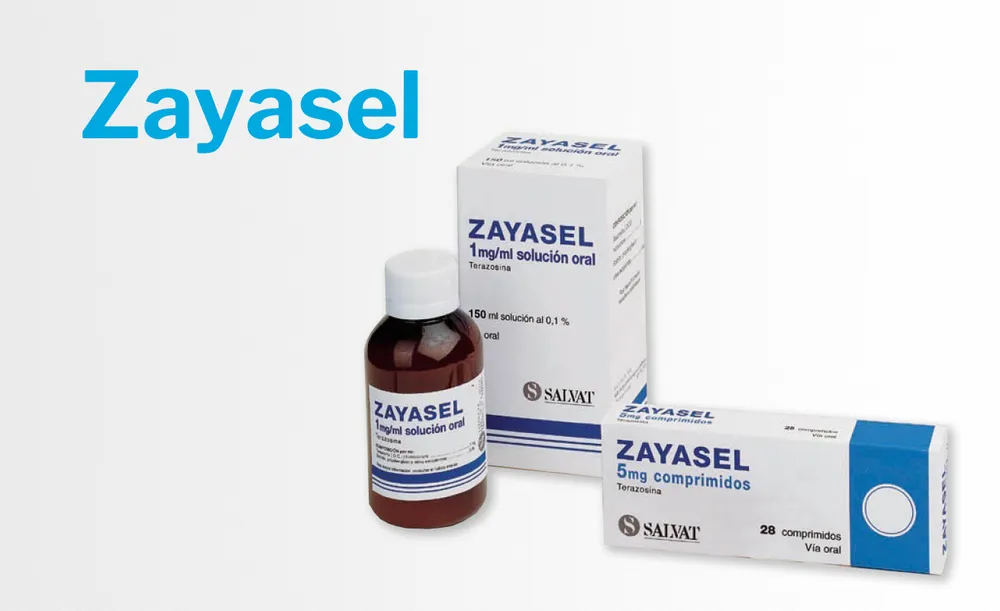
Table of Contents
Package leaflet: Information for the user
Introduction
Package leaflet: information for the patient
Zayasel 1 mg/ml oral solution EFG
terazosin
Read the entire leaflet carefully before you start taking this medicine, because it contains important information for you.
- Keep this leaflet, as you may need to read it again.
- If you have any questions, ask your doctor or pharmacist.
- This medicine has been prescribed for you only, and you should not give it to other people, even if they have the same symptoms as you, because it may harm them.
- If you experience any adverse effects, consult your doctor or pharmacist, even if they are adverse effects not listed in this leaflet. See section 4.
Contents of the leaflet
- What Zayasel is and what it is used for
- What you need to know before taking Zayasel
- How to take Zayasel
- Possible side effects
- How to store Zayasel
- Contents of the pack and other information
1. What Zayasel is and what it is used for
Zayasel contains terazosin, a substance that is a selective alpha-1 adrenergic blocker. It blocks receptors in the prostate, the bladder neck, and the prostatic capsule, thereby improving symptoms of benign prostatic hyperplasia (enlargement of the prostate). In addition, it lowers blood pressure without causing a secondary increase in heart rate.
Zayasel is indicated for the symptomatic treatment of benign prostatic hyperplasia. It is also indicated for the treatment of mild to moderate essential arterial hypertension.
2. What you need to know before starting to take Zayasel
Do not take Zayasel
-
If you are allergic to terazosin or to any of the other components of this medicine (listed in section 6).
-
If you have ever experienced syncope (loss of consciousness) during urination.
-
If you have heart failure or inflammation of the heart lining.
Warnings and precautions
Talk to your doctor or pharmacist before starting to take Zayasel.
Take special care with Zayasel:
-
When taking the first doses, as it may cause a significant drop in blood pressure. Symptoms such as dizziness, drowsiness, lightheadedness, and palpitations may occur; therefore, caution should be exercised when driving or performing hazardous tasks until you know how this medicine affects you.
-
When resuming treatment after interruption, a similar effect may occur.
-
After the initial dose of the medicine, following too rapid an increase in dose, or due to concomitant use of another antihypertensive medicine (to lower blood pressure), syncope (loss of consciousness) may occur (in fewer than 1 in 100 patients). This can be avoided by limiting the initial dose of Zayasel to 1 mg and carefully administering any other antihypertensive medication.
-
If you are undergoing cataract eye surgery, inform your doctor before the procedure if you are currently taking or have previously taken Zayasel. This is because this medicine may cause complications during surgery, which can be anticipated and managed by your ophthalmologist if previously informed.
-
Zayasel should be used with caution in patients with hepatic impairment.
-
A decrease in hemoglobin levels, white blood cells, and certain liver function tests may occur in some patients.
Children and adolescents
The use of Zayasel is not indicated in children, as its safety and efficacy have not been established in this age group, since this is a medicine intended for the treatment of diseases typical of adults.
Elderly patients
Caution is necessary when administering the first dose, increasing the dose, or restarting treatment after interruption, due to the high incidence of postural hypotension (low blood pressure upon standing) in this age group.
Other medicines and Zayasel
Inform your doctor or pharmacist if you are taking, have recently taken, or might need to take any other medicines.
-
Angiotensin-converting enzyme (ACE) inhibitors and diuretics (medicines used to increase urine production).
-
Non-steroidal anti-inflammatory drugs (NSAIDs) (medicines used to treat hay fever, inflammation, and allergies).
-
Theophylline (a medicine used to treat asthma).
-
Nitrates (medicines used to treat chest pain and angina).
-
Metformin, acarbose (medicines used to lower blood sugar).
-
Sildenafil, tadalafil, vardenafil (medicines used to treat erectile dysfunction).
-
General anesthetics (medicines used to induce anesthesia).
-
Warfarin (a medicine used to thin the blood).
Some patients taking an alpha-blocker for high blood pressure or benign prostatic hyperplasia may experience dizziness or fainting, which may be caused by a drop in blood pressure when sitting or standing up quickly. Some patients have experienced these symptoms when taking medications for erectile dysfunction (impotence) together with alpha-blockers such as Zayasel. To reduce the likelihood of these symptoms occurring, you should already be on a regular daily dose of the alpha-blocker before starting treatment for erectile dysfunction.
If you are taking other antihypertensives (to lower high blood pressure), consult your doctor. Concomitant administration with other antihypertensives may require a reduction in the dose of the antihypertensive and/or adjustment of the Zayasel dose.
Hypotension (low blood pressure) has been observed when terazosin has been used together with medications for erectile dysfunction (phosphodiesterase inhibitors) such as sildenafil and vardenafil.
Taking Zayasel with food, drinks, and alcohol
This medicine can be taken with or without food. Do not drink alcohol while taking this medicine.
Pregnancy, breastfeeding, and fertility
If you are pregnant or breastfeeding, think you may be pregnant, or are planning to become pregnant, consult your doctor or pharmacist before using this medicine.
The safety of terazosin during pregnancy has not been established. Zayasel should not be used during pregnancy unless clearly necessary. Your doctor will assess whether this medicine should be used if you are pregnant.
If you are breastfeeding, it is not advisable to take Zayasel. There is no information available on whether terazosin passes into breast milk. Inform your doctor before breastfeeding your child if you are taking Zayasel.
Driving and using machines
Do not drive or operate machinery until you know how this medicine affects you, as it may cause dizziness, especially at the beginning of treatment.
Zayasel contains methyl parahydroxybenzoate, propyl parahydroxybenzoate, and sorbitol
It may cause allergic reactions (possibly delayed) because it contains methyl parahydroxybenzoate (E-218) and propyl parahydroxybenzoate (E-216).
This medicine contains 132.48 mg of sorbitol (E-420) per ml. Sorbitol is a source of fructose. If your doctor has told you (or your child) that you have an intolerance to certain sugars, or if you (or your child) have been diagnosed with hereditary fructose intolerance (HFI), a rare genetic disorder in which the patient cannot break down fructose, consult your doctor (or your child's doctor) before taking this medicine.
3. How to take Zayasel
Follow exactly the instructions for use of this medicine given by your doctor or pharmacist. If in doubt, consult your doctor or pharmacist again.
The recommended dose should be determined by the doctor for each individual patient.
Benign prostatic hyperplasia (enlargement of the prostate):
For all patients, the initial dose is 1 mg at bedtime, equivalent to 1 ml of Zayasel 1 mg/ml oral solution. This initial treatment regimen must be strictly followed to avoid the possibility of acute hypotension.
Depending on the patient's response and after 3 or 4 days, the dose may be increased to 2 mg (2 ml of Zayasel 1 mg/ml oral solution). Subsequently, the dose may be gradually increased until the desired clinical response is achieved.
The recommended maintenance dose is 5 mg once daily, equivalent to 5 ml of Zayasel 1 mg/ml oral solution per day, taken orally. In cases where clinical response justifies it, the dose may be increased up to a maximum of 10 mg per day, i.e., 10 ml of Zayasel 1 mg/ml oral solution taken once daily.
If treatment is interrupted for several days, it is necessary to restart treatment according to the initial dosing regimen.
Hypertension:
For all patients, the initial dose is 1 mg at bedtime, equivalent to 1 ml of Zayasel 1 mg/ml oral solution. This initial treatment regimen must be strictly followed to avoid the possibility of acute hypotension.
The daily dose may be doubled at approximately one-week intervals to achieve the desired effect.
The recommended maintenance dose is 1 to 5 mg per day, equivalent to 1 to 5 ml of Zayasel 1 mg/ml oral solution per day. However, some patients may require doses as high as 20 mg per day.
If treatment is interrupted for several days, it is necessary to restart treatment according to the initial dosing regimen.
Elderly patients
The dose should be kept as low as possible and increased under close supervision.
Hepatic impairment
The dose in patients with hepatic dysfunction must be carefully adjusted.
Inform your doctor if you are taking or are about to start taking other medications for the treatment of high blood pressure, as you may need to reduce your dose of Zayasel.
Use in children and adolescents
This medicine should not be administered to children and adolescents, as the efficacy and safety of terazosin have not been studied in this population.
Method of administration: to adjust the dose to your needs, use the dosing syringe supplied with the medicine.
Open the bottle cap, then insert the dosing syringe into the pierced cap, invert the bottle, pull the plunger until the liquid reaches the amount prescribed by your doctor, return the bottle to its upright position, and remove the dosing syringe.
The syringe should be cleaned and dried after each use.
If you take more Zayasel than you should
In case of overdose or accidental ingestion, contact your doctor or pharmacist immediately or call the Toxicology Information Service at telephone number 91.562.04.20, indicating the medicine and the amount ingested. If you take more Zayasel than you should, you may experience acute hypotension.
If you forget to take Zayasel
If you forget to take a dose, take it as soon as you remember. Then continue using Zayasel according to your doctor's instructions.
Do not take a double dose to make up for missed doses.
If you stop taking Zayasel
Unless your doctor tells you otherwise, it is important to continue taking Zayasel as instructed.
If treatment is interrupted for several days, it is necessary to restart treatment according to the initial dosing regimen.
If you have any further questions about the use of this medicine, ask your doctor or pharmacist.
4. Possible adverse effects
Like all medicines, this medicine can cause adverse effects, although not everyone experiences them.
All medicines can cause allergic reactions, although severe allergic reactions are very rare. If you experience sudden wheezing or difficulty breathing, swelling of the eyelids, face or lips, rash or itching (especially if widespread over the body), you must inform your doctor immediately.
Adverse effects include:
Very common (may affect more than 1 in 10 patients treated):
Dizziness, headache, somnolence.
Common (may affect up to 1 in 10 patients treated):
Swelling of limbs (peripheral edema), nervousness, somnolence, tingling or numbness of hands or feet (paresthesia), blurred vision, decreased vision, increased heart rate, fainting, increased heart rate, drop in blood pressure upon standing (orthostatic hypotension), shortness of breath (dyspnea), nasal congestion/inflammation and nasal irritation, dizziness, limb pain (orthostatic hypotension), swelling of extremities, back pain, impotence, somnolence, nausea.
Uncommon (may affect up to 1 in 100 patients treated):
Swelling of hands and feet (edema), decreased sexual desire (libido), sadness (depression), hypotension, weight gain.
Rare (may affect up to 1 in 1,000 patients treated):
Weight gain has been reported, cases of low platelet count, and, as with other medicines in this class, priapism (persistent and painful penile erection) has been described. Allergic reactions may also occur.
Frequency not known (frequency cannot be estimated from available data):
Amblyopia (lazy eye), rhinitis (nasal congestion or discharge), nasal obstruction, constipation, diarrhea, pruritus (itching), rash, angioedema (skin swelling), urinary tract infection, atrial fibrillation (heart arrhythmia), thrombocytopenia (decrease in number of blood platelets), persistent penile erection despite absence of sexual desire, and urinary incontinence (inability to control urine).
Other adverse effects reported in clinical trials or during post-marketing experience, but not clearly associated with the use of terazosin, include the following: vasodilation (increased diameter of blood vessels), arrhythmia (irregular heartbeat), dry mouth, flatulence, arthralgia (joint pain), arthritis, increased cough, increased frequency of urination.
Reporting of adverse effects
If you experience any type of adverse effect, consult your doctor or pharmacist, even if it is a possible adverse effect not listed in this leaflet.
You can also report them directly via the Spanish System for Pharmacovigilance of Human Medicines: http://www.notificaRAM.es.
By reporting adverse effects, you can help provide more information on the safety of this medicine.
5. Storage of Zayasel
Keep this medicine out of the sight and reach of children.
No special storage conditions are required.
Do not use this medicine after the expiry date stated on the packaging after EXP. The expiry date refers to the last day of the month indicated.
Medicines should not be disposed of via wastewater or household waste. Dispose of unused medicines and their containers at the SIGRE Point at your pharmacy. If you are unsure, please ask your pharmacist how to dispose of medicines and containers you no longer need. This will help protect the environment.
6. Contents of the pack and other information
Composition of Zayasel
-
The active substance is terazosin (as dihydrate hydrochloride). Each ml of oral solution contains 1 mg of terazosin.
-
The other components (excipients) are: liquid sorbitol (non-crystallizable) (E-420), methyl parahydroxybenzoate (E-218), propyl parahydroxybenzoate (E-216), pineapple flavour (containing propylene glycol (E-1520) and glyceryl triacetate (E-1518)), and purified water.
Nature of the product and pack contents
Zayasel is a clear oral solution. It is supplied in 150 ml bottles, accompanied by a dosing syringe graduated from 0.2 ml to 5 ml, and a perforated cap.
Other available presentations:
Zayasel 5 mg tablets EFG
Marketing Authorization Holder and Manufacturer
Laboratorios Salvat, S.A.
C/ Gall, 30-36 -
08950 Esplugues de Llobregat
Barcelona – Spain
Date of the most recent revision of this leaflet: December 2024
Detailed information on this medicine is available on the website of the Spanish Agency for Medicines and Health Products (AEMPS):
http://www.aemps.gob.es/.es