Vivace 30 mg/10 mg tablets
Spain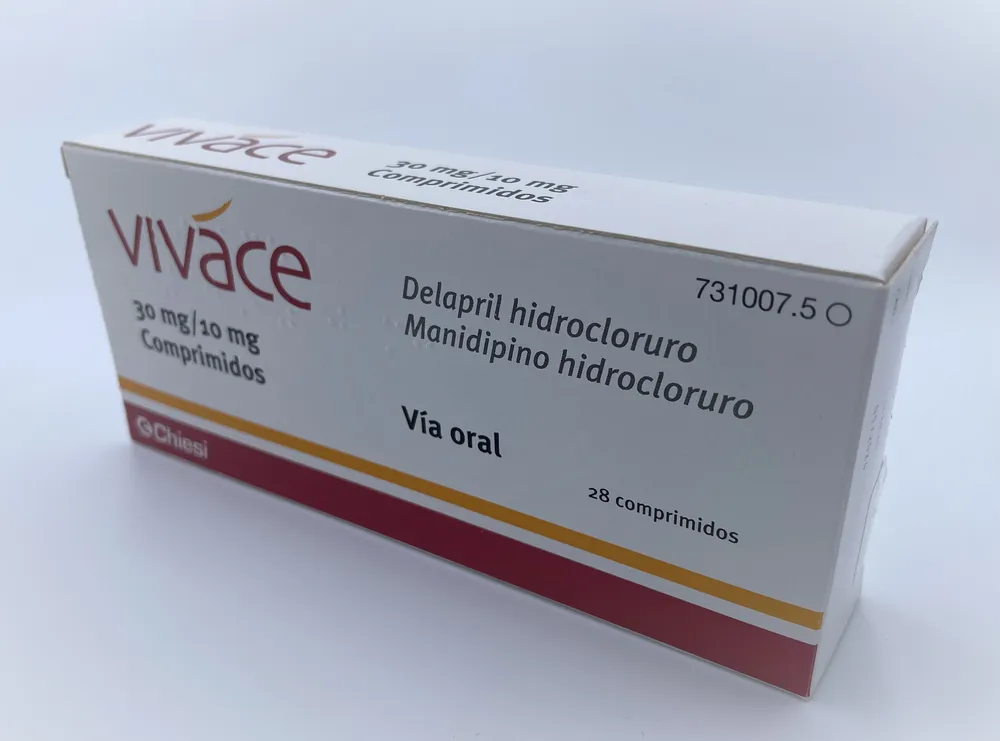
Table of Contents
Patient Information Leaflet
Introduction
Patient Information Leaflet
VIVACE 30 mg/10 mg tablets
delapril hydrochloride + manidipine hydrochloride
Read the entire leaflet carefully before you start taking this medicine, because it contains important information for you.
|
Package leaflet contents:
- What Vivace is and what it is used for
- What you need to know before taking Vivace
- How to take Vivace
- Possible side effects
- Storage of Vivace
- Contents of the pack and other information
1. What Vivace is and what it is used for
Vivace is
Vivace is a combination of two active substances: delapril hydrochloride and manidipine hydrochloride.
Delapril belongs to a group of medicines known as angiotensin-converting enzyme inhibitors (ACE inhibitors). Angiotensin II is a substance produced in the body that causes blood vessels to narrow, leading to an increase in blood pressure. Delapril hydrochloride prevents the formation of angiotensin II, thereby reducing blood pressure.
Manidipine belongs to a group of medicines called calcium channel antagonists, which block the influx of calcium into the smooth muscle cells of blood vessels, causing the blood vessels to relax and resulting in a reduction of blood pressure.
The two active substances in Vivace work together to lower blood pressure more effectively than when either delapril or manidipine is used alone.
Vivace is used for
the treatment of high blood pressure (hypertension) in patients whose blood pressure is not adequately controlled with delapril or manidipine alone.
2. What you need to know before taking Vivace
Do not take Vivace:
- if you are allergic to delapril or any other angiotensin-converting enzyme (ACE) inhibitor, to manidipine or any other calcium channel blocker, or to any of the other components of this medicine (listed in section 6)
- if you have previously experienced severe allergic reactions such as swelling of the face, lips, tongue and/or throat with difficulty breathing during previous treatments with ACE inhibitors, or if you or a family member has had these symptoms under any other circumstances
- if you have severe liver disease
- if you have severe kidney problems (for example, severe kidney disease, are undergoing hemodialysis (treatment with an artificial kidney), have had a kidney transplant, or have renal artery stenosis (narrowing of the arteries to the kidneys), especially if you have only one kidney)
- if you have certain heart problems (for example, recent myocardial infarction or angina pectoris (chest pain due to insufficient oxygen supply to the heart) or heart failure)
- if you have aortic stenosis (narrowing of the main blood vessel leaving the heart) or hypertrophic cardiomyopathy (a heart muscle disorder)
- if you have adrenal hyperactivity that may cause low blood potassium levels
- if you are more than 3 months pregnant (it is also advisable to avoid taking Vivace early in pregnancy – see Pregnancy section)
- if you have diabetes or kidney failure and are being treated with a blood pressure-lowering medicine containing aliskiren
- if you have taken or are currently taking sacubitril/valsartan, a medicine used to treat chronic heart failure in adults, as the risk of angioedema (rapid swelling beneath the skin, for example in the throat) is high
- if you are taking any of the following medicines, the risk of developing angioedema may increase:
- Racecadotril, a medicine used to treat diarrhoea
- Medicines used to prevent organ transplant rejection and for cancer (e.g., temsirolimus, sirolimus, everolimus)
- Vildagliptin, a medicine used to treat diabetes
- if you are taking any of the following medicines, the risk of developing angioedema may increase:
Do not give Vivace to children or adolescents under 18 years of age.
Warnings and precautions
Talk to your doctor or pharmacist before taking Vivace if:
- you have kidney problems
- you have liver problems
- you suffer from certain heart conditions (e.g., ischemic heart disease)
- you have cerebrovascular disease (blood vessel problems in the brain)
- you are scheduled to undergo LDL apheresis (a procedure that removes cholesterol from your blood using a machine)
- you are due to receive desensitization treatment to reduce the effects of an allergy to bee or wasp stings
- you have a connective tissue disease such as systemic lupus erythematosus or scleroderma
- you are diabetic
- you have a condition associated with persistently high blood potassium levels
- you experience symptoms such as swelling of the face, eyes, lips, tongue, throat, or difficulty breathing (see section 4, “Rare adverse effects”)
- you have abnormal changes in your blood components
- you are due to undergo anaesthesia or surgery
- you experience rapid heartbeat, dizziness, or general weakness, which may indicate low blood pressure
- you think you may be (or could become) pregnant. Vivace is not recommended during early pregnancy and must not be taken if you are more than 3 months pregnant, as it may cause serious harm to your baby (see Pregnancy section)
- you are taking any of the following medicines for high blood pressure (hypertension):
- an angiotensin II receptor antagonist (ARA) (also known as “sartans” – e.g., valsartan, telmisartan, irbesartan), particularly if you have kidney problems related to diabetes
- aliskiren
- you are taking any of the following medicines, which may increase the risk of angioedema (rapid swelling beneath the skin, e.g., in the throat):
Sirolimus, everolimus, and other medicines belonging to the mTOR inhibitor family (used to prevent rejection of transplanted organs)
- you are undergoing peritoneal dialysis
Your doctor may monitor your kidney function, blood pressure, and blood electrolyte levels (e.g., potassium) at regular intervals.
See also the information under the heading “Do not take Vivace”.
Children and adolescents
Do not give Vivace to children or adolescents under 18 years of age.
Taking Vivace with other medicines
Tell your doctor or pharmacist if you are taking, have recently taken, or might need to take any other medicines, including those not requiring a prescription.
Your doctor may need to adjust your dose and/or take other precautions if you are taking any of the following medicines:
- diuretics (used to remove water from the body by increasing urine output) and other blood pressure-lowering medicines. These may enhance the hypotensive effect of Vivace
- heparin (used to prevent blood clots)
- medicines containing lithium (usually used to treat manic-depressive disorders). These should only be taken with Vivace under close medical supervision
- painkillers (e.g., non-steroidal anti-inflammatory drugs such as aspirin)
- antidepressants, antipsychotics (used to treat schizophrenia and other mental illnesses), and anaesthetics
- medicines that stimulate the sympathetic nervous system (e.g., cold remedies)
- potassium-containing salts or potassium-sparing diuretics. In such cases, special precautions (e.g., blood tests) are required
- digoxin (used to treat heart disorders)
- medicines that affect blood composition (e.g., allopurinol, used to treat gout), procainamide (for irregular heartbeats), corticosteroids, immunosuppressants (used to treat autoimmune disorders or to prevent transplant rejection), and cancer medicines
- medicines for diabetes (oral medicines or insulin)
- vildagliptin, a medicine used to treat diabetes (see also information in section “Do not take Vivace”)
- antacids
- medicines that affect the metabolism of any of the active substances in Vivace, for example, cimetidine (used to treat stomach ulcers), certain antibiotics or antifungals (used to treat fungal infections), phenytoin, carbamazepine, phenobarbital, rifampicin, terfenadine, astemizole, or class III antiarrhythmics used to normalize heart rate (e.g., amiodarone, quinidine)
- if you are taking an angiotensin II receptor antagonist (ARA) or aliskiren (see also information under headings “Do not take Vivace” and “Warnings and precautions”)
- medicines used to treat chronic heart failure in adults (e.g., sacubitril/valsartan) (see also information in section “Do not take Vivace”)
- racecadotril, a medicine used to treat diarrhoea (see also information in section “Do not take Vivace”)
Inform your doctor if you are also taking:
- Medicines commonly used to prevent rejection of transplanted organs (sirolimus, everolimus, and other medicines belonging to the mTOR inhibitor family). See section “Warnings and precautions”
- Potassium supplements (including salt substitutes), potassium-sparing diuretics, and other medicines that may increase blood potassium levels (e.g., trimethoprim and cotrimoxazole for bacterial infections; cyclosporine, an immunosuppressant used to prevent transplant rejection; and heparin, a medicine used to thin the blood and prevent clots)
Taking Vivace with food and drinks
Vivace should be taken after breakfast.
Do not drink grapefruit juice while taking this medicine, as your blood pressure may drop too much. Drinking alcohol may cause a drop in blood pressure when standing.
Avoid high-salt meals (containing large amounts of sodium chloride), as this may reduce the hypotensive effect of Vivace.
Pregnancy and breastfeeding
If you are pregnant or breastfeeding, think you may be pregnant, or are planning to become pregnant, consult your doctor or pharmacist before using this medicine.
Pregnancy
Your doctor will usually advise you to stop taking Vivace before becoming pregnant or as soon as you know you are pregnant, and will recommend an alternative medicine. Vivace is not recommended during early pregnancy and must not be taken after 3 months of pregnancy, as it may cause serious harm to your baby if used beyond the third month of pregnancy.
Breastfeeding
Vivace is not recommended for breastfeeding mothers. Your doctor should choose an alternative treatment if you wish to continue breastfeeding, especially if your baby is a newborn or was premature.
Driving and using machines
It is unlikely that Vivace will affect your ability to drive or use machines. However, it may occasionally cause dizziness due to low blood pressure. If this occurs, consult your doctor before attempting these activities.
Vivace contains lactose and a colouring agent
If your doctor has told you that you have an intolerance to certain sugars, consult him before taking this medicine.
The colouring agent E-110 may cause allergic-type reactions.
3. How to take Vivace
Follow exactly the administration instructions for Vivace given by your doctor or pharmacist. If in doubt, consult your doctor or pharmacist again.
The recommended dose of Vivace is one tablet per day.
Dose reduction
If you are over 65 years of age or if you have kidney or liver problems, your doctor may prescribe a lower dose.
Administration
Vivace should be taken in the morning after breakfast. The tablet must be swallowed whole with sufficient water. Try to take your daily dose at approximately the same time each day.
The tablet may be divided into equal doses.
Duration of treatment
It is important that you continue taking Vivace until your doctor tells you otherwise.
Please take the exact dose prescribed by your doctor and do not change it without first consulting him.
Use in children and adolescents
Do not give Vivace to children or adolescents under 18 years of age (see section 2, “What you need to know before taking Vivace – Do not take Vivace”).
If you take more Vivace than you should
If, for any reason, you have taken more tablets than you should, consult your doctor immediately, as this may cause your blood pressure to drop too much.
In case of overdose or accidental ingestion, contact your doctor or pharmacist immediately, go to a medical center, or call the Toxicology Information Service at 91 562 04 20, indicating the medication and the amount ingested.
If you forget to take Vivace
If you forget to take a dose, take the next dose at your usual time. Do not take a double dose to make up for a missed dose.
If you stop taking Vivace
It is important that you continue taking Vivace until your doctor tells you otherwise.
If you have any further questions about the use of this product, ask your doctor or pharmacist.
4. Possible adverse effects
Like all medicines, Vivace may cause adverse effects, although not everyone will experience them.
If adverse effects occur, they are usually mild and transient. However, some adverse effects may be serious and require medical attention.
The frequency of adverse effects is classified into the following categories:
Very frequent | At least 1 in 10 patients |
Frequent | At least 1 in 100 patients, but less than 1 in 10 patients |
Uncommon | At least 1 in 1,000 patients, but less than 1 in 100 patients |
Rare | At least 1 in 10,000 patients, but less than 1 in 1,000 patients |
Very rare | Less than 1 in 10,000 patients, including isolated cases |
Not known | Frequency cannot be estimated from the available data |
Frequent adverse effects:
Most frequent adverse effects:
Cough, fluid accumulation in tissues causing oedema, headache
Other frequent adverse effects:
Decreased number of white blood cells in the blood, feeling of apathy, balance disorder, sensation of abnormal movement, dizziness, vertigo, palpitations, hypotension (especially when standing), hot flushes, bronchitis, nausea, abdominal pain, digestive disorders, fatigue, alteration of laboratory parameters (e.g. changes indicating abnormal liver function, increased potassium levels).
Uncommon adverse effects:
Anaemia due to lack or insufficient production of new blood cells by the bone marrow, marked decrease in the number of white blood cells in the blood leading to increased risk of infections, decreased number of blood platelets leading to increased risk of bleeding or bruising, decreased number of certain white blood cells in the blood leading to increased risk of infections, decreased amount of blood plasma and proportion of red blood cell volume, loss of appetite, confusion, insomnia, mood changes, nervousness, anxiety, feeling of irritability, altered taste, blurred vision, increased heart rate, fainting (syncope), breathing difficulty, swelling of sinuses and nasal mucosa (e.g. constant nasal discharge), sore throat, vomiting, diarrhoea, constipation, dry mouth, formation of gallstones in the bile ducts (especially if gallbladder inflammation is present), redness, itching, skin inflammation with redness and itching (eczema), excessive sweating, muscle and joint stiffness, pain in arms and legs, renal failure, high levels of protein in urine, inability to achieve or maintain an erection (impotence), feeling of weakness, general malaise, alterations in laboratory parameters (e.g. changes indicating abnormal liver function).
Rare adverse effects:
Allergic reactions, decreased libido, somnolence, myocardial infarction, cardiac rhythm disorders, chest pain due to insufficient oxygen supply to the heart (angina pectoris), chest pain, stroke, stomach pain, urticaria, abnormal redness of the skin, muscle cramps, acute renal failure, accumulation of urea (a waste product excreted in urine) in the blood, irritability, alterations in laboratory parameters (e.g. increased biliary pigment, changes indicating abnormal heart or muscle function).
Rare reactions that may be caused by this type of medicine include swelling of the face, lips, tongue, throat or difficulty breathing. If you notice any of these reactions during treatment, stop taking Vivace and contact your doctor immediately.
Very rare adverse effects (including isolated cases):
Anaemia due to rapid destruction of red blood cells, in patients with pre-existing angina pectoris (chest pain due to insufficient oxygen supply to the heart), frequency, duration and severity of angina attacks may increase, as well as occurrence of heart attacks, poor blood circulation causing numbness and pale colour of fingers in hands and feet (Raynaud's disease), breathing difficulty, inflammation of the pancreas, intestinal obstruction, swelling of the tongue, appearance of blisters on the face, mouth, eyes and genitals accompanied by fever (Stevens-Johnson syndrome), hair loss, psoriasis.
Adverse effects with unknown frequency:
- High potassium concentration in blood (hyperkalaemia)
- Swelling of the skin, lips, tongue or throat with difficulty swallowing or breathing (angioedema)
- Kidney problems: severely reduced diuresis (acute deterioration of renal function)
- Muscle pain
- Breast enlargement with or without pain in men (gynaecomastia)
- Cloudy fluid (when performing dialysis through a tube in the abdomen)
Reporting of adverse effects
If you experience any type of adverse effect, consult your doctor or pharmacist, even if it is a possible adverse effect not listed in this leaflet. You may also report them directly via the national reporting system of the Spanish Pharmacovigilance System for Human Medicines at https://www.notificaram.es.
By reporting adverse effects, you can help provide more information on the safety of this medicine.
5. Storage of Vivace
- Keep this medicine out of the sight and reach of children.
- Do not use this medicine after the expiry date stated on the container following "Exp.".
Medicines must not be disposed of via wastewater or household waste. Dispose of empty containers and unused medicines at the SIGRE point in your pharmacy. If you are unsure, ask your pharmacist how to properly dispose of containers and unused medicines. This helps protect the environment.
6. Information for the user
Composition of Vivace
Vivace is a combination of two active substances: delapril hydrochloride and manidipine hydrochloride.
Each Vivace 30 mg/10 mg tablet contains 30 mg of delapril hydrochloride and 10 mg of manidipine hydrochloride, respectively.
The other components are monohydrate lactose, low-substituted hydroxypropylcellulose, hydroxypropylcellulose, magnesium stearate, riboflavin, and aluminium lake E-110 (orange-yellow).
Appearance of the product and contents of the container
Vivace is supplied in Alu-Alu blisters.
Each pack of Vivace contains 28 salmon-coloured, round, scored tablets.
Marketing Authorization Holder and Manufacturer
Marketing Authorization Holder:
CHIESI ESPAÑA, S.A.U.
Plaça d’Europa, 41-43, Planta 10
08908 L'Hospitalet de Llobregat - Barcelona (Spain)
Manufacturer:
Chiesi Farmaceutici, S.p.A.
Vía San Leonardo 96
43122 Parma (Italy)
Or
Fine Foods & Pharmaceuticals N.T.M. S.p.A.
Via Grignano, 43
24041 Brembate (BG)
Italy
This medicinal product is authorized in the following EEA Member States under the following names:
Italy: | Adaptus |
Greece: | Vivace |
Spain: | Vivace |
Date of the latest review of this leaflet: July 2024
Delapril and manidipino are licensed by Takeda Pharmaceutical Company Ltd.
Detailed and up-to-date information on this medicinal product is available on the website of the Spanish Agency of Medicines and Medical Devices (AEMPS) http://www.aemps.gob.es.