Vinorelbine Accord 10 mg/ml concentrate for solution for infusion EFG
Spain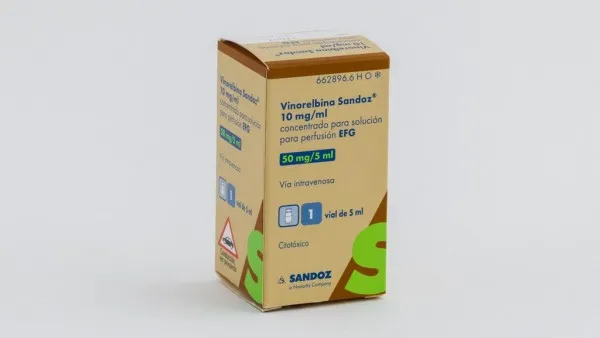
Table of Contents
- Package leaflet: Information for the user
- Introduction
- 1. What Vinorelbina Accord is and what it is used for
- 2. What you need to know before starting to use Vinorelbina Accord
- 3. How to use Vinorelbina Accord
- 4. Possible adverse effects
- 5. Vinorelbine Accord Storage Instructions
- 6. Contents of the pack and other information
Package leaflet: Information for the user
Introduction
Package leaflet: information for the user
Vinorelbine Accord 10 mg/ml concentrate for solution for infusion EFG
Read the entire leaflet carefully before you start using this medicine, because it contains important information for you.
- Keep this leaflet, as you may need to read it again.
- If you have any questions, ask your doctor or pharmacist.
- If you experience any side effects, consult your doctor or pharmacist, even if they are side effects not listed in this leaflet. See section 4.
Leaflet contents:
- What Vinorelbine Accord is and what it is used for
- What you need to know before using Vinorelbine Accord
- How to use Vinorelbine Accord
- Possible side effects
- How to store Vinorelbine Accord
- Contents of the pack and other information
1. What Vinorelbina Accord is and what it is used for
Vinorelbina Accord contains vinorelbine as the active substance, which belongs to a group of anticancer drugs. These drugs interfere with the growth of malignant cells.
Vinorelbina Accord is indicated in adults for the treatment of cancer, specifically non-small cell lung cancer and breast cancer in patients over 18 years of age.
2. What you need to know before starting to use Vinorelbina Accord
Do not use Vinorelbina Accord:
- if you are allergic to vinorelbine or to any medicine in the family of medicines known as vinca alkaloids;
- if you are allergic to any of the other ingredients of this medicine (listed in section 6);
- if you are breastfeeding;
- if you have low white blood cell count (neutrophils) or a serious current or recent infection (within the last two weeks);
- if you have low platelet count;
- if you are scheduled to receive (or have recently received) the yellow fever vaccine;
- This medicine is for intravenous use only and must not be injected into the spinal column.
Warnings and precautions
Talk to your doctor or pharmacist before starting to use Vinorelbina Accord.
Inform your doctor if:
- you have a history of heart attack or severe chest pain;
- you have received radiotherapy and the treated area included the liver;
- you have symptoms of infection (such as fever, chills, or cough);
- you are planning to get vaccinated;
- you have liver problems;
- if you are pregnant.
- Vinorelbina Accord must not come into contact with the eyes, as there is a risk of severe irritation or even corneal ulcers. If this occurs, the eyes must be immediately rinsed with isotonic saline solution and an ophthalmologist should be consulted.
Before administration of Vinorelbina Accord, a blood sample will be taken to analyze its components. If the results of this test are not satisfactory, treatment may be delayed and further tests performed until values return to normal.
Other medicines and Vinorelbina Accord
Inform your doctor or pharmacist if you are taking, have recently taken, or might need to take any other medicines.
Your doctor must exercise special caution if you are taking any of the following medicines:
- medicines that make the blood thinner (anticoagulants);
- an antiepileptic medicine called phenytoin;
- an antifungal medicine called itraconazole;
- an anticancer medicine called mitomycin C;
- medicines that affect the immune system, such as cyclosporine and tacrolimus;
- concomitant use with lapatinib (a medicine used to treat cancer);
- St. John's wort (Hypericum perforatum);
- antibiotics such as rifampicin, erythromycin, clarithromycin, or telithromycin;
- antiviral medicines used to treat HIV/AIDS, such as ritonavir (HIV protease inhibitors);
- verapamil, quinidine (used to treat heart problems).
Vaccination is not recommended; e.g., varicella, mumps, measles, etc.; nor the yellow fever vaccine during treatment with Vinorelbina Accord, as they may increase the risk of developing a potentially fatal systemic illness.
Concomitant use of Vinorelbina Accord with other medicines known to have myelotoxic effects (affecting white blood cells, red blood cells, and platelets) may worsen some of the adverse reactions.
Taking Vinorelbina Accord with food and drinks
No interaction of Vinorelbina Accord with food or drinks is known.
Use in children and adolescents
The safety and efficacy have not been established in children and adolescents.
Pregnancy, breastfeeding, and fertility
Pregnancy
- Before starting treatment, you must inform your doctor and seek advice if you are pregnant, think you may be pregnant, or intend to become pregnant, as there are potential risks to the baby.
If you are a woman of childbearing age, you must use an effective method of contraception during treatment and for 7 months after completion of treatment.
Breastfeeding
You must not breastfeed if you are prescribed Vinorelbina Accord (see section 2 “Do not use Vinorelbina Accord”).
Fertility
Men treated with Vinorelbina Accord are advised not to father a child during treatment and for 4 months after the end of treatment, and to seek advice regarding sperm preservation before starting treatment, as Vinorelbina Accord may affect male fertility. An effective method of contraception must be used during treatment and for 4 months after completion of treatment.
Driving and use of machines
No studies on the effects of Vinorelbina Accord on the ability to drive or operate machinery have been performed. Therefore, do not drive if your doctor has advised against it or if you do not feel well.
3. How to use Vinorelbina Accord
Follow exactly the administration instructions provided by your doctor for this medicine. If in doubt, consult your doctor or pharmacist again.
Dosage
Only qualified healthcare professionals specialized in oncology may prepare and administer Vinorelbina Accord.
Before each administration, a new blood sample will be taken to check its composition, in order to confirm that the patient has sufficient blood cells to receive Vinorelbina Accord. If the results of these tests are not satisfactory, treatment may need to be postponed and further tests performed until the values return to normal.
The usual dose for adults is 25 mg/m² to 30 mg/m².
Frequency of administration
Vinorelbina Accord is scheduled once a week. Your doctor will determine the frequency.
Always follow your doctor's instructions.
Dose adjustment:
-
In case of significant hepatic impairment, your doctor may adjust the dose. You must follow your doctor's instructions.
-
Dose adjustment is not required in cases of renal impairment. You must follow your doctor's instructions.
Method and route of administration
Vinorelbina Accord must be diluted before administration.
Vinorelbina Accord can only be administered intravenously. It will be given as an infusion into one of your veins, lasting between 6 and 10 minutes.
After administration, the vein will be flushed thoroughly with a sterile solution.
If you take more Vinorelbina Accord than you should
Your doctor must ensure that you receive the appropriate dose for your condition. However, you should contact your doctor, emergency services, or your pharmacist if you suspect an overdose or experience symptoms such as fever, signs of infection, or constipation.
If you have any doubts, consult your doctor or pharmacist.
In case of overdose or accidental ingestion, contact your doctor or pharmacist immediately or call the Toxicology Information Service at telephone number: 91 562 04 20, indicating the medicine and the amount ingested.
4. Possible adverse effects
Like all medicines, this medicine can cause adverse effects, although not everyone will experience them.
Tell your doctor immediately if you develop any of the following symptoms while using Vinorelbina Accord:
- Signs of infection such as cough, fever, and chills.
- Severe constipation with abdominal pain after several days without bowel movements.
- Severe dizziness, lightheadedness when standing up, which may be signs of a serious drop in blood pressure.
- Unusual, severe chest pain; symptoms may be due to impaired heart function, leading to insufficient blood flow such as ischemic heart disease, for example angina pectoris and myocardial infarction (sometimes fatal).
- Difficulty breathing, which may be a symptom of a condition known as acute respiratory distress syndrome, which can be serious and potentially fatal.
- Dizziness, low blood pressure, skin rash affecting the whole body, or swelling of the eyelids, lips, face, or throat, which may be signs of an allergic reaction.
- Chest pain, difficulty breathing, and fainting, which may indicate a blood clot in a blood vessel in the lungs (pulmonary embolism).
- Headaches, changes in mental status that may lead to confusion and coma, seizures, blurred vision, and high blood pressure, which could indicate a neurological disorder such as reversible posterior encephalopathy syndrome.
Very common adverse effects (may affect more than 1 in 10 people):
- Nausea, vomiting, constipation;
- Decrease in red blood cells, which may cause paleness of the skin and lead to weakness or difficulty breathing;
- Decrease in white blood cells, making you more vulnerable to infections;
- Weakness in the lower limbs;
- Loss of some reflexes, occasionally disturbances in touch sensation;
- Hair loss (alopecia), usually not severe with long-term treatment;
- Inflammation or ulceration in the mouth or throat;
- Reactions at the injection site of Vinorelbina Accord such as redness, burning, discoloration of veins, vein inflammation;
- Liver abnormalities (abnormal liver function tests).
Common adverse effects (may affect up to 1 in 10 people):
- Decrease in platelet count, which may increase the risk of bleeding or bruising;
- Joint pain;
- Jaw pain;
- Muscle pain;
- Tiredness (asthenia, fatigue);
- Fever;
- Pain in various parts of the body, such as chest pain or pain at the tumor site;
- Diarrhea;
- Infections at various sites.
Uncommon adverse effects (may affect up to 1 in 100 people):
- Severe difficulty performing movements and abnormal sensation to touch;
- Dizziness;
- Sudden feeling of warmth and skin redness of the face and neck;
- Cold sensation in hands and feet;
- Difficulty breathing or wheezing (dyspnea and bronchospasm);
- Blood infections (sepsis) with symptoms such as high fever and general deterioration in health;
- High blood pressure.
Rare adverse effects (may affect up to 1 in 1,000 people):
- Heart attack (myocardial ischemia, angina pectoris, myocardial infarction, sometimes fatal);
- Pulmonary toxicity (inflammation and fibrosis, sometimes fatal);
- Severe abdominal and back pain (inflammation of the pancreas);
- Low sodium levels in your blood (which may cause symptoms such as fatigue, confusion, muscle twitching, and loss of consciousness);
- Ulcers at the injection site where Vinorelbina Accord was administered (local necrosis);
- Skin rashes on your body such as rash and eruptions (generalized skin reactions).
Very rare adverse effects (may affect up to 1 in 10,000 people):
- Irregular heartbeat (tachycardia), palpitations, disturbances in heart rhythm.
Frequency not known (cannot be estimated from available data):
- Abdominal pain, gastrointestinal bleeding;
- Heart failure, which may cause difficulty breathing and swelling of the ankles;
- Redness of hands and feet (erythema);
- Low sodium levels due to overproduction of a hormone causing fluid retention, leading to weakness, fatigue, or confusion (Syndrome of Inappropriate Antidiuretic Hormone Secretion, SIADH);
- Loss of muscle coordination, which may be associated with abnormal gait, changes in speech, and abnormal eye movements (ataxia);
- Headache;
- Chills with fever;
- Cough;
- Loss of appetite;
- Weight loss;
- Darker skin coloration following the path of the veins.
Reporting of adverse effects
If you experience any adverse effects, consult your doctor or nurse. This includes any possible adverse effects not listed in this leaflet. You may also report them directly via the Spanish Pharmacovigilance System for Human Medicines: www.notificaram.es. By reporting adverse effects, you can help provide more information on the safety of this medicine.
5. Vinorelbine Accord Storage Instructions
Keep this medicine out of the sight and reach of children.
Do not use this medicine after the expiry date stated on the vial and outer packaging, following "EXP". The expiry date refers to the last day of the month indicated.
Store in a refrigerator (2 °C – 8 °C). Do not freeze.
Keep in the original packaging to protect from light.
Stability after dilution
Chemical and physical in-use stability has been demonstrated for 24 hours at 25 °C.
From a microbiological standpoint, unless the method of opening and dilution excludes the risk of microbial contamination, the product should be used immediately after dilution. If not used immediately, the storage conditions and duration of stability during use are the responsibility of the user.
Do not freeze.
Disposal of unused medicine and of any materials that have come into contact with it must be carried out in accordance with local regulations for cytotoxic agents.
Medicines must not be disposed of via wastewater or household waste. If you are unsure how to dispose of any unused medicines or their containers, consult your pharmacist. This helps protect the environment.
6. Contents of the pack and other information
Composition of Vinorelbine Accord
The active substance is vinorelbine (as tartrate). Each 1 ml of solution contains 10 mg of vinorelbine (as vinorelbine tartrate).
The other component is: water for injections.
Each 1 ml vial contains a total of 10 mg of vinorelbine (as tartrate).
Each 5 ml vial contains a total of 50 mg of vinorelbine (as tartrate).
Appearance of Vinorelbine Accord and contents of the pack
Vinorelbine Accord is a concentrate for solution for infusion. The solution is clear, colourless to pale yellow. It is supplied in clear type I glass vials with bromobutyl rubber stoppers, sealed with an aluminium cap and protected by an overlaid blue plastic disc.
Vinorelbine Accord is available in:
1 vial of 1 ml
1 vial of 5 ml
Only some pack sizes may be marketed.
Marketing Authorisation Holder and Manufacturer
Marketing Authorisation Holder
Accord Healthcare S.L.U.
World Trade Center
Moll de Barcelona, s/n
Edifici Est, 6th floor
08039 Barcelona
Spain
Manufacturer
Accord Healthcare Polska Sp.z o.o.,
ul. Lutomierska 50,
95-200 Pabianice,
Poland
or
Accord Healthcare single member S.A.
64th Km National Road Athens, Lamia,
Schimatari, 32009,
Greece
Date of the most recent revision of this leaflet: March 2025
This medicinal product is authorised in EEA Member States under the following names:
Member States | Medicinal product names |
PT | Vinorelbine Accord |
AT | Vinorelbine Accord 10 mg/ml concentrate for solution for infusion |
BE | Vinorelbine Accord Healthcare 10 mg/ml, concentrate for solution for intravenous infusion |
CY | Vinorelbine Accord 10 mg/ml, concentrate for solution for infusion |
CZ | Vinorelbine Accord 10 mg/ml concentrate for infusion solution |
DK | Vinorelbine Accord |
DE | Vinorelbine Accord 10 mg/ml concentrate for solution for infusion |
EE | Vinorelbine Accord |
ES | Vinorelbine Accord 10 mg/ml concentrate for infusion solution EFG |
FI | Vinorelbine Accord 10 mg/ml concentrate for infusion, solution for dilution |
FR | Vinorelbine Accord 10 mg/ml solution to dilute for infusion |
IT | Vinorelbine Accord |
LV | Vinorelbine Accord 10 mg/ml concentrate for infusion solution |
LT | Vinorelbine Accord 10 mg/ml concentrate for infusion solution |
MT | Vinorelbine 10 mg/ml concentrate for solution for infusion |
NO | Vinorelbine Accord 10 mg/ml, concentrate for infusion solution |
PL | Vinorelbine Accord |
RO | Vinorelbine Accord 10 mg/ml concentrate for infusion solution |
NL | Vinorelbine Accord 10 mg/ml concentrate for solution for infusion |
SK | Vinorelbine Accord 10 mg/ml concentrate for infusion |
SE | Vinorelbine Accord 10 mg/ml concentrate for infusion solution, solution |
SI | Vinorelbine Accord 10 mg/ml concentrate for solution for infusion |
UK | Vinorelbine 10 mg/ml concentrate for solution for infusion |
Detailed information about this medicinal product is available on the website of the Spanish Agency of Medicines and Health Products (AEMPS) (http://www.aemps.gob.es/).
This information is intended exclusively for healthcare professionals:
Vinorelbina Accord 10 mg/ml concentrate for solution for infusion EFG
Instructions for use
ANTINEOPLASTIC AGENT
Refer to the Summary of Product Characteristics for detailed information on this medicinal product.
Handling and administration
The preparation and administration of injectable cytotoxic drug solutions must be carried out by trained specialized personnel familiar with the drugs used, under conditions ensuring protection of the environment and, especially, protection of personnel handling the drugs. A dedicated preparation area must be available for this purpose. Smoking, eating, and drinking are prohibited in this area.
Personnel must have appropriate handling materials, especially long-sleeved gowns, masks, caps, protective goggles, sterile disposable gloves, protective covers for the work area, and waste collection bags.
Syringes and infusion sets must be assembled carefully to avoid leaks (use of Luer connections is recommended).
Spills and leaks must be cleaned up using protective gloves.
Precautions must be taken to avoid exposure of pregnant personnel.
Any contact with the eyes must be strictly avoided. In case of eye contact, immediate irrigation with isotonic saline solution is essential. In case of irritation, an ophthalmologist should be consulted.
In case of skin contact, the affected area must be thoroughly washed with water.
After completion, any exposed surfaces must be carefully cleaned, and hands and face must be washed.
Preparation of the infusion solution
There is no incompatibility between Vinorelbina Accord and glass vials, PVC bags, vinyl acetate bags, or polypropylene syringes.
If polychemotherapy is administered, Vinorelbina Accord must not be mixed with other drugs.
Intrathecal administration is contraindicated.
Vinorelbina Accord must only be administered intravenously by infusion.
Vinorelbina Accord may be administered as a slow bolus (6–10 minutes) after dilution in 20–50 ml of isotonic saline solution or 50 mg/ml (5%) glucose solution, or as a short infusion (20–30 minutes) after dilution in 125 ml of isotonic saline solution or 50 mg/ml (5%) glucose solution. Administration must always be followed by infusion of at least 250 ml of isotonic solution to flush the vein.
Vinorelbine must be administered intravenously only. Before injection, it is very important to ensure that the cannula is correctly placed within the vein. If vinorelbine infiltrates surrounding tissue during intravenous administration, considerable irritation may occur. In such a case, injection must be stopped immediately, the vein flushed with saline solution, and the remainder of the dose administered into another vein. In case of extravasation, intravenous glucocorticoids may be administered to reduce the risk of phlebitis.
Excreta and vomit must be handled carefully.
Storage
Store in a refrigerator (2 °C – 8 °C). Do not freeze.
Keep in the original packaging to protect from light.
Stability after dilution
Chemical and physical in-use stability has been demonstrated for 24 hours at 25 °C.
From a microbiological standpoint, unless the method of opening and dilution excludes the risk of microbial contamination, the product should be used immediately after dilution. If not used immediately, the duration and conditions of storage during use are the responsibility of the user.
Do not freeze.
Disposal
Disposal of unused medicine and all materials that have come into contact with it must be carried out in accordance with local regulations for cytotoxic agents.