Vildagliptin Vivanta 50 mg tablets EFG
Spain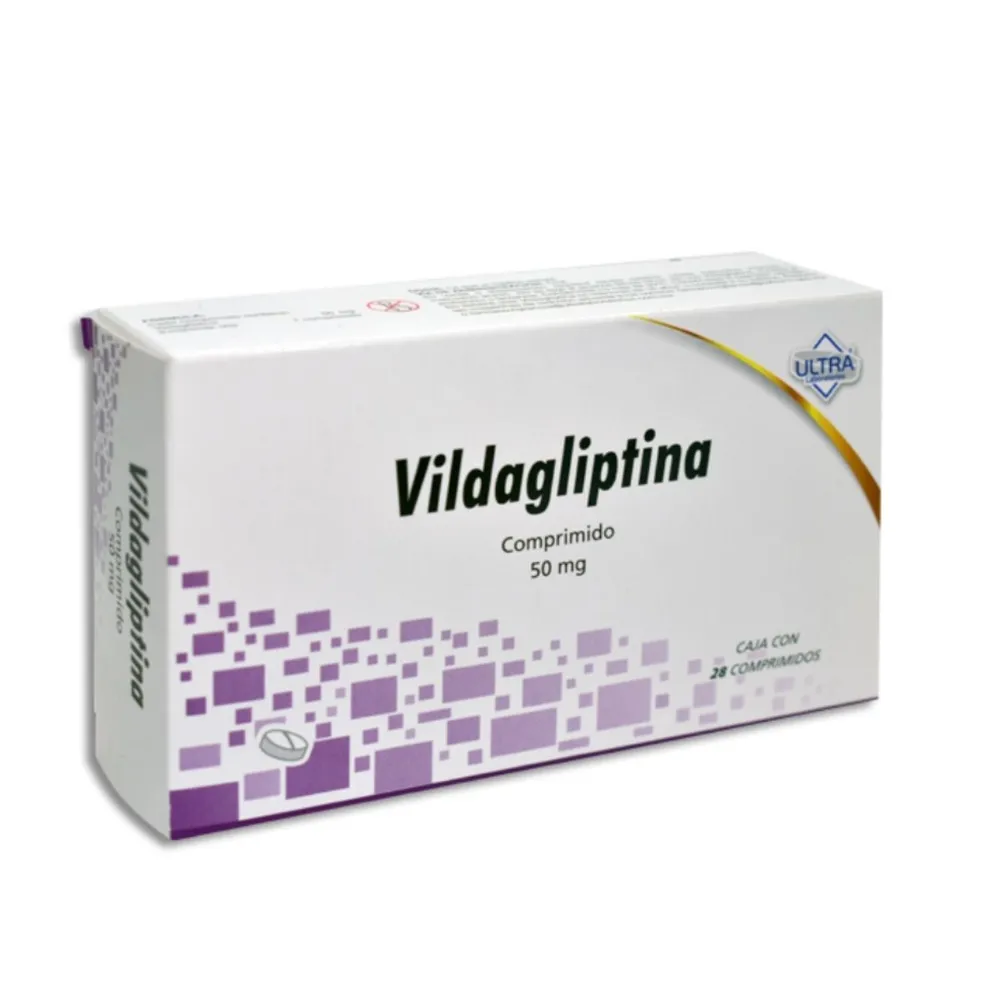
Table of Contents
- Package leaflet: Information for the user
- Introduction
- 1. What Vildagliptina Vivanta is and what it is used for
- 2. What you need to know before taking Vildagliptin Vivanta
- 3. How to take Vildagliptina Vivanta
- 4. Possible adverse effects
- 5. Storage of Vildagliptin Vivanta
- 6. Contents of the pack and other information
Package leaflet: Information for the user
Introduction
Package leaflet: information for the user
Vildagliptin Vivanta 50 mg tablets EFG
Read the entire leaflet carefully before you start taking this medicine, because it contains important information for you.
- Keep this leaflet, as you may need to read it again.
- If you have any questions, ask your doctor, pharmacist or nurse.
- This medicine has been prescribed for you only, and you must not give it to other people, even if they have the same symptoms as you, because it could harm them.
- If you experience any adverse effects, consult your doctor, pharmacist or nurse, even if they are adverse effects not listed in this leaflet. See section 4.
Leaflet contents
- What Vildagliptin Vivanta is and what it is used for
- What you need to know before taking Vildagliptin Vivanta
- How to take Vildagliptin Vivanta
- Possible side effects
- How to store Vildagliptin Vivanta
- Contents of the pack and other information
1. What Vildagliptina Vivanta is and what it is used for
The active substance in this medicine is vildagliptin, which belongs to a group of medicines called "oral antidiabetics".
Vildagliptin is used to treat adult patients with type 2 diabetes when diabetes cannot be controlled by diet and exercise alone. It helps control blood sugar levels. Your doctor will prescribe vildagliptin either alone or in combination with other antidiabetic medicines you are already taking, if these are not sufficiently effective in controlling your diabetes.
Type 2 diabetes occurs when the body does not produce enough insulin or when the insulin produced does not work properly. It may also occur when the body produces too much glucagon.
Insulin is a substance that helps lower blood sugar levels, especially after meals. Glucagon is a substance that promotes sugar production by the liver, thereby increasing blood sugar levels. Both substances are produced in the pancreas.
How Vildagliptina Vivanta works
Vildagliptin stimulates the pancreas to produce more insulin and less glucagon. This helps control blood sugar levels. This medicine has been shown to reduce blood sugar, which will help prevent complications from your diabetes. Even if you start taking this medicine for your diabetes, it is important that you continue with the diet and/or exercise regimen recommended to you.
2. What you need to know before taking Vildagliptin Vivanta
Do not take Vildagliptin Vivanta
- if you are allergic to vildagliptin or to any of the other ingredients of this medicine (listed in section 6). If you think you might be allergic to vildagliptin or any other component of this medicine, do not take this medicine and consult your doctor.
Warnings and precautions
Consult your doctor, pharmacist, or nurse before taking this medicine
- if you have type 1 diabetes (i.e., your body does not produce insulin) or if you have a condition called diabetic ketoacidosis,
- if you are taking an antidiabetic medicine known as a sulfonylurea (your doctor may wish to reduce your sulfonylurea dose when taken together with vildagliptin to avoid low blood glucose levels [hypoglycemia]),
- if you have moderate or severe kidney disease (you will need to take a lower dose of vildagliptin),
- if you are undergoing dialysis,
- if you have liver disease,
- if you have heart failure,
- if you have or have had a disease of the pancreas.
If you have previously taken vildagliptin but had to stop due to liver disease, you must not take this medicine.
Skin lesions are common complications of diabetes. Follow your doctor’s or nurse’s advice regarding skin and foot care, paying special attention to the appearance of blisters or ulcers while taking vildagliptin. If this occurs, you should consult your doctor as soon as possible.
Liver function tests should be performed before starting treatment with vildagliptin, repeated every three months during the first year, and periodically thereafter. This is done to detect as early as possible any signs indicating elevated liver enzymes.
Children and adolescents
The use of vildagliptin is not recommended in children and adolescents under 18 years of age.
Other medicines and Vildagliptin Vivanta
Inform your doctor or pharmacist if you are taking, have recently taken, or might need to take any other medicines.
Your doctor may adjust your dose of vildagliptin if you are taking other medicines such as:
- thiazides or other diuretics (also called water pills),
- corticosteroids (commonly used to treat inflammation),
- thyroid medications,
- certain medicines affecting the nervous system.
Pregnancy and breastfeeding
If you are pregnant or breastfeeding, think you might be pregnant, or plan to become pregnant, consult your doctor or pharmacist before using this medicine.
You must not use vildagliptin during pregnancy. It is unknown whether vildagliptin passes into breast milk. You must not take vildagliptin if you are breastfeeding or plan to breastfeed.
Driving and use of machines
If you feel dizzy while taking vildagliptin, do not drive or operate machinery.
Vildagliptin Vivanta contains lactose
If your doctor has informed you that you have an intolerance to certain sugars, consult with him before taking this medicine.
3. How to take Vildagliptina Vivanta
Follow exactly the instructions given by your doctor for taking this medicine. If in doubt, consult your doctor or pharmacist again.
How much to take and when
The dose of vildagliptin required varies depending on the individual's condition. Your doctor will tell you exactly how many vildagliptin tablets you should take. The maximum daily dose is 100 mg.
The recommended dose of vildagliptin is:
-
50 mg once daily in the morning, if you are taking vildagliptin together with another medicine known as a sulfonylurea.
-
100 mg daily in two doses (50 mg in the morning and 50 mg in the evening) if you are taking vildagliptin alone, with another medicine called metformin or a glitazone, with a combination of metformin and a sulfonylurea, or with insulin.
-
50 mg daily in the morning if you have moderate to severe kidney disease or are undergoing dialysis.
How to take Vildagliptina Vivanta
- Swallow the tablet whole with some water.
Duration of treatment with Vildagliptina Vivanta
- Take vildagliptin every day as long as your doctor tells you to. You may need to continue this treatment for a long period of time.
- Your doctor will carry out periodic checks to ensure the treatment is having the desired effect.
If you take more Vildagliptina Vivanta than you should
If you have taken too many vildagliptin tablets, or if someone else has taken your medicine, consult your doctor immediately. You may require medical attention. If you need to visit a doctor or go to the nearest hospital, take the pack with you.
In case of overdose or accidental ingestion, contact your doctor or pharmacist immediately or call the Toxicology Information Service at 91 562 04 20, stating the medicine and the amount ingested.
If you forget to take Vildagliptina Vivanta
If you forget to take a dose of this medicine, take it as soon as you remember. Then take the next dose at your usual time. If it is almost time for your next dose, skip the missed dose. Do not take a double dose to make up for forgotten doses.
If you stop taking Vildagliptina Vivanta
Do not stop taking vildagliptin unless your doctor tells you to. If you have any further questions about the use of this medicine, ask your doctor.
4. Possible adverse effects
Like all medicines, this medicine may cause adverse effects, although not everyone experiences them.
Some symptoms require immediate medical attention:
You must stop taking vildagliptin and contact your doctor immediately if you experience any of the following adverse effects:
- Angioedema (rare: may affect up to 1 in 1,000 people): symptoms include swelling of the face, tongue or throat, difficulty swallowing, difficulty breathing, sudden appearance of rash or hives, which may be indicative of a reaction called “angioedema”,
- Liver disease (hepatitis) (frequency not known): symptoms include yellowing of the skin and eyes, nausea, loss of appetite, or dark-colored urine, which may be indicative of liver disease (hepatitis).
- Inflammation of the pancreas (pancreatitis) (rare: may affect up to 1 in 1,000 people): symptoms include severe and persistent pain in the abdomen (stomach area), which may radiate to your back, as well as nausea and vomiting.
Other adverse effects
Some patients experienced the following adverse effects while taking vildagliptin:
- Very common (may affect more than 1 in 10 people): sore throat, nasal congestion, fever.
- Common (may affect up to 1 in 10 people): itchy rash, tremor, headache, dizziness, muscle pain, joint pain, constipation, swollen hands, ankles or feet (edema), excessive sweating, vomiting, stomach and abdominal pain (abdominal pain), diarrhea, heartburn, nausea (feeling unwell), blurred vision.
- Uncommon (may affect up to 1 in 100 people): weight gain, chills, weakness, sexual dysfunction, low blood glucose levels, flatulence.
- Rare (may affect up to 1 in 1,000 people): inflammation of the pancreas.
Since the marketing of this product, the following adverse effects have also been reported:
- Frequency not known (cannot be estimated from the available data): localized skin peeling or blistering, inflammation of blood vessels (vasculitis) which may cause skin rashes or small, flat, red, round spots under the skin surface or bruising.
Reporting of adverse effects
If you experience any type of adverse effect, consult your doctor, pharmacist or nurse, even if they are possible adverse effects not listed in this leaflet. You may also report them directly via the Spanish Pharmacovigilance System for Human Medicines: https://www.notificaram.es. By reporting adverse effects, you can help provide more information on the safety of this medicine.
5. Storage of Vildagliptin Vivanta
Keep this medicine out of the sight and reach of children.
This medicine does not require any special storage conditions.
Do not use this medicine after the expiry date stated on the blister and on the cardboard box after “EXP”. The expiry date is the last day of the month indicated.
Medicines should not be disposed of via wastewater or household waste. Dispose of unused medicines and their containers at the SIGRE Point at your pharmacy. If you are unsure, ask your pharmacist how to properly dispose of unused medicines and their packaging. This will help protect the environment.
6. Contents of the pack and other information
Composition of Vildagliptina Vivanta
- The active substance is vildagliptin. Each tablet contains 50 mg of vildagliptin.
- The other components (excipients) are lactose, microcrystalline cellulose, low-substituted hydroxypropylcellulose, and magnesium stearate.
Appearance of the product and contents of the pack
Vildagliptina Vivanta 50 mg tablets EFG are white to off-white, round, flat tablets with bevelled edges, engraved with "M" on one side and "V11" on the other.
Vildagliptina Vivanta 50 mg tablets EFG are available in blister packs containing 7, 14, 28, 30, 56, 60, 90, 112, 180 or 336 tablets, and in multiple packs consisting of 3 cardboard boxes, each containing 112 tablets.
Only certain pack sizes may be marketed.
Marketing Authorization Holder and Manufacturer
Marketing Authorization Holder
Vivanta Generics s.r.o.
Trtinová 260/1, Cakovice,
19600, Prague 9
Czech Republic
Manufacturer
Pharmadox Healthcare Limited
KW20A Kordin Industrial Park,
Paola, PLA3000, Malta
or
MSN Labs Europe Limited
KW20A Corradino Park,
Paola, PLA3000, Malta
For further information about this medicinal product, please contact the local representative of the Marketing Authorization Holder:
Local representative:
Mabo-Farma S.A.
Calle Vía de los Poblados 3, Edificio 6
28033 Madrid
Spain
This medicinal product is authorized in the Member States of the European Economic Area (EEA) under the following names:
Germany: Vildagliptin Vivanta 50 mg Tabletten
Spain: Vildagliptina Vivanta 50 mg comprimidos EFG
Portugal: Vildagliptina Vivanta
Date of the most recent revision of this leaflet: November 2024
Detailed information on this medicinal product is available on the website of the Spanish Agency of Medicines and Health Products (AEMPS) http://www.aemps.gob.es/