Ventolin 5 mg/ml solution for inhalation by nebulizer
Spain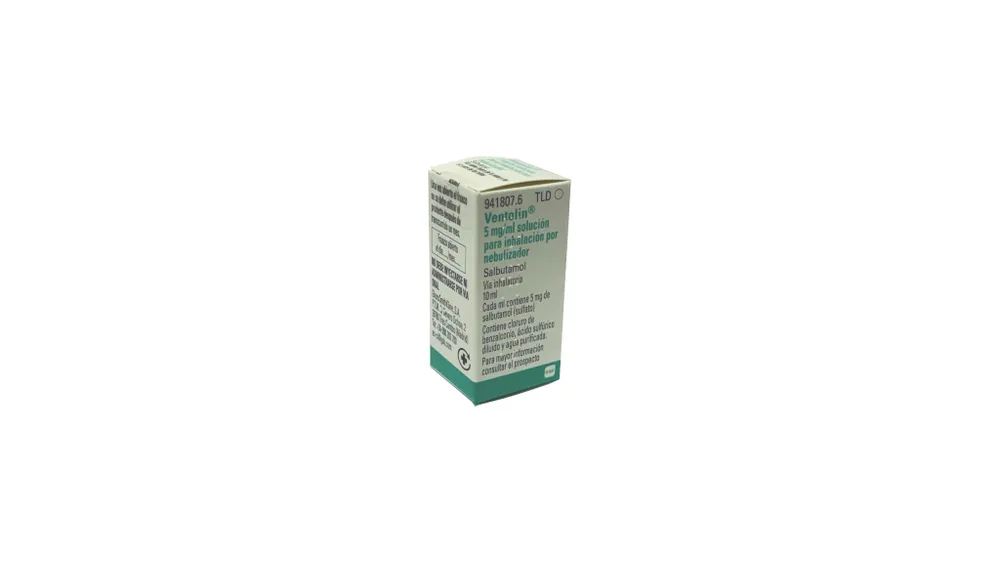
Table of Contents
- Package leaflet: Information for the user
- Introduction
- 1. What Ventolin 5 mg/ml Inhalation Solution for Nebulizer Is and What It Is Used For
- 2. What you need to know before using Ventolin 5 mg/ml solution for inhalation by nebulizer
- 3. How to use Ventolin 5 mg/ml solution for inhalation by nebulizer
- 4. Possible adverse effects
- 5. Storage of Ventolin 5 mg/ml solution for inhalation for nebulizer
- 6. Package contents and additional information
Package leaflet: Information for the user
Introduction
Package leaflet: information for the patient
Ventolin 5 mg/ml solution for inhalation by nebuliser
salbutamol
Read the entire leaflet carefully before you start using this medicine, because it contains important information for you.
- Keep this leaflet, as you may need to read it again.
- If you have any questions, consult your doctor or pharmacist.
- This medicine has been prescribed for you only, and you should not give it to others, even if they have the same symptoms as you, because it may harm them.
- If you experience any adverse effects, consult your doctor or pharmacist, even if they are effects not listed in this leaflet. See section 4.
Leaflet contents:
- What Ventolin 5 mg/ml solution for inhalation by nebuliser is and what it is used for
- What you need to know before using Ventolin 5 mg/ml solution for inhalation by nebuliser
- How to use Ventolin 5 mg/ml solution for inhalation by nebuliser
- Possible side effects
- How to store Ventolin 5 mg/ml solution for inhalation by nebuliser
- Contents of the pack and other information
1. What Ventolin 5 mg/ml Inhalation Solution for Nebulizer Is and What It Is Used For
Ventolin belongs to a group of medicines called short-acting bronchodilators. Short-acting bronchodilators relax the muscles in the walls of the small airways in the lungs within a few minutes. This helps to open up the airways and helps relieve chest tightness, shortness of breath, and coughing, making it easier to breathe.
Ventolin is used in the treatment of severe bronchospasm (airway narrowing in the lungs) associated with asthma attacks and other conditions involving reversible obstruction of the airways. These are a group of lung diseases that cause inflammation of the airways, resulting in blockage of airflow in the lungs. It is usually given to people who frequently experience these conditions when other forms of treatment do not provide sufficient relief.
Ventolin Inhalation Solution for Nebulizer is indicated in adults, adolescents, and children aged 4 to 11 years. For infants and children under 4 years of age, consult your doctor.
2. What you need to know before using Ventolin 5 mg/ml solution for inhalation by nebulizer
Do not use Ventolin 5 mg/ml solution for inhalation by nebulizer
- if you are allergic to salbutamol or to any of the other ingredients of this medicine (listed in section 6).
- to stop uncomplicated premature labor or threat of abortion.
Warnings and precautions
Talk to your doctor or pharmacist before using Ventolin if:
- you have previously had to stop using this or another medicine for treating this condition due to allergy or another problem
- you have high blood pressure
- you have hyperthyroidism (overactive thyroid gland)
- you have a history of heart problems such as fast or irregular heartbeat, or angina (chest pain)
- you have low levels of potassium in your blood
- you are taking xanthine derivatives (such as theophylline) or steroids for the treatment of asthma
- you are taking diuretics, sometimes used to treat high blood pressure or heart problems
- you have diabetes
- you are using nebulized anticholinergic medicines (such as ipratropium bromide) in combination with salbutamol. Make sure the nebulized mist does not enter your eyes.
- you have taken other medicines used to relieve nasal congestion (such as ephedrine or pseudoephedrine) or other medicines used to treat asthma.
Your doctor will monitor your potassium levels if you are taking xanthine derivatives, steroids, or diuretics.
Talk to your doctor if you think you may have any of these conditions.
Symptoms to watch for
High doses of this medicine may very rarely cause a condition known as lactic acidosis. Be alert for the appearance of certain symptoms while taking this medicine to reduce the risk of any problems. See “Symptoms to watch for” in section 4.
Other medicines and Ventolin 5 mg/ml solution for inhalation by nebulizer
Inform your doctor or pharmacist if you are taking, have recently taken, or might need to take any other medicines (for example, diuretics, other types of bronchodilator tablets, steroids, etc.), including those obtained without a prescription.
Some medicines may affect how Ventolin works or make it more likely that you will experience adverse effects. These include:
- Non-selective β-blockers such as propranolol, used to treat high blood pressure or heart problems.
- Monoamine oxidase inhibitors (MAOIs), used to treat depression.
Your doctor or pharmacist will decide whether you should use Ventolin with these medicines.
Pregnancy and breastfeeding
Ventolin is generally not recommended during pregnancy. If you are pregnant or breastfeeding, think you may be pregnant, or are planning to become pregnant, consult your doctor or pharmacist before using this medicine.
Your doctor will assess the benefit of treatment with Ventolin for you and the potential risk to the baby.
Salbutamol may pass into breast milk, so if you are breastfeeding, you should consult your doctor before using this medicine.
Driving and using machines
No studies on the ability to drive and use machines have been conducted.
Ventolin 5 mg/ml solution for inhalation by nebulizer contains benzalkonium chloride.
This medicine contains 0.1 mg of benzalkonium chloride per ml of Ventolin 5 mg/ml solution for inhalation by nebulizer.
Benzalkonium chloride may cause wheezing and breathing difficulties (bronchospasm), especially in patients with asthma.
Use in athletes
This medicine contains salbutamol, which may produce a positive result in doping control tests.
3. How to use Ventolin 5 mg/ml solution for inhalation by nebulizer
Follow exactly the instructions given by your doctor for using this medicine. If in doubt, consult your doctor or pharmacist again.
Remember to take your medicine.
Your doctor will tell you how long to take Ventolin. Do not stop treatment prematurely.
Instructions for use:
Important information
Ventolin solution for inhalation by nebulizer must only be used by inhalation with a nebulizer. It must not be injected or swallowed.
-
Prepare the nebulizer for filling.
-
Measure the correct amount of Ventolin and place it into the nebulizer container.
-
Add the correct amount of sterile normal saline solution (make sure your doctor has told you how much to use). Use only sterile normal saline solution to dilute the solution.
-
Place the cap on the nebulizer container and gently shake to mix the contents.
-
Attach the nebulizer and use as directed.
-
After use, discard any remaining solution in the nebulizer container. Clean the
nebulizer as recommended.
The nebulizer produces a fine mist which is inhaled through a mask or mouthpiece. Make sure you know how to use it correctly. If you have any problems, ask your doctor or pharmacist. Instructions on how to use Ventolin are provided later in this leaflet.
Avoid letting Ventolin, or the mist produced by the nebulizer, come into contact with the eyes.
Use the nebulizer in a well-ventilated room, as some of the mist may escape and be inhaled by others.
Make sure you know HOW, WHEN, and HOW MUCH solution to use. Your doctor should have informed you, and the instructions should be in writing. If not, or if you are unsure, ask your doctor or pharmacist.
Ventolin 5 mg/ml solution for inhalation by nebulizer should be used as needed and not on a regular basis.
If your asthma is active (for example, you have symptoms or frequent attacks such as difficulty breathing that interferes with speaking, eating, or sleeping, coughing, wheezing, chest tightness, or limited physical capacity), inform your doctor immediately. Your doctor may start or increase treatment with another medicine, such as an inhaled corticosteroid, to control your asthma.
Inform your doctor as soon as possible if your medicine does not seem to be working as well as usual (for example, if you need higher doses to relieve breathing problems or if your inhaler does not provide relief for at least 3 hours), as your asthma may be worsening and you may require a different medicine.
If you use Ventolin 5 mg/ml solution for inhalation by nebulizer more than twice a week to treat your asthma symptoms, excluding preventive use before exercise, this indicates poorly controlled asthma and may increase the risk of severe asthma attacks (worsening of asthma) that can lead to serious complications and may be life-threatening or even fatal. You should contact your doctor as soon as possible to review your asthma treatment.
If you are taking a daily medicine to reduce inflammation in your lungs, e.g., an "inhaled corticosteroid", it is important that you continue to use it regularly, even if you feel better.
If your breathing or difficulty in breathing worsens after taking the medicine, stop using it immediately and contact your doctor as soon as possible.
If you use more Ventolin 5 mg/ml solution for inhalation by nebulizer than you should
In case of overdose or accidental ingestion, contact your doctor or pharmacist immediately or call the Toxicology Information Service at telephone number 91 562 04 20, stating the medicine and the amount taken.
However, if the amount ingested is significant, go immediately to your doctor or the nearest hospital emergency department. It is recommended to bring the medicine packaging and leaflet to the healthcare professional.
If you accidentally take a higher dose than recommended, you are more likely to experience adverse effects such as increased heart rate, headache, tremors, or muscle cramps (see Possible side effects). You should inform your doctor as soon as possible if you have taken more than the recommended dose.
If you forget to use Ventolin 5 mg/ml solution for inhalation by nebulizer
Do not take a double dose to make up for missed doses. Simply inhale the next dose when it is due, or earlier if you start to notice difficulty breathing.
4. Possible adverse effects
Most people who take this medicine do not experience any problems. Like all medicines, this medicine may produce adverse effects, although not everyone will experience them.
Some people may be allergic to medicines. If you experience any of the following symptoms immediately after using Ventolin, stop treatment and contact your doctor as soon as possible.
Symptoms to watch for
The following adverse reactions are very rare (may affect up to 1 in 10,000 patients) but very serious. Contact your doctor immediately if you experience any of these symptoms. Stop using Ventolin.
Allergic reactions: these are very rare in patients using Ventolin. They include the following signs:
- sudden onset of "wheezing" or tightness in the chest
- swelling of the eyelids, face, or lips
- skin rash (wheals) or hives anywhere on the body
- sudden feeling of weakness or dizziness (may lead to collapse or loss of consciousness)
Lactic acidosis: a very rare adverse effect of nebulized Ventolin is an increase in lactic acid levels in the blood (lactic acidosis). This more commonly affects patients with severe kidney problems. Symptoms of lactic acidosis include:
- rapid breathing, difficulty breathing despite possible improvement in wheezing
- feeling cold
- stomach pain, nausea, and vomiting.
The following are adverse effects associated with salbutamol, classified by organ system and frequency. The terms used to describe the frequency of adverse effects have the following meanings:
- very common (may affect more than 1 in 10 patients),
- common (may affect up to 1 in 10 patients),
- uncommon (may affect up to 1 in 100 patients),
- rare (may affect up to 1 in 1,000 patients), and
- very rare (may affect up to 1 in 10,000 patients).
Immune system disorders
Very rare: hypersensitivity reactions (allergic), including angioedema (skin reactions with erythema, swelling, and itching), urticaria, bronchospasm (narrowing of the bronchial walls leading to reduced airflow), hypotension, and collapse.
Metabolism and nutrition disorders
Rare: hypokalaemia (low potassium levels in the blood).
Therapy with β2-agonists may lead to potentially serious hypokalaemia.
Very rare: lactic acidosis.
Very rare cases of lactic acidosis have been reported in patients receiving intravenous or nebulized salbutamol for the treatment of acute asthma exacerbations.
Nervous system disorders
Common: tremor, headache.
Very rare: hyperactivity (agitation and excitability).
Cardiac disorders
Common: tachycardia (fast heart rate).
Uncommon: palpitations (irregular heartbeat).
Very rare: cardiac arrhythmias, including atrial fibrillation, supraventricular tachycardia, and extrasystoles (abnormal heart rhythms).
Although the exact frequency is not known, some people may occasionally experience chest pain (due to heart problems such as angina). Inform your doctor if you develop these symptoms while being treated with salbutamol, but do not stop taking it unless instructed to do so.
Vascular disorders
Rare: peripheral vasodilation (dilation of peripheral blood vessels).
Respiratory, thoracic and mediastinal disorders
Very rare: paradoxical bronchospasm (narrowing of the bronchial walls leading to reduced airflow).
Gastrointestinal disorders
Uncommon: irritation of mouth and throat.
Musculoskeletal and connective tissue disorders
Uncommon: muscle cramps.
Reporting of adverse effects
If you experience any adverse effect, consult your doctor or pharmacist, even if it is a possible adverse effect not listed in this leaflet. You may also report them directly via the Spanish Pharmacovigilance System for Human Medicines: https://www.notificaRAM.es By reporting adverse effects, you can help provide more information on the safety of this medicine.
5. Storage of Ventolin 5 mg/ml solution for inhalation for nebulizer
Keep this medicine out of the sight and reach of children.
Do not store above 25°C. Store in the outer packaging to protect from light.
Do not leave any residual solution in the nebulizer after treatment has been completed.
Once the bottle has been opened, the product must not be used after one month.
Do not use this medicine after the expiry date stated on the packaging after EXP. The expiry date refers to the last day of the month indicated.
Medicines must not be disposed of via wastewater or household waste. Dispose of containers and unused medicines at the SIGRE collection point at your pharmacy. If you are unsure, ask your pharmacist how to dispose of containers and unused medicines. This way, you will help protect the environment.
6. Package contents and additional information
Composition of Ventolin 5 mg/ml solution for inhalation by nebulizer
- The active substance is salbutamol (as salbutamol sulfate). The solution contains 5 mg of salbutamol per ml dissolved in water. Each container contains 10 ml.
- The other components are benzalkonium chloride, diluted sulfuric acid, and purified water.
Appearance of the medicinal product and contents of the container
Ventolin solution for inhalation by nebulizer is presented as a colourless to pale yellow transparent solution, in Type I amber glass bottles of 10 ml, with a polypropylene screw cap and low-density polyethylene insert.
Marketing Authorization Holder and Manufacturer
Marketing Authorization Holder:
GlaxoSmithKline, S.A.
P.T.M. C/ Severo Ochoa, 2
28760 Tres Cantos (Madrid)
Spain
Tel: +34 900 202 700
[email protected]
Manufacturer:
GLAXO WELLCOME, S.A.
Avda. de Extremadura, 3 (Aranda de Duero (Burgos)) - 09400 – Spain
Date of the most recent revision of this leaflet: April 2024
Detailed and up-to-date information on this medicinal product is available on the website of the Spanish Agency of Medicines and Health Products (AEMPS) http://www.aemps.gob.es/
This information is intended for healthcare professionals only
VENTOLIN 5 mg/ml SOLUTION FOR INHALATION BY NEBULIZER MUST NOT BE INJECTED OR SWALLOWED.
MEASURE VENTOLIN 5 mg/ml SOLUTION FOR INHALATION BY NEBULIZER AND THE SALINE SOLUTION ONLY IN MILLILITRES. To accurately measure the amount prescribed by the physician, use a syringe or any other alternative measuring device capable of measuring in millilitres.
The dosage of Ventolin 5 mg/ml solution for inhalation by nebulizer depends on the method of administration:
- Intermittent administration:
Intermittent treatment may be repeated up to 4 times daily.
Adults
Dilute 0.5 ml to 1.0 ml of Ventolin 5 mg/ml solution for inhalation by nebulizer (2.5 mg to 5.0 mg of salbutamol) to a final volume of 2.0 ml to 2.5 ml using sterile normal saline solution as diluent. Inhale the resulting solution using a suitable nebulizer until aerosol generation is complete. When using an appropriate nebulizer, this should take approximately 10 minutes.
Ventolin 5 mg/ml solution for inhalation by nebulizer may be used undiluted in intermittent administration. In this case, place 2.0 ml of Ventolin 5 mg/ml solution for inhalation by nebulizer (10.0 mg of salbutamol) into a nebulizer and allow the patient to inhale the nebulized solution until the desired degree of bronchodilation is achieved. This usually takes between 3 and 5 minutes.
Some patients may require higher doses of salbutamol, up to 10 mg; in such cases, continued inhalation of the undiluted nebulized solution is recommended until aerosol generation is complete.
Children
Ventolin 5 mg/ml solution for inhalation by nebulizer can be administered in the same way as intermittent administration in adults. The usual dose in children under 12 years of age is 0.5 ml (2.5 mg of salbutamol), diluted to a final volume of 2.0 ml or 2.5 ml using sterile normal saline solution as diluent. However, some children (over 18 months of age) may require higher doses of salbutamol, up to 5.0 mg.
Intermittent treatment may be repeated up to 4 times daily.
For children aged 12 years and older: use the same dose as in adults.
The clinical efficacy of Ventolin 5 mg/ml solution for inhalation by nebulizer in children under 18 months of age is uncertain. Since transient hypoxia may occur, supplemental oxygen therapy should be considered.
Other pharmaceutical forms may be more suitable for administration in children under 4 years of age.
- Continuous administration:
Ventolin 5 mg/ml solution for inhalation by nebulizer is diluted with sterile normal saline solution to achieve a final concentration of 50 to 100 micrograms of salbutamol per ml (1 or 2 ml of Ventolin 5 mg/ml solution for inhalation by nebulizer diluted to 100 ml with diluent).
The diluted solution is administered as an aerosol generated by a suitable nebulizer. In this manner, salbutamol is delivered at a rate of 1–2 mg per hour.