Trimbow 88 micrograms/5 micrograms/9 micrograms powder for inhalation
Spain
Table of Contents
Package leaflet: Information for the user
Introduction
Package leaflet: information for the user
Trimbow 88 micrograms/5 micrograms/9 micrograms powder for inhalation
beclometasone dipropionate/formoterol fumarate dihydrate/glycopyrronium
Read the entire leaflet carefully before you start using this medicine, because it contains important information for you.
- Keep this leaflet, as you may need to read it again.
- If you have any questions, ask your doctor or pharmacist.
- This medicine has been prescribed for you only, and you should not give it to other people, even if they have the same symptoms as you, because it may harm them.
- If you experience any adverse effects, consult your doctor or pharmacist, even if they are adverse effects not listed in this leaflet. See section 4.
Leaflet contents
- What Trimbow is and what it is used for
- What you need to know before using Trimbow
- How to use Trimbow
- Possible side effects
- How to store Trimbow
- Contents of the pack and other information
1. What Trimbow is and what it is used for
Trimbow is a medicine that helps you breathe and contains three active substances:
- beclometasone dipropionate,
- formoterol fumarate dihydrate, and
- glycopyrronium.
Beclometasone dipropionate belongs to a group of medicines called corticosteroids, which work by reducing inflammation and irritation in the lungs.
Formoterol and glycopyrronium are medicines called long-acting bronchodilators. They work in different ways to relax the muscles in the airways, helping to widen them and allowing you to breathe more easily.
Regular treatment with these three active substances helps relieve and prevent symptoms such as breathlessness, wheezing, and cough in adult patients with chronic obstructive pulmonary disease (COPD). Trimbow may reduce exacerbations (worsening episodes) of COPD symptoms. COPD is a serious, long-term disease in which the airways become blocked and the air sacs inside the lungs are damaged, causing difficulty in breathing.
2. What you need to know before using Trimbow
Do not use Trimbow
If you are allergic to beclometasone dipropionate, formoterol fumarate dihydrate, and/or glycopyrronium, or to any of the other ingredients of this medicine (listed in section 6).
Warnings and precautions
Trimbow is used as maintenance treatment for obstructive lung disease. Do not use this medicine to treat a sudden attack of breathing difficulty or wheezing.
If your breathing worsens
If you experience a worsening of breathing difficulty or wheezing immediately after inhaling the medicine (paradoxical bronchospasm), stop using the Trimbow inhaler and use your fast-acting “rescue” inhaler immediately. You must contact your doctor right away. Your doctor will assess your symptoms and, if necessary, may change your treatment.
See also section 4. Possible side effects.
If your lung disease worsens
If your symptoms worsen or become difficult to control (e.g., if you are using your “rescue” inhaler more frequently) or if your “rescue” inhaler fails to improve your symptoms, contact your doctor immediately. Your lung disease may be worsening, and your doctor may need to prescribe a different treatment.
Consult your doctor or pharmacist before starting Trimbow:
-
if you have any heart problems, such as angina (chest pain), recent heart attack (myocardial infarction), heart failure, narrowing of the heart arteries (coronary artery disease), heart valve disease, or any other heart abnormality, or if you have a condition called obstructive hypertrophic cardiomyopathy (also known as HOCM, a disease in which the heart muscle is abnormal).
-
if you have heart rhythm disorders, such as irregular heartbeat, rapid pulse, palpitations, or if you have been told that your electrocardiogram (ECG) is abnormal.
-
if you have narrowed arteries (also known as atherosclerosis), high blood pressure, or an aneurysm (an abnormal bulge in the wall of a blood vessel).
-
if you have an overactive thyroid gland.
-
if you have low levels of potassium in your blood (hypokalaemia). The combination of Trimbow with certain other lung medicines or medications such as diuretics (medicines that cause the body to lose water, used to treat heart disease or high blood pressure) may cause a marked decrease in blood potassium levels. Your doctor may therefore wish to monitor your blood potassium levels from time to time.
-
if you have any liver or kidney disease.
-
if you have diabetes. High doses of formoterol may increase blood glucose levels, so additional blood tests to monitor your blood sugar levels may be needed when you start using this medicine and periodically during treatment.
-
if you have a tumour of the adrenal gland (known as phaeochromocytoma).
-
if you are due to receive an anaesthetic. Depending on the type of anaesthetic, it may be necessary to stop treatment with Trimbow at least 12 hours before anaesthesia.
-
if you are receiving or have previously received treatment for tuberculosis (TB) or if you have a chest infection.
-
if you have a condition of the eye called narrow-angle glaucoma.
-
if you have difficulty passing urine.
-
if you have an infection in your mouth or throat.
If you are in any of the above situations, inform your doctor before starting to use Trimbow.
If you have or have had any medical conditions or allergies, or if you are unsure whether you can use Trimbow, consult your doctor or pharmacist before using the inhaler.
If you are already using Trimbow
If you are using Trimbow or high doses of other inhaled corticosteroids for prolonged periods and experience a stressful event (e.g., hospitalization after an accident, a serious injury, or before surgery), you may need additional medication. In such cases, your doctor may need to increase your corticosteroid dose to cope with the stress and may prescribe it in the form of tablets or injections.
Contact your doctor if you experience blurred vision or other visual disturbances.
Children and adolescents
Do not give this medicine to children and adolescents under 18 years of age.
Other medicines and Trimbow
Inform your doctor or pharmacist if you are taking, have recently taken, or might need to take any other medicines. This includes medicines similar to Trimbow used for your lung condition.
Some medicines may increase the effects of Trimbow, so your doctor will monitor you closely if you are taking these medicines (including some used for HIV: ritonavir, cobicistat).
Do not use this medicine with a beta-blocker (used to treat certain heart conditions such as angina or to lower blood pressure) unless your doctor has chosen a beta-blocker that does not affect your breathing. Beta-blockers (including beta-blocker eye drops) may reduce or completely block the effects of formoterol. Conversely, the use of other beta2-agonist medicines (which work in the same way as formoterol) may increase the effects of formoterol.
The combined use of Trimbow with:
-
medicines used to treat
-
abnormal heart rhythms (quinidine, disopyramide, procainamide),
-
allergic reactions (antihistamines),
-
symptoms of depression or mental disorders such as monoamine oxidase inhibitors (e.g., phenelzine and isocarboxazide), tricyclic antidepressants (e.g., amitriptyline and imipramine), and phenothiazines may cause changes in the electrocardiogram (ECG). They may also increase the risk of heart rhythm disorders (ventricular arrhythmias).
-
medicines used to treat Parkinson’s disease (levodopa), medicines used to treat an underactive thyroid gland (levotyroxine), medicines containing oxytocin (which causes uterine contractions), and alcohol may increase the likelihood of formoterol-related side effects on the heart.
-
monoamine oxidase inhibitors (MAOIs), including medicines with similar properties such as furazolidone and procarbazine, used to treat mental disorders, may cause an increase in blood pressure.
-
medicines used to treat heart disease (digoxin) may cause a decrease in blood potassium levels. This may increase the likelihood of abnormal heart rhythms.
-
other medicines used to treat obstructive lung disease (theophylline, aminophylline, or corticosteroids) and diuretics may also cause a drop in potassium levels.
-
some anaesthetics may increase the risk of abnormal heart rhythms.
Pregnancy and breastfeeding
If you are pregnant or breastfeeding, think you may be pregnant, or are planning to become pregnant, consult your doctor or pharmacist before using this medicine.
You should only use Trimbow during pregnancy if your doctor advises you to do so. It is preferable to avoid using Trimbow during labour due to formoterol’s inhibitory effect on uterine contractions.
You should not use Trimbow while breastfeeding. You and your doctor must decide whether to stop breastfeeding or discontinue treatment, taking into account the benefits of breastfeeding for your child and the benefits of treatment for you.
Driving and using machines
It is unlikely that Trimbow will affect your ability to drive or operate machinery.
Trimbow contains lactose
Lactose contains small amounts of milk proteins, which may cause allergic reactions.
3. How to use Trimbow
Follow exactly the instructions for administering this medicine as given by your doctor or pharmacist. If in doubt, consult your doctor or pharmacist again.
The recommended dose is two inhalations in the morning and two inhalations at night.
If you think the medicine is not working well enough, consult your doctor.
If you have previously been using another inhaler containing beclometasone dipropionate, consult your doctor, as the effective dose of beclometasone dipropionate from Trimbow for the treatment of chronic obstructive pulmonary disease may be lower than that of other inhalers.
Route of administration
Trimbow is for inhalation use only.
You should inhale the medicine through your mouth, which delivers the medicine directly to the lungs.
Instructions for use
For information about the contents of the pack, see section 6.
If the pack contents do not match the description in section 6, return the inhaler to the person who supplied it and obtain a new one.
-
Do not remove the inhaler from the bag if you do not intend to use it immediately.
-
Always use the inhaler as directed.
-
Keep the cover closed until you need to take a dose from the inhaler.
-
When not using the inhaler, store it in a clean and dry place.
-
Do not under any circumstances attempt to dismantle the inhaler.
A. Essential features of the inhaler
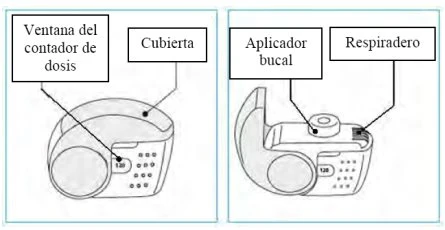
Taking a dose from the inhaler involves three steps: open, inhale, close.
B. Before using a new inhaler
1. Open the bag and remove the inhaler.
- Do not use the inhaler if the bag is not sealed or shows any damage; return it to the person who supplied it and obtain a new one.
- Use the label on the box to record the date on which you opened the bag.
2. Inspect the inhaler.
- If the inhaler appears broken or damaged, return it to the person who supplied it and obtain a new one.
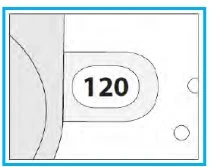
3. Check the dose counter window. If the inhaler is new, you will see “120” in the dose counter window.
- Do not use a new inhaler if the number shown is less than “120”; return it to the person who supplied it and obtain a new one.
C. How to use the inhaler
C.1. Open
1. Hold the inhaler firmly in an upright position.
2. Check the number of doses remaining: any number between “1” and “120” indicates that doses remain.
- If the dose counter window shows “0”, no doses remain; discard the inhaler and obtain a new one.
3. Fully open the cover.
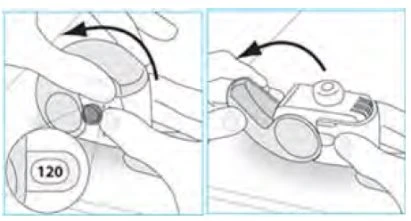
4. Before inhaling, breathe out as fully as comfortably possible.
- Do not breathe out through the inhaler.
C.2. Inhale
Whenever possible, stand up or sit upright when inhaling.
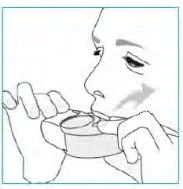
1. Lift the inhaler, bring it to your mouth, and place your lips around the mouthpiece.
- Do not cover the air vent when holding the inhaler.
- Do not inhale through the air vent.
2. Breathe in strongly and deeply through your mouth.
- You may notice a slight taste when taking the dose.
- You may hear or feel a click when taking the dose.
- Do not inhale through your nose.
- Do not remove the inhaler from your lips during inhalation.
3. Remove the inhaler from your mouth.
4. Hold your breath for 5 to 10 seconds, or for as long as is comfortable.
5. Breathe out slowly.
-
Do not breathe out through the inhaler.
-
If you are unsure whether you are receiving your dose correctly, contact your pharmacist or doctor.
C.3. Close
1. Place the inhaler back in an upright position and fully close the cover.
2. Check that the dose counter has decreased by one unit.
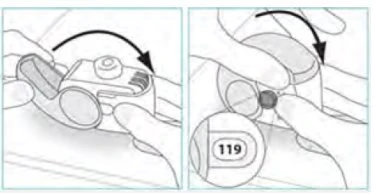
- If you are not sure whether the dose counter has decreased by one unit after inhalation, wait until your next scheduled dose and take it as normal. Do not take an extra dose.
3. If you need to take another dose, repeat steps C.1 to C.3.
D. Cleaning
- Normally, there is no need to clean the inhaler.
- If necessary, you may clean the inhaler after use with a dry cloth or dry tissue paper.
- Do not clean the inhaler with water or other liquids. Keep it dry.
If you use more Trimbow than you should
It is important to take the dose exactly as prescribed by your doctor. Do not exceed the prescribed dose without first consulting your doctor.
If you use more Trimbow than you should, the adverse effects described in section 4 may occur.
Inform your doctor if you have used more Trimbow than you should and if you experience any of these symptoms. Your doctor may wish to carry out some blood tests.
If you forget to use Trimbow
Use it as soon as you remember. If it is almost time for your next dose, do not take the missed dose; instead, take the next dose at the correct time. Do not double the dose.
If you stop using Trimbow
It is important to use Trimbow every day. Do not stop treatment with Trimbow or reduce the dose, even if you feel better or have no symptoms. If you wish to do so, consult your doctor.
If you have any further questions about the use of this medicine, ask your doctor or pharmacist.
4. Possible adverse effects
Like all medicines, this medicine can cause adverse effects, although not everyone gets them.
There is a risk of worsening breathing difficulty and wheezing immediately after using Trimbow, known as paradoxical bronchospasm (may affect up to 1 in 1,000 people). If this occurs, you must stop treatment with Trimbow and use your fast-acting "rescue" inhaler without delay to treat the breathing difficulty and wheezing. You must contact your doctor immediately.
Inform your doctor immediately
- if you experience allergic reactions such as skin allergies, hives, skin itching, skin rash (may affect up to 1 in 100 people), skin redness, swelling of the skin or mucous membranes, especially of the eyes, face, lips, and throat (may affect up to 1 in 1,000 people).
- if you experience eye pain or discomfort, transient blurred vision, visual halos, or colored images associated with red eyes. These may be signs of an acute attack of narrow-angle glaucoma (may affect up to 1 in 10,000 people).
Inform your doctor if you notice any of the following symptoms while using Trimbow, as they may be due to a lung infection (may affect up to 1 in 10 people):
- fever or chills
- increased mucus production, change in mucus color
- increased cough or worsening of breathing difficulty
The possible adverse effects are listed below according to their frequency.
Frequent (may affect up to 1 in 10 people)
- sore throat
- nasal discharge or congestion and sneezing
- fungal infections of the mouth. Rinsing your mouth or gargling with water and brushing your teeth immediately after inhalation may help prevent these adverse effects
- hoarseness
- headache
- urinary tract infection
Uncommon (may affect up to 1 in 100 people)
|
|
Rare (may affect up to 1 in 1,000 people)
|
|
Very rare (may affect up to 1 in 10,000 people)
- low level of certain blood cells called platelets
- feeling of suffocation or difficulty breathing
- swelling of hands and feet
- growth retardation in children and adolescents
Frequency not known (cannot be estimated from available data)
- blurred vision
The use of inhaled corticosteroids at high doses over a prolonged period of time may, in very rare cases, cause systemic effects:
- problems with adrenal gland function (adrenal suppression)
- decreased bone mineral density (bone thinning)
- clouding of the lens of the eye (cataract)
Trimbow does not contain an inhaled corticosteroid at a high dose, but your doctor may occasionally want to measure your blood cortisol levels.
The following adverse effects may also occur when inhaled corticosteroids are used at high doses over a prolonged period of time, but their frequency is currently not known (cannot be estimated from available data):
- depression
- feelings of anxiety, nervousness, overexcitement, or irritability
These effects are more likely in children.
Reporting of adverse reactions
If you experience any adverse reaction, consult your doctor or pharmacist, even if it is a possible adverse reaction not listed in this leaflet. You can also report them directly through the national reporting system included in Appendix V. By reporting adverse reactions, you can help provide more information on the safety of this medicine.
5. Storage of Trimbow
Keep this medicine out of the sight and reach of children.
Do not use this medicine after the expiry date stated on the label and on the carton after CAD/EXP. The expiry date refers to the last day of the month indicated.
Do not store above 25°C.
Keep the inhaler in its original packaging to protect it from moisture, and only remove it from the bag immediately before first use.
After the bag has first been opened, the medicine should be used within 6 weeks and stored in a dry place. Use the adhesive label from the outer carton to record the date on which you opened the bag, and attach this label to the bottom of the inhaler.
Medicines must not be disposed of via wastewater or household waste. Ask your pharmacist how to dispose of medicines and packaging no longer required. In this way,
you will help protect the environment.
6. Contents of the pack and other information
Composition of Trimbow
The active substances are: beclometasone dipropionate, formoterol fumarate dihydrate and glycopyrronium.
Each delivered dose (the dose leaving the mouthpiece) contains 88 micrograms of beclometasone dipropionate, 5 micrograms of formoterol fumarate dihydrate and 9 micrograms of glycopyrronium (as 11 micrograms of glycopyrronium bromide).
Each metered dose contains 100 micrograms of beclometasone dipropionate, 6 micrograms of formoterol fumarate dihydrate and 10 micrograms of glycopyrronium (as 12.5 micrograms of glycopyrronium bromide).
The other components are: lactose monohydrate (see section 2) and magnesium stearate.
Appearance of the product and contents of the pack
Trimbow is a white to almost white powder for inhalation.
It is supplied in a white plastic inhaler called NEXThaler, with a grey mouthpiece cap and a dose counter.
Each inhaler is packed in a sealed protective pouch.
Trimbow is available in packs containing one inhaler and multipacks containing two or three inhalers, each providing 120 inhalations (120, 240 or 360 inhalations).
Only certain pack sizes may be marketed.
Marketing Authorisation Holder
Chiesi Farmaceutici S.p.A.
Via Palermo 26/A
43122 Parma
Italy
Manufacturer
Chiesi Farmaceutici S.p.A.
Via San Leonardo 96
43122 Parma
Italy
Chiesi SAS
2 rue des Docteurs Alberto et Paolo Chiesi
41260 La Chaussée Saint Victor
France
Further information on this medicinal product is available upon request from the local representative of the Marketing Authorisation Holder:
|
| ||
|
| ||
|
| ||
|
| ||
|
| ||
|
| ||
|
| ||
|
| ||
|
| ||
|
| ||
|
| ||
|
| ||
|
| ||
|
| ||
|
|

Date of the most recent review of this leaflet: December 2024
Other sources of information
Detailed information on this medicinal product is available on the European Medicines Agency website: http://www.ema.europa.eu.