Trazodone Stada 100 mg tablets EFG
Spain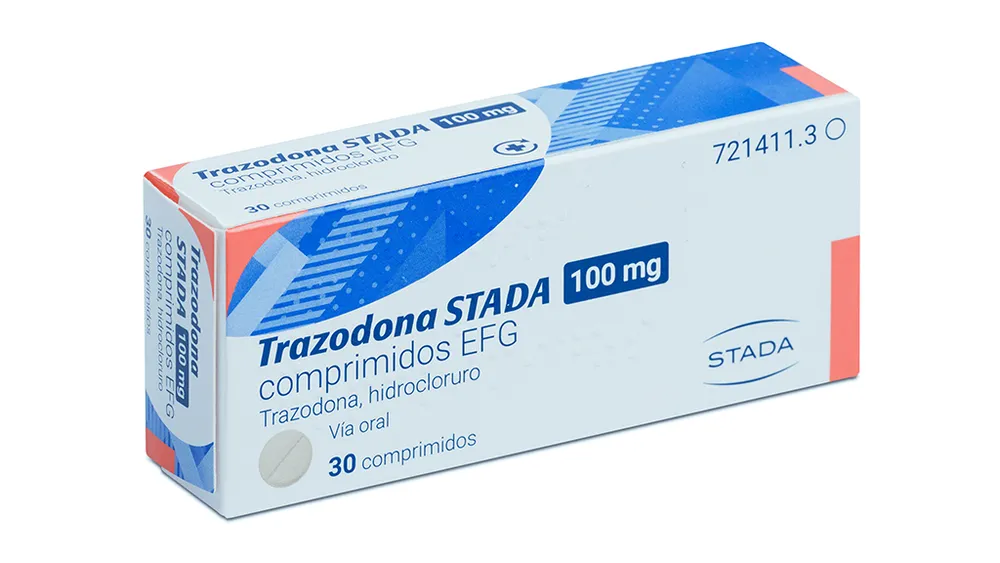
Table of Contents
Package leaflet: Information for the user
Introduction
Package leaflet: information for the user
Trazodone Stada 100 mg tablets EFG
trazodone hydrochloride
Read the entire leaflet carefully before you start taking this medicine, because it contains important information for you.
- Keep this leaflet. You may need to read it again.
- If you have any questions, ask your doctor or pharmacist.
- This medicine has been prescribed for you only. Do not give it to others, even if they have the same symptoms as you, because it could harm them.
- If you experience any adverse reactions, consult your doctor or pharmacist, even if they are adverse reactions not listed in this leaflet. See section 4.
Contents of the leaflet
- What Trazodone Stada is and what it is used for
- What you need to know before taking Trazodone Stada
- How to take Trazodone Stada
- Possible side effects
- How to store Trazodone Stada
- Contents of the pack and other information
1. What Trazodona Stada is and what it is used for
The name of this medicine is Trazodona Stada. This medicine contains an active substance called trazodone hydrochloride, which belongs to a group of medicines known as antidepressants.
Trazodona may be used to treat symptoms of depression (major depressive episodes).
2. What you need to know before taking Trazodone Stada
Do not take Trazodone Stada and consult your doctor if:
- You are allergic to trazodone hydrochloride or to any of the other ingredients of this medicine (listed in section 6). Signs of an allergic reaction include: skin rash, difficulty swallowing or breathing, swelling of the lips, face, throat, or tongue.
- You have recently had a heart attack.
- You have recently experienced alcohol poisoning or poisoning with sleeping medications.
Do not take this medicine if any of the above conditions apply to you. If you are unsure, consult your doctor or pharmacist before starting trazodone.
Warnings and precautions
Consult your doctor or pharmacist before starting treatment with trazodone.
Take special care with Trazodone Stada
Suicidal thoughts and worsening of depression
If you are depressed, you may sometimes have thoughts about self-harm or suicide. These thoughts may increase at the beginning of treatment with antidepressants, as these medicines usually take about two weeks to take effect, and sometimes even longer.
You may be more likely to experience such thoughts:
- If you have previously had thoughts of self-harm or suicide.
- If you are a young adult. Clinical trials have shown an increased risk of suicidal behavior in psychiatric patients under 25 years of age treated with antidepressants.
If you experience any thoughts of self-harm or suicide at any time, contact your doctor or go to a hospital immediately.
You may find it helpful to inform a family member or close friend that you are depressed and ask them to read this leaflet. You could ask them whether they think your depression or anxiety is worsening, or if they are concerned about changes in your behavior.
Severe liver disorders have been reported with the use of trazodone. If you experience any of the following symptoms, you must inform your doctor immediately:
- Weakness (asthenia)
- Loss of appetite (anorexia)
- Nausea, vomiting
- Stomach pain
- Yellowing of the skin and/or eyes (jaundice)
Children and adolescents
Trazodone must not be used in children and adolescents under 18 years of age.
Elderly patients
Elderly patients taking trazodone may experience mild dizziness and lightheadedness when standing up or getting up from a lying position. They may also feel more drowsy than usual.
Extra caution is required, especially if the patient suffers from other medical conditions and is taking other medications along with trazodone.
Talk to your doctor or pharmacist before taking Trazodone Stada if you:
- Have or have had seizures or convulsions (epilepsy).
- Have severe kidney or liver problems.
- Have a heart condition (such as cardiovascular insufficiency, angina pectoris, conduction disorders or AV blocks of varying degrees, arrhythmias, recent myocardial infarction, congenital long QT syndrome, or bradycardia).
- Have low levels of potassium in the blood (hypokalemia), which may cause muscle weakness, nervous twitching, or irregular heartbeat.
- Have low levels of magnesium in the blood (hypomagnesemia).
- Have an enlarged prostate.
- Have low blood pressure (hypotension).
- Have an overactive thyroid gland (hyperthyroidism).
- Have difficulty urinating or need to urinate frequently.
- Have narrow-angle glaucoma (an eye disorder).
- Have schizophrenia or another type of mental disorder.
- Are an elderly person, as you may be more susceptible to side effects.
- Are taking buprenorphine or naloxone (a strong painkiller). Using buprenorphine and naloxone with trazodone may cause serotonin syndrome, which can be life-threatening (see “Other medicines and Trazodone Stada”).
- Are pregnant, trying to become pregnant, or breastfeeding.
If you have liver, kidney, or heart problems, epilepsy, increased eye pressure (glaucoma), urinary problems, or prostate issues, your doctor may want to monitor you regularly while you are taking trazodone.
Severe liver disorders with potentially fatal outcomes have been reported with the use of trazodone.
Stop taking trazodone and contact your doctor immediately if you develop yellowing of the skin or the whites of the eyes (jaundice), or symptoms such as asthenia, anorexia, nausea, vomiting, or abdominal pain (see Section 4. "Possible side effects").
If you have schizophrenia or other psychotic disorders, taking antidepressants may potentially worsen psychotic symptoms. Paranoid thoughts may intensify.
During treatment with trazodone, a depressive phase of bipolar disorder may shift into a manic phase. In such cases, trazodone should be discontinued.
If you develop a sore throat, fever, or flu-like symptoms while taking trazodone, contact your doctor immediately. In such cases, a blood test is recommended, as agranulocytosis—a blood disorder—may present clinically with these symptoms.
Caution is advised when using trazodone together with other medicines known to prolong the QT interval or known to increase the risk of serotonin syndrome/neuroleptic malignant syndrome (see "Other medicines and Trazodone Stada" and Section 4. "Possible side effects").
If you are unsure whether any of the above apply to you, speak with your doctor or pharmacist before taking trazodone.
Other medicines and Trazodone Stada
Inform your doctor or pharmacist if you are taking, have recently taken, or might need to take any other medicines.
This includes medicines you can buy without a prescription, including herbal medicines. This is because trazodone may affect how other medicines work. In addition, some medicines may affect how trazodone works.
Inform your doctor if you are taking any of the following medicines:
- MAOIs (monoamine oxidase inhibitors), such as tranylcypromine, phenelzine, and isocarboxazide (for depression) or selegiline (for Parkinson’s disease), or have taken them within the last two weeks.
- Other antidepressants.
- Phenothiazines: antipsychotic medicines used to treat schizophrenia and other mental disorders.
- Buprenorphine and naloxone: used for pain treatment. These medicines may interact with trazodone, and you may experience symptoms such as involuntary rhythmic muscle contractions, including muscles controlling eye movements, agitation, hallucinations, coma, excessive sweating, tremor, exaggerated reflexes, increased muscle tension, and body temperature above 38°C. Contact your doctor if you experience any of these symptoms.
- Sedatives (tranquilizers or sleeping medicines).
- Medicines used to treat epilepsy, such as carbamazepine and phenytoin.
- Medicines used to treat high blood pressure, for example, clonidine.
- Digoxin: used to treat heart problems.
- Medicines used to treat fungal infections, such as ketoconazole and itraconazole.
- Some medicines used to treat HIV, such as ritonavir and indinavir.
- Erythromycin: an antibiotic used to treat infections.
- Levodopa (used in the treatment of Parkinson’s disease).
- St. John’s wort (a herbal remedy).
- Warfarin (used to prevent blood clots).
- Tryptophan.
- Triptans (medicines used to treat migraine).
- Medicines known to prolong the QT interval on ECG, such as class IA and III antiarrhythmics (a group of medicines used to suppress abnormal heart rhythms).
- Medicines used to treat allergies, such as antihistamines.
- Oral contraceptives (birth control pills).
- Muscle relaxants (a group of medicines capable of relaxing or reducing muscle tension).
Anesthetics
If you are scheduled to undergo anesthesia (for surgery), inform your doctor or dentist that you are taking trazodone.
Taking Trazodone Stada with alcohol
You should avoid drinking alcohol while taking trazodone.
Pregnancy and breastfeeding
If you are pregnant or breastfeeding, think you might be pregnant, or plan to become pregnant, consult your doctor before using this medicine.
You should only take trazodone during pregnancy if specifically instructed by your doctor.
Taking trazodone during pregnancy may cause your baby to experience withdrawal symptoms after birth. In such cases, your doctor should monitor the newborn.
If you are breastfeeding or planning to breastfeed, consult your doctor or pharmacist before taking any medicine.
Driving and using machines
Trazodone may cause drowsiness or dizziness. It may also cause blurred vision and confusion. If this occurs, do not drive or operate tools or machinery.
Trazodone Stada contains sodium
This medicine contains less than 23 mg of sodium (1 mmol) per tablet; thus, it is essentially “sodium-free”.
3. How to take Trazodona Stada
Follow exactly the instructions for use of this medicine provided by your doctor or pharmacist. If in doubt, consult your doctor or pharmacist again.
Recommended dose
Adults:
- Adults usually start with 150 mg per day in one or more doses.
- Your doctor may increase the dose every 3–4 days in 50 mg increments, up to a maximum of 300 mg per day, depending on your condition.
- For hospitalized adults, the dose may be increased up to 600 mg per day.
Elderly patients:
Elderly or frail individuals are usually given an initial dose of 100 mg per day.
Use in children and adolescents
Children and adolescents under 18 years of age must not take trazodone.
Method of administration
- Take the medicine orally.
- Swallow the tablet whole with a glass of water.
- Take during or after a meal. This may help reduce the likelihood of adverse effects.
- If you have been instructed to take trazodone only once daily, take it before bedtime.
- If you feel the effect of your medicine is too weak or too strong, do not change the dose yourself; consult your doctor.
The tablet can be divided into equal doses. Each half tablet contains 50 mg of trazodone hydrochloride.
Duration of treatment
It usually takes two to four weeks before you start to feel better.
Once the correct dose has been established, you should continue treatment for at least four weeks. Your doctor will periodically re-evaluate your dose depending on your condition and determine whether maintenance treatment is necessary.
In general, antidepressant treatment should continue until you have felt well for four to six months.
If you take more Trazodona Stada than you should
In case of overdose or accidental ingestion, contact your doctor or pharmacist immediately, go to the nearest hospital emergency department, or call the Toxicology Information Service at 91 562 04 20, indicating the medicine and the amount ingested. Take the medicine package with you so the doctor knows what you have taken.
Symptoms that may occur include: general discomfort, drowsiness, dizziness or fainting, seizures, confusion, breathing difficulties, or heart problems.
If you forget to take Trazodona Stada
If you forget to take a dose, take it as soon as you remember. However, if it is almost time for your next dose, skip the missed dose.
Do not take a double dose to make up for forgotten doses.
If you stop taking Trazodona Stada
Do not stop treatment with trazodone unless your doctor tells you to. Do not discontinue treatment just because you feel better. When your doctor advises you to stop taking these tablets, they will help you to gradually discontinue the treatment.
If you have any further questions about the use of this medicine, ask your doctor or pharmacist.
4. Possible adverse effects
Like all medicines, this medicine can cause adverse effects, although not everyone will experience them.
Cases of suicidal thoughts and suicidal behaviour have been reported during treatment with trazodone or shortly after discontinuation of treatment (see section 2, "What you need to know before starting Trazodona Stada").
Stop taking this medicine and contact your doctor immediately if you experience any of the following adverse effects:
- Allergic reaction, itching, lumpy and irritated skin, skin rash, swelling of hands, face or throat (edema), chest tightness or difficulty breathing.
- Prolonged and painful erection of the penis (priapism).
- Skin rash.
- Unexplained fever, sore throat or flu-like symptoms.
- Yellowing of the eyes (jaundice) or skin, very dark urine, back pain.
You should consult your doctor or pharmacist if you experience any of the following effects, especially if they are prolonged or worsen:
Very common: may affect more than 1 in 10 people
• Nervousness, dizziness, somnolence**
• Dry mouth
Common: may affect up to 1 in 10 people
• Expressive central nervous system disorder affecting the ability to use and understand words (expressive aphasia)
• Disorientation, confusion, agitation (very occasionally worsening to delirium), mental disorder characterised by intense outbursts of violent excitement (mania), aggressive outbursts, and experiencing the sensation of seeing something that is not really there (hallucinations)
• Allergic reactions
• Weight gain, anorexia, and increased appetite
• Vision changes, such as blurred vision, difficulty focusing, sometimes high pressure in the eye (glaucoma)
• Palpitations, irregular or rapid heartbeat (bradycardia or tachycardia)
• Dizziness upon sudden standing (orthostatic hypotension), fainting (syncope), high blood pressure
• Changes in taste, flatulence, indigestion (digestive discomfort) with symptoms such as a feeling of fullness in the upper stomach, belching, discomfort or nausea, and acid indigestion (dyspepsia), inflammation of the stomach or small intestine (gastroenteritis), constipation or diarrhoea, stomach pain
• Skin lumps or spots and itching
• Feeling weak (asthenia), chest, back or limb pain
• Sweating, hot flushes, swelling (edema), flu-like symptoms
• Itching and eye pain (ocular pruritus)
• Tinnitus (ringing in the ears), headache, tremor
• Blocked, congested and painful nose (nasal/sinus congestion)
Uncommon: may affect up to 1 in 100 people
• Weight loss
• Difficulty breathing (dyspnoea)
• Decreased sexual desire
• A condition similar to serotonin syndrome, characterised by (extreme) restlessness, confusion, excitability, seeing things that are not there (hallucinations), chills, sweating, increased reflexes and sudden muscle contractions, high fever, rigidity and seizures – especially if you are taking other antidepressant medicines
Rare: may affect up to 1 in 1,000 people
• Very serious blood disorders (lack of white blood cells) accompanied by sudden high fever, sore throat and severe mouth ulcers (agranulocytosis), increased levels of a type of white blood cells in the blood (eosinophilia), blood disorder (lack of white blood cells) accompanied by increased susceptibility to infections (leucopenia), blood disorder (lack of platelets) accompanied by blue spots and tendency to bleeding (thrombocytopenia), and anaemia. Your doctor will be able to assess this.
• Sudden muscle contractions (myoclonus)
• Obstruction of bile flow, which may cause jaundice, impaired liver function, elevated liver enzymes
Very rare: may affect up to 1 in 10,000 people
• Prolonged and painful erection of the penis (priapism).
• A group of side effects due to the use of neuroleptic medicines such as trazodone (neuroleptic malignant syndrome), such as: increased sweating and fever, changes in body function (rapid heartbeat, changes in blood pressure, increased/decreased salivation), decreased level of consciousness, pale skin, skin rashes/peeling over the entire body, mutism, body immobility (stupor), which may occur during treatment with trazodone
Frequency not known: frequency cannot be estimated from available data
• Worsening of delusions, feeling of fear or embarrassment that prevents you from behaving naturally, inhibition, anxiety, suicidal thoughts and suicidal behaviour*
• Sleep disturbances (nightmares, inability to sleep)
• Excessive release of antidiuretic hormone
• If you feel tired, weak or confused and have painful, stiff or uncoordinated muscles, this may be due to low sodium levels in the blood. Contact your doctor if you have these symptoms (hyponatraemia).
• Dizziness, restlessness, decreased alertness, memory impairment, tingling or numbness (paraesthesia), abnormal and uncontrollable body movements (dystonia)
• Rapid and irregular heartbeats, fainting which could be symptoms of a potentially life-threatening condition known as Torsades de Pointes.
• Changes in heart rhythm (known as "prolongation of the QT interval", seen on ECG, electrical activity of the heart)
• Muscle pain, joint stiffness or pain
• Intestinal perforation, intestinal obstruction caused by paralysis of intestinal muscles (paralytic ileus), gastrointestinal cramps, and stomach protruding through abdominal muscles forming a lump in the skin (hiatal hernia), increased salivation
• Weakness, fatigue, fever
• Difficulty or interruption in urination
• Excessive sweating
* Cases of suicidal thoughts and suicidal behaviour have been reported during treatment with trazodone or shortly after discontinuation of treatment (see section 2, "What you need to know before starting Trazodona Stada").
**Somnolence. This usually occurs at the beginning of treatment. It usually resolves as you continue taking your medicine.
Reporting of adverse effects
If you experience any adverse effect, talk to your doctor, pharmacist or nurse, even if it is a side effect not listed in this leaflet. You can also report them directly via the Spanish Pharmacovigilance System for Human Medicines: www.notificaram.es. By reporting adverse effects, you can help provide more information on the safety of this medicine.
5. Storage of Trazodone Stada
Keep this medicine out of the sight and reach of children.
Do not use this medicine after the expiry date stated on the packaging and blister after "EXP". The expiry date refers to the last day of the month indicated.
This medicine does not require any special storage conditions. Store in the original packaging to protect it from light.
Medicines must not be disposed of via wastewater or household waste. Dispose of unused medicines and their packaging at the SIGRE collection point at your pharmacy. If you are unsure, ask your pharmacist how to dispose of unused medicines and packaging. This will help protect the environment.
6. Contents of the pack and other information
Composition of Trazodone Stada
- The active substance is trazodone hydrochloride.
- Trazodone Stada 100 mg tablets: each tablet contains 100 mg of trazodone hydrochloride.
The other components are microcrystalline cellulose, sodium starch glycolate (Type A) (derived from potato), pregelatinized starch (derived from maize), colloidal anhydrous silica, and magnesium stearate.
Appearance of the product and contents of the pack
Trazodone Stada 100 mg: white to off-white, round, biconvex, uncoated tablets, 9.52 mm in diameter, marked with “IT” and “II” on either side of the breakline on one side and smooth on the other.
The tablets are available in blisters made of OPA-Aluminium-PVC/Aluminium, PVC-PVdC/Aluminium, and PVC/Aluminium.
Pack sizes:
100 mg: 20, 30, 50, 56, 60 or 100 tablets in blister packs. Also available in single-dose precut blisters of 56 x 1.
Only certain pack sizes may be marketed.
Marketing Authorization Holder and Manufacturer
Marketing Authorization Holder
Laboratorio STADA, S.L.
Frederic Mompou, 5
08960 Sant Just Desvern (Barcelona)
Spain
Manufacturer
Accord Healthcare B.V.,
Winthontlaan 200,
3526 KV Utrecht,
The Netherlands
Laboratori Fundació DAU
C/ C, 12-14 Pol. Ind. Zona Franca,
08040 Barcelona,
Spain
Accord Healthcare Polska Sp.z o.o.,
ul. Lutomierska 50, 95-200 Pabianice,
Poland
This medicinal product is authorized in the European Economic Area (EEA) Member States and in the United Kingdom (Northern Ireland) under the following names:
Spain: Trazodona Stada 100 mg tablets EFG
Ireland: Trazodone hydrochloride 50/100/150 mg tablets
The Netherlands: Trazodone hydrochloride Accord 50/100/150 mg, tabletten
United Kingdom (Northern Ireland): Trazodone hydrochloride 50/100/150 mg tablets
Date of the most recent review of this leaflet: July 2023.
Detailed information on this medicinal product is available on the website of the Spanish Agency of Medicines and Health Products (Agencia Española de Medicamentos y Productos Sanitarios - AEMPS) (http://www.aemps.gob.es/).