Tivicay 50 mg film-coated tablets
Spain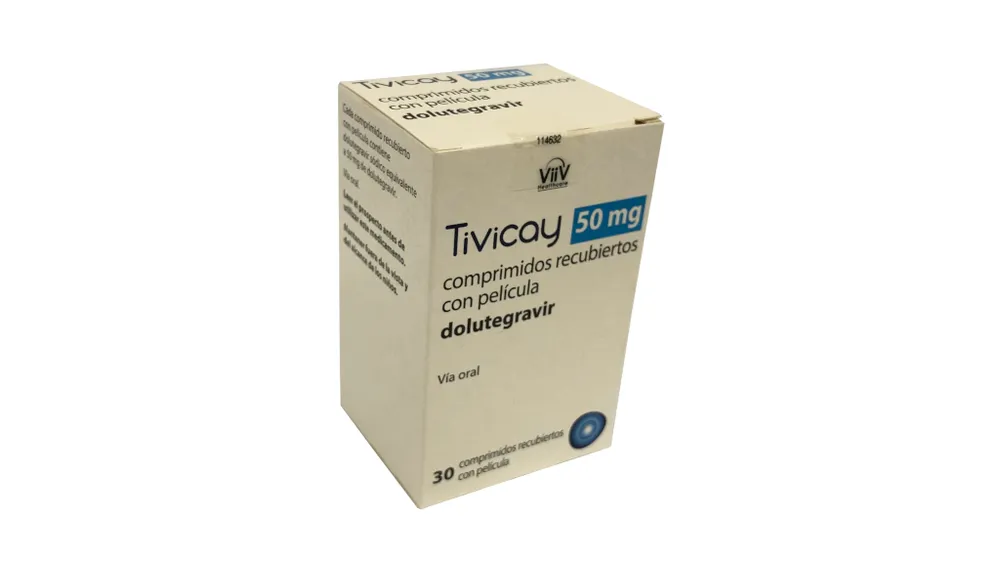
Table of Contents
Package leaflet: Information for the user
Introduction
Package leaflet: information for the patient
Tivicay 10mg film-coated tablets
Tivicay 25mg film-coated tablets
Tivicay 50mg film-coated tablets
dolutegravir
Read the entire leaflet carefully before you (or your child, if they are the patient) start taking this medicine, because it contains important information for you.
- Keep this leaflet, as you may need to read it again.
- If you have any questions, consult your doctor or pharmacist.
- This medicine has been prescribed for you (or your child, if they are the patient) only, and you should not give it to other people, even if they have the same symptoms as you, because it may harm them.
- If you experience any adverse effects, consult your doctor or pharmacist, even if they are adverse effects not listed in this leaflet. See section 4.
Leaflet contents
- What Tivicay is and what it is used for
- What you need to know before taking Tivicay
- How to take Tivicay
- Possible side effects
- How to store Tivicay
- Contents of the pack and other information
1. What Tivicay is and what it is used for
Tivicay contains the active substance dolutegravir. Dolutegravir belongs to a group of antiretroviral medicines called integrase inhibitors (INIs).
Tivicay is used to treat HIV infection (human immunodeficiency virus) in adults, adolescents, and children at least 6 years of age and older who weigh at least 14 kg.
Tivicay does not cure HIV infection; it reduces the amount of virus in your body and keeps it at a low level. As a result, it also increases the number of CD4 cells in the blood. CD4 cells are a type of white blood cells that are important in helping your body fight infections.
Not everyone responds to treatment with Tivicay in the same way. Your doctor will monitor how well your treatment is working.
Tivicay is always used in combination with other antiretroviral medicines (combination therapy). To control your HIV infection and to prevent your condition from worsening, you must continue taking all of your medicines, unless your doctor has instructed you otherwise.
2. What you need to know before taking Tivicay
Do not take Tivicay:
-
if you (or your child, if they are the patient) are allergic to dolutegravir or to any of the other ingredients of this medicine (listed in section 6).
-
if you (or your child, if they are the patient) are taking another medicine called fampridine (also known as dalfampridine; used to treat multiple sclerosis).
-
If you think any of these apply to you (or your child), consult your doctor.
Warnings and precautions
Be alert to important symptoms
Some people taking medicines for HIV infection develop other disorders, which may be serious. These include:
- symptoms of infections and inflammation
- joint pain, stiffness, and bone problems.
You need to know which important signs and symptoms to watch for while you (or your child, if they are the patient) are taking Tivicay.
- Read the information in section 4 of this leaflet.
Children
Do not give this medicine to children under 6 years of age, weighing less than 14 kg, or with HIV infection resistant to other medicines similar to Tivicay. The use of Tivicay film-coated tablets in children under 6 years of age or weighing less than 14 kg has not yet been studied.
Children should attend scheduled medical appointments (see "Use in children and adolescents" in section 3 for more information).
Other medicines and Tivicay
Tell your doctor if you (or your child, if they are the patient) are taking, have recently taken, or might need to take any other medicines.
Do not take Tivicay with the following medicine:
- fampridine (also known as dalfampridine), used to treat multiple sclerosis.
Some medicines may affect how Tivicay works, or increase the likelihood of side effects. Tivicay may also affect how some other medicines work.
Tell your doctor if you (or your child) are taking any of the following medicines:
-
metformin, to treat diabetes
-
medicines called antacids, to treat indigestion and heartburn. Do not take an antacid within 6 hours before taking Tivicay or at least 2 hours after taking it (see also section 3)
-
supplements or multivitamin preparations containing calcium, iron, or magnesium. If you take Tivicay with food, you may take supplements or multivitamin preparations containing calcium, iron, or magnesium at the same time as Tivicay. If you do not take Tivicay with food, do not take a supplement or multivitamin preparation containing calcium, iron, or magnesium within 6 hours before taking Tivicay or at least 2 hours after taking it (see also section 3)
-
etravirine, efavirenz, fosamprenavir/ritonavir, nevirapine, or tipranavir/ritonavir, to treat HIV infection
-
rifampicin, to treat tuberculosis (TB) and other bacterial infections
-
phenytoin and phenobarbital, to treat epilepsy
-
oxcarbazepine and carbamazepine, to treat epilepsy or bipolar disorder
-
St. John’s wort (Hypericum perforatum), a herbal medicine used to treat depression.
-
Tell your doctor or pharmacist if you (or your child) are taking any of these medicines. Your doctor may decide to adjust your dose or that you need additional monitoring.
Pregnancy
If you are pregnant, think you may be pregnant, or plan to become pregnant:
- Consult your doctor about the risks and benefits of taking Tivicay.
Inform your doctor immediately if you become pregnant or plan to become pregnant. Your doctor will review your treatment. Do not stop treatment with Tivicay without consulting your doctor, as this could harm both you and your fetus.
Breast-feeding
Women living with HIV are not recommended to breast-feed, because HIV infection can be transmitted to the baby through breast milk.
A small amount of the components of Tivicay may pass into breast milk.
If you are breast-feeding or considering breast-feeding, you must consult your doctor as soon as possible.
Driving and using machines
Tivicay may cause dizziness and has other side effects that may reduce your attention.
- Do not drive or operate machinery unless you are certain it does not affect you.
Tivicay contains less than 1 mmol of sodium (23 mg) per tablet; this is essentially “sodium-free”.
3. How to take Tivicay
Follow exactly the instructions given by your doctor for taking this medicine. If in doubt, consult your doctor or pharmacist again.
- The recommended dose is 50 mg once daily.
- If you are also taking other medicines, the dose is 50 mg twice daily.
- For HIV resistant to other medicines similar to Tivicay, the recommended dose is 50 mg twice daily.
Your doctor will decide the correct dose of Tivicay for you.
Swallow the tablet(s) with some liquid.
Tivicay can be taken with or without food. When you take Tivicay twice daily, your doctor may advise you to take it with food.
Tivicay is also available in dispersible tablets. Film-coated tablets and dispersible tablets are not the same, therefore do not switch between film-coated tablets and dispersible tablets without consulting your doctor first.
Use in children and adolescents
-
The pediatric dose of Tivicay should be adjusted as they grow or gain weight.
-
Therefore, it is important that children attend their scheduled medical appointments.
-
Children and adolescents weighing at least 20 kg may take the adult dose of 50 mg once daily or 25 mg twice daily. Your doctor will decide how Tivicay should be administered.
-
For children between 6 and 12 years of age, your doctor will determine the correct dose of Tivicay based on your child's weight.
-
To reduce the risk of choking, children should not swallow more than one tablet at a time.
-
Tivicay must not be used in children and adolescents with HIV infection resistant to other medicines similar to Tivicay.
Antacids
Antacids, used to treat indigestion and heartburn, may interfere with the absorption of Tivicay in your body and make it less effective.
Do not take an antacid within 6 hours before taking Tivicay, or at least 2 hours after taking it. Other medicines that reduce acidity, such as ranitidine and omeprazole, may be taken at the same time as Tivicay.
- Consult your doctor for advice on which acid-reducing medicines you can take with Tivicay.
Calcium, iron, or magnesium supplements or multivitamin preparations
Supplements or multivitamin preparations containing calcium, iron, or magnesium may interfere with the absorption of Tivicay in your body and make it less effective.
If you take Tivicay with food, you may take supplements or multivitamin preparations containing calcium, iron, or magnesium at the same time as Tivicay. If you do not take Tivicay with food, do not take a supplement or multivitamin preparation containing calcium, iron, or magnesium within 6 hours before taking Tivicay, or at least 2 hours after taking it.
- Consult your doctor for advice on how to take supplements or multivitamin preparations containing calcium, iron, or magnesium with Tivicay.
If you take more Tivicay than you should
If you (or your child) take more Tivicay tablets than prescribed, contact your doctor or pharmacist for advice. If possible, show them the Tivicay packaging.
If you forget to take Tivicay
If you (or your child) miss a dose, take it as soon as you remember. However, if there are less than 4 hours until your next dose, skip the missed dose and take the next one at the usual time. Then continue your treatment as before.
- Do not take a double dose to make up for a missed dose.
Do not stop treatment with Tivicay
Keep taking Tivicay for as long as your doctor tells you to. Do not stop taking it unless your doctor advises you to do so.
If you have any further questions about the use of this medicine, ask your doctor or pharmacist.
4. Possible adverse effects
Like all medicines, this medicine can cause adverse effects, although not everybody gets them.
Allergic reactions
These are uncommon in people taking Tivicay. Signs include:
-
skin rash
-
high temperature (fever)
-
lack of energy (fatigue)
-
swelling, sometimes of the face or mouth (angioedema), causing difficulty breathing
-
muscle or joint pain.
-
Seek medical advice immediately. Your doctor may decide to carry out liver, kidney or blood tests and may tell you to stop taking Tivicay.
Very common adverse effects
These may affect more than 1 in 10 people:
- headache
- diarrhoea
- nausea.
Common adverse effects
These may affect up to 1 in 10 people:
- skin rash
- itching (pruritus)
- vomiting
- stomach pain (abdominal pain)
- stomach discomfort (abdomen)
- weight gain
- insomnia
- dizziness
- abnormal dreams
- depression (feeling deeply sad and lacking self-esteem)
- anxiety
- lack of energy (fatigue)
- gas (flatulence)
- increased levels of liver enzymes
- increased levels of enzymes produced in the muscles (creatine phosphokinase).
Uncommon adverse effects
These may affect up to 1 in 100 people:
- inflammation of the liver (hepatitis)
- suicide attempt*
- suicidal thoughts*
- panic attacks
- joint pain
- muscle pain.
- *especially in patients who have previously had depression or mental health problems.
Rare adverse effects
These may affect up to 1 in 1,000 people:
-
liver failure (signs may include yellowing of the skin and whites of the eyes, or unusually dark urine)
-
increased bilirubin (liver function test) in your blood
-
suicide (especially in patients who have previously had depression or mental health problems).
-
Tell your doctor immediately if you experience any mental health problems (see also other mental health problems listed above).
Frequency not known – cannot be estimated from available data:
- a condition in which red blood cells do not form properly (sideroblastic anaemia).
Symptoms of infection and inflammation
People with advanced HIV infection (AIDS) have a weakened immune system and are more likely to develop serious infections (opportunistic infections). Such infections may have developed "silently", not detected by the weakened immune system before treatment started. After starting treatment, the immune system becomes stronger and may react against these infections, causing symptoms of infection or inflammation. Symptoms usually include fever, along with some of the following:
- headache
- stomach pain
- difficulty breathing.
In rare cases, as the immune system becomes stronger, it may also attack healthy tissues (autoimmune disorders). Symptoms of autoimmune disorders may appear many months after starting HIV treatment. Symptoms may include:
- palpitations (irregular or rapid heartbeat) or tremor
- hyperactivity (excessive restlessness and movement)
- weakness starting in the hands and feet and moving up towards the trunk of the body.
If you (or your child) have any symptoms of infection or inflammation, or if you notice any of the symptoms listed above:
- Consult your doctor immediately. Do not take other medicines for infection without first consulting your doctor.
Joint pain, stiffness and bone problems
Some people receiving combination treatment for HIV develop osteonecrosis. In this condition, parts of the bone tissue die due to reduced blood supply to the bones. People may be more likely to develop this condition if:
- they have been on combination treatment for a long time
- they are also taking anti-inflammatory medicines called corticosteroids
- they drink alcohol
- their immune system is severely weakened
- they are overweight.
Signs of osteonecrosis include:
- stiffness in the joints
- discomfort and pain in the joints (especially in the hip, knee or shoulder)
- difficulty moving.
If you notice any of these symptoms:
- Tell your doctor.
Effects on weight, lipids and blood glucose
During HIV treatment, there may be an increase in weight and in levels of lipids and blood glucose. This is partly related to improved health, lifestyle, and sometimes to the HIV medicines themselves. Your doctor will assess these changes.
Reporting of adverse effects
If you experience any adverse effect, talk to your doctor or pharmacist, even if it is a possible adverse effect not listed in this leaflet. You can also report them directly through the national reporting system included in Appendix V. By reporting adverse effects, you can help provide more information on the safety of this medicine.
5. Storage of Tivicay
Keep this medicine out of the sight and reach of children.
Do not use this medicine after the expiry date stated on the carton and bottle after EXP.
Tivicay 10 mg film-coated tablets
Store in the original packaging to protect from moisture. Keep the bottle tightly closed. Do not remove the desiccant. Do not ingest the desiccant. This medicine does not require any special storage temperature conditions.
Tivicay 25 mg and 50 mg film-coated tablets
This medicine does not require any special storage conditions.
Medicines should not be disposed of via wastewater or household waste. Ask your pharmacist how to dispose of medicines and packaging that you no longer need. This will help protect the environment.
6. Contents of the pack and other information
Composition of Tivicay
- The active substance is dolutegravir. Each tablet contains dolutegravir sodium equivalent to 10 mg, 25 mg or 50 mg of dolutegravir.
- The other components are mannitol (E421), microcrystalline cellulose, povidone, sodium carboxymethyl starch, sodium stearyl fumarate, partially hydrolysed poly(vinyl alcohol), titanium dioxide (E171), macrogol, talc and, for the 25 mg and 50 mg tablets, yellow iron oxide (E172).
Appearance of the product and contents of the pack
Tivicay 10 mg film-coated tablets are white, round, biconvex, engraved with “SV 572” on one side and “10” on the other. The bottle contains a desiccant to reduce moisture. After opening, keep the desiccant in the bottle; do not discard it.
Tivicay 25 mg film-coated tablets are pale yellow, round, biconvex, engraved with “SV 572” on one side and “25” on the other.
Tivicay 50 mg film-coated tablets are yellow, round, biconvex, engraved with “SV 572” on one side and “50” on the other.
The film-coated tablets are supplied in bottles containing 30 or 90 tablets. Only certain pack sizes may be marketed.
Marketing Authorisation Holder
ViiV Healthcare BV
Van Asch van Wijckstraat 55H
3811 LP Amersfoort
The Netherlands
Manufacturer
Glaxo Wellcome, S.A., Avda. Extremadura 3, 09400 Aranda de Duero, Burgos, Spain
or
Delpharm Poznan Spólka Akcyjna, ul. Grunwaldzka 189, 60-322 Poznan, Poland.
For more information about this medicine, please contact the local representative of the Marketing Authorisation Holder:
Belgium/Belgium/Belgium ViiV Healthcare srl/bv Tel/Tel: + 32 (0) 10 85 65 00 | Lithuania ViiV Healthcare BV Tel: + 370 80000334 |
| Luxembourg/Luxembourg ViiV Healthcare srl/bv Belgium/Belgium Tel/Tel: + 32 (0) 10 85 65 00 |
Czech Republic GlaxoSmithKline, s.r.o. Tel: + 420 222 001 111 | Hungary ViiV Healthcare BV Tel.: + 36 80088309 |
Denmark GlaxoSmithKline Pharma A/S Tlf.: + 45 36 35 91 00 | Malta ViiV Healthcare BV Tel: + 356 80065004 |
Germany ViiV Healthcare GmbH Tel.: + 49 (0)89 203 0038-10 | Netherlands ViiV Healthcare BV Tel: + 31 (0) 33 2081199 |
Estonia ViiV Healthcare BV Tel: + 372 8002640 | Norway GlaxoSmithKline AS Tlf: + 47 22 70 20 00 |
Greece GlaxoSmithKline Monoprosōpē EPE Tel: + 30 210 68 82 100 | Austria GlaxoSmithKline Pharma GmbH Tel: + 43 (0)1 97075 0 |
Spain Laboratorios ViiV Healthcare, S.L. Tel: + 34 900 923 501 | Poland GSK Services Sp. z o.o. Tel.: + 48 (0)22 576 9000 |
France ViiV Healthcare SAS Tél.: + 33 (0)1 39 17 69 69 | Portugal VIIVHIV HEALTHCARE, UNIPESSOAL, LDA Tel: + 351 21 094 08 01 |
Croatia ViiV Healthcare BV Tel: + 385 800787089 | Romania ViiV Healthcare BV Tel: + 40800672524 |
Ireland GlaxoSmithKline (Ireland) Limited Tel: + 353 (0)1 4955000 | Slovenia ViiV Healthcare BV Tel: + 386 80688869 |
Iceland Vistor ehf. Sími: + 354 535 7000 | Slovakia ViiV Healthcare BV Tel: + 421 800500589 |
Italy ViiV Healthcare S.r.l Tel: + 39 (0)45 7741600 | Finland GlaxoSmithKline Oy Puh/Tel: + 358 (0)10 30 30 30 |
Cyprus ViiV Healthcare BV Tel: + 357 80070017 | Sweden GlaxoSmithKline AB Tel: + 46 (0)8 638 93 00 |
Latvia ViiV Healthcare BV Tel: + 371 80205045 |
Date of the most recent review of this leaflet: {month YYYY}.
Other sources of information
Detailed information on this medicine is available on the website of the European Medicines Agency: https://www.ema.europa.eu.