Tirodril 5 mg tablets
Spain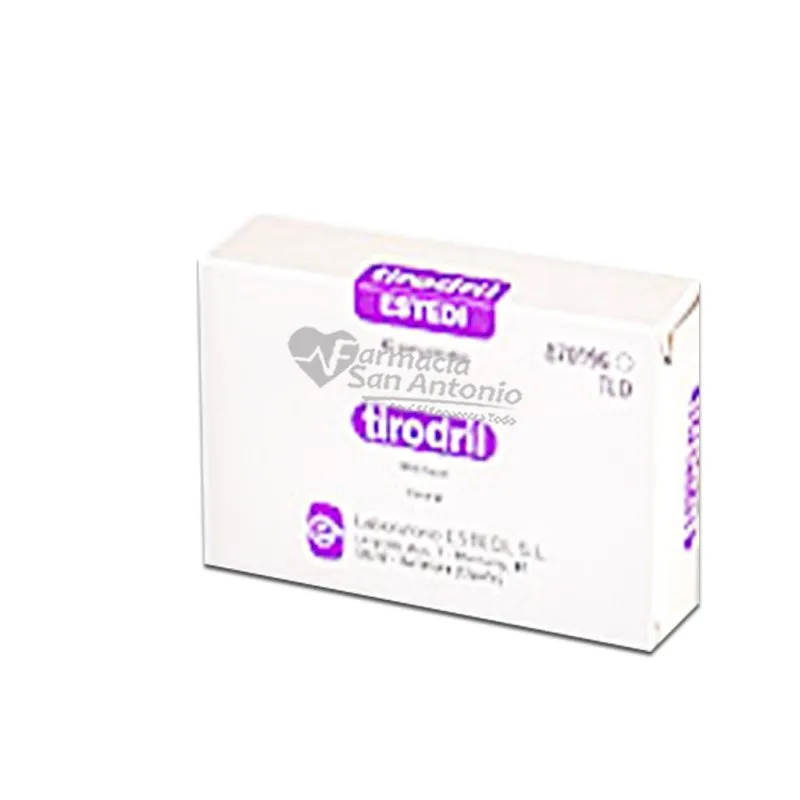
Table of Contents
Package leaflet: Information for the user
Introduction
Package leaflet: information for the user
Tirodril 5 mg tablets
Thiamazole (Methimazole)
Read the entire leaflet carefully before you start taking this medicine, because it contains important information for you.
- Keep this leaflet, as you may need to read it again.
- If you have any questions, ask your doctor or pharmacist.
- This medicine has been prescribed for you only and must not be given to other people, even if they have the same symptoms as you, because it could harm them.
- If you experience any adverse effects, consult your doctor or pharmacist, even if they are adverse effects not listed in this leaflet. See section 4.
Leaflet contents
- What Tirodril is and what it is used for
- What you need to know before taking Tirodril
- How to take Tirodril
- Possible side effects
- How to store Tirodril
- Contents of the pack and other information
1. What Tirodril is and what it is used for
Tirodril is a medication (antithyroid agent) that works by controlling the overproduction of thyroid hormones in the thyroid gland.
It is indicated for the treatment of the following conditions in adults and children aged 3 years and older:
- sudden worsening of symptoms of hyperthyroidism (thyrotoxic crisis or thyroid storm)
- when you need to take a medication to treat overproduction of thyroid hormones by the thyroid gland (hyperthyroidism)
- prior to undergoing surgery on the thyroid gland
- prior to receiving radioactive iodine treatment, or after such treatment until its full effect has been established
Tirodril is also used for:
- preventing overproduction of thyroid hormones before exposure to iodine, such as during an imaging procedure with iodine-containing contrast medium
- if you have a mild overproduction of thyroid hormones without additional symptoms (subclinical hyperthyroidism)
- if your thyroid gland has certain hormone-producing areas (autonomous adenoma)
- if you have previously experienced overproduction of thyroid hormones at any time in your life
2. What you need to know before taking Tirodril 5 mg tablets
Do not take Tirodril
- if you are allergic to the active substance or to any of the other ingredients of this medicine (listed in section 6).
- if you have low levels of certain blood cells such as leukocytes or neutrophils.
- if you have biliary flow obstruction (cholestasis) not caused by hyperthyroidism.
- if you have previously experienced bone marrow damage during prior treatment with thiamazole or carbimazole.
- combination therapy with thiamazole and thyroid hormones is contraindicated during pregnancy.
- if you have previously experienced acute pancreatitis following administration of thiamazole or carbimazole.
Warnings and precautions
Consult your doctor or pharmacist before starting to take Tirodril.
If your symptoms worsen or persist, consult your doctor.
-
During treatment with Tirodril, inform your doctor of any illness that occurs, especially sore throat, fever, chills, cough, mouth ulcers, or hoarseness, as these could be early signs of blood disorders (agranulocytosis) which could have serious consequences.
-
During treatment with Tirodril, inform your doctor if you lose your appetite or develop itching or abdominal pain, as these could be early signs of liver impairment.
-
If you suffer from goiter (swelling in the front part of the neck), treatment with Tirodril must be carried out under strict medical supervision.
-
Weight gain may occur during treatment with Tirodril as a result of clinical improvement.
-
Inform your doctor if you have previously experienced allergic skin reactions (allergic dermatitis, itching) before starting treatment with Tirodril.
-
During treatment with Tirodril, a certain type of eye disease called endocrine orbitopathy may worsen, although this condition is not related to Tirodril treatment.
-
Inform your doctor immediately if you experience fever or abdominal pain, as these may be signs of inflammation of the pancreas (acute pancreatitis). It may be necessary to discontinue Tirodril.
-
Tirodril may harm the fetus. If you can become pregnant, use a reliable method of contraception from the start of treatment and throughout treatment.
Pregnancy
Tirodril may harm the fetus.
If you can become pregnant, use a reliable method of contraception from the start of treatment and throughout treatment.
If you are pregnant, think you may be pregnant, or plan to become pregnant, inform your doctor immediately. Continuing treatment with Tirodril during pregnancy may be necessary if the potential benefit outweighs the potential risk to you and the fetus.
Taking Tirodril with other medicines
Inform your doctor if you are taking, have recently taken, or might need to take any other medicines.
Tirodril may enhance the effects of the following drugs, requiring a reduction in their dosage:
- Medicines used for hypertension or heart failure (propranolol or other beta-blockers).
- Medicines that increase the strength of heart contractions (digoxin).
- Medicines for the treatment of asthma (theophylline).
Tirodril may reduce the effects of oral anticoagulants.
Administration of iodinated glycerol, iodine, or potassium iodide may reduce the response to Tirodril.
Administration of amiodarone (a medicine for heart arrhythmias) may enhance the effect of Tirodril.
Antithyroid drugs may reduce thyroid uptake of radioactive iodine used in certain diagnostic tests ([131I]).
Taking Tirodril with food and drink
Tirodril has no known interactions with food or drink.
Pregnancy and breastfeeding
If you are pregnant or breastfeeding, think you may be pregnant, or plan to become pregnant, consult your doctor before using this medicine.
Pregnancy:
During pregnancy, Tirodril should be administered at the lowest possible dose. Thiamazole (methimazole) can cross the placental barrier and may cause hypothyroidism and goiter in the fetus. The actual risk of fetal death, goiter, hypothyroidism, or certain serious congenital anomalies is low, especially if the dose given to the mother is the lowest possible. Fetal risks increase when antithyroid drugs are used close to the end of pregnancy. The potential risks of adverse effects and fetal harm from treatment must be weighed against the risks associated with untreated hyperthyroidism during pregnancy.
In many pregnant women, thyroid gland function improves during pregnancy, so a dose reduction may be necessary. During the last trimester of pregnancy, half the usual daily dose is administered. In some cases, treatment may be discontinued during the last 2–3 weeks.
Breastfeeding:
Tirodril is excreted in breast milk, so there is a risk of hypothyroidism in the breastfed infant. Breastfeeding is possible during treatment with Tirodril, but only low doses up to 10 mg per day may be used, without additional administration of thyroid hormones.
Driving and using machines
The influence of Tirodril on the ability to drive or operate machinery is none or negligible.
3. How to take Tirodril
Follow exactly the instructions for administration of Tirodril provided by your doctor. If in doubt, consult your doctor or pharmacist.
The tablet may be divided into equal doses. It can be crushed or swallowed whole or in divided doses with a sufficient amount of liquid.
It is recommended to take this medicine every day at the same time in relation to meals. If you take more than one tablet daily, you may also take it in several doses at regular intervals throughout the day.
The recommended dose is:
Treatment of hyperthyroidism (increased production of thyroid hormones):
Adults and adolescents (12 to 17 years of age): The initial dose of Tirodril is 15 mg (3 tablets) in cases of moderate hyperthyroidism, 30–40 mg (6–8 tablets) in moderate-to-severe hyperthyroidism, or 60 mg (12 tablets) in severe hyperthyroidism. Treatment should be administered in divided doses at 6–8 hour intervals orally until thyroid hormones normalize. At this point, the dose should be gradually reduced until reaching the maintenance dose of 5–15 mg (1–3 tablets) daily.
Children (3 to 11 years of age): The initial dose is 0.4 mg/kg given in divided doses every 8 hours. The maintenance dose is approximately half the initial dose (0.2 mg/kg).
The use of Tirodril is not recommended in children under 3 years of age.
Sudden worsening of hyperthyroidism symptoms (thyrotoxic crisis or thyroid storm):
Adults: The initial dose is 30 mg (6 tablets), followed by 30 mg every 4–6 hours.
Preoperative treatment prior to thyroid surgery in patients with hyperthyroidism:
Use the same doses as those used for the treatment of hyperthyroidism until the patient becomes euthyroid.
Prior to radioactive iodine treatment, or after such treatment for hyperthyroidism:
Use the same doses as those used in the treatment of hyperthyroidism.
Prevention of overproduction of thyroid hormones prior to exposure to iodine:
Typically, daily doses of 10–20 mg of thiamazole are administered for approximately 10 days. The duration of treatment depends on how long the iodine-containing substance remains in the body.
If you take more Tirodril than you should
If blood disorders occur, treatment must be immediately discontinued and, if necessary, antibiotics, blood transfusions, and corticosteroids should be administered.
For mild skin allergic reactions caused by thiamazole, antihistamines may be helpful.
Overdose causes hypothyroidism, with corresponding symptoms of reduced metabolism and goiter enlargement. This can be avoided by reducing the dose as soon as normal thyroid hormone levels are achieved, and, if necessary, by additional administration of levothyroxine (thyroid hormone).
In case of acute intoxication, standard treatment should be administered: gastric lavage, intravenous fluids, rest, analgesics, and mild sedation.
In case of overdose or accidental ingestion, contact the Toxicology Information Service.
Telephone: 91 562 04 20.
If you forget to take Tirodril
Do not take a double dose to make up for forgotten doses.
If you stop taking Tirodril
Do not stop treatment with Tirodril without first consulting your doctor.
If you have any further questions about the use of this medicine, ask your doctor or pharmacist.
4. Possible adverse effects
Like all medicines, this medicine may cause adverse effects, although not everyone will experience them.
The most common adverse effects (may affect more than 1 in 10 people) are: rash, urticaria, itching, and skin darkening. Most of these are mild and disappear during treatment with Tirodril.
Frequent adverse effects (may affect up to 1 in 10 people) are: nausea, vomiting, stomach pain, joint pain, and muscle pain.
Uncommon adverse effects (may affect up to 1 in 100 people) but serious, include agranulocytosis.
Rare adverse effects (may affect up to 1 in 1,000 people) are: loss of taste, tingling or numbness sensation anywhere in the body, dizziness, swelling, fever, headache, and drowsiness.
Very rare adverse effects (may affect up to 1 in 10,000 people) are: decreased number of certain blood cells (granulocytopenia, thrombocytopenia, pancytopenia), lymph node disorders (generalized lymphadenopathy), a type of anaemia (aplastic anaemia), inflammation of arteries (periarteritis), coagulation problems (hypoprothrombinemia), hypoglycaemic coma (autoimmune insulin syndrome), nerve inflammation (neuritis), involvement of multiple nerves (polyneuropathy), salivary gland disease (sialoadenopathy), biliary or liver involvement (cholestatic jaundice, fulminant hepatitis, hepatic necrosis), an allergic reaction known as Stevens-Johnson syndrome, inflammation and damage to cellular tissues (drug-induced lupus erythematosus), kidney inflammation (nephritis).
Adverse effects with unknown frequency (cannot be estimated from available data) are: inflammation of the pancreas (acute pancreatitis).
Reporting of adverse effects
If you experience any type of adverse effect, consult your doctor or pharmacist, even if it is a possible adverse effect not listed in this leaflet. You may also report them directly via the Spanish Pharmacovigilance System for Human Medicines: www.notificaRAM.es. By reporting adverse effects, you can help provide more information on the safety of this medicine.
5. Storage of Tirodril
Keep this medicine out of the sight and reach of children.
Store this medicine in its original packaging to protect it from light.
Do not use this medicine after the expiry date stated on the carton after EXP. The expiry date is the last day of the month indicated.
Medicines must not be disposed of via wastewater or household waste. Dispose of containers and unused medicines at the SIGRE collection point at your pharmacy. If you are unsure, ask your pharmacist how to dispose of containers and medicines you no longer need. This will help protect the environment.
6. Contents of the package and other information
Composition of Tirodril
- The active substance is thiamazole (methimazole). Each tablet contains 5 mg of thiamazole.
- The other components are: maize starch, calcium sulfate, talc, colloidal silica and magnesium stearate.
Appearance of the product and contents of the container
Tirodril tablets are supplied in a pack containing 40 tablets.
The tablets are round, flat, white in colour and have a score line. The tablet can be divided into equal doses. They are packaged in PVC/aluminum blisters.
Marketing Authorization Holder
LABORATORIO ESTEDI S.L.
Montseny 41
08012 Barcelona (Spain)
Manufacturer responsible for manufacturing:
LABORATORIO ESTEDI S.L.
Leopoldo Alas 7
08012 Barcelona (Spain)
Local representative:
LABORATORIO ALDO-UNION S.L.
Baronesa de Maldà, 73
08950 Esplugues de Llobregat
Barcelona (Spain)
Date of the most recent review of this leaflet: March 2019
Detailed and up-to-date information on this medicinal product is available on the website of the Spanish Agency for Medicines and Health Products (AEMPS) http://www.aemps.gob.es/.