Terramycin 10 mg/g ophthalmic ointment
Spain
Table of Contents
- Package leaflet: Information for the user
- Introduction
- 1. What is Terramicina ophthalmic ointment and what is it used for
- 2. What you need to know before using Terramicina eye ointment
- 3. How to use Terramicina Ophthalmic Ointment
- 4. Possible adverse effects
- 5. Storage of Terramicina Ophthalmic Ointment
- 6. Contents of the pack and other information
Package leaflet: Information for the user
Introduction
Package leaflet: information for the patient
Terramicina 10 mg/g ophthalmic ointment
Oxytetracycline
Read this entire leaflet carefully before you start using this medicine, because it contains important information for you.
-
Keep this leaflet, as you may need to read it again.
- If you have any questions, consult your doctor, pharmacist, or nurse.
-
This medicine has been prescribed for you only, and you should not give it to other people, even if they have the same symptoms as you, because it could harm them.
- If you experience any adverse effects, consult your doctor, pharmacist, or nurse, even if they are adverse effects not listed in this leaflet. See section 4.
Leaflet contents
-
What Terramicina ophthalmic ointment is and what it is used for
-
What you need to know before using Terramicina ophthalmic ointment
-
How to use Terramicina ophthalmic ointment
-
Possible side effects
-
Storage of Terramicina ophthalmic ointment
-
Contents of the container and other information
1. What is Terramicina ophthalmic ointment and what is it used for
Terramicina ophthalmic ointment contains an antibacterial agent indicated in adults and children over 12 years of age for the treatment of infections caused by susceptible organisms when located in the eye, such as blepharitis, conjunctivitis, keratitis, or keratoconjunctivitis.
Antibiotics are used to treat bacterial infections and are not effective against viral infections. It is important that you follow your doctor's instructions regarding dosage, dosing interval, and duration of treatment. Do not store or reuse this medicine. If you have leftover antibiotic after completing treatment, return it to the pharmacy for proper disposal. Do not dispose of medicines via the drain or in household waste.
You should consult a doctor if your condition worsens or does not improve after 10 days.
2. What you need to know before using Terramicina eye ointment
Do not use Terramicina eye ointment
- if you are allergic to oxytetracycline or any of the other ingredients of this medicine (listed in section 6)
- if you have acute herpes simplex, chickenpox, or any other viral condition affecting the eye, ear, or skin
- if you have infections caused by mycobacteria
- if you have fungal infections of the eyes
- if a foreign body has recently been removed from your cornea in an uncomplicated manner
Warnings and precautions
Talk to your doctor or pharmacist before starting to use Terramicina eye ointment, or during treatment with Terramicina eye ointment:
- if you experience hypersensitivity to the medicine
- if local irritation occurs, as treatment should be discontinued
- if you will be exposed to sunlight or ultraviolet light, as it may cause sunburn
- if new infections appear, as appropriate measures must be taken
- if you experience visual disturbances or blurred vision, as you should be examined by an ophthalmologist
The use of contact lenses is not recommended during ophthalmic treatment.
Children and adolescents
Children under 8 years of age
Terramicina eye ointment must not be used in children under 8 years of age due to the risk of tooth discoloration.
Children aged 8 to under 12 years
Use in children between 8 and 12 years of age should be carefully justified.
Other medicines and Terramicina eye ointment
Tell your doctor or pharmacist if you are using, have recently used, or might need to use any other medicines, including those obtained without a prescription.
Pregnancy, breastfeeding, and fertility
If you are pregnant or breastfeeding, think you may be pregnant, or are planning to become pregnant, consult your doctor or pharmacist before using this medicine.
There are no data or the data are limited regarding the use of this medicine in pregnant women.
If you are breastfeeding, your doctor must decide whether breastfeeding should be discontinued or treatment with this medicine stopped, after considering the benefit of breastfeeding for the child and the benefit of treatment for the mother, as a risk to breastfed infants cannot be excluded.
There are no data available on the effect of this medicine on male or female fertility.
Driving and using machines
You may notice blurred vision for a short time after applying the ointment. Do not drive or operate machinery until these effects have passed.
3. How to use Terramicina Ophthalmic Ointment
Ophthalmic use.
Remember to wash your hands before and after applying this medicine.
Apply directly from the tube a small 1 cm strip of ointment inside the lower eyelid of the affected eye. Do not let the tip of the tube touch the eye or any other surface to avoid possible contamination of the tube's contents.
Administer 3 to 6 applications per day to the affected eye.
In cases of blepharitis, remove scales and crusts before applying the ointment.
If more than one ophthalmic medicine is being used, applications should be spaced at least 5 minutes apart. Ophthalmic ointments should be administered last.
The recommended treatment duration is 1 week, although this depends on the nature and severity of the infection and may vary from a few days to several weeks. Your doctor will determine the duration of your treatment with Terramicina Ophthalmic Ointment. Do not stop treatment prematurely, as the infection may recur.
Follow exactly the administration instructions provided in this leaflet or those given by your doctor or pharmacist. If in doubt, ask your doctor or pharmacist.
Use in children and adolescents
Children under 8 years of age
Terracortil ophthalmic-otic ointment must not be used in children under 8 years of age due to the risk of tooth discoloration and delayed skeletal development.
Children from 8 to under 12 years of age
Its use should be carefully justified in children between 8 and 12 years of age.
If you use more Terramicina Ophthalmic Ointment than you should
Using larger amounts than recommended increases the risk of adverse effects.
If you have used more Terramicina Ophthalmic Ointment than you should, consult your doctor or pharmacist immediately.
In case of accidental ingestion, go immediately to a medical center or call the Toxicology Information Service at telephone: (91) 562 04 20, indicating the medicine and the amount ingested.
If you forget to use Terramicina Ophthalmic Ointment
Do not apply a double dose to make up for missed doses.
Apply the missed dose as soon as you remember, and observe the recommended time interval between doses before the next application.
If you stop using Terramicina Ophthalmic Ointment
If you have any further questions about the use of this medicine, ask your doctor, pharmacist, or nurse.
How to open the tube
The tube is sealed. When using the tube for the first time, unscrew the base of the cap to remove the inner ring. Then screw the cap back on.
The upper part of the cap can be unscrewed and the tube is ready to use.
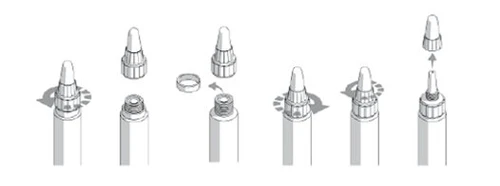
4. Possible adverse effects
Like all medicines, this medicine may cause adverse effects, although not everyone will experience them.
The following adverse effects have been reported, with a frequency not known (cannot be estimated from available data):
- Allergic reactions
- Burning sensation
- Increased lacrimation
- Contact dermatitis
- Periorbital dermatitis
- Eye pain
- Foreign body sensation in the eye
- Photosensitivity reactions may occur after exposure to sunlight or UV radiation
Other adverse effects in children and adolescents
Tooth discoloration, frequency not known.
Reporting of adverse effects
If you experience any type of adverse effect, consult your doctor or pharmacist, even if it is a possible adverse effect not listed in this leaflet. You can also report them directly through the Spanish Pharmacovigilance System for Human Medicines: www.notificaRAM.es. By reporting adverse effects, you can help provide more information on the safety of this medicine.
5. Storage of Terramicina Ophthalmic Ointment
Keep this medicine out of the sight and reach of children.
Store between 15 and 30°C.
Do not use this medicine after the expiry date stated on the packaging after EXP. The expiry date refers to the last day of the month indicated.
Discard 4 weeks after first opening.
Medicines should not be disposed of via wastewater or household waste. Dispose of empty containers and unused medicines at the SIGRE Point at your pharmacy. If you have any doubts, ask your pharmacist how to dispose of containers and medicines you no longer need. This will help protect the environment.
6. Contents of the pack and other information
Composition of Terramycin ophthalmic ointment
- The active substance is oxytetracycline hydrochloride 10.0 mg
- The other components (excipients) are liquid paraffin and soft white paraffin.
Appearance of the product and pack contents
Ophthalmic ointment with a soft yellow color and smooth texture. It is supplied in tubes containing 3.5 g of ointment.
Marketing Authorization Holder and Manufacturer
Farmasierra Laboratorios SL
Ctra de Irún km 26,200 San Sebastián de los Reyes
28706 Madrid. Spain
Manufacturer
Farmasierra Manufacturing SL
Ctra de Irún km 26,200 San Sebastián de los Reyes
28706 Madrid. Spain
Date of the most recent review of this leaflet: October 2025
Detailed information on this medicine is available on the website of the Spanish Agency for Medicines and Health Products (AEMPS) (http://www.aemps.gob.es/)