Tenoretic 100 mg/25 mg tablets
Spain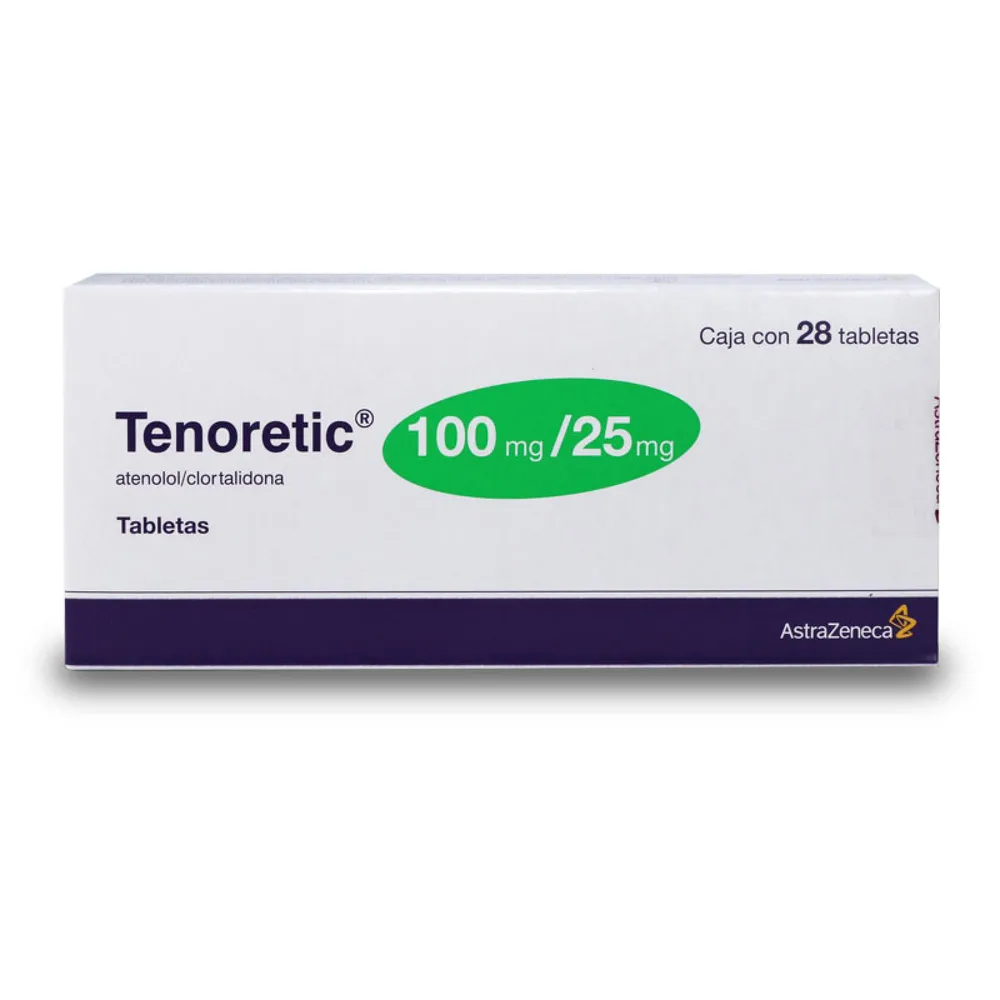
Table of Contents
Package leaflet: Information for the user
Introduction
Package leaflet: information for the patient
Tenoretic 100 mg/25 mg tablets
atenolol/chlorthalidone
Read the entire leaflet carefully before you start taking this medicine, because it contains important information for you.
- Keep this leaflet, as you may need to read it again.
- If you have any questions, ask your doctor, pharmacist or nurse.
- This medicine has been prescribed for you only, and you should not give it to other people, even if they have the same symptoms as you, because it may harm them.
- If you experience any adverse effects, consult your doctor, pharmacist or nurse, even if these effects are not listed in this leaflet.
Contents of the leaflet:
- What Tenoretic is and what it is used for
- What you need to know before taking Tenoretic
- How to take Tenoretic
- Possible side effects
- How to store Tenoretic
- Contents of the pack and other information
1. What Tenoretic is and what it is used for
Tenoretic is indicated for the treatment of high blood pressure.
Tenoretic contains two active substances. Atenolol is a beta-blocker and has effects on your heart and circulation. Chlorthalidone is a diuretic that increases the amount of urine produced by the kidneys. Each of these substances lowers blood pressure through a different mechanism.
Your doctor may prescribe Tenoretic if your blood pressure is not adequately controlled with atenolol or chlorthalidone alone.
2. What you need to know before taking Tenoretic
Do not take Tenoretic
- if you are allergic to atenolol, chlortalidone, or any of the other ingredients of this medicine (listed in section 6).
- if you have had or currently have heart conditions such as heart failure or heart block.
- if you have ever experienced very slow or very irregular heartbeats, very low blood pressure, or circulatory failure (cardiac conduction disorder).
- if you have severe kidney problems.
- if you have been told you have phaeochromocytoma (a tumor of the adrenal glands) that is not being treated with other medicines.
- if you have been fasting.
- if you have been diagnosed with metabolic acidosis (a metabolic disorder causing excessive blood acidity).
- if you are pregnant, think you may be pregnant, or are breastfeeding. See “Pregnancy and breastfeeding”.
Warnings and precautions
-
Consult your doctor, pharmacist, or nurse before starting Tenoretic
-
if you have health problems such as asthma or breathing difficulties, diabetes, circulatory disorders, gout, or heart, kidney, liver, or thyroid problems.
-
if you have ever been diagnosed with a specific type of chest pain (angina) called Prinzmetal's angina.
-
if you have ever had an allergic reaction to anything, for example, an insect sting.
-
If you are using eye drops containing beta-blockers, you may experience an increased effect from Tenoretic.
-
If you are elderly, on a low-potassium diet, or have gastrointestinal problems, your doctor may need to perform blood tests to monitor your blood potassium or sodium levels.
-
You may notice that your pulse is slower while taking these tablets. This is normal, but if you are concerned, inform your doctor.
-
If you are diabetic, Tenoretic may alter your response to insulin or other antidiabetic treatments. It may also modify your normal response to low blood sugar, which usually includes an increased heart rate.
-
Tenoretic may alter the body's response to hypoglycemia (low blood glucose), reducing the tachycardia, palpitations, and sweating that typically occur during hypoglycemia.
-
If you experience a decrease in vision or eye pain, these could be symptoms of fluid accumulation in the vascular layer of the eye (choroidal effusion) or increased eye pressure, which may occur within hours to a week after taking Tenoretic. If untreated, this may lead to permanent vision loss. If you have previously had an allergy to penicillin or sulfonamides, you may have a higher risk of developing this condition.
-
If you are admitted to hospital, inform healthcare staff, and especially the anesthetist, that you are being treated with Tenoretic.
Taking Tenoretic with other medicines
Inform your doctor or pharmacist if you are taking, have recently taken, or might need to take any other medicines, including those obtained without a prescription, as it may be necessary to stop or adjust the dose of one of them. Some medicines may affect each other’s action. In particular, inform your doctor if you are taking:
- Disopyramide or amiodarone (for irregular heartbeats).
- Other treatments for hypertension or angina (especially verapamil, diltiazem, nifedipine, clonidine). If you are taking clonidine for hypertension or to prevent migraines, do not stop treatment with clonidine or Tenoretic without first consulting your doctor.
- Treatment for heart failure (digoxin).
- Lithium (for certain psychiatric disorders).
- Anti-inflammatory medicines for pain relief (such as indomethacin or ibuprofen).
- Nasal decongestants or other cold remedies you may have purchased yourself from a pharmacy.
- Baclofen (used as a muscle relaxant).
- Adrenaline.
Pregnancy, breastfeeding, and fertility
If you are pregnant or breastfeeding, think you may be pregnant, or plan to become pregnant, consult your doctor or pharmacist before using this medicine.
Pregnancy:
Should not be used during pregnancy. See “Do not take Tenoretic”.
Breastfeeding:
Should not be used during breastfeeding. See “Do not take Tenoretic”.
Driving and using machines
It is unlikely that Tenoretic will affect your ability to drive or operate machinery. However, like other medicines used to treat high blood pressure, Tenoretic may cause dizziness or drowsiness in some people, especially at the beginning of treatment, when changing doses, or if alcohol is consumed. If you experience dizziness or drowsiness, consult your doctor before engaging in such activities.
Important information about some of the ingredients of Tenoretic
Use in athletes: This medicine contains atenolol, which may produce a positive result in doping control tests.
Tenoretic contains sodium
This medicine contains less than 1 mmol of sodium (23 mg) per tablet, which is essentially “sodium-free”.
3. How to take Tenoretic
Follow exactly the instructions for use of this medicine given by your doctor or pharmacist. If in doubt, consult your doctor or pharmacist again.
Remember to take your medicine.
Your doctor will tell you how long to take Tenoretic.
Use in adults
- The recommended dose is one tablet daily.
- Swallow the tablet whole with water.
- Try to take your tablet at the same time each day.
- Do not stop taking your tablets even if you feel well, unless your doctor tells you otherwise; in that case, you should stop gradually.
Use in children
This medicine must not be used in children. See "Do not take Tenoretic".
If you take more Tenoretic than you should
In case of overdose or accidental ingestion, contact your doctor or pharmacist immediately or call the Toxicology Information Service. Telephone 91 562 04 20.
If you forget to take Tenoretic
If you forget to take a dose, take it as soon as you remember. Do not take a double dose to make up for forgotten doses.
If you stop taking Tenoretic
Do not stop treatment before your doctor tells you to. Stop taking your tablets only if your doctor instructs you to do so, and in that case, do so gradually only.
If you have any further questions about the use of this medicine, ask your doctor, pharmacist, or nurse.
4. Possible adverse effects
Like all medicines, Tenoretic can cause adverse effects, although not everyone experiences them. With Tenoretic, these may include:
Frequent (affects between 1 and 10 out of every 100 patients)
- Cold hands and feet.
- Slower heart rate.
- Diarrhea.
- Nausea.
- Fatigue.
- Low sodium levels in the blood, causing weakness, vomiting, and cramps.
- Hyperuricemia (excess uric acid in the blood).
- Hypokalaemia (decreased potassium levels in the blood).
- Impaired glucose tolerance.
Uncommon (affects between 1 and 10 out of every 1,000 patients)
- Sleep disorders.
- Increased transaminases (a type of liver enzyme).
Rare (affects between 1 and 10 out of every 10,000 patients)
- Heart block (which may cause abnormal heartbeats, dizziness, fatigue, or fainting).
- Worsening of arterial circulation, if you already have some degree of circulatory insufficiency.
- Numbness and spasms in the fingers, followed by warmth and pain (Raynaud's phenomenon).
- Shortness of breath and/or swelling of the ankles, if you also have heart failure.
- Dizziness, especially when standing up.
- Headache.
- Confusion.
- Psychosis or hallucinations (mental disorders).
- Mood changes.
- Dry mouth.
- Hair loss.
- Dry eyes.
- Skin rash, including worsening of psoriasis.
- Tingling sensation in the hands.
- Worsening of breathing difficulties, if you have or have had asthma.
- Vision disorders.
- Thrombocytopenia (increased tendency to bruise).
- Purpura (purple spots on the skin).
- Impotence.
- Jaundice (which may appear as yellowing of the skin and eyes).
- Pancreatitis (inflammation of the pancreas, a large gland located behind the stomach).
- Nightmares.
- Leucopenia (decreased number of white blood cells in the blood).
Very rare (affects fewer than 1 out of every 10,000 patients)
- Very rarely, changes in certain blood components may occur, for example, antinuclear antibodies (ANA).
Frequency not known (cannot be estimated from available data)
- Constipation.
- Lupus-like syndrome (a disease in which the immune system produces antibodies that primarily attack the skin and joints).
- Decreased vision or eye pain due to elevated pressure [possible signs of fluid accumulation in the vascular layer of the eye (choroidal effusion) or acute angle-closure glaucoma].
- Depression.
Reporting of adverse effects
If you experience any adverse effects, consult your doctor, pharmacist, or nurse, even if they are possible adverse effects not listed in this leaflet.
You can also report them directly via the Spanish Pharmacovigilance System for Human Medicines: https://www.notificaRAM.es. By reporting adverse effects, you can help provide more information on the safety of this medicine.
5. Storage of Tenoretic
Keep this medicine out of the sight and reach of children.
Store below 25°C, in the original packaging to protect it from light and moisture.
Do not use this medicine after the expiry date stated on the container and blister pack. The expiry date refers to the last day of the month indicated.
Medicines must not be disposed of via wastewater or household waste. Dispose of unused medicines and their packaging at the SIGRE Point in your pharmacy. If you are unsure, ask your pharmacist how to dispose of unused medicines and packaging. This will help protect the environment.
6. Contents of the pack and other information
Composition of Tenoretic
- The active substances are atenolol and chlorthalidone.
- The other components are: heavy magnesium carbonate, corn starch, sodium lauryl sulfate, gelatin, and magnesium stearate.
Appearance of the product and contents of the pack
Tenoretic 100 mg/25 mg are white tablets.
This medicine is supplied in packs containing 56 tablets.
Marketing Authorization Holder and Manufacturer
Marketing Authorization Holder
Atnahs Pharma Netherlands B.V.
Copenhagen Towers
Ørestads Boulevard 108, 5.tv
DK-2300 København S
Denmark
Manufacturer
AstraZeneca AB
Karlebyhusentrén Astraallén
SE-152 57 Södertälje
Sweden
or
Corden Pharma GmbH
Otto-Hahn-Strasse 1
68723 Plankstadt
Germany
Date of the most recent revision of this leaflet: May 2024
Detailed and up-to-date information on this medicine is available on the website of the Spanish Agency for Medicines and Health Products (AEMPS) http://www.aemps.gob.es/