Tamiflu 30 mg hard capsules
Spain
Table of Contents
Package leaflet: Information for the user
Introduction
Package leaflet: information for the user
Tamiflu 30 mg hard capsules
oseltamivir
Read the entire leaflet carefully before you start taking this medicine because it contains important information for you.
- Keep this leaflet as you may need to read it again.
- If you have any questions, ask your doctor or pharmacist.
- This medicine has been prescribed for you only and must not be given to other people, even if they have the same symptoms as you. It could harm them.
- If you experience any adverse effects, talk to your doctor or pharmacist, even if the effects are not listed in this leaflet. See section 4.
Leaflet contents
- What Tamiflu is and what it is used for
- What you need to know before taking Tamiflu
- How to take Tamiflu
- Possible side effects
- How to store Tamiflu
- Contents of the pack and other information
1. What Tamiflu is and what it is used for
- Tamiflu is used in adults, adolescents, children, and infants (including full-term newborn babies) for the treatment of influenza (influenza). It may be used when you have influenza symptoms and it is known that the influenza virus is circulating in the community.
- Tamiflu may also be prescribed to adults, adolescents, children, and infants over 1 year of age for influenza prevention on a case-by-case basis, for example, if you have been in contact with someone who has influenza.
- Tamiflu may be prescribed to adults, adolescents, children, and infants (including full-term newborn babies) as preventive treatment under exceptional circumstances, for example, during a global influenza outbreak (an influenza pandemic) and when the seasonal influenza vaccine may not provide sufficient protection.
Tamiflu contains oseltamivir, which belongs to a group of medicines called neuraminidase inhibitors. These medicines prevent the spread of the influenza virus in the body. They help to relieve or prevent symptoms caused by influenza virus infection.
Influenza is a viral infection. Signs of influenza often include sudden fever (above 37.8 °C), cough, runny or stuffy nose, headache, muscle aches, and extreme tiredness. These symptoms may also be caused by other infections. A true influenza infection only occurs during annual outbreaks (epidemics), when influenza viruses are circulating in the population. Outside epidemic periods, influenza-like symptoms are usually due to other illnesses.
2. What you need to know before starting Tamiflu
Do not take Tamiflu:
- if you are allergic (hypersensitive) to oseltamivir or to any of the other ingredients of Tamiflu listed in section 6.
If this applies to you, consult your doctor. Do not take Tamiflu.
Warnings and precautions
Before taking Tamiflu, make sure your doctor knows if:
- you are allergic to other medicines
- you have any kidney disease. If so, your dose may need to be adjusted.
- you have a serious illness requiring immediate hospitalization.
- your immune system is not working properly.
- you have chronic heart disease or chronic respiratory disease.
During treatment with Tamiflu, tell your doctor immediately if:
- you notice changes in your behaviour or mood (neuropsychiatric events), especially if they occur in children and adolescents. These may be signs of rare but serious side effects.
Tamiflu is not a flu vaccine
Tamiflu is not a vaccine: it is used to treat infection or prevent the spread of the influenza virus. A vaccine provides antibodies against the virus. Tamiflu does not affect the effectiveness of the flu vaccine, and your doctor may prescribe both.
Taking Tamiflu with other medicines
Tell your doctor or pharmacist if you are taking any other medicines, or have recently taken any, including those obtained without a prescription.
The following medicines are particularly important:
? chlorpropamide (used to treat diabetes)
? methotrexate (used to treat, for example, rheumatoid arthritis)
? phenylbutazone (used to treat pain and inflammation)
? probenecid (used to treat gout)
Pregnancy and breastfeeding
You must inform your doctor if you are pregnant, think you may be pregnant, or are planning to become pregnant, so your doctor can decide whether Tamiflu is suitable for you.
It is unknown whether Tamiflu affects breastfed infants. Inform your doctor if you are breastfeeding, so that they can decide whether Tamiflu is appropriate for you.
Consult your doctor or pharmacist before using this medicine.
Driving and using machines
Tamiflu has no effect on your ability to drive or operate machinery.
Tamiflu contains sodium
This medicine contains less than 1 mmol of sodium (23 mg) per capsule; essentially "sodium-free".
3. How to take Tamiflu
Follow exactly the administration instructions for Tamiflu provided by your doctor. Consult your doctor or pharmacist if you have any questions.
Take Tamiflu as soon as possible, ideally within two days of developing flu symptoms.
Recommended doses
For the treatment of influenza: Take two doses daily. It is generally advisable to take one dose in the morning and another in the evening. It is important to complete the full 5-day treatment course, even if you start feeling better quickly.
For patients with a weakened immune system, treatment will continue for 10 days.
For the prevention of influenza or after exposure to an infected person: Take one dose daily for 10 days. It is best to take this dose in the morning with breakfast. In special situations, such as widespread influenza outbreaks or in patients with a weakened immune system, treatment may continue for up to 6 or 12 weeks.
The recommended dose depends on the patient's body weight.
Use the number of capsules or oral suspension volume prescribed by your doctor.
Adults and adolescents aged 13 years and older
Body weight | Influenza treatment: dose | Influenza treatment (in immunocompromised patients): dose | Influenza prevention: dose |
40 kg or more | 75 mg** twice daily | 75 mg** twice daily | 75 mg** once daily |
*For patients with a weakened immune system, the treatment duration is 10 days.
**75 mg can be obtained with one 30 mg capsule plus one 45 mg capsule
Children from 1 to 12 years old
Body weight | Influenza treatment: dose for 5 days | Influenza treatment (in immunocompromised patients): dose for 10 days* | Influenza prevention: dose for 10 days |
10 to 15 kg | 30 mg twice daily | 30 mg twice daily | 30 mg once daily |
Over 15 kg up to 23 kg | 45 mg twice daily | 45 mg twice daily | 45 mg once daily |
Over 23 kg up to 40 kg | 60 mg twice daily | 60 mg twice daily | 60 mg once daily |
Over 40 kg | 75 mg** twice daily | 75 mg** twice daily | 75 mg** once daily |
*For children with a weakened immune system, the treatment duration is 10 days.
**75 mg can be obtained with one 30 mg capsule plus one 45 mg capsule.
Children under 1 year of age (0 to 12 months)
The administration of Tamiflu to children under 1 year of age for the prevention of influenza during a pandemic should be carried out at the physician's discretion, after considering the potential benefit versus any potential risk to the child.
Body weight | Influenza treatment: dose | Influenza treatment (in immunocompromised patients): dose | Influenza prevention: dose |
3 kg to more than 10 kg | 3 mg per kg body weight**, twice daily | 3 mg per kg body weight**, twice daily | 3 mg per kg body weight**, once daily |
*For children with a weakened immune system, the treatment duration is10 days.
**mg per kg = mg per kilogram of the child's body weight. For example:
If a 6-month-old child weighs 8 kg, the dose is
8 kg x 3 mg per kg = 24 mg
Method of administration
Swallow the capsules whole with water. Do not break or chew the capsules.
Tamiflu may be taken with or without food; however, taking it with food may reduce the likelihood of experiencing stomach discomfort (nausea or vomiting).
People who may have difficulty swallowing the capsules can use a liquid medicine, Tamiflu oral suspension, but if this is not available at your pharmacy, you can prepare a liquid form of Tamiflu from the capsules. See the leaflet section onPreparation of Tamiflu oral liquid at home.
If you take more Tamiflu than you should
Stop taking Tamiflu and contact a doctor or pharmacist immediately.
In many overdose cases, no adverse effects were reported. When adverse effects were reported, they were similar to those seen with normal doses and listed in section 4.
Tamiflu overdoses have been reported more frequently in children than in adults and adolescents. Caution must be exercised when preparing liquid Tamiflu for children and when administering Tamiflu capsules or liquid to children.
If you forget to take Tamiflu
Do not take a double dose to make up for missed doses.
If you stop taking Tamiflu
No adverse effects occur when you stop taking Tamiflu. However, if you stop taking Tamiflu earlier than instructed by your doctor, flu symptoms may return. Always complete the full course of treatment prescribed by your doctor.
If you have any further questions about the use of this medicine, ask your doctor or pharmacist.
4. Possible adverse effects
Like all medicines, this medicine can cause adverse effects, although not everyone will experience them. Many of these adverse effects may be caused by influenza.
Since oseltamivir has been marketed, the following serious adverse effects have rarely been reported:
- Anaphylactic and anaphylactoid reactions: severe allergic reactions, with swelling of the face and skin, itchy rash, low blood pressure, and difficulty breathing.
- Hepatic disorders (fulminant hepatitis, hepatic function disorder, and jaundice): yellowing of the skin and whites of the eyes, change in stool color, changes in behavior.
- Angioneurotic edema: sudden, severe swelling of the skin, mainly around the head and neck area, including eyes and tongue, with difficulty breathing.
- Stevens-Johnson syndrome and toxic epidermal necrolysis: a complicated allergic reaction that may be life-threatening, severe inflammation of the outer skin and possibly inner surfaces, initially with fever, sore throat, fatigue, skin rash, blistering, peeling, and large areas of skin shedding, possible breathing difficulty and low blood pressure.
- Gastrointestinal hemorrhage: prolonged bleeding from the large intestine or vomiting blood.
- Neuropsychiatric disorders, as described below.
If you notice any of these symptoms, seek medical help immediately.
The most frequently reported adverse effects (very common and common) for Tamiflu are feeling unwell or malaise (nausea, vomiting), stomach pain, stomach discomfort, headache, and pain. These adverse effects usually occur after the first dose of the medicine and generally resolve during the course of treatment. The frequency of these effects is reduced if the medicine is taken with food.
Rare but serious adverse effects: seek medical help immediately
(These may affect up to 1 in 1,000 people)
Rare adverse effects reported during treatment with Tamiflu include:
- seizures and delirium, including altered levels of consciousness
- confusion, abnormal behavior
- delirious disorders, hallucinations, agitation, anxiety, nightmares
These events were mainly reported in children and adolescents and often began suddenly and resolved quickly. Very rarely, these events resulted in self-harm, some with fatal outcomes. These neuropsychiatric events have also been reported in patients with influenza who were not taking Tamiflu.
? Patients, especially children and adolescents, should be closely monitored for the behavioral changes described above.
If you notice any of these symptoms, especially in younger patients, seek medical help immediately.
Adults and adolescents aged 13 years and older
Very common adverse effects
(may affect more than 1 in 10 people)
- Headache
- Nausea
Common adverse effects
(may affect up to 1 in 10 people)
- Bronchitis
- Chills
- Cough
- Dizziness
- Fever
- Pain
- Limb pain
- Runny nose
- Difficulty sleeping
- Sore throat
- Stomach pain
- Fatigue
- Feeling of fullness in the upper abdomen
- Upper respiratory tract infections (inflammation of nose, throat, and sinuses)
- Stomach discomfort
- Vomiting
Uncommon adverse effects
(may affect up to 1 in 100 people)
- Allergic reactions
- Altered level of consciousness
- Convulsion
- Heart rhythm disturbances
- Mild to severe liver function disorders
- Skin reactions (skin inflammation, red itchy rash, scaly skin)
Rare adverse effects
(may affect up to 1 in 1,000 people)
- Thrombocytopenia (reduced number of platelets)
- Visual disorders
Children aged 1 to 12 years
Very common adverse effects
(may affect more than 1 in 10 people)
- Cough
- Nasal congestion
- Vomiting
Common adverse effects
(may affect up to 1 in 10 people)
- Conjunctivitis (red, watery, or painful eyes)
- Ear inflammation and other ear disorders
- Headache
- Nausea
- Runny nose
- Stomach pain
- Feeling of fullness in the upper abdomen
- Stomach discomfort
Uncommon adverse effects
(may affect up to 1 in 100 people)
- Skin inflammation
- Tympanic membrane disorder (eardrum)
Infants under 1 year of age
Adverse effects reported in children aged 0 to 12 months are mostly similar to those reported in older children (aged 1 year and above). In addition, diarrhea and diaper dermatitis have been reported.
If you consider any of the adverse effects you experience to be severe, or if you notice any adverse effect not listed in this leaflet, inform your doctor or pharmacist. However,
- if you or your child have repeated episodes of illness, or
- if flu symptoms worsen or fever persists
Inform your doctor as soon as possible.
Reporting of adverse effects
If you experience any type of adverse effect, consult your doctor, even if it is a possible adverse effect not listed in this leaflet. You may also report them directly through the national reporting system detailed in Appendix V.
By reporting adverse effects, you can help provide more information on the safety of this medicine.
5. Storage of Tamiflu
Keep this medicine out of the reach and sight of children.
Do not use this medicine after the expiry date stated on the packaging and blister after EXP. The expiry date is the last day of the month indicated.
Do not store above 25 °C.
Medicines should not be disposed of via wastewater or household waste. Ask your pharmacist how to dispose of any unused medicine and its packaging. This will help protect the environment.
6. Contents of the pack and other information
Composition of Tamiflu
- The active substance is:
Each hard capsule contains oseltamivir phosphate equivalent to 30 mg of oseltamivir.
- The other components are:
capsule contents: pregelatinized starch, talc, povidone, sodium croscarmellose,
and sodium stearyl fumarate (see section 2 "Tamiflu contains sodium")
capsule shell: gelatin, yellow iron oxide (E172), red iron oxide (E172), and titanium dioxide (E171)
printing ink: shellac (E904), titanium dioxide (E171), and FD&C Blue 2 (indigo carmine, E132).
Appearance of the product and contents of the pack
The 30 mg hard capsules consist of an opaque light yellow body marked with “ROCHE” and an opaque light yellow cap marked with “30 mg”. The markings are blue in color.
Tamiflu 30 mg hard capsules are available in blisters of 10 capsules.
Marketing Authorization Holder
Roche Registration GmbH
Emil-Barell-Strasse 1
79639 Grenzach-Wyhlen
Germany
Manufacturer
Roche Pharma AG
Emil-Barell-Strasse 79639 Grenzach-Wyhlen
Germany
For more information about this medicinal product, please contact the local representative of the marketing authorization holder:
Belgium/Belgium/Belgium N.V. Roche S.A. Tel/Tel: +32 (0) 2 525 82 11 | Lithuania UAB “Roche Lietuva” Tel: +370 5 2546799 |
| Luxembourg/Luxembourg (See/see Belgium/Belgium) |
Czech Republic Roche s. r. o. Tel: +420 - 2 20382111 | Hungary Roche (Hungary) Kft. Tel: +36 - 1 279 4500 |
Denmark Roche Pharmaceuticals A/S Tlf: +45 - 36 39 99 99 | Malta (See Ireland) |
Germany Roche Pharma AG Tel: +49 (0) 7624 140 | Netherlands Roche Nederland B.V. Tel: +31 (0) 348 438050 |
Estonia Roche Eesti OÜ Tel: + 372 - 6 177 380 | Norway Roche Norge AS Tlf: +47 - 22 78 90 00 |
Greece Roche (Hellas) A.E. Tel: +30 210 61 66 100 | Austria Roche Austria GmbH Tel: +43 (0) 1 27739 |
Spain Roche Farma S.A. Tel: +34 - 91 324 81 00 | Poland Roche Polska Sp.z o.o. Tel: +48 - 22 345 18 88 |
France Roche Tél: +33 (0) 1 47 61 40 00 | Portugal Roche Farmacêutica Química, Lda Tel: +351 - 21 425 70 00 |
Croatia Roche d.o.o Tel: +385 1 4722 333 | Romania Roche România S.R.L. Tel: +40 21 206 47 01 |
Ireland Roche Products (Ireland) Ltd. Tel: +353 (0) 1 469 0700 | Slovenia Roche farmacevtska družba d.o.o. Tel: +386 - 1 360 26 00 |
Iceland Roche Pharmaceuticals A/S c/o Icepharma hf Sími: +354 540 8000 | Slovakia Roche Slovensko, s.r.o. Tel: +421 - 2 52638201 |
Italy Roche S.p.A. Tel: +39 - 039 2471 | Finland/Finland Roche Oy Puh/Tel: +358 (0) 10 554 500 |
Cyprus G.A. Stamatīs & Sia Ltd. Tel: +357 - 22 76 62 76 | Sweden Roche AB Tel: +46 (0) 8 726 1200 |
Latvia Roche Latvija SIA Tel: +371 - 6 7039831 |
Date of the most recent review of this leaflet:
Detailed information on this medicine is available on the European Medicines Agency website: https://www.ema.europa.eu/.
Information for the user
For people who have difficulty swallowing capsules, including very young children, there is a liquid form of this medicine, Tamiflu oral suspension.
If you need a liquid medicine but it is not available, a suspension can be prepared at the pharmacy from Tamiflu capsules (see Information for healthcare professionals). The pharmacy-prepared preparation is the recommended option.
If the pharmacy-prepared preparation is also unavailable, you may prepare Tamiflu liquid at home from these capsules.
The dose is the same for treatment and for prevention of influenza. The difference is in the frequency of administration.
Preparation of Tamiflu liquid at home
? If you have the correct capsule for the required dose (a 30 mg or 60 mg dose), open the capsule and mix its contents with a teaspoon (or less) of a suitable sweetened food.
This is usually suitable for children over 1 year of age. See the upper section of the instructions.
? If smaller doses are needed, preparing Tamiflu liquid from capsules requires additional steps.
This is suitable for young children and infants: they require a Tamiflu dose of less than 30 mg. See the lower section of the instructions.
Children from 1 to 12 years of age
To prepare a 30 mg or 60 mg dose, you will need:
? One or two 30 mg Tamiflu capsules
? Sharp scissors
? A small container
? Teaspoon (5 ml spoon)
? Water
? Sweetened food to mask the bitter taste of the powder
Examples: chocolate or cherry syrup, dessert sauce, caramel or condensed milk.
Alternatively, you may prepare sugar water by mixing one teaspoon of water with three-quarters (3/4) of a teaspoon of sugar.
Step 1: Check the correct dose
To determine the correct amount to use, find the patient's weight in the left column of the table.
Look at the right-hand column to verify the number of capsules to give the patient for a single dose. The amount is the same for treatment and for prevention of influenza.
dose 30mg |
|
dose 60mg |
|
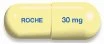
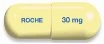
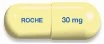
Only the 30 mg capsules should be used for 30 mg and 60 mg doses. Do not attempt to prepare 45 mg or 75 mg doses using the contents of the 30 mg capsules. Instead, use the capsule with the appropriate dose.
Weight | Tamiflu Dose | Number of 30 mg capsules |
Up to 15 kg | 30 mg | 1 capsule |
15 kg up to 23 kg | 45 mg | Do not use 30 mg capsules |
Over 23 kg up to 40 kg | 60 mg | 2 capsules |
Step 2: Pour all the powder into the container
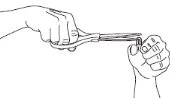
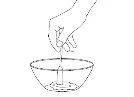
Take one 30mg capsule and hold it vertically over a container. Carefully cut off the rounded end with scissors.
Pour all the powder into the container.
For a 60 mg dose, open a second capsule. Pour all the powder into the container.
Be careful with the powder, as it may be irritating to the skin and eyes.
Step 3: Sweeten the powder and administer the dose
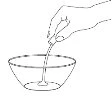
Add a small amount—no more than a teaspoon—of sweetened food to the powder in the container.
This is to mask the bitter taste of Tamiflu powder.
Mix thoroughly.
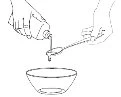
Give the patient the entire contents of the container immediately.
If any mixture remains in the container, rinse the container with a small amount of water and give it to the patient to ensure complete dosing.
Repeat this procedure each time you need to administer the medication.
Infants under 1 year of age
To prepare a smaller single dose, you will need:
? One 30mg Tamiflu capsule
? A pair of sharp scissors
? Two small containers
(use separate containers for each child)
? A large oral dosing dispenser to measure water—a 5 ml or 10 ml dispenser
? A small oral dosing dispenser marked in 0.1 ml increments to administer the dose
? Teaspoon (5 ml spoon)
? Water
? Sweetened food to mask the bitter taste of Tamiflu
Examples: chocolate syrup or cherry syrup, and dessert sauces such as caramel or condensed milk.
Alternatively, you may prepare sweetened water: mix one teaspoon of water with three-quarters (3/4) of a teaspoon of sugar.
Step 1: Pour all the powder into a container
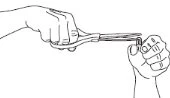
Take one 30mg capsule and hold it vertically over one of the containers. Carefully cut off the rounded end with scissors. Be careful with the powder, as it may be irritating to the skin and eyes.
Pour all the powder into the container, regardless of the dose being prepared.
The amount is the same for both treatment and prevention of influenza.
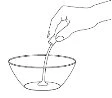
Step 2: Add water to dilute the medication
Use the larger dispenser to withdraw 5 ml of water. Add the water to the powder in the container. |
|
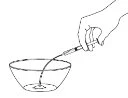
Shake the suspension with a spoon for 2 minutes. |
|
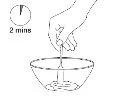
Do not worry if not all of the powder dissolves. The undissolved powder corresponds to inactive ingredients.
Step 3: Choose the correct amount for the child's weight
Find the child's weight in the left column of the table.
The right column of the table shows how much of the liquid mixture you need to prepare.
Infants under 1 year of age (including full-term newborns)
Child's weight (nearest) | Amount of mixture to prepare |
3 kg | 1.5 ml |
3.5 kg | 1.8 ml |
4 kg | 2.0 ml |
4.5 kg | 2.3 ml |
5 kg | 2.5 ml |
5.5 kg | 2.8 ml |
6 kg | 3.0 ml |
6.5 kg | 3.3 ml |
7 kg | 3.5 ml |
7.5 kg | 3.8 ml |
8 kg | 4.0 ml |
8.5 kg | 4.3 ml |
9 kg | 4.5 ml |
9.5 kg | 4.8 ml |
10 kg or more | 5.0 ml |
Step 4: Prepare the liquid mixture
Ensure you have the correct dispenser size.
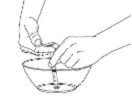
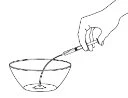
Prepare the correct amount of liquid mixture from the first container.
Prepare it carefully to avoid introducing air bubbles.
Gently add the correct dose to the second container.
Step 5: Sweeten and administer to the child
Add a small amount—no more than a teaspoon—of sweetened food to the second container.
This is to mask the bitter taste of the Tamiflu suspension.
Shake the sweetened food and Tamiflu liquid well.
Immediately give the child the entire contents of the second container (sweetened food mixed with Tamiflu liquid).
If any mixture remains in the second container, rinse the container with a small amount of water and ensure the child consumes it all. For children unable to drink directly from the container, administer using a spoon or an appropriate bottle to deliver the remaining liquid.
Give the child something to drink.
Discard any remaining liquid left in the first container.
Repeat this procedure each time the medication needs to be administered.
Information for healthcare professionals only
Patients unable to swallow capsules:
The marketed formulation of Tamiflu for oral suspension (6 mg/mL) is the preferred medicinal product for pediatric and adult patients who have difficulty swallowing capsules or require lower doses. If Tamiflu oral suspension powder is not available, the pharmacist may prepare an oral suspension (6 mg/mL) from Tamiflu capsules. If pharmacy-prepared suspension is also unavailable, patients may prepare the suspension at home from capsules.
Oral dosing dispensers (oral syringes) with appropriate volume and graduations must be provided to administer the pharmacy-prepared suspension and for use in home preparation procedures. In both cases, the required volumes should preferably be marked on the dispensers. For home preparation, dispensers must be provided separately to measure the correct volume of water and to measure the Tamiflu mixture with water. A 5 mL or 10 mL dispenser should be used to measure 5.0 mL of water.
Below is the appropriate dispenser size to withdraw the correct volume of Tamiflu suspension (6 mg/mL).
Infants under 1 year of age (including full-term newborns):
Oseltamivir Dose | Volume of Oseltamivir Suspension | Syringe Size to Use (0.1 mL graduations) |
9 mg | 1.5 mL | 2.0 mL (or 3.0 mL) |
10 mg | 1.7 mL | 2.0 mL (or 3.0 mL) |
11.25 mg | 1.9 mL | 2.0 mL (or 3.0 mL) |
12.5 mg | 2.1 mL | 3.0 mL |
13.75 mg | 2.3 mL | 3.0 mL |
15 mg | 2.5 mL | 3.0 mL |
16.25 mg | 2.7 mL | 3.0 mL |
18 mg | 3.0 mL | 3.0 mL (or 5.0 mL) |
19.5 mg | 3.3 mL | 5.0 mL |
21 mg | 3.5 mL | 5.0 mL |
22.5 mg | 3.8 mL | 5.0 mL |
24 mg | 4.0 mL | 5.0 mL |
25.5 mg | 4.3 mL | 5.0 mL |
27 mg | 4.5 mL | 5.0 mL |
28.5 mg | 4.8 mL | 5.0 mL |
30 mg | 5.0 mL | 5.0 mL |