Synthamin 14 Reformulated solution for infusion
Spain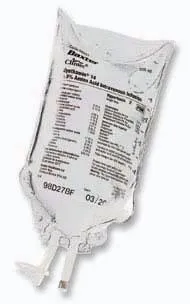
Table of Contents
- Package leaflet: Information for the user
- Introduction
- 1. What Synthamin is and what it is used for
- 2. What you need to know before Synthamin is administered to you
- 3. How Synthamin will be administered to you
- 4. Possible adverse effects
- 5. Storage of Synthamin
- 6. Package contents and additional information
Package leaflet: Information for the user
Introduction
Package leaflet: Information for the user
SYNTHAMIN 14 REFORMULATED solution for infusion
Read all of this leaflet carefully before you start using this medicine, because it contains important information for you.
- Keep this leaflet, as you may need to read it again.
- If you have any questions, ask your doctor or nurse.
- If you experience any side effects, talk to your doctor or nurse, even if they are not listed in this leaflet. See section 4.
Leaflet contents:
- What Synthamin is and what it is used for
- What you need to know before Synthamin is administered to you
- How Synthamin will be administered to you
- Possible side effects
- How to store Synthamin
- Contents of the pack and other information
1. What Synthamin is and what it is used for
Synthamin is a sterile solution containing a large number of compounds called amino acids. These are the building blocks for proteins, which are vital for your body. It also contains certain chemicals called electrolytes, which are very important for the proper functioning of your body.
Together with other compounds such as minerals and vitamins, it is used to provide you with nutrition (food) directly into your bloodstream when you are unable to take food orally. It is important that you are given this medicine to help you recover.
It is usually administered together with other nutritional solutions.
2. What you need to know before Synthamin is administered to you
Do not be given Synthamin if you have any of the following clinical conditions
-
If you are allergic to the active substances or to any of the other components of this
medicine (listed in section 6). -
If you have a disorder in amino acid metabolism.
-
If you have high blood levels of sodium, potassium, magnesium and/or phosphorus.
Warnings and precautions
Consult your doctor or nurse before starting to use Synthamin
-
Synthamin should only be used if the solution is clear and the container is undamaged.
-
If symptoms of pulmonary disorders appear.
-
If you have fever or feel unwell.
-
Regular blood and urine tests will be performed to ensure you are receiving the correct amount of solution. If necessary, you may be given additional treatments.
-
You will be monitored more closely if you have liver, heart or kidney problems. Please inform your doctor of this.
-
You will be carefully monitored if you have diabetes.
-
If administered to a very young child, additional monitoring will be carried out.
-
If necessary, you may also be given a vitamin called folic acid, fatty acids (the building blocks of fats), and sugar solutions (such as glucose) to ensure your body has all the necessary components for good health.
-
Synthamin must not be administered simultaneously with, before, or after a blood transfusion using the same infusion equipment.
-
Concomitant administration of injectable Synthamin solutions with concentrated glucose solutions may lead to hyperglycemia, glucosuria, and hyperosmolar syndrome. Therefore, in patients receiving this treatment, routine monitoring of blood and urine glucose is required. In certain patients, exogenous insulin may be necessary.
-
If any abnormal signs or symptoms of hypersensitivity or allergic reactions occur, the infusion must be stopped immediately.
When used in newborns and children under 2 years of age, the solution (in bags and administration sets) must be protected from light exposure until administration is complete. Exposure of Synthamin to ambient light, especially after mixing with trace elements or vitamins, generates peroxides and other degradation products, which can be minimized by protecting the product from light.
Use of Synthamin with other medicines
Inform your doctor or nurse if you are taking, have recently taken, or might need to take any other medicines.
No interaction studies have been conducted with Synthamin.
Due to the potassium content of Synthamin, special caution is required in patients treated with potassium-sparing diuretics (e.g., amiloride, spironolactone, triamterene), angiotensin-converting enzyme (ACE) inhibitors, angiotensin II receptor antagonists, or immunosuppressants such as tacrolimus or cyclosporine, due to the risk of hyperkalemia.
Pregnancy, breastfeeding, and fertility
If you are pregnant or breastfeeding, think you may be pregnant, or plan to become pregnant, consult your doctor or pharmacist before using this medicine.
The safety of amino acid solutions in pregnant or breastfeeding women has not been established. Your doctor will carefully evaluate the benefits and potential risks before prescribing Synthamin.
Driving and use of machines
Synthamin does not affect your ability to drive or operate machinery.
3. How Synthamin will be administered to you
Use in adults
Your doctor will determine an infusion rate based on your needs and clinical condition, which will depend on your body weight, your body's requirements, the amount of sugar solution (such as glucose) that can be given to you, and the reason for your treatment.
The solution will be administered by slow intravenous infusion (called an infusion) through a plastic tube carefully inserted into a large vein in the chest (the vena cava). The infusion rate will not exceed 70 ml per hour, and you will not receive more than 40 ml per kg of body weight in one day.
You must not receive blood transfusions through this tube.
Use in children
When used in newborns and children under 2 years of age, the solution (in bags and administration sets) must be protected from light exposure until administration is complete (see section 2).
In children, the dose of parenteral nutrition must be individually adjusted according to the patient's requirements for amino acids, electrolytes, and energy.
If you are given more Synthamin than you should
Since Synthamin will be administered by your doctor, it is unlikely that you will be given too much. However, if you think you have received more than you should, tell your doctor or nurse immediately.
In case of overdose or accidental ingestion, contact the Toxicology Information Service. Telephone 915.620.420.
4. Possible adverse effects
Like all medicines, this medicine may cause adverse effects, although not everyone will experience them.
Cases of sharp pain and redness at the site where the medicine is administered into the vein have been reported. Hypersensitivity reactions have also been reported, including a severe allergic reaction called anaphylaxis, as well as skin reactions (urticaria, rash, pruritus, erythema), gastrointestinal, circulatory (shock), or respiratory manifestations.
The following may occur:
- fever,
- chills,
- high (hypertension) or low (hypotension) blood pressure,
- joint pain (arthralgia),
- muscle pain (myalgia),
- headache (cephalalgia),
- increased levels of nitrogen in the blood (azotemia) or ammonia (hyperammonemia),
- liver abnormalities,
- venous irritation (thrombus formation, pain, erythema, heat, swelling, hardening).
Reporting of adverse effects
If you experience any type of adverse effect, consult your doctor or nurse, even if it is a possible adverse effect not listed in this leaflet. You can also report them directly through the Spanish Pharmacovigilance System for Human Medicines at www.notificaRAM.es. By reporting adverse effects, you can help provide more information on the safety of this medicine.
5. Storage of Synthamin
Keep this medicine out of the sight and reach of children.
When used in newborns and children under 2 years of age, the solution (in the bags and administration sets) must be protected from light exposure until administration is complete (see section 2).
Do not store above 25°C.
Protect from light until immediately before use.
Do not refrigerate.
Do not use this medicine after the expiry date stated on the bag and carton
after EXP. The expiry date refers to the last day of the month indicated.
Dispose of partially used containers. Any remaining solution must be discarded by healthcare professionals.
6. Package contents and additional information
Composition of Synthamin
The active ingredients per 1000 ml are: Glycine 8.76 g, L-Alanine 17.60 g, L-Arginine 9.78 g, L-Phenylalanine 4.76 g, L-Histidine 4.08 g, L-Isoleucine 5.10 g, L-Leucine 6.20 g, L-Lysine hydrochloride 6.16 g, L-Methionine 3.40 g, L-Proline 5.78 g, L-Serine 4.25 g, L-Tyrosine 34 mg, L-Threonine 3.57 g, L-Tryptophan 1.53 g, L-Valine 4.93 g, Sodium acetate trihydrate 5.94 g, Dibasic potassium phosphate 5.22 g, Sodium chloride 1.54 g, Magnesium chloride hexahydrate 1.02 g.
The other components are Water for injections and acetic acid.
Approximate electrolyte concentrations (mmol/l) of the solution:
Sodium: 70
Potassium: 60
Magnesium: 5
Acetate (1): 140
Chloride: 70
Phosphate (as HPO₄²⁻): 30
Amino acid concentration: 85 g/l
Nitrogen equivalence: 14 g/l
Protein equivalence: 88 g/l
Ratio of essential amino acids / total amino acids: 0.45
Approximate pH: 6
Calculated osmolarity (mOsm/l): 1160
(1) Acetate is added as sodium acetate and/or acetic acid for pH adjustment.
Product appearance and package contents
Synthamin is a clear solution, free from visible particles. It is supplied in plastic bags known as Viaflex. Each bag is contained within a sealed protective overwrap.
Bag sizes may be 500 ml and 1000 ml.
Bags are supplied in cartons, each containing the following quantities:
- 10 bags of 500 ml
- 10 bags of 1,000 ml
Only certain pack sizes may be marketed.
Marketing Authorization Holder
Baxter S.L.
Pouet de Camilo 2, 46394 Ribarroja del Turia (Valencia)
Spain
Manufacturer
Baxter S.A.
Boulevard René Branquart, 80
7860 Lessines
Belgium
Date of latest review of this leaflet: March 2020
Detailed and up-to-date information on this medicinal product is available on the website of the Spanish Agency of Medicines and Health Products (AEMPS) http://www.aemps.gob.es/
This information is intended for healthcare professionals only
Dosage and method of administration
Dosage
The total daily dose of these solutions depends on the patient's metabolic requirements and clinical response.
The most appropriate method for determining individual nitrogen requirements is likely to be assessment of fluid balance. Daily doses of amino acids of approximately 1.0–1.5 g/kg body weight in adults and 2–3 g/kg body weight in children, together with an adequate amount of calories (approximately 180 kcal/g of nitrogen or ±30 kcal/g of amino acids), are generally sufficient to meet protein requirements and promote a positive nitrogen balance.
The use of higher doses, particularly in children, should be monitored with more frequent laboratory tests. The infusion rate should not exceed 0.1 g/kg per hour. The maximum infusion rate depends on the amino acid concentration used. For Synthamin 14 (8.5% amino acids), the maximum rate is 100 ml/h.
Serum potassium levels must be maintained. A potassium amount equivalent to 60–180 mEq/day may be appropriate. Electrolytes and potassium may need to be added, depending on the amount of carbohydrate administered and metabolized by the patient. Frequent monitoring of serum electrolytes, particularly phosphate, magnesium, and chloride, is important.
Vitamins, trace elements, and other components (including glucose and lipids) may be individually added to the parenteral nutrition regimen to meet nutritional needs and prevent deficiencies and complications.
Co-administration of a lipid emulsion should be considered when prolonged parenteral nutrition is required, in order to prevent essential fatty acid deficiency (EFAD).
When administered peripherally, the osmolarity of the solution must be taken into account.
The solution should be visually inspected for particles and discoloration before administration.
The infusion rate should be gradually increased during the first hour and adjusted according to the dose to be administered, the daily volume indicated, and the duration of infusion.
Use of an in-line filter is recommended during administration of parenteral nutrition solutions.
Method of administration
When used in newborns and children under 2 years of age, the solution (in bags and administration sets) must be protected from light exposure until administration is complete.
Hypertonic mixtures of amino acids and glucose are preferably administered via a central catheter. If central access is not indicated, peripheral administration may be used in patients requiring parenteral nutrition, with amino acid solutions given simultaneously with appropriately concentrated glucose solutions and lipid emulsions.
Do not administer unless the solution is clear and colorless or slightly yellow and the container is intact.
Warnings and special precautions for use:
Exposure of intravenous parenteral nutrition solutions to light, especially after addition of trace elements or vitamins, may have adverse effects on clinical outcomes in neonates due to the formation of peroxides and other degradation products.
When used in newborns and children under 2 years of age, Synthamin must be protected from ambient light until administration is complete.
Handling and preparation
Instructions for use of the Viaflex bag
Use an aseptic technique.
-
Remove the Viaflex bag from its protective overwrap at the time of use. Discard the oxygen-absorbing sachet.
-
Check for leaks by gently squeezing the Viaflex bag. Inspect the solution for clarity and absence of foreign particles.
-
Hang the Viaflex bag. Prepare the administration set and close the flow regulator.
-
Remove the protector from the outlet tube of the Viaflex bag and the protector from the spike of the administration set. Insert the spike into the outlet tube of the Viaflex bag.
-
Follow the administration set instructions to prime and administer the solution.
In case of additions to the bag:
Use an aseptic technique.
Verify the stability and compatibility of additives.
Prepare the injection site on the bag.
Puncture the injection site and inject additives using a syringe or reconstitution device.
Mix the contents of the bag thoroughly.
Inspect the final mixture for color and presence of foreign particles.
Check the bag for leaks.
Ensure appropriate storage conditions for the additive are met.
Infusion administration:
Do not administer blood before, simultaneously, or immediately after through the same administration set due to the risk of pseudoagglutination.
Do not connect bags in series to avoid gas embolism from residual air in the primary container.
Discard after single use.
Discard any unused portion.
Do not reconnect partially used bags.
Special precautions for disposal and other handling:
When used in newborns and children under 2 years of age, the product must be protected from light exposure until administration is complete. Exposure of Synthamin to ambient light, especially after mixing with trace elements or vitamins, generates peroxides and other degradation products, which can be minimized by protecting the product from light.
Baxter, Viaflex and Synthamin are registered trademarks of Baxter International Inc.