Solifenacin TecniGen 10 mg film-coated tablets EFG
Spain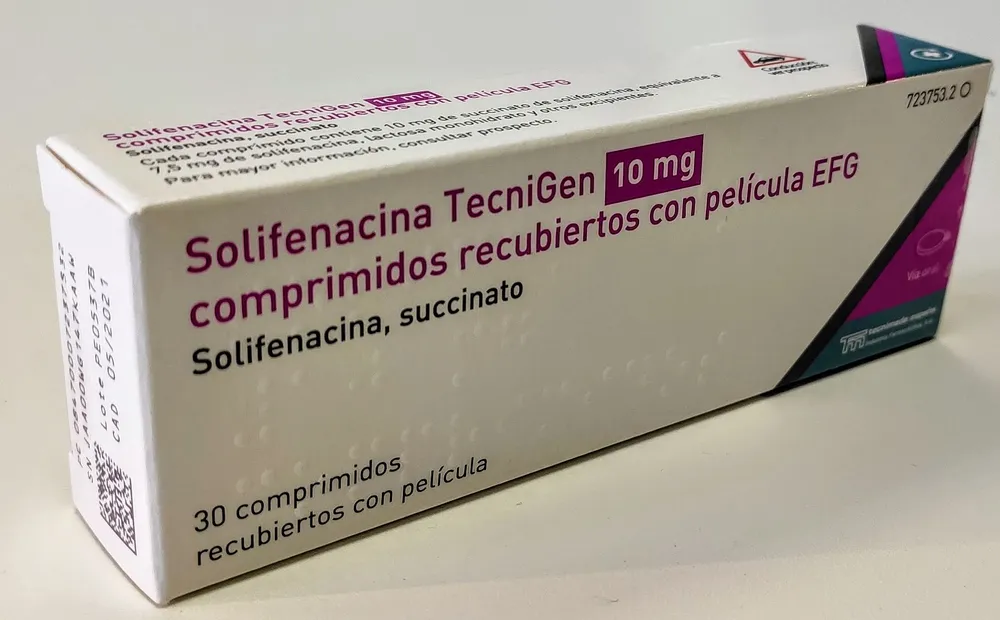
Table of Contents
- Package leaflet: Information for the user
- Introduction
- 1. What Solifenacin TecniGen is and what it is used for
- 2. What you need to know before taking Solifenacin TecniGen
- 3. How to take Solifenacin TecniGen
- 4. Possible adverse effects
- 5. Storage of Solifenacin TecniGen
- 6. Contents of the pack and other information
Package leaflet: Information for the user
Introduction
Package leaflet: information for the user
Solifenacin TecniGen 10 mg film-coated tablets EFG
Solifenacin succinate
Read all of this leaflet carefully before you start taking this medicine because it contains important information for you.
- Keep this leaflet; you may need to read it again.
- If you have any questions, ask your doctor or pharmacist.
- This medicine has been prescribed for you only, and you should not give it to other people, even if they have the same symptoms as you, because it may harm them.
- If you experience any adverse effects, consult your doctor, even if they are adverse effects not listed in this leaflet. See section 4.
Leaflet contents:
- What Solifenacin TecniGen is and what it is used for
- What you need to know before taking Solifenacin TecniGen
- How to take Solifenacin TecniGen
- Possible side effects
- Storage of Solifenacin TecniGen
- Contents of the pack and other information
1. What Solifenacin TecniGen is and what it is used for
The active substance in this medicine belongs to the group of anticholinergics. These medicines are used to reduce the activity of an overactive bladder. This allows you to have more time before needing to go to the toilet and increases the amount of urine your bladder can hold.
This medicine is used to treat the symptoms of overactive bladder syndrome. These symptoms include a sudden, strong urge to urinate without prior warning, needing to urinate frequently, or leaking urine due to not reaching the toilet in time.
2. What you need to know before taking Solifenacin TecniGen
Do not take Solifenacin TecniGen:
- if you have difficulty urinating or emptying your bladder completely (urinary retention)
- if you have a severe stomach or intestinal disorder (including toxic megacolon, a complication of ulcerative colitis)
- if you have a muscle disease called myasthenia gravis, which can cause extreme weakness of certain muscles
- if you have high pressure in the eyes with gradual loss of vision (glaucoma)
- if you are allergic to solifenacin or any of the other ingredients of this medicine (listed in section 6)
- if you are undergoing renal dialysis
- if you have severe liver disease
- if you have severe renal disease or moderate liver disease and are also being treated with medicines that may reduce the elimination of this medicine from the body (e.g. ketoconazole). Your doctor or pharmacist will have informed you if this applies.
Before starting treatment with this medicine, inform your doctor if you have or have had any of the conditions mentioned above.
Warnings and precautions
Talk to your doctor, pharmacist, or nurse before taking this medicine:
- if you have problems emptying your bladder (= bladder obstruction) or difficulty urinating (e.g. weak urine flow). The risk of urine accumulation in the bladder (urinary retention) is much higher.
- if you have any obstruction of the digestive system (constipation).
- if you are at risk of reduced activity of the digestive system (stomach and intestinal movements). Your doctor will have informed you if this applies.
- if you have severe kidney disease.
- if you have moderate liver disease.
- if you have a hiatal hernia or heartburn.
- if you have a nervous system disorder (autonomic neuropathy).
Before starting treatment with this medicine, inform your doctor if you have or have had any of the conditions mentioned above.
Before starting treatment with this medicine, your doctor will assess whether there are other causes explaining your need to urinate frequently (for example, heart failure (reduced pumping capacity of the heart) or kidney disease). If you have a urinary tract infection, your doctor will prescribe an antibiotic (a treatment against certain bacterial infections).
Children and adolescents
This medicine must not be used in children or adolescents under 18 years of age.
Other medicines and Solifenacin TecniGen
Tell your doctor or pharmacist if you are taking, have recently taken, or might need to take any other medicines.
It is especially important that you inform your doctor if you are taking:
- other anticholinergic medicines, as the activity and adverse effects of both medicines could increase.
- cholinergics, as they may reduce the effect of solifenacin.
- medicines such as metoclopramide or cisapride, which increase digestive system activity. Solifenacin may reduce their effect.
- medicines such as ketoconazole, ritonavir, nelfinavir, itraconazole, verapamil, and diltiazem, which decrease the rate of elimination of solifenacin from the body.
- medicines such as rifampicin, phenytoin, and carbamazepine, as they may increase the rate of elimination of solifenacin from the body.
- medicines such as bisphosphonates, which may cause or worsen inflammation of the oesophagus (oesophagitis).
Taking Solifenacin TecniGen with food and drink
This medicine can be taken with or without food, as preferred.
Pregnancy and breastfeeding
If you are pregnant or breastfeeding, think you may be pregnant, or are planning to become pregnant, consult your doctor or pharmacist before using this medicine.
Pregnancy
You must not use this medicine during pregnancy unless absolutely necessary.
Breastfeeding
Do not use this medicine during breastfeeding, as solifenacin may pass into breast milk.
Driving and using machines
Solifenacin may cause blurred vision and sometimes drowsiness or fatigue. If you experience any of these side effects, do not drive or operate machinery.
Solifenacin TecniGen contains lactose
This medicine contains lactose. If your doctor has diagnosed you with a hereditary intolerance to certain sugars, consult with your doctor before taking this medicine.
3. How to take Solifenacin TecniGen
Follow exactly the instructions given by your doctor for taking this medicine. If in doubt, consult your doctor or pharmacist again.
You must swallow the tablet whole with a liquid. It can be taken with or without food, according to your preference. Do not crush the tablets.
The usual dose is 5 mg once daily, unless your doctor tells you to take 10 mg daily.
If you take more Solifenacin TecniGen than you should
In case of overdose or accidental ingestion, contact your doctor or pharmacist immediately or call the Toxicology Information Service at 91 562 04 20, indicating the medicine and the amount ingested.
Symptoms of overdose may include: headache, dry mouth, dizziness, somnolence and blurred vision, perception of things that are not present (hallucinations), marked excitement, seizures, breathing difficulty, increased heart rate (tachycardia), urine retention in the bladder (urinary retention), and pupil dilation (mydriasis).
If you forget to take Solifenacin TecniGen
If you forget to take a dose at the usual time, take it as soon as you remember, unless it is almost time for your next dose. Never take more than one dose per day. If you have any doubts, always consult your doctor or pharmacist.
If you stop taking Solifenacin TecniGen
If you stop taking this medicine, symptoms of overactive bladder may return or worsen. Always consult your doctor if you are considering stopping treatment.
If you have any further questions about the use of this medicine, ask your doctor or pharmacist.
4. Possible adverse effects
Like all medicines, this medicine can cause adverse effects, although not everyone experiences them.
If you suffer an allergic reaction or a severe skin reaction (for example, blistering and peeling of the skin), you must inform your doctor or pharmacist immediately.
Angioedema (an allergic reaction of the skin causing swelling in the tissue beneath the skin surface) with airway obstruction (difficulty breathing) has been reported in some patients treated with solifenacin succinate. If angioedema occurs, treatment with solifenacin succinate must be stopped immediately and appropriate treatment and/or measures must be taken.
This medicine may cause the following adverse effects:
Very common (may affect more than 1 in 10 people)
- dry mouth
Common (may affect up to 1 in 10 people)
- blurred vision
- constipation, nausea, indigestion with symptoms such as stomach heaviness, abdominal pain, belching and heartburn (dyspepsia), stomach discomfort
Uncommon (may affect up to 1 in 100 people)
- urinary tract infection, bladder infection
- somnolence
- abnormal taste sensation (dysgeusia)
- dry (irritated) eyes
- dry nasal passages
- reflux disease (gastroesophageal reflux)
- dry throat
- dry skin
- difficulty urinating
- fatigue
- fluid accumulation in the lower limbs (edema)
Rare (may affect up to 1 in 1,000 people)
- accumulation of hardened feces in the colon (fecal impaction)
- urine retention due to inability to empty the bladder (urinary retention)
- dizziness, headache
- vomiting
- itching, skin rash
Very rare (may affect up to 1 in 10,000 people)
- hallucinations, confusion
- allergic skin rash
Frequency not known (frequency cannot be estimated from available data)
- decreased appetite, high levels of potassium in the blood which may cause an abnormal heart rhythm.
- increased eye pressure
- changes in the heart's electrical activity (ECG), irregular heartbeat, palpitations, rapid heartbeat.
- voice disorder
- liver disorder
- muscle weakness
- kidney disorder
Reporting of adverse effects:
If you experience any type of adverse effect, consult your doctor or pharmacist, even if it is a possible adverse effect not listed in this leaflet. You may also report them directly via the Spanish Pharmacovigilance System for Human Medicines: https://www.notificaRAM.es. By reporting adverse effects, you can help provide more information on the safety of this medicine.
5. Storage of Solifenacin TecniGen
Keep this medicine out of the sight and reach of children.
Do not use this medicine after the expiry date stated on the packaging after EXP. The expiry date refers to the last day of the month indicated.
This medicine does not require any special storage conditions.
Medicines must not be disposed of via wastewater or household waste. Dispose of unused medicines and their containers at the SIGRE Point in your pharmacy. If you are unsure, ask your pharmacist how to properly dispose of unused medicines and their packaging. This will help protect the environment.
6. Contents of the pack and other information
Composition of Solifenacin TecniGen
- The active substance is solifenacin succinate.
Each film-coated tablet contains 10 mg of solifenacin succinate, equivalent to 7.5 mg of solifenacin.
- The other components are:
Core: maize starch, lactose monohydrate, hypromellose, magnesium stearate.
Coating: talc, titanium dioxide (E171), macrogol, iron oxide red (E172), hypromellose.
Appearance of the product and contents of the pack
Film-coated tablets, circular, convex, and light pink in colour.
Solifenacin TecniGen EFG film-coated tablets are supplied in blisters containing 3, 5, 10, 20, 30, 50, 60, 90, 100 or 200 tablets.
Only certain pack sizes may be marketed.
Marketing Authorization Holder and Manufacturer
Marketing Authorization Holder:
Tecnimede España Industria Farmacéutica, S.A.
Avda. de Bruselas, 13, 3º D. Edificio América. Polígono Arroyo de la Vega,
28108 Alcobendas (Madrid)
Spain
Manufacturer:
Atlantic Pharma – Produções Farmacêuticas, S.A.
Rua da Tapada Grande, n.º 2
Abrunheira, 2710-089 Sintra
Portugal
Date of latest review of this leaflet: August 2018
Detailed and up-to-date information on this medicine is available on the website of the Spanish Agency of Medicines and Health Products (AEMPS): http://www.aemps.gob.es