Slenyto 1 mg prolonged-release tablets
Spain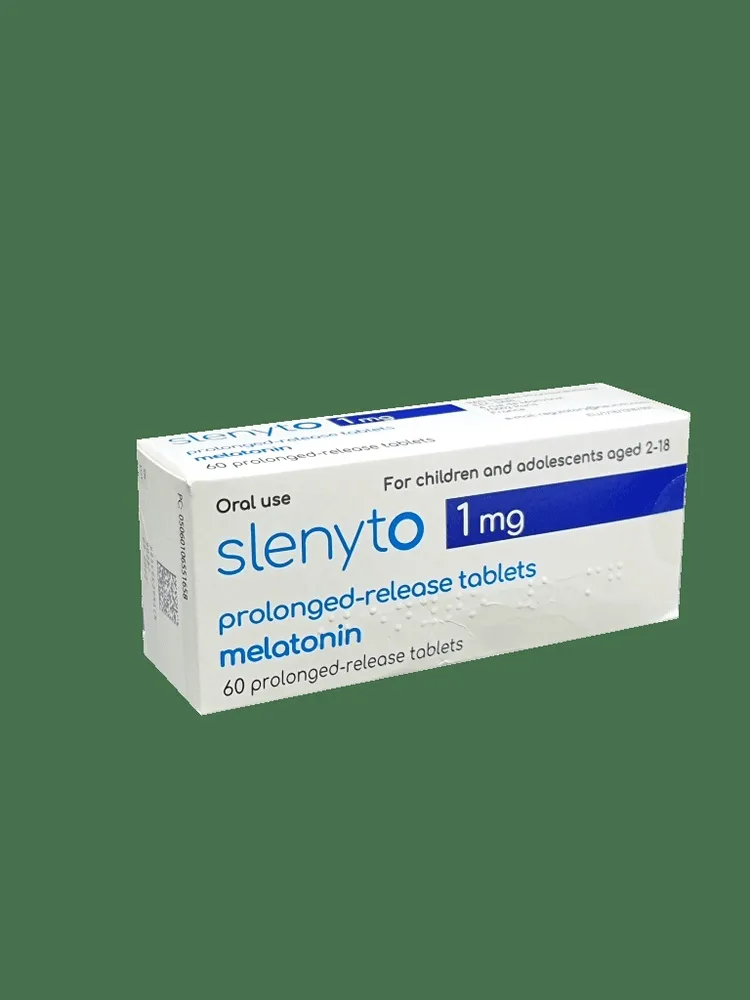
Table of Contents
Package leaflet: Information for the user
Introduction
Package leaflet: information for the user
Slenyto 1 mg prolonged-release tablets
Slenyto 5 mg prolonged-release tablets
melatonin
Read the entire leaflet carefully before your child starts taking this medicine, because it contains important information.
- Keep this leaflet, as you may need to read it again.
- If you have any questions, consult your doctor or pharmacist.
- This medicine has been prescribed for you or your child only, and you must not give it to others, even if they have the same symptoms as you or your child, because it may harm them.
- If you or your child experience any adverse reactions, consult your doctor or pharmacist, even if they are adverse reactions not listed in this leaflet. See section 4.
Leaflet contents
- What Slenyto is and what it is used for
- What you need to know before you or your child start taking Slenyto
- How to take Slenyto
- Possible side effects
- How to store Slenyto
- Contents of the pack and other information
1. What Slenyto is and what it is used for
What Slenyto is
Slenyto is a medicine that contains the active substance melatonin. Melatonin is a hormone naturally produced by the body.
What it is used for
Slenyto is used for the treatment of insomnia (inability to fall asleep) in:
- children and adolescents (from 2 to 18 years of age) with autism spectrum disorder (ASD) and/or neurogenetic diseases (inherited disorders affecting nerves and the brain) associated with abnormal melatonin levels and/or nocturnal awakenings, when other healthy sleep routines (e.g., a regular bedtime and a relaxing sleep environment) have not been sufficiently effective;
- children and adolescents (from 6 to 17 years of age) with attention deficit hyperactivity disorder (ADHD), when other healthy sleep routines (e.g., a regular bedtime and a relaxing sleep environment) have not been sufficiently effective.
Slenyto shortens the time it takes to fall asleep and prolongs the duration of sleep.
The medicine may help you or your child fall asleep and may help you or your child sleep longer during the night.
2. What you need to know before you or your child start taking Slenyto
Do NOT take Slenyto if you or your child:
- are allergic to melatonin or to any of the other components of this medicine (listed in section 6).
Warnings and precautions
Talk to your doctor or pharmacist before starting to take Slenyto if you or your child:
- have liver or kidney problems. Consult your doctor before taking/administering Slenyto, as its use is not recommended in such cases.
- have an autoimmune disease (a condition in which the body's own immune [defence] system attacks parts of the body). Consult your doctor before taking/administering Slenyto, as its use is not recommended in such cases.
Slenyto may cause drowsiness and daytime fatigue. Caregivers should monitor the child for signs of daytime fatigue and seek medical advice if symptoms occur.
In particular, children and adolescents with ADHD may experience an increase in daytime symptoms such as inattention, hyperactivity, or behavioural disturbances.
Children
The safety and efficacy of Slenyto have not been established in children under 6 years of age with ADHD.
Do not administer this medicine to children under 2 years of age, as it has not been tested and its effects are unknown.
Other medicines and Slenyto
Tell your doctor or pharmacist if you or your child are taking, have recently taken, or might need to take any other medicines.
In particular, taking Slenyto with the following medicines may increase the risk of adverse effects or may affect how Slenyto or the other medicine works:
- fluvoxamine (used for the treatment of depression and obsessive-compulsive disorder)
- methoxypsoralens (used in the treatment of skin disorders such as psoriasis)
- cimetidine (used for the treatment of stomach problems such as ulcers)
- quinolones (e.g., ciprofloxacin and norfloxacin) and rifampicin (used for the treatment of bacterial infections)
- estrogens (used in contraceptives or hormone replacement therapy)
- carbamazepine (used for the treatment of epilepsy)
- non-steroidal anti-inflammatory drugs such as acetylsalicylic acid and ibuprofen (used to treat pain and inflammation). These medicines should be avoided, especially at night.
- beta-blockers (used to control blood pressure). These medicines should be taken in the morning.
- benzodiazepines and non-benzodiazepine hypnotics such as zaleplon, zolpidem, and zopiclone (used to induce sleep)
- thioridazine (used for the treatment of schizophrenia)
- imipramine (used for the treatment of depression)
Tobacco
Tobacco may increase the breakdown of melatonin by the liver, which could make this medicine less effective. Inform your doctor if you or your child starts or stops smoking during treatment.
Taking Slenyto with alcohol
Do not drink alcohol before, during, or after taking Slenyto, as alcohol weakens the effect of this medicine.
Pregnancy and breastfeeding
If you are pregnant or breastfeeding, think you may be pregnant, or are planning to become pregnant, consult your doctor before using this medicine.
Inform your doctor or pharmacist before starting to use Slenyto if you or your daughter:
- are pregnant or might be pregnant. As a precaution, it is preferable to avoid using melatonin during pregnancy.
- are breastfeeding or plan to breastfeed. Melatonin may pass into human breast milk, so your doctor will decide whether you or your daughter should breastfeed while taking melatonin.
Driving and using machines
Slenyto may cause drowsiness. After taking this medicine, you or your child must not drive a vehicle, ride a bicycle, or operate machinery until fully recovered.
If you or your child experiences persistent drowsiness, you should consult your doctor.
Slenyto contains lactose
Slenyto contains lactose monohydrate. If your doctor has informed you or your child that you have an intolerance to certain sugars, consult with your doctor before taking this medicine.
3. How to take Slenyto
Follow exactly the instructions for administration of this medicine as given by your doctor.
If in doubt, consult your doctor or pharmacist again.
Slenyto is available in two strengths: 1 mg and 5 mg.
Insomnia in children and adolescents (aged 2 to 18 years) with ASD and/or neurogenetic disorders (hereditary conditions affecting nerves and brain) associated with abnormal melatonin levels and/or nocturnal awakenings.
The recommended initial dose is 2 mg (two 1 mg tablets) once daily. If your symptoms or those of your child do not improve, your doctor may increase the dose of Slenyto to determine the most appropriate dose for you or your child. The maximum daily dose you or your child will receive is 10 mg (two 5 mg tablets).
Your doctor should regularly monitor you or your child (it is recommended every 6 months) to ensure that Slenyto remains the appropriate treatment for you or your child.
Insomnia in children and adolescents (aged 6 to 17 years) with ADHD
The recommended initial dose is 1–2 mg (one or two 1 mg tablets) once daily. If there is no improvement in your symptoms or those of your child, the dose may be individually adjusted to 5 mg daily, regardless of age. If considered necessary by the doctor, the maximum daily dose may be increased to 10 mg (two 5 mg tablets) per day.
The lowest possible dose will be administered for the shortest possible duration.
Your doctor should regularly monitor you or your child (it is recommended every 6 months) to ensure that Slenyto remains the appropriate treatment for you or your child.
Treatment should be interrupted once a year to assess whether it is still necessary.
When to take Slenyto
Slenyto should be taken at night, between 30 and 60 minutes before bedtime. The tablets should be taken after dinner, that is, with a full stomach.
How to take Slenyto
Slenyto is administered orally. The tablets must be swallowed whole, without being split, crushed, or chewed. If the tablets are crushed or chewed, their special properties will be altered and they will not work properly.
The whole tablets may be mixed with food such as yoghurt, orange juice, or ice cream to help swallowing. If the tablets are mixed with these foods, they must be administered immediately and must not be left or stored, as this may affect how the tablets work. If the tablets are mixed with any other type of food, they may not work properly.
If you or your child take more Slenyto than you should
If you or your child have accidentally taken an excessive amount of this medicine, contact your doctor or pharmacist as soon as possible.
Taking more than the recommended daily dose may cause you or your child to feel drowsy.
If you or your child forget to take Slenyto
If you or your child forget to take a tablet, you may take it before going to bed that night, but after that time no further tablet should be taken until the next night.
Do not take a double dose to make up for missed doses.
If you or your child stop taking Slenyto
You should consult your doctor before you or your child stop taking Slenyto. It is important to continue taking this medicine to treat the disorder.
If you have any further questions about the use of this medicine, ask your doctor or pharmacist.
4. Possible adverse effects
Like all medicines, this medicine can cause adverse effects, although not everyone will experience them.
Unpredictable changes in behaviour, such as aggression, may occur frequently (affecting up to 1 in 10 people). If such behavioural change occurs, you must inform your doctor. The doctor may decide that you or your child should stop taking this medicine.
If any of the following adverse effects become severe or bothersome, contact your doctor or seek medical attention:
Frequent: may affect up to 1 in 10 people
- mood changes
- aggression
- irritability
- somnolence
- headache
- sudden sleep onset
- swelling and inflammation of the sinuses associated with pain and nasal congestion (sinusitis)
- fatigue
- hangover-like feeling
Frequency not known (reported from use in adults)
- epilepsy
- visual disturbance
- shortness of breath / difficulty breathing (dyspnea)
- nosebleeds (epistaxis)
- constipation
- loss of appetite
- facial swelling
- skin lesion
- abnormal sensation
- abnormal behaviour
- low white blood cell count (neutropenia)
Reporting of adverse effects
If you or your child experience any type of adverse effect, consult your doctor or pharmacist, even if it is a possible adverse effect not listed in this leaflet. You can also report them directly through the national reporting system listed in Appendix V. By reporting adverse effects, you can help provide more information on the safety of this medicine.
5. Storage of Slenyto
Keep this medicine out of the sight and reach of children.
Do not use this medicine after the expiry date which is stated on the carton and blister after EXP. The expiry date refers to the last day of the month indicated.
Do not store above 30 °C.
Medicines should not be disposed of via wastewater or household waste. Ask your pharmacist how to dispose of medicines and packaging you no longer need. This will help protect the environment.
6. Contents of the pack and other information
Composition of Slenyto
1 mg dose
- The active substance is melatonin. Each tablet contains 1 mg of melatonin.
- The other components are ammonio methacrylate copolymer type B, calcium hydrogen phosphate dihydrate, lactose monohydrate, silica (colloidal anhydrous), talc, magnesium stearate, sodium carmellose (E466), maltodextrin, glucose monohydrate, lecithin (E322), titanium dioxide (E171), red iron oxide (E172) and yellow iron oxide (E172).
5 mg dose
- The active substance is melatonin. Each tablet contains 5 mg of melatonin.
- The other components are ammonio methacrylate copolymer type A, calcium hydrogen phosphate dihydrate, lactose monohydrate, silica (colloidal anhydrous), magnesium stearate, sodium carmellose (E466), maltodextrin, glucose monohydrate, lecithin (E322), titanium dioxide (E171) and yellow iron oxide (E172).
Nature and contents of the container
1 mg dose
Slenyto 1 mg prolonged-release tablets are film-coated tablets, pink in colour, round, biconvex, 3 mm in diameter.
Available in blisters of 30/60 tablets.
5 mg dose
Slenyto 5 mg prolonged-release tablets are film-coated tablets, yellow in colour, round, biconvex, 3 mm in diameter.
Available in blisters of 30 tablets.
Only certain pack sizes may be marketed.
Marketing Authorisation Holder
RAD Neurim Pharmaceuticals EEC SARL
4 rue de Marivaux
75002 Paris
France
Email: [email protected]
Manufacturer
Iberfar - Indústria Farmacêutica, S.A.
Rua Consiglieri Pedrosa, n.° 121-123 Queluz de Baixo
Barcarena
2734-501
Portugal
For further information regarding this medicinal product, please contact the local representative of the Marketing Authorisation Holder:
Belgium/Belgium/Belgien RAD Neurim Pharmaceuticals EEC SARL Tel/Tel: +33 185149776 (FR) e-mail: [email protected] | Lithuania RAD Neurim Pharmaceuticals EEC SARL Tel: +33 185149776 (FR) e-mail: [email protected] |
| Luxembourg/Luxembourg RAD Neurim Pharmaceuticals EEC SARL Tel: +33 185149776 (FR) e-mail: [email protected] |
Czech Republic RAD Neurim Pharmaceuticals EEC SARL Tel: +33 185149776 (FR) e-mail: [email protected] | Hungary RAD Neurim Pharmaceuticals EEC SARL Tel.: +33 185149776 (FR) e-mail: [email protected] |
Denmark Takeda Pharma A/S Tlf: +45 46 77 11 11 | Malta RAD Neurim Pharmaceuticals EEC SARL Tel: +33 185149776 (FR) e-mail: [email protected] |
Germany INFECTOPHARM Arzneimittel und Consilium GmbH Tel: +49 6252 957000 e-mail: [email protected] | Netherlands RAD Neurim Pharmaceuticals EEC SARL Tel: +33 185149776 (FR) e-mail: [email protected] |
Estonia RAD Neurim Pharmaceuticals EEC SARL Tel: +33 185149776 (FR) e-mail: [email protected] | Norway Takeda AS Tlf: +47 6676 3030 e-mail: [email protected] |
Greece RAD Neurim Pharmaceuticals EEC SARL Tel: +33 185149776 (FR) e-mail: [email protected] | Austria RAD Neurim Pharmaceuticals EEC SARL Tel: +33 185149776 (FR) e-mail: [email protected] |
Spain EXELTIS HEALTHCARE, S.L. Tel: +34 91 7711500 e-mail: [email protected] | Poland RAD Neurim Pharmaceuticals EEC SARL Tel.: +33 185149776 (FR) e-mail: [email protected] |
France BIOCODEX Tel: +33 (0)1 41 24 30 00 e-mail: [email protected] | Portugal RAD Neurim Pharmaceuticals EEC SARL Tel: +33 185149776 (FR) e-mail: [email protected] |
Croatia RAD Neurim Pharmaceuticals EEC SARL Tel: +33 185149776 (FR) e-mail: [email protected] | Romania RAD Neurim Pharmaceuticals EEC SARL Tel: +33 185149776 (FR) e-mail: [email protected] |
Ireland RAD Neurim Pharmaceuticals EEC SARL Tel: +33 185149776 (FR) e-mail: [email protected] | Slovenia RAD Neurim Pharmaceuticals EEC SARL Tel: +33 185149776 (FR) e-mail: [email protected] |
Iceland RAD Neurim Pharmaceuticals EEC SARL Tel: +33 185149776 (FR) e-mail: [email protected] | Slovakia RAD Neurim Pharmaceuticals EEC SARL Tel: +33 185149776 (FR) e-mail: [email protected] |
Italy Fidia Farmaceutici S.p.A. Tel: +39 049 8232355 e-mail: [email protected] | Finland Biocodex Oy Tel: +358 9 329 59100 e-mail: [email protected] |
Cyprus RAD Neurim Pharmaceuticals EEC SARL Tel: +33 185149776 (FR) e-mail: [email protected] | Sweden Takeda Pharma AB Tel: +46 8 731 28 00 e-mail: [email protected] |
Latvia RAD Neurim Pharmaceuticals EEC SARL Tel: +33 185149776 (FR) e-mail: [email protected] |
Date of the most recent review of this leaflet: {month/YYYY}
Other sources of information
Detailed information on this medicine is available on the website of the European Medicines Agency: http://www.ema.europa.eu.