Silodosin Vivanta 8 mg hard capsules EFG
Spain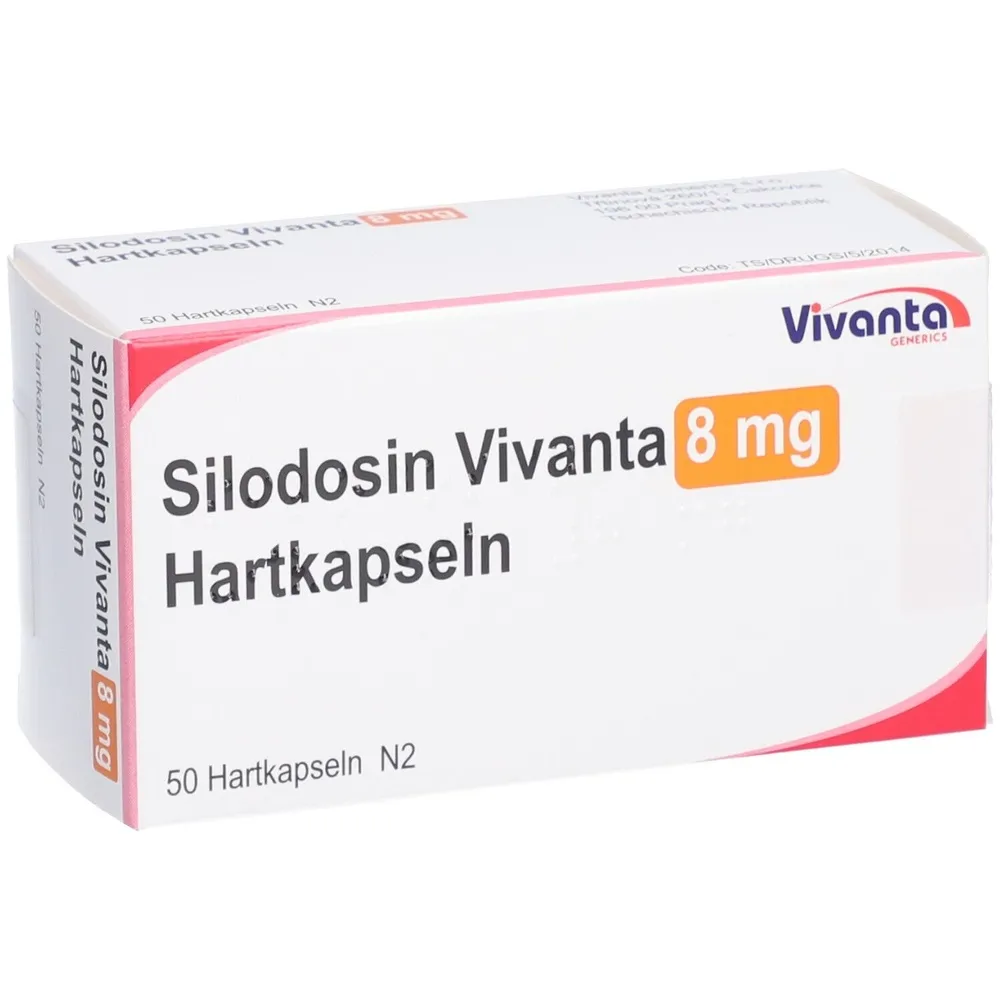
Table of Contents
- Package leaflet: Information for the user
- Introduction
- 1. What Silodosin Vivanta is and what it is used for
- 2. What you need to know before starting to take/use Silodosin Vivanta
- 3. How to take/use Silodosin Vivanta
- 4. Possible adverse effects
- 5. Storage of Silodosin Vivanta
- 6. Contents of the pack and other information
- **Composition of Silodosin Vivanta**
- **Appearance of the product and contents of the container**
- **Marketing Authorization Holder**
- **Manufacturer**
Package leaflet: Information for the user
Introduction
Package leaflet: information for the patient
Silodosin Vivanta 8 mg hard capsules EFG
Read the entire leaflet carefully before you start taking this medicine, because it contains important information for you.
- Keep this leaflet, as you may need to read it again.
- If you have any questions, ask your doctor or pharmacist.
- This medicine has been prescribed for you only; do not pass it on to other people, even if they have the same symptoms as you, because it may harm them.
- If you experience any adverse effects, consult your doctor or pharmacist, even if such effects are not listed in this leaflet. See section 4.
Leaflet contents:
-
What Silodosin Vivanta is and what it is used for
-
What you need to know before taking Silodosin Vivanta
-
How to take Silodosin Vivanta
-
Possible side effects
-
How to store Silodosin Vivanta
-
Contents of the pack and other information
1. What Silodosin Vivanta is and what it is used for
What is silodosin
Silodosin belongs to a group of medicines known as alpha1A-adrenergic receptor blockers.
Silodosin is selective for receptors located in the prostate, bladder, and urethra. By blocking these receptors, it causes relaxation of the smooth muscle in these tissues. This makes it easier for you to urinate and relieves your symptoms.
What silodosin is used for
Silodosin is used in adult men to treat urinary symptoms associated with benign enlargement of the prostate (benign prostatic hyperplasia, BPH), such as:
- difficulty starting urination,
- sensation of not completely emptying the bladder,
- increased need to urinate, even during the night.
2. What you need to know before starting to take/use Silodosin Vivanta
Do not take silodosin
if you are allergic to silodosin or to any of the other ingredients of this medicine (listed in section 6).
Warnings and precautions
Consult your doctor or pharmacist before starting to take this medicine:
-
If you are scheduled for cataract surgery (surgery due to clouding of the lens), it is important that you immediately inform your ophthalmologist that you are currently taking or have previously taken silodosin. This is because some patients treated with this type of medication have experienced loss of iris muscle tone (the colored circular part of the eye) during this type of surgery. The ophthalmologist can then take appropriate precautions regarding the medical and surgical techniques required. Ask your doctor whether it is necessary to delay or temporarily interrupt treatment with silodosin prior to undergoing cataract surgery.
-
If you have ever fainted or felt dizzy upon standing up suddenly, inform your doctor before taking silodosin.
When taking silodosin, dizziness and, occasionally, fainting may occur upon standing, especially when starting treatment or if you are taking other medications that lower blood pressure. If this occurs, sit or lie down immediately until symptoms resolve and inform your doctor as soon as possible (see also section “Driving and use of machines”).
If you have severe liver problems, you must not take silodosin, as it has not been evaluated in this condition.
- If you have kidney problems, consult your doctor.
If you have moderate kidney problems, your doctor will start treatment with silodosin cautiously and possibly at a lower dose (see section 3 “Dosage”). If you have severe kidney problems, you must not take this medicine.
-
Since benign prostatic enlargement and prostate cancer can cause similar symptoms, your doctor will examine you to rule out prostate cancer before starting treatment with silodosin. Silodosin is not effective for treating prostate cancer.
-
Treatment with this medicine may lead to abnormal ejaculation (reduced amount of semen ejaculated during sexual intercourse), which may temporarily affect male fertility. This effect resolves after discontinuation of silodosin treatment. Inform your doctor if you are planning to have children.
Children and adolescents
Do not administer this medicine to children or adolescents under 18 years of age, as there are no relevant indications for this age group.
Taking silodosin with other medicines
Inform your doctor or pharmacist if you are taking, have recently taken, or might need to take any other medicines.
In particular, inform your doctor if you are taking:
- medicines that lower blood pressure (especially alpha1-blockers such as prazosin or doxazosin), as there may be a potential risk that the effect of these medicines may be increased during treatment with silodosin.
- antifungal medicines (such as ketoconazole or itraconazole), medicines used for HIV/AIDS infection (such as ritonavir), or medicines used after organ transplantation to prevent organ rejection (such as cyclosporine), as these medicines may increase blood levels of silodosin.
- medicines used to treat difficulty achieving or maintaining an erection (such as sildenafil or tadalafil), as their concomitant use with silodosin may lead to a slight decrease in blood pressure.
- medicines for epilepsy or rifampicin (a medicine used to treat tuberculosis), as the effect of silodosin may be reduced.
Driving and use of machines
Do not drive or operate machinery if you experience weakness, dizziness, drowsiness, or
blurred vision.
3. How to take/use Silodosin Vivanta
Follow exactly the administration instructions for this medicine as given by your doctor or pharmacist. If in doubt, consult your doctor or pharmacist again.
The recommended dose is one 8 mg silodosin capsule per day, taken orally.
Always take the capsule with food, preferably at the same time each day. Do not break or chew the capsule; swallow it whole, preferably with a glass of water.
Patients with kidney problems
If you have moderate kidney impairment, your doctor may prescribe you a different dose. For this purpose, the 4 mg silodosin hard capsule formulation is available.
If you take more silodosin than you should
In case of overdose or accidental ingestion, contact your doctor or pharmacist immediately or call the Toxicology Information Service at telephone number: 91 562 04 20, indicating the medicine and the amount ingested. If you feel dizzy or weak, inform your doctor immediately.
If you forget to take silodosin
You may take the capsule later on the same day if you forgot to take it earlier. If it is almost time for the next dose, do not take the missed dose. Do not take a double dose to make up for the forgotten capsule.
If you stop taking silodosin
If you stop treatment, your symptoms may return.
If you have any further questions about the use of this medicine, ask your doctor or pharmacist.
4. Possible adverse effects
Like all medicines, this medicine may cause adverse effects, although not everyone will experience them.
Contact your doctor immediately if you experience any of the following allergic reactions, as they could have serious consequences: swelling of the face or throat, difficulty breathing, feeling faint, skin itching, or hives.
The most common adverse effect is a reduction in the amount of semen released during sexual intercourse. This effect disappears after stopping treatment with silodosin. Inform your doctor if you are planning to have children.
Dizziness, including dizziness upon standing, and occasionally fainting, may occur.
If you feel weak or dizzy, sit or lie down immediately until symptoms subside. If you experience dizziness upon standing or fainting, please inform your doctor as soon as possible.
Silodosin may cause complications during cataract surgery (eye surgery for lens clouding; see section “Warnings and precautions”).
It is important that you inform your ophthalmologist immediately if you are currently taking or have previously taken silodosin.
The possible adverse effects are listed below:
Very common adverse effects (may affect more than 1 in 10 people)
- Abnormal ejaculation (reduced or negligible amount of semen released during sexual intercourse; see section “Warnings and precautions”)
Common adverse effects (may affect up to 1 in 10 people)
- Dizziness, including dizziness upon standing (see also above in this section)
- Nasal discharge or nasal congestion
- Diarrhea
Uncommon adverse effects (may affect up to 1 in 100 people)
- Loss of sexual appetite
- Nausea
- Dry mouth
- Difficulty achieving or maintaining an erection
- Increased heart rate
- Skin allergic reaction symptoms such as rash, pruritus, hives, and drug-induced rash
- Abnormal liver function test results
- Low blood pressure
Rare adverse effects (may affect up to 1 in 1,000 people)
- Fast or irregular heartbeats (called palpitations)
- Fainting/Loss of consciousness
Very rare adverse effects (may affect up to 1 in 10,000 people)
- Other allergic reactions with swelling of the face or throat
Frequency not known (frequency cannot be estimated from available data)
- Floppy iris during cataract surgery (see also above in this section)
Inform your doctor if you notice that your sexual activity is affected.
Reporting of adverse effects
If you experience any type of adverse effect, consult your doctor or pharmacist, even if they are possible adverse effects not listed in this leaflet. You may also report them directly via the Spanish Pharmacovigilance System for Human Medicinal Products: https://www.notificaram.es. By reporting adverse effects, you can help provide more information on the safety of this medicine.
5. Storage of Silodosin Vivanta
Keep this medicine out of the sight and reach of children.
Do not use this medicine after the expiry date stated on the carton and blister pack after "EXP". The expiry date refers to the last day of the month indicated.
This medicine does not require any special storage conditions.
Do not use this medicine if it appears damaged or shows signs of tampering.
Medicines must not be disposed of via wastewater or household waste. Dispose of unused medicines and their packaging at a SIGRE collection point at your pharmacy. If in doubt, ask your pharmacist how to properly dispose of unused medicines and their packaging. This will help protect the environment.
6. Contents of the pack and other information
Composition of Silodosin Vivanta
The active substance is silodosin. Each capsule contains 4 mg of silodosin.
The other components are:
- capsule contents: pregelatinized corn starch, mannitol, magnesium stearate, polysorbate 80, magnesium aluminometasilicate, butylhydroxytoluene.
- capsule shell: gelatin, titanium dioxide (E171).
- printing ink: shellac, propylene glycol, concentrated ammonia solution, black iron oxide (E172), potassium hydroxide.
Appearance of the product and contents of the container
Silodosina Vivanta 8 mg are white to almost white powders in hard gelatin capsules of size “1” with an opaque white body printed with “8 mg” and an opaque white cap printed with “M”, both in black ink.
Silodosina Vivanta is available in blister packs in pack sizes of 30, 50, and 100 capsules.
Only some pack sizes may be marketed.
Marketing Authorization Holder
Vivanta Generics s.r.o.
Trtinová 260/1, Cakovice
196 00 Prague 9
Czech Republic
Manufacturer
Pharmadox Healthcare Ltd.
KW20A Kordin Industrial Park,
Paola, PLA3000
Malta
You can request further information about this medicinal product by contacting the local representative of the marketing authorization holder:
Local Representative:
Mabo-Farma S.A.
Calle Vía de los Poblados 3, Edificio 6
28033 Madrid
Spain
This medicinal product is authorized in the European Economic Area member states under the following names:
Portugal Silodosin Vivanta
France Silodosine Vivanta 8 mg hard capsule
Germany Silodosin Vivanta 8 mg hard capsules
Spain Silodosin Vivanta 8 mg hard capsules EFG
Italy Silodosin Vivanta
Date of the most recent review of this leaflet: August 2021
Detailed information on this medicinal product is available on the website of the Spanish Agency of Medicines and Health Products (AEMPS): http://www.aemps.gob.es/.