Sertraline CinfA 50 mg film-coated tablets EFG
Spain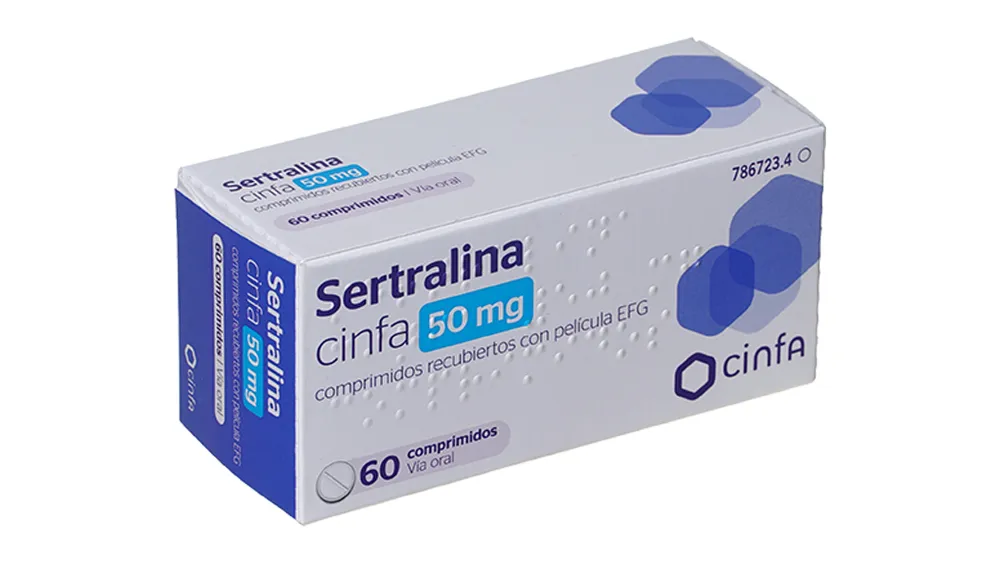
Table of Contents
Package leaflet: Information for the user
Introduction
Package leaflet: information for the user
sertralina cinfa 50 mg film-coated tablets EFG
sertraline hydrochloride
Read the entire leaflet carefully before you start taking this medicine, because it contains important information for you.
- Keep this leaflet, as you may need to read it again.
- If you have any questions, ask your doctor or pharmacist.
- This medicine has been prescribed for you only, and you should not give it to others, even if they have the same symptoms as you, because it may harm them.
- If you experience any adverse effects, consult your doctor or pharmacist, even if they are adverse effects not listed in this leaflet. See section 4.
Contents of the leaflet
- What sertralina cinfa is and what it is used for
- What you need to know before taking sertralina cinfa
- How to take sertralina cinfa
- Possible side effects
- How to store sertralina cinfa
- Contents of the pack and other information
1. What is sertralina cinfa and what is it used for
sertralina cinfa contains sertraline as the active substance. Sertraline belongs to a group of medicines known as selective serotonin reuptake inhibitors (SSRIs); these medicines are used to treat depression and/or anxiety disorders.
sertralina cinfa can be used to treat:
- Depression and prevention of recurrence of depression (in adults).
- Social anxiety disorder (in adults).
- Post-traumatic stress disorder (PTSD) (in adults).
- Panic disorder (in adults).
- Obsessive-compulsive disorder (OCD) (in adults, and in children and adolescents aged 6–17 years).
Depression is a clinical illness with symptoms such as feelings of sadness, inability to sleep well, or to enjoy life as you used to.
OCD and panic disorders are anxiety-related illnesses, with symptoms such as persistent worry about recurring thoughts (obsessions) that lead to repetitive rituals (compulsions).
PTSD is a disorder that may occur after an emotionally traumatic experience and has some symptoms similar to those of depression and anxiety. Social anxiety disorder (social phobia) is an anxiety-related illness. It is characterized by intense anxiety or distress in social situations (for example: talking to strangers, speaking in public, eating or drinking in front of others, or worrying about behaving in an embarrassing way).
Your doctor has determined that this medicine is appropriate for treating your condition.
If you are unsure why you have been prescribed sertraline, you should consult your doctor.
2. What you need to know before taking sertraline cinfa
Do not take sertraline cinfa:
- If you are allergic to sertraline or to any of the other ingredients of this medicine (listed in section 6).
- If you are taking or have recently taken medicines known as monoamine oxidase inhibitors (MAOIs), such as selegiline or moclobemide, or other medicines similar to MAOIs (such as linezolid). If you stop treatment with sertraline, you must wait at least one week before starting treatment with an MAOI. After stopping treatment with an MAOI, you must wait at least two weeks before starting treatment with sertraline.
- If you are taking another medicine called pimozide (a medicine used to treat mental disorders such as psychosis).
Warnings and precautions
Talk to your doctor or pharmacist before starting to take sertraline cinfa. Medicines are not always suitable for everyone.
Before starting treatment with sertraline cinfa, tell your doctor if you have or have previously had any of the following conditions:
- If you have epilepsy (seizures) or a history of seizures. If you have a seizure, contact your doctor immediately.
- If you have manic-depressive illness (bipolar disorder) or schizophrenia. If you experience a manic episode, contact your doctor immediately.
- If you have or have previously had thoughts of harming yourself or of suicide (see below: Suicidal thoughts and worsening of depression or anxiety disorder).
- If you have serotonin syndrome. This syndrome may rarely occur when you are taking certain medicines together with sertraline. (For symptoms, see section 4. Possible side effects.) Your doctor will determine if you have previously experienced this syndrome.
- If you have low sodium levels in the blood, as this may occur as a result of treatment with sertraline. You should also inform your doctor if you are taking any medicines for high blood pressure, as these may also affect blood sodium levels.
- If you are elderly, as you may be at higher risk of low blood sodium levels (see previous section).
- If you have liver disease: your doctor may decide that you should take a lower dose of sertraline.
- If you have diabetes; sertraline may affect your blood sugar levels, so it may be necessary to adjust the dose of your diabetes medicines.
- If you have had bleeding disorders or have been taking medicines that reduce blood clotting (e.g. acetylsalicylic acid (aspirin) or warfarin) or that may increase the risk of bleeding, or if you are pregnant (see "Pregnancy, breastfeeding and fertility").
- If you are a child or adolescent under 18 years of age. Sertraline should only be used to treat children and adolescents aged 6 to 17 years with obsessive-compulsive disorder (OCD). If you are being treated for this condition, your doctor will want to monitor you closely (see below: Children and adolescents).
- If you are receiving electroconvulsive therapy (ECT).
- If you have any eye disorders, such as certain types of glaucoma (increased intraocular pressure).
- If you have been told you have an abnormality on the heart tracing obtained from an electrocardiogram (ECG), known as QT interval prolongation.
- If you have heart disease, low potassium or magnesium levels, a family history of QTc prolongation, slow heart rate, or are taking concomitantly medicines that prolong the QTc interval.
Restlessness/Akathisia
The use of sertraline has been associated with unpleasant restlessness and a need to move, often accompanied by an inability to sit or stand still (akathisia). This occurs most frequently during the first weeks of treatment. Increasing the dose may be harmful, so if you develop these symptoms, you should contact your doctor.
Withdrawal symptoms
Side effects related to stopping treatment (withdrawal symptoms) are common, particularly if treatment is stopped abruptly (see section 3. How to take sertraline cinfa and section 4. Possible side effects). The risk of experiencing withdrawal symptoms depends on the duration of treatment, the dose, and the rate at which the dose is reduced. These symptoms are usually mild or moderate. However, in some patients they may be severe. These symptoms usually appear in the first few days after stopping treatment. In general, these symptoms resolve on their own and usually disappear within two weeks. In some patients, they may last longer (2–3 months or more). It is recommended that when stopping treatment with sertraline, the dose should be gradually reduced over a period of several weeks or even months, and you should always agree with your doctor on the best way to discontinue treatment.
Suicidal thoughts and worsening of depression or anxiety disorder
If you are depressed and/or have anxiety disorders, you may sometimes have thoughts of harming yourself or of suicide. This may increase at the beginning of treatment with antidepressants, because all these medicines take time to work, usually about two weeks but sometimes longer.
You are more likely to experience this if:
- You have previously had thoughts of suicide or self-harm.
- You are a young adult. Clinical trial data show an increased risk of suicidal behaviour in psychiatric patients under 25 years of age treated with an antidepressant.
If you have thoughts of harming yourself or of suicide at any time, contact your doctor or go to the hospital immediately.
It may be helpful for you to explain to a close family member or friend that you are depressed or have an anxiety disorder, and ask them to read this leaflet. You may also ask them to inform you if they think your depression or anxiety is worsening, or if they are concerned about changes in your behaviour.
Sexual problems
Some medicines in the class to which sertraline cinfa belongs (called SSRIs/SNRIs) may cause symptoms of sexual dysfunction (see section 4). In some cases, these symptoms persist after stopping treatment.
Children and adolescents
Sertraline should not normally be used to treat children and adolescents under 18 years of age, except in patients with obsessive-compulsive disorder (OCD). Patients under 18 years of age have a higher risk of adverse effects such as suicide attempts, thoughts of self-harm or suicide (suicidal ideation), and hostility (mainly aggression, confrontational behaviour, and anger reactions) when taking this type of medicine. Nevertheless, your doctor may decide to prescribe sertraline cinfa to a patient under 18 years of age if they consider it to be the most appropriate treatment. If your doctor has prescribed sertraline cinfa and you are under 18 years of age and wish to discuss this decision, please consult your doctor again. You must inform your doctor if any of the symptoms listed above appear or worsen while you are taking sertraline. In addition, the long-term safety effects of sertraline on growth, maturation, learning (cognitive development), and behavioural development in this age group have not yet been established.
Taking sertraline cinfa with other medicines
Inform your doctor or pharmacist if you are taking, have recently taken, or might need to take any other medicines.
Some medicines may affect how sertraline cinfa works, or sertraline cinfa itself may reduce the effectiveness of other medicines taken at the same time.
Using sertraline cinfa together with the following medicines may cause serious adverse effects:
- Medicines known as monoamine oxidase inhibitors (MAOIs), such as moclobemide (to treat depression), selegiline (to treat Parkinson's disease), the antibiotic linezolid, and methylene blue (to treat high levels of methaemoglobin in the blood). Do not use sertraline with these medicines.
- Medicines to treat mental disorders such as psychosis (pimozide). Do not use sertraline with pimozide.
Inform your doctor if you are taking the following medicines:
- Medicines containing amphetamines (used to treat attention deficit hyperactivity disorder (ADHD), narcolepsy, and obesity).
- Herbal medicines containing St. John's wort (Hypericum perforatum). The effects of St. John's wort may last 1–2 weeks.
- Products containing the amino acid tryptophan.
- Medicines to treat severe pain (e.g. tramadol).
- Medicines used in anaesthesia or for chronic pain treatment (e.g. fentanyl, mivacurium, and suxamethonium).
- Medicines to treat migraines (e.g. sumatriptan).
- Medicines that reduce blood clotting (warfarin).
- Medicines to treat pain/arthritis: non-steroidal anti-inflammatory drugs (NSAIDs) such as ibuprofen or acetylsalicylic acid (aspirin).
- Sedatives (diazepam).
- Diuretics.
- Medicines to treat epilepsy (phenytoin, phenobarbital, carbamazepine).
- Medicines to treat diabetes (tolbutamide).
- Medicines to treat acidity, ulcers, and heartburn (cimetidine, omeprazole, lansoprazol, pantoprazole, rabeprazole).
- Medicines to treat mania and depression (lithium).
- Other medicines to treat depression (such as amitriptyline, nortriptyline, nefazodone, fluoxetine, fluvoxamine).
- Medicines to treat schizophrenia and other mental disorders (such as perphenazine, levomepromazine, and olanzapine).
- Medicines to treat high blood pressure, chest pain, or to regulate heart rate and rhythm (such as verapamil, diltiazem, flecainide, propafenone).
- Medicines used to treat bacterial infections (such as rifampicin, clarithromycin, telithromycin, erythromycin).
- Medicines used to treat fungal infections (such as ketoconazole, itraconazole, posaconazole, voriconazole, fluconazole).
- Medicines used to treat HIV/AIDS and hepatitis C (protease inhibitors such as ritonavir, telaprevir).
- Medicines used to prevent nausea and vomiting after surgery or chemotherapy (aprepitant).
- Medicines known to increase the risk of changes in the heart's electrical activity (e.g. some antipsychotics and antibiotics).
Taking sertraline cinfa with food, drinks and alcohol
Sertraline can be taken with or without food.
Alcohol intake should be avoided while being treated with sertraline.
Grapefruit juice should not be taken with sertraline, as it may increase sertraline levels in your body.
Pregnancy, breastfeeding and fertility
If you are pregnant, breastfeeding, think you may be pregnant, or are planning to become pregnant, consult your doctor or pharmacist before using this medicine.
The safety of sertraline in pregnant women has not been fully established. If you are pregnant, sertraline will only be administered if your doctor considers that the benefit to you outweighs any possible risk to the developing baby.
Ensure that your midwife and/or doctor know that you are taking sertraline cinfa. If you take it during pregnancy, especially during the last 3 months, medicines like sertraline cinfa may increase the risk of a serious condition in newborns called persistent pulmonary hypertension of the newborn (PPHN), which causes the baby to breathe faster and appear blue. These symptoms usually begin within the first 24 hours after birth. If this occurs in your baby, contact your midwife and/or doctor immediately.
If you take sertraline in late pregnancy, there may be an increased risk of heavy vaginal bleeding shortly after delivery, especially if you have a history of bleeding disorders. Your doctor or midwife should be aware that you are taking sertraline so they can advise you.
Your newborn baby may have other conditions, which usually appear within the first 24 hours after birth. Symptoms include:
- difficulty breathing,
- blue or excessively hot or cold skin,
- blue lips,
- vomiting or feeding problems,
- excessive tiredness, inability to sleep or excessive crying,
- muscle stiffness or decreased muscle tone,
- tremors, restlessness or seizures,
- increased reflexes,
- irritability,
- low blood sugar.
If your baby has any of these symptoms at birth, or if you are concerned about your baby's health, consult your doctor or midwife for advice.
Evidence indicates that sertraline passes into breast milk. Therefore, sertraline may only be used in women who are breastfeeding if your doctor considers that the benefit outweighs any possible risk to the child.
Animal studies have shown that some medicines like sertraline may reduce sperm quality. Theoretically, this could affect fertility; however, the impact on human fertility has not yet been determined.
Driving and using machines
During treatment with sertraline, you may feel drowsy or dizzy. Do not drive or operate tools or machinery until you know how sertraline cinfa affects you.
sertraline cinfa contains lactose
This medicine contains lactose. If your doctor has told you that you have an intolerance to certain sugars, consult with them before taking this medicine.
sertraline cinfa contains sodium
This medicine contains less than 23 mg of sodium (1 mmol) per tablet; this is essentially "sodium-free".
3. How to take sertraline cinfa
Follow exactly the instructions for use of this medicine as given by your doctor or pharmacist. If in doubt, consult your doctor or pharmacist again.
The recommended dose is:
Adults:
Depression and Obsessive-Compulsive Disorder (OCD):
For depression and OCD, the usual effective dose is 50 mg per day. The daily dose may be increased in 50 mg increments at intervals of at least one week, over several weeks. The maximum recommended dose is 200 mg per day.
Panic disorder, social anxiety disorder, and post-traumatic stress disorder:
For panic disorder, social anxiety disorder, and post-traumatic stress disorder, treatment should be initiated at a dose of 25 mg per day, increasing to 50 mg per day after one week. The daily dose may be increased in 50 mg increments over a period of several weeks. The maximum recommended dose is 200 mg per day.
Use in children and adolescents:
Sertraline should only be used to treat children and adolescents aged 6 to 17 years with OCD.
Obsessive-compulsive disorder (OCD):
Children aged 6 to 12 years:
The recommended starting dose is 25 mg per day. After one week, your doctor may increase your dose to 50 mg per day. The maximum dose is 200 mg per day.
Adolescents aged 13 to 17 years:
The recommended starting dose is 50 mg per day. The maximum dose is 200 mg per day.
If you have liver or kidney problems, inform your doctor and follow the instructions he or she gives you.
Method of administration:
Sertraline tablets can be taken with or without food.
Take your medicine once daily, either in the morning or at night. The tablet may be divided into equal doses.
Your doctor will determine how long you should take this medicine. The duration will depend on the nature of your illness and your response to treatment. It may take several weeks before your symptoms begin to improve. Treatment for depression should usually continue for 6 months after improvement.
If you take more sertraline cinfa than you should
If you accidentally take too much sertraline, contact your doctor or go to the nearest hospital emergency department. Always take the medicine packaging with you, whether or not any medication remains.
In case of overdose or accidental ingestion, contact your doctor, pharmacist, or the Toxicology Information Service immediately at telephone number 91 562 04 20, indicating the medicine and the amount ingested.
Symptoms of overdose may include drowsiness, nausea and vomiting, increased heart rate, tremors, agitation, dizziness, and in rare cases, unconsciousness.
If you forget to take sertraline cinfa
Do not take a double dose to make up for missed doses. If you forget to take a dose, do not take it when you remember. Take the next dose at the scheduled time.
If you stop taking sertraline cinfa
Do not stop treatment with sertraline unless your doctor advises you to do so. Your doctor will want to gradually reduce your dose of sertraline over several weeks before you stop taking this medicine completely. If you stop treatment abruptly, you may experience adverse effects such as dizziness, numbness, sleep disturbances, agitation or anxiety, headache, nausea, vomiting, and tremor. If you experience any of these adverse effects or any other symptoms while stopping treatment with sertraline, please inform your doctor.
If you have any further questions about using this medicine, ask your doctor or pharmacist.
4. Possible adverse effects
Like all medicines, this medicine can cause adverse effects, although not everyone will experience them.
The most common adverse effect is nausea. Adverse effects depend on the dose and often diminish or disappear with continued treatment.
Tell your doctor immediately
If you experience any of the following symptoms after taking this medicine, as these symptoms may be serious:
- If you develop a severe skin rash causing blisters (erythema multiforme), which may affect the mouth and tongue. These could be signs of a condition known as Stevens-Johnson syndrome or toxic epidermal necrolysis (TEN). In such cases, your doctor will discontinue treatment.
- Allergic reaction or allergy, which may present symptoms such as itchy skin rash, difficulty breathing, wheezing, swelling of the eyelids, face, or lips.
- If you experience agitation, confusion, diarrhea, increased body temperature and blood pressure, excessive sweating, and rapid pulse. These are symptoms of serotonin syndrome. This syndrome may rarely occur when taking certain medications concomitantly with sertraline. Your doctor may decide to discontinue treatment.
- If you notice yellowing of the skin or eyes, which may indicate liver damage.
- If you experience depressive symptoms with thoughts of self-harm or suicide (suicidal thoughts).
- If, after starting treatment with sertralina cinfa, you begin to feel restless and unable to sit or stand still. Inform your doctor if you start feeling restless.
- If you have a seizure (convulsions).
- If you experience a manic episode (see section 2. Warnings and precautions).
The following adverse effects were observed in clinical trials in adults and following marketing.
Very common (may affect more than 1 in 10 patients):
Insomnia, dizziness, drowsiness, headache, diarrhea, malaise, dry mouth, ejaculation disorders, and fatigue.
Common (may affect up to 1 in 10 patients):
- Cold (chest), sore throat, runny nose,
- Loss of appetite, increased appetite,
- Anxiety, depression, agitation, decreased libido, nervousness, feeling strange, nightmares, teeth grinding,
- Tremor, movement disorders (such as constant movements, muscle tension, difficulty walking, stiffness, spasms, and involuntary muscle movements)*, numbness and tingling, increased muscle tone, difficulty concentrating, abnormal taste,
- Visual disturbances,
- Ringing in the ears,
- Palpitations,
- Hot flushes,
- Yawning,
- Stomach discomfort, constipation, abdominal pain, vomiting, flatulence,
- Increased sweating, rash,
- Back pain, joint pain, muscle pain,
- Menstrual irregularities, erectile dysfunction,
- Malaise, chest pain, weakness, fever,
- Weight gain,
- Injury.
Uncommon (may affect up to 1 in 100 patients):
-
Gastroenteritis, ear infection,
-
Tumor,
-
Hypersensitivity, seasonal allergy,
-
Low levels of thyroid hormones,
-
Suicidal thoughts, suicidal behaviour*, psychotic disorders, abnormal thoughts, lack of self-care, hallucinations, aggression, excessive happiness, paranoia,
-
Amnesia, decreased sensitivity, involuntary muscle contractions, fainting, continuous movements, migraine, seizures, dizziness upon standing, abnormal coordination, speech disorders,
-
Dilated pupils,
-
Ear pain,
-
Rapid pulse, heart problems,
-
Bleeding disorders (such as stomach bleeding)*, elevated blood pressure, hot flushes, blood in urine,
-
Shortness of breath, nosebleeds, difficulty breathing possibly accompanied by noise,
-
Black stools, dental disorders, inflammation of the esophagus, tongue disorders, hemorrhoids, increased salivation, difficulty swallowing, burping, tongue disorders,
-
Swelling of eyes, hives, hair loss, itching, purple spots on the skin, blistering skin disorders, dry skin, facial swelling, cold sweats,
-
Osteoarthritis, muscle twitches, muscle cramps*, muscle weakness,
-
Increased frequency of urination, urinary disorders, urinary retention, urinary incontinence, increased urine volume, need to urinate at night,
-
Sexual dysfunction, excessive vaginal bleeding, vaginal bleeding, female sexual dysfunction,
-
Swollen legs, chills, difficulty walking, thirst,
-
Increased liver enzyme levels, weight loss,
-
Cases of suicidal thoughts and behaviour have been reported during treatment with sertraline or shortly after discontinuation (see section 2).
Rare (may affect up to 1 in 1,000 patients):
-
Diverticulitis, swollen lymph nodes, decrease in platelets*, decrease in white blood cell count*,
-
Severe allergic reaction,
-
Endocrine disorders*,
-
High cholesterol, difficulty controlling blood sugar levels (diabetes), low blood sugar, increased blood sugar levels*, low blood sodium levels*,
-
Physical symptoms due to stress or emotions, abnormal nightmares*, drug dependence, sleepwalking, premature ejaculation,
-
Coma, abnormal movements, difficulty moving, increased sensitivity, sudden severe headache (which may be a sign of a serious condition known as reversible cerebral vasoconstriction syndrome (RCVS)*, sensory disturbances,
-
Seeing spots in front of the eyes, glaucoma, double vision, photophobia (eye sensitivity to light), eye hemorrhages, irregular pupils*, visual disturbances*, tear problems,
-
Heart attack, dizziness, fainting or chest discomfort that could indicate changes in electrical activity (seen on electrocardiogram) or abnormal heart rhythm*, decreased heart rate,
-
Circulation problems in arms and legs,
-
Rapid breathing, progressive scarring in lung tissue (interstitial lung disease)*, throat spasm, difficulty speaking, slower breathing, hiccups,
-
Mouth ulceration, pancreatitis*, blood in stools, tongue ulceration, mouth sores,
-
Liver function disorders, serious liver function problems*, yellowing of skin and eyes (jaundice)*,
-
Skin reaction to sunlight*, skin swelling*, abnormal hair texture, abnormal skin odor, capillary rash,
-
Muscle tissue rupture*, bone disorder,
-
Interrupted urination, decreased urine volume,
-
Breast discharge, vaginal dryness, genital discharge, pain and redness of the penis and foreskin, breast enlargement*, prolonged erection,
-
Hernia, decreased tolerance to the medicine,
-
Increased cholesterol levels, abnormal laboratory tests*, abnormal semen, coagulation disorders*,
-
Relaxation of blood vessel dilation process.
Frequency not known (cannot be estimated from available data):
- Jaw locking*,
- Nocturnal urinary incontinence*,
- Partial loss of vision.
- Inflammation of the colon (causing diarrhea)
- Heavy vaginal bleeding shortly after childbirth (postpartum hemorrhage), see “Pregnancy, breastfeeding and fertility”.
- Muscle weakness and severe muscle pain, which may be a sign of multiple acyl-coenzyme A dehydrogenase deficiency (MADD).
*Adverse effects reported after marketing.
Other adverse effects in children and adolescents
In clinical trials in children and adolescents, adverse effects were generally similar to those reported in adults (see above). The most common adverse effects in children and adolescents were headache, insomnia, diarrhea, and nausea.
Symptoms that may occur when stopping treatment
If you stop taking this medicine abruptly, you may experience adverse effects such as dizziness, numbness, sleep disturbances, agitation or anxiety, headache, nausea, vomiting, and tremor (see section 3. If you stop taking sertraline).
An increased risk of bone fracture has been observed in patients taking this type of medicine.
Reporting of adverse effects
If you experience any adverse effect, consult your doctor or pharmacist, even if it is a possible adverse effect not listed in this leaflet. You may also report them directly via the Spanish Pharmacovigilance System for Human Medicines: https://www.notificaram.es. By reporting adverse effects, you can help provide more information on the safety of this medicine.
5. Storage of sertraline cinfa
Keep this medicine out of the sight and reach of children.
Do not store above 30°C.
Do not use this medicine after the expiry date, which is stated on the packaging after EXP. The expiry date is the last day of the month indicated.
Medicines must not be disposed of via wastewater or household waste. Dispose of unused containers and medicines at the SIGRE Point located at your pharmacy. If you have any doubts, ask your pharmacist how to properly dispose of containers and medicines you no longer need. This will help protect the environment.
6. Contents of the pack and other information
Composition of sertralina cinfa
- The active substance in sertralina cinfa is sertraline (hydrochloride). Each tablet contains 50 mg of sertraline.
- The other components are: microcrystalline cellulose (E-460), lactose monohydrate, sodium croscarmellose, copovidone, magnesium stearate (E-470b) and anhydrous colloidal silica. Coating: Opadry White Y-5-7068: hypromellose (E-464), hydroxypropylcellulose (E-463), titanium dioxide (E-171) and macrogol 400.
Appearance of the product and contents of the pack
sertralina cinfa 50 mg is presented as cylindrical biconvex coated tablets, white or almost white, with the logo “ST” on one side and scored on the other.
sertralina cinfa is available in packs containing: 30, 60 and 500 tablets (hospital pack).
Only certain pack sizes may be marketed.
The tablets are presented in PVC-PVDC-aluminum blisters.
Marketing Authorization Holder and Manufacturer
Laboratorios Cinfa, S.A.
Carretera Olaz-Chipi, 10. Polígono Industrial Areta
31620 Huarte (Navarra) - Spain
Date of the most recent review of this leaflet: August 2025
Detailed information on this medicinal product is available on the website of the Spanish Agency of Medicines and Medical Devices (AEMPS) www.aemps.gob.es
You can access detailed and up-to-date information about this medicine by scanning with your mobile phone (smartphone) the QR code included in the package leaflet and outer packaging. You can also access this information at the following internet address: https://cima.aemps.es/cima/dochtml/p/66057/P_66057.html
QR code to: https://cima.aemps.es/cima/dochtml/p/66057/P_66057.html