Seretide Accuhaler 50 micrograms/250 micrograms/inhalation, powder for inhalation
Spain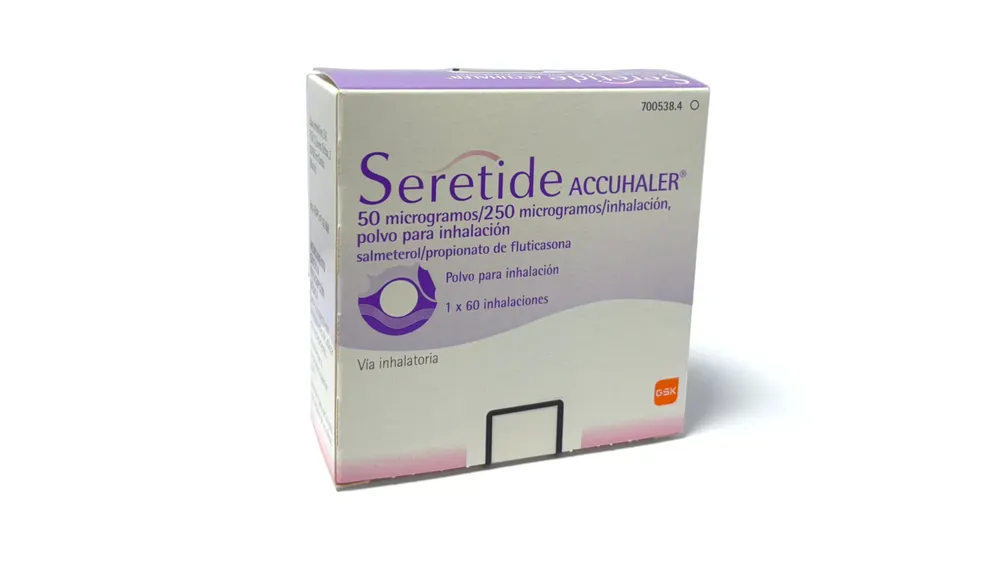
Table of Contents
Patient Information Leaflet
Introduction
Patient Information Leaflet
Seretide Accuhaler 50 micrograms/250 micrograms/inhalation, inhalation powder
salmeterol/fluticasone propionate
Read the entire leaflet carefully before you start using this medicine, as it contains important information for you.
- Keep this leaflet as you may need to read it again.
- If you have any questions, ask your doctor or pharmacist.
- This medicine has been prescribed for you only, and you should not give it to other people, even if they have the same symptoms as you, because it could harm them.
- If you experience any adverse effects, talk to your doctor or pharmacist, even if they are effects not listed in this leaflet. See section 4.
Leaflet Contents
-
What Seretide is and what it is used for
-
What you need to know before using Seretide
-
How to use Seretide
-
Possible side effects
-
How to store Seretide
-
Contents of the pack and other information
1. What Seretide is and what it is used for
Seretide contains two active substances, salmeterol and fluticasone propionate:
- Salmeterol is a long-acting bronchodilator. Bronchodilators help keep the airways in the lungs open, making it easier for air to flow in and out. The effects last for at least 12 hours.
- Fluticasone propionate is a corticosteroid that reduces inflammation and irritation in the lungs.
Your doctor has prescribed this medicine to help prevent breathing problems such as:
- Asthma.
- Chronic Obstructive Pulmonary Disease (COPD). Seretide Accuhaler, at a dose of 50/500 micrograms, reduces the number of exacerbations of COPD symptoms.
You should use Seretide every day as directed by your doctor. This will ensure that the medicine works properly to control your asthma or COPD.
Seretide helps prevent breathlessness and wheezing. However, Seretide must not be used to relieve a sudden attack of breathlessness or wheezing. In such a case, you must use your fast-acting "rescue" medication, such as salbutamol. You should always carry your fast-acting rescue medication with you.
2. What you need to know before using Seretide
Do not use Seretide
- if you are allergic to salmeterol, fluticasone propionate, or any of the other ingredients, lactose monohydrate.
Warnings and precautions
Talk to your doctor before starting treatment if you have:
- Heart problems, including rapid or irregular heartbeat.
- Overactive thyroid gland.
- High blood pressure.
- Diabetes mellitus (Seretide may increase blood sugar levels).
- Low levels of potassium in the blood.
- Current or past tuberculosis (TB) or other lung infections.
Contact your doctor if you experience blurred vision or other visual disturbances.
Other medicines and Seretide
Tell your doctor or pharmacist if you are taking, have recently taken, or might need to take any other medicines, including medicines for asthma or those obtained without a prescription. This is because, in some cases, Seretide should not be used together with certain other medicines.
Tell your doctor if you are taking any of the following medicines before starting Seretide:
- β-blockers (such as atenolol, propranolol, and sotalol). β-blockers are mainly used to treat high blood pressure or other heart conditions.
- Medicines to treat infections (such as ketoconazole, itraconazole, and erythromycin), including some medicines for HIV (such as ritonavir, cobicistat). Some of these medicines may increase the amount of fluticasone propionate or salmeterol in your body. This could increase your risk of adverse effects with Seretide, including irregular heartbeats, or may worsen side effects, so your doctor will monitor you closely if you are taking these medicines.
- Corticosteroids (oral or injectable). If you have recently taken these medicines, there may be an increased risk that this medicine could affect your adrenal gland.
- Diuretics, also known as water tablets, used to treat high blood pressure.
- Other bronchodilators (such as salbutamol).
- Medicines containing xanthines. These are often used to treat asthma.
Pregnancy and breastfeeding
If you are pregnant or breastfeeding, think you might be pregnant, or are planning to become pregnant, consult your doctor or pharmacist before using this medicine.
Driving and using machines
Seretide is unlikely to affect your ability to drive or operate machinery.
Seretide Accuhaler contains lactose
Seretide Accuhaler contains up to 12.5 milligrams of lactose monohydrate per dose. The amount of lactose in this medicine is usually not problematic for people with lactose intolerance. However, it may cause allergic reactions in patients allergic to cow's milk protein. If your doctor has told you that you have an intolerance to certain sugars, consult him before using this medicine.
3. How to use Seretide
Follow exactly the instructions for administering this medicine as given by your doctor or pharmacist. If in doubt, consult your doctor or pharmacist again.
- Use Seretide every day until your doctor tells you to stop. Do not take more than the recommended dose. If in doubt, consult your doctor or pharmacist.
- Do not stop taking Seretide or reduce your dose without first speaking to your doctor.
- Seretide must be inhaled through the mouth into the lungs.
- You may not taste or feel the powder on your tongue, even if you have used the Accuhaler correctly.
For asthma
Adults and adolescents aged 12 years and older
- Seretide 50/100 Accuhaler – One inhalation twice daily
- Seretide 50/250 Accuhaler – One inhalation twice daily
- Seretide 50/500 Accuhaler – One inhalation twice daily
Children aged 4 to 12 years
- Seretide 50/100 Accuhaler – One inhalation twice daily
Seretide is not recommended for use in children under 4 years of age.
For adults with Chronic Obstructive Pulmonary Disease (COPD)
- Seretide 50/500 Accuhaler – One inhalation twice daily
Your symptoms may become well controlled with Seretide twice daily. If so, your doctor may decide to reduce your dose to once daily. The dose may be changed to:
- once at night if you have nocturnal symptoms,
- once in the morning if you have diurnal symptoms.
It is very important that you follow your doctor’s instructions on how many doses and how often you should take your medication.
If you are using Seretide to treat asthma, your doctor will want to monitor your symptoms regularly.
If your asthma worsens or you have increasing difficulty breathing, see your doctor immediately. You may notice more wheezing or breathlessness more often, or find you need to use your fast-acting rescue medication more frequently. If any of these occur, you must continue using Seretide, but do not increase the number of inhalations. Your respiratory condition may worsen and you may become seriously ill. See your doctor, as you may need additional treatment.
Instructions for use
- Your doctor, nurse, or pharmacist should show you how to use your inhaler. They should periodically check that you are using it correctly. Not using the Seretide Accuhaler properly or as prescribed may result in your asthma or COPD not improving as it should.
- This Accuhaler contains blisters containing Seretide powder.
- There is a dose counter on the top of the Accuhaler indicating how many doses remain. It counts down to 0. Numbers from 5 to 0 will appear in red to warn you that few doses remain. Once the counter reaches 0, your inhaler is empty.
Using your inhaler
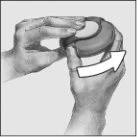
- To open the Accuhaler, hold the outer case with one hand and place the thumb of the other hand in the designated thumb grip. Push the thumb away from you as far as it will go. You will hear a “click”. This opens a small hole in the mouthpiece.
- Hold the device with the mouthpiece facing you. You may hold it with either your right or left hand. Slide the lever away from you. You will hear a “click”. This delivers the dose of medication into the mouthpiece.
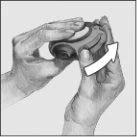
Each time the lever is slid back, a blister is opened and the powder is prepared for inhalation. Do not play with the lever, as this opens the blisters and wastes medication.
-
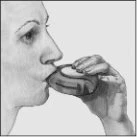
Keep the Accuhaler away from your mouth. Breathe out as much as reasonably possible. Do not breathe into the Accuhaler.
-
Place the mouthpiece in your mouth; breathe in steadily and deeply through the Accuhaler, not through your nose.
Remove the Accuhaler from your mouth.
Hold your breath for about 10 seconds, or as long as possible.
Breathe out slowly.
-
After use, rinse your mouth with water and spit it out and/or brush your teeth. This may help prevent mouth ulcers and hoarseness.
-
To close the Accuhaler, slide the lever back toward you with your thumb as far as it will go. You will hear a “click”.
The lever will automatically return to its original position.
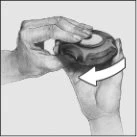
The Accuhaler is now ready for reuse.
As with all inhalers, caregivers must ensure that children using Seretide Accuhaler use the correct inhalation technique described above.
Cleaning your inhaler
To clean, wipe the mouthpiece of the Accuhaler with a dry tissue.
If you use more Seretide than you should
It is very important to use the inhaler exactly as directed. If you have accidentally taken a higher dose than recommended, consult your doctor or pharmacist. You may notice your heart beating faster than normal and feel tremors. You may also experience dizziness, headache, muscle weakness, and joint pain.
If you have used large doses over long periods of time, you should seek advice from your doctor or pharmacist. This is because high concentrations of Seretide may reduce the amount of steroid hormones produced by the adrenal gland.
In case of overdose, contact your doctor or pharmacist immediately or call the Toxicology Information Service at: 91 562 04 20, stating the medication and amount taken.
If you forget to use Seretide
Do not take a double dose to make up for missed doses. Take the next dose at your usual time.
If you stop using Seretide
It is very important that you use Seretide every day as directed. Continue taking it until your doctor tells you to stop. Do not stop treatment with Seretide abruptly. This could cause your breathing to worsen.
Additionally, if you stop taking Seretide suddenly or reduce your dose, you may (very rarely) develop problems with your adrenal gland (adrenal insufficiency), which sometimes causes adverse effects.
These adverse effects may include any of the following:
- Stomach pain.
- Tiredness and loss of appetite, feeling unwell.
- Nausea and diarrhea.
- Weight loss.
- Headache or drowsiness.
- Low blood sugar levels.
- Low blood pressure and seizures (fits).
When your body is under stress such as fever, trauma (e.g., traffic accident), infection, or surgery, adrenal insufficiency may worsen, and you may experience any of the adverse effects listed above.
If you experience any adverse effects, consult your doctor or pharmacist. To prevent these symptoms, your doctor may prescribe an additional dose of corticosteroid tablets during that time (such as prednisolone).
If you have any further questions about the use of this medicine, ask your doctor, nurse, or pharmacist.
4. Possible adverse effects
Like all medicines, this medicine can cause adverse effects, although not everyone experiences them. To reduce the occurrence of adverse effects, your doctor will prescribe the lowest dose of Seretide that controls your asthma or Chronic Obstructive Pulmonary Disease (COPD).
Allergic reactions: you may notice that your breathing suddenly worsens immediately after using Seretide. You may experience wheezing, coughing, or shortness of breath. You may also notice itching, rash (urticaria), and swelling (usually of the face, lips, tongue, or throat). You may also suddenly feel your heart beating very fast, feel dizzy, or feel like you are losing consciousness (which could lead to collapse or loss of consciousness). If you experience any of these effects or if they appear suddenly after using Seretide, stop taking Seretide and contact your doctor immediately. Allergic reactions to Seretide are uncommon (may affect up to 1 in 100 people).
Pneumonia (lung infection) in patients with COPD (common adverse effect)
Inform your doctor if you experience any of the following symptoms while inhaling Seretide, as they could be signs of a lung infection:
- Fever or chills.
- Increased mucus production or change in the color of mucus.
- Worsening cough or worsening difficulty breathing.
Other adverse effects listed below:
Very common (may affect more than 1 in 10 people)
- Headache, which usually improves with continued treatment.
- Increased incidence of colds has been reported in patients with Chronic Obstructive Pulmonary Disease (COPD).
Common (may affect up to 1 in 10 people)
- Oral and throat candidiasis (itching, yellowish-white sores), as well as tongue pain, hoarseness, and throat irritation. Rinsing your mouth with water and spitting it out and/or brushing your teeth immediately after each dose of medication may help. For treatment of candidiasis, your doctor may prescribe antifungal medication (for treatment of fungal infections).
- Joint pain, joint swelling, and muscle pain.
- Muscle cramps.
The following adverse effects have been reported in patients with Chronic Obstructive Pulmonary Disease (COPD):
- Bruising and fractures.
- Sinusitis (feeling of pressure or congestion in the nose, cheeks, and behind the eyes, sometimes with throbbing pain).
- Reduction in blood potassium levels (you may feel irregular heartbeats, muscle weakness, or cramps).
Uncommon (may affect up to 1 in 100 people)
- Increased blood sugar (glucose) levels (hyperglycaemia). If you have diabetes, your blood sugar levels will need to be monitored more frequently, and your usual diabetic treatment may need to be adjusted if necessary.
- Cataracts (clouding of the eye's lens).
- Very fast heart rate (tachycardia).
- Tremors and a fast or irregular heartbeat (palpitations). These adverse effects are usually harmless and decrease with continued treatment.
- Chest pain.
- Feeling of anxiety (occurs mainly in children).
- Sleep disorders.
- Skin rash.
- Allergic skin reaction.
Rare (may affect up to 1 in 1,000 people)
- Difficulty breathing (or wheezing) that worsens immediately after using Seretide. If this happens, stop using Seretide. Use your "rescue" fast-acting inhaler to improve your breathing and contact your doctor immediately.
- Seretide may increase the normal production of steroid hormones, particularly if you have been taking high doses for long periods. Effects include:
- Delayed growth in children and adolescents.
- Decreased bone mineral density.
- Glaucoma.
- Weight gain.
- Rounded face (moon face) (Cushing's syndrome).
Your doctor will regularly monitor for any of these adverse effects and ensure you are taking the lowest dose of Seretide necessary to control your asthma.
- Changes in behaviour, such as hyperactivity and irritability (these effects occur mainly in children).
- Irregular heartbeats or extra heartbeats (arrhythmias). Consult your doctor, but do not stop taking Seretide unless your doctor tells you to.
- Fungal infection of the oesophagus (throat), which may cause difficulty swallowing.
Not known: frequency cannot be estimated from available data
- Depression or aggression. These effects are more likely to occur in children.
- Blurred vision.
Reporting of adverse effects
If you experience any adverse effect, talk to your doctor or pharmacist, even if it is a possible adverse effect not listed in this leaflet. You can also report them directly via the Spanish Pharmacovigilance System for Human Medicines: www.notificaRAM.es. By reporting adverse effects, you can help provide more information on the safety of this medicine.
5. Storage of Seretide
Keep this medicine out of the sight and reach of children.
Do not use Seretide after the expiry date stated on the label and the carton after EXP. The expiry date refers to the last day of the month indicated.
Do not store above 30 °C.
Medicines should not be disposed of via wastewater or household waste. Dispose of empty containers and unused medicines at a SIGRE collection point at your pharmacy. If you are in doubt, ask your pharmacist how to dispose of containers and medicines you no longer need. This will help protect the environment.
6. Contents of the pack and other information
Composition of Seretide
- Each pre-dispensed dose contains 50 micrograms of salmeterol (as salmeterol xinafoate) and 250 micrograms of fluticasone propionate.
- The other component is lactose monohydrate (contains milk proteins).
Nature of the product and pack contents
Seretide Accuhaler contains a strip of blisters. The blisters protect the inhalation powder from atmospheric effects.
Each dose is pre-dispensed.
The devices are available in packs of:
- 1 Accuhaler x 28 inhalations or
- 1, 2, 3 or 10 Accuhaler x 60 inhalations each.
Only certain pack sizes may be marketed.
Marketing Authorisation Holder and Manufacturer
Marketing Authorisation Holder:
GlaxoSmithKline, S.A.
P.T.M. C/ Severo Ochoa, 2
28760 Tres Cantos (Madrid)
Tel: +34 900 202 700
Manufacturer:
Glaxo Wellcome Production
Zone Industrielle nº 2, 23 Rue Lavoisier, La Madeleine, 27000 Evreux, France
Tel: +33 2 3223 5500
Fax: +33 2 3223 5558
This medicinal product is authorised in the European Economic Area member states under the following names:
Austria Seretide Diskus
Belgium Seretide Diskus
Croatia Seretide Diskus
Cyprus Seretide Diskus
Czech Republic Seretide Diskus
Denmark Seretide
Estonia Seretide Diskus
Finland Seretide Diskus
France Seretide Diskus
Germany atmadisc Diskus
Greece Seretide Diskus
Hungary Seretide Diskus
Iceland Seretide
Ireland Seretide Diskus
Italy Seretide Diskus
Luxembourg Seretide Diskus
Malta Seretide Diskus
Netherlands Seretide Diskus
Portugal Seretaide Diskus
Romania Seretide Diskus
Slovakia Seretide Diskus
Spain Seretide Accuhaler
Sweden Seretide Diskus
Date of the most recent review of this leaflet: July 2020
Detailed and up-to-date information on this medicinal product is available on the website of the Spanish Agency of Medicines and Health Products (AEMPS) http://www.aemps.gob.es/