Serdolect 20 mg film-coated tablets
Spain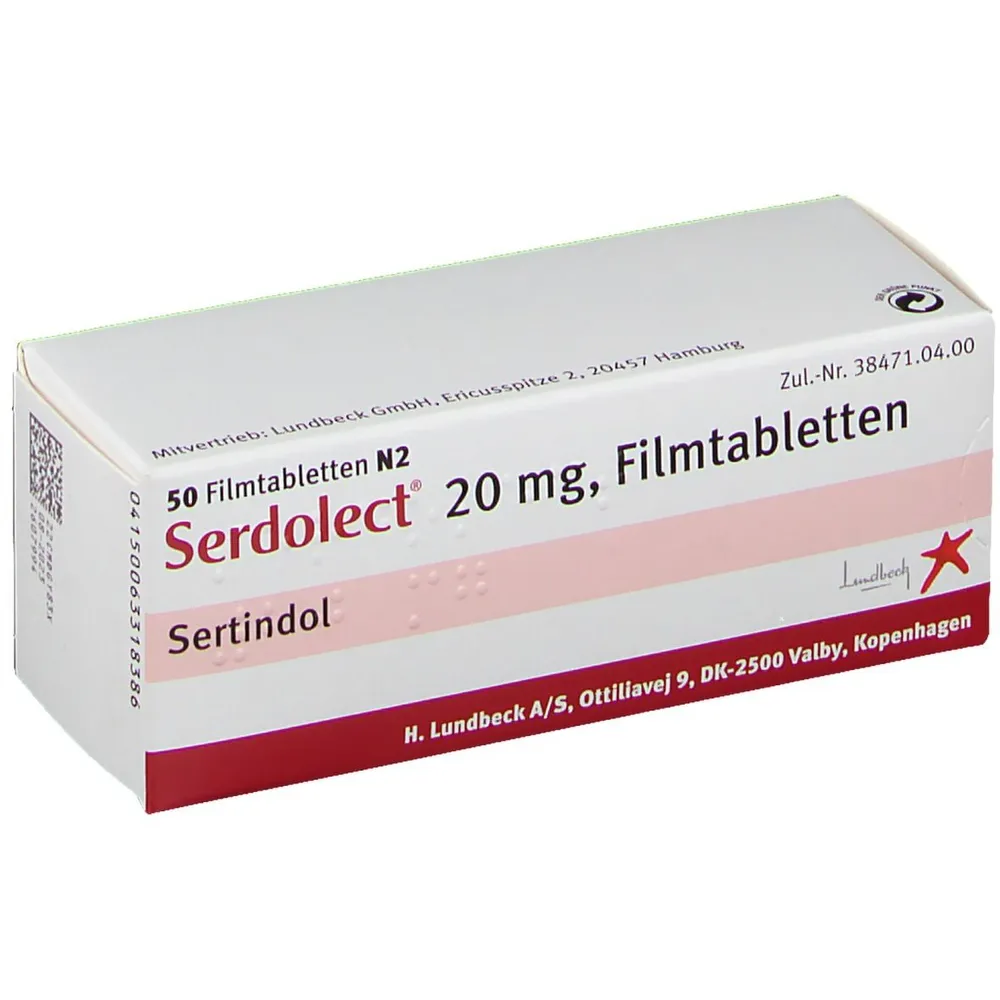
Table of Contents
Package leaflet: Information for the user
Introduction
Package leaflet: information for the patient
Serdolect 20 mg film-coated tablets Sertindole
Read the entire leaflet carefully before you start taking this medicine, because it contains important information for you.
- Keep this leaflet, as you may need to read it again.
- If you have any questions, ask your doctor or pharmacist.
- This medicine has been prescribed for you only and must not be given to other people, even if they have the same symptoms as you, because it may harm them.
- If you experience any adverse effects, consult your doctor or pharmacist, even if they are adverse effects not listed in this leaflet. See section 4.
Leaflet contents:
- What Serdolect is and what it is used for
- What you need to know before taking Serdolect
- How to take Serdolect
- Possible adverse effects
- How to store Serdolect
- Contents of the pack and other information
1. What Serdolect is and what it is used for
Serdolect contains the active substance sertindole and belongs to a group of medicines called antipsychotics. These act on nerve pathways in specific areas of the brain and help correct certain chemical imbalances in the brain that cause your symptoms.
Serdolect is indicated for the treatment of schizophrenia in cases where another medication is not effective.
2. What you need to know before taking Serdolect
Do not take Serdolect:
If you are/have
? an allergy to sertindole or to any of the other ingredients of
this medicine (listed in section 6)
? untreated low levels of potassium or magnesium in the blood
? significant heart or circulatory disease
- a serious heart condition, such as:
- heart failure with tissue swelling caused by fluid retention
- enlarged heart
- irregular or slow heartbeats
? a personal or family history of prolonged ventricular cardiac activity (QT prolongation) measured on an ECG, or if someone in your family has this abnormal heart rhythm
? severely reduced liver function
? are taking medicines that prolong the ventricular cardiac activity interval or that affect liver function. See the first two points in the section “Other medicines and Serdolect” in section 2
Warnings and precautions
Talk to your doctor before starting Serdolect if you are/have:
- vomiting or diarrhoea during treatment with Serdolect
- reduced liver function
- Parkinson’s disease
- diabetes or risk factors for developing diabetes
- risk factors for stroke, such as high blood pressure, previous stroke or heart attack, diabetes, high cholesterol, dementia, or if you are a smoker
- are over 65 years of age
- a history of venous blood clots or a family history of venous blood clots, as antipsychotic medicines have been associated with blood clot formation
- seizures
- unusual movements of the mouth and tongue, which may be early signs of a nervous system disorder called tardive dyskinesia
- high fever, unusual muscle stiffness, and changes in consciousness, especially if accompanied by sweating and rapid heartbeat. These may be signs of a rare but serious condition called neuroleptic malignant syndrome
At the beginning of treatment with Serdolect, you may feel dizzy when getting up from bed or standing up. Your doctor may reduce this risk by starting with a low dose and gradually increasing it over several weeks. This sensation usually disappears after you have been taking Serdolect for some time.
Monitoring before and during treatment
Before and during your treatment with Serdolect, your doctor may carry out certain tests, such as:
- an electrocardiogram (ECG) of your ventricular cardiac activity to check for QT interval prolongation
This test is repeated after 3 weeks of treatment or when reaching a daily dose of 16 mg sertindole. During maintenance treatment, it will be performed every 3 months. Additionally, an ECG will be performed before and after any dose increase. This will also be done if the dose of another medicine you are taking changes, which could affect the level of sertindole in your blood.
- a blood test to measure potassium and magnesium levels
If your potassium or magnesium levels are low, your doctor will start treatment to correct them. Do not take Serdolect if you have untreated low levels of potassium or magnesium in the blood.
Contact your doctor if you experience vomiting, diarrhoea, electrolyte disturbances, or are taking medicines that increase urine output. Your doctor may measure the potassium level in your blood.
- monitoring of blood pressure
Children under 18 years of age
Serdolect should not be used in this age group as there is no available data.
Taking Serdolect with other medicines
Tell your doctor or pharmacist if you are taking, have recently taken, or might need to take any other medicines.
Serdolect must not be used with the following medicines:
-
medicines that may affect heart rhythm such as:
- some drugs used to treat irregular heartbeats, such as quinidine, amiodarone, sotalol, dofetilide
- some medicines used to treat mental disorders, such as thioridazine
- some antibiotics with active substance names ending in “mycin”, such as erythromycin
- some antihistamines used to treat allergies, such as terfenadine, astemizole
- some antibiotics with active substance names ending in “oxacin”, such as gatifloxacin, moxifloxacin
-
cisapride: a medicine used to treat stomach or intestinal problems
-
lithium: a medicine used to treat depression and mental disorders
-
medicines that affect liver function, such as:
- oral antifungal medicines, such as ketoconazole, itraconazole
- some antibiotics with active substance names ending in “mycin”, such as erythromycin, clarithromycin
- antiviral medicines for HIV with active substance names ending in “navir”, such as indinavir
- some medicines used to treat high blood pressure and heart conditions called calcium channel blockers, such as diltiazem, verapamil
- cimetidine: a medicine used to reduce stomach acidity
Other medicines that may interact with or be affected by Serdolect include:
- medicines for Parkinson’s disease called dopaminergic agonists
- some antidepressants and anti-anxiety medicines, such as fluoxetine, paroxetine
- rifampicin: a medicine used to treat tuberculosis or certain other infections
- carbamazepine, phenytoin, phenobarbital: medicines used to treat epilepsy
- diuretics (medicines that increase urine output), which may lower blood potassium levels
Taking Serdolect with food and drink
Avoid alcohol during treatment with Serdolect, although no interaction with alcohol is expected.
Pregnancy, breast-feeding and fertility
- Pregnancy
Serdolect is not recommended during pregnancy.
The following symptoms may occur in newborns of mothers who have taken Serdolect during the third trimester (the last three months of pregnancy):
- tremor
- muscle rigidity and/or weakness
- drowsiness, restlessness
- breathing difficulties
- feeding problems
Contact your doctor if your baby shows any of these symptoms.
- Breast-feeding
Serdolect should not be used during breast-feeding unless your doctor considers it absolutely necessary. Discontinuation of breast-feeding should be considered if treatment is required, as Serdolect is excreted in breast milk.
•Fertility
Serdolect may have adverse effects that can affect your sexual function and fertility. These effects are reversible. Please discuss any sexual problems with your doctor.
Driving and using machines
Do not drive or operate machinery until you know how Serdolect affects you, even though it does not usually cause drowsiness.
Serdolect contains lactose
If your doctor has informed you that you have an intolerance to certain sugars, consult him before taking this medicine.
Serdolect contains sodium
This medicine contains less than 1 mmol sodium (23 mg) per tablet; hence, it is essentially “sodium-free”.
3. How to take Serdolect
Follow exactly the instructions for using this medicine as given by your doctor or pharmacist. If you are in doubt, consult your doctor or pharmacist again.
Recommended dose:
-
Starting dose: 1 tablet of 4 mg Serdolect once daily. Every 4 to 5 days, the dose will be increased by 1 tablet of 4 mg Serdolect, until the maintenance dose is reached.
-
Maintenance dose: 1 tablet of 12 mg Serdolect to 1 tablet of 20 mg Serdolect once daily.
-
Maximum dose: 2 tablets of 12 mg Serdolect once daily, to be considered only in exceptional cases.
Alternatively, the maximum dose may be achieved by taking 1 tablet of 20 mg Serdolect plus 1 tablet of 4 mg Serdolect.
Patients over 65 years of age
Your doctor will likely increase your Serdolect dose over a longer period than usual. Your doctor may also prescribe you a lower maintenance dose than normally recommended.
Patients with reduced liver function
Your doctor may monitor you more closely and increase your dose over a longer period if you have mild to moderate impairment of liver function. Your doctor may also prescribe you a lower maintenance dose than normally recommended.
Serdolect must not be used in patients with severely impaired liver function.
Patients with reduced kidney function
Serdolect may be administered to patients with reduced kidney function at the usual doses.
Administration
Take the tablets whole, with a glass of water, each day at the same time. The tablets may be taken with or without food.
Duration of treatment
Take the tablets for the length of time recommended by your doctor.
Never change the dose of this medicine without first consulting your doctor.
If you wish to stop using this medicine, please consider the information in section 3 “If you stop treatment with Serdolect”.
If you take more Serdolect than you should
If this happens, contact your doctor or nearest hospital immediately. Do so even if you do not have any signs of feeling unwell.
Symptoms of overdose are:
- increased fatigue
- difficulty speaking
- increased pulse
- low blood pressure
In case of overdose or accidental ingestion, contact your doctor or pharmacist immediately, or call the Toxicology Information Service at 91 562 04 20, stating the name of the medicine and the amount ingested. Do so even if you do not observe any discomfort or signs of poisoning. Take the Serdolect packaging with you if you go to the doctor or hospital.
If you forget to take Serdolect
Do not take a double dose to make up for missed doses.
If you forget to take your daily dose, contact your doctor. Your doctor will advise you on how to continue your treatment correctly.
If you stop treatment with Serdolect
Do not stop taking Serdolect without your doctor's permission, even if you start to feel better. The underlying illness may persist for a long time. If you stop your treatment too early, symptoms of your illness may return and involuntary movements may also occur.
 Your doctor will advise you on how and when to stop your treatment to avoid unpleasant symptoms that may occur. If Serdolect is stopped abruptly, it may cause withdrawal symptoms such as:
- nausea, vomiting
- sweating
- sleep disturbances
If you have any further questions about the use of this medicine, ask your doctor or pharmacist.
4. Possible adverse effects
Like all medicines, this medicine can cause adverse effects, although not everyone experiences them.
Contact your doctor or hospital immediately if you experience any of the adverse effects listed in the following 4 points:
Uncommon: may affect up to 1 in 100 people
- very fast, irregular or strong heartbeats, dizziness, fainting, difficulty breathing or chest pain
These symptoms may indicate life-threatening irregular heartbeats.
- uncontrollable movements mainly affecting the mouth, tongue and limbs
This could indicate a nervous system disorder called tardive dyskinesia.
Rare: may affect up to 1 in 1,000 people
- a combination of fever, rapid breathing, sweating, muscle stiffness, drowsiness or lethargy
These symptoms may indicate a life-threatening nervous disorder called neuroleptic malignant syndrome.
Not known: frequency cannot be estimated from available data
- venous blood clots, particularly in the legs (symptoms include swelling, pain and redness in the leg), which may travel through blood vessels to the lungs causing chest pain and breathing difficulties
Other possible adverse effects that may occur with the following frequencies are:
Very common: may affect more than 1 in 10 people
- nasal inflammation causing sneezing, itching, runny nose and nasal congestion
- inability to ejaculate
Common: may affect up to 1 in 10 people
- dizziness or sudden dizziness due to a drop in blood pressure upon standing
- dry mouth
- weight gain
- difficulty breathing
- swelling of hands or feet
- tingling or prickling sensation in the skin
- reduced ejaculate volume
- impotence
- changes in the electrical activity of the heart (called "QT interval prolongation"). QT prolongation may lead to symptoms such as palpitations and fainting
- white and red blood cells in urine
Uncommon: may affect up to 1 in 100 people
- increased blood sugar levels
- irregular heartbeat, known as Torsade de Pointes
- increased blood levels of the hormone called prolactin
- spontaneous milk discharge from the breasts
- seizures, fainting
In elderly patients with dementia, a small increase in the number of deaths has been reported in patients taking antipsychotics compared to those who did not take them.
Reporting of adverse effects:
If you experience any type of adverse effect, consult your doctor or pharmacist, even if it is a possible adverse effect not listed in this leaflet. You may also report them directly via the Spanish Pharmacovigilance System for Human Medicines: http;//www.notificaram.es. By reporting adverse effects, you can help provide more information on the safety of this medicine.
5. Storage of Serdolect
Keep this medicine out of the sight and reach of children.
Do not use this medicine after the expiry date stated on the packaging after EXP. The expiry date is the last day of the month indicated.
Store in the original packaging, to protect it from light.
Medicines must not be disposed of via wastewater or household waste. Dispose of unused medicines and their containers at the SIGRE Point at your pharmacy. If in doubt, ask your pharmacist how to dispose of medicines and containers you no longer need. This will help protect the environment.
6. Contents of the pack and other information
Composition of Serdolect
The active substance is sertindole.
Each film-coated tablet contains 20 mg of sertindole.
The other components are:
- maize starch
- lactose monohydrate
- hydroxypropylcellulose
- hypromellose
- microcrystalline cellulose
- sodium croscarmellose
- magnesium stearate
- macrogol 400
- titanium dioxide
- yellow iron oxide (E172)
- red iron oxide (E172)
- black iron oxide (E172).
Appearance of the product and contents of the pack
Serdolect 20 mg is presented as film-coated tablets.
The tablets are light pink, oval-shaped, with rounded top and bottom surfaces, marked with the letters “S20” on one side.
Serdolect 20 mg is available in packs containing 7, 10, 14, 20, 28, 30, 50, 98 or 100 tablets.
Only certain pack sizes may be marketed.
Marketing Authorization Holder and Manufacturer
- Lundbeck A/S
Ottilliavej, 9
2500 Valby
Denmark
Tel: +45 3630 1311
You can request further information about this medicinal product from the local representative of the Marketing Authorization Holder:
Local representative:
Lundbeck España, S.A.
Av. Diagonal, 605
08028 Barcelona
(Spain)
This medicinal product is authorized in the following EU/European Economic Area member states under the following names:
Member State | Medicinal product name |
Austria | Serdolect |
Belgium | Serdolect |
Bulgaria | Serdolect |
Czech Republic | Serdolect |
Croatia | Serdolect |
Denmark | Serdolect |
Estonia | Serdolect |
Finland | Serdolect |
Germany | Serdolect |
Greece | Serdolect |
Hungary | Serdolect |
Iceland | Serdolect |
Latvia | Serdolect |
Luxembourg | Serdolect |
Netherlands | Serdolect |
Norway | Serdolect |
Poland | Serdolect |
Romania | Serdolect |
Slovakia | Serdolect |
Spain | Serdolect |
Sweden | Serdolect |
This leaflet was approved in April 2021
Detailed and up-to-date information about this medicine is available on the website of the Spanish Agency for Medicines and Health Products (AEMPS) http://www.aemps.gob.es/