Sedotime 30 mg hard capsules
Spain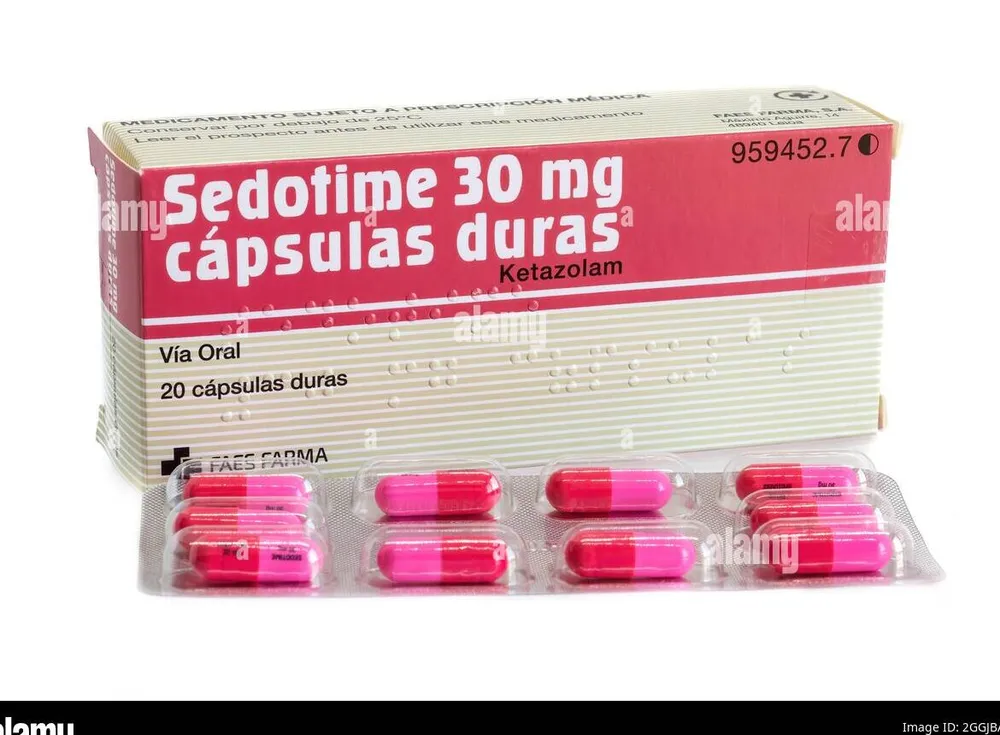
Table of Contents
Package leaflet: Information for the user
Introduction
Package leaflet: information for the user
Sedotime 30 mg hard capsules
Ketazolam
Read the entire leaflet carefully before you start taking this medicine, as it contains important information for you.
- Keep this leaflet, as you may need to read it again.
- If you have any questions, consult your doctor or pharmacist.
- This medicine has been prescribed for you only, and you should not give it to other people, even if they have the same symptoms as you, because it could harm them.
- If you experience any adverse effects, consult your doctor or pharmacist, even if they are adverse effects not listed in this leaflet. See section 4.
Leaflet contents
- What Sedotime is and what it is used for
- What you need to know before taking Sedotime
- How to take Sedotime
- Possible side effects
- How to store Sedotime
- Contents of the pack and other information
1. What Sedotime is and what it is used for
The active substance in Sedotime belongs to a group of medicines called benzodiazepines.
Doctors prescribe Sedotime for the treatment of anxiety, nervousness, and irritability.
Also, due to its muscle-relaxant effect, it is indicated in spasticity (increased "muscle tone" causing muscles to feel more rigid or stiff) associated with cerebrovascular accidents, spinal injuries, cervical syndrome, rigidity in encephalitis, etc.
In most cases, only short-term treatment with Sedotime is required (generally not exceeding two weeks). You should consult a doctor if your condition worsens or does not improve.
Treatment should be started at the lowest dose. The maximum dose must not be exceeded.
2. What you need to know before taking Sedotime
Do not take Sedotime
- If you are allergic to ketazolam, benzodiazepines, or any of the other ingredients of this medicine (listed in section 6).
- If you have myasthenia gravis (a disease characterized by abnormal muscle weakness).
- If you have severe respiratory insufficiency (e.g., severe chronic obstructive pulmonary disease).
- If you have sleep apnea (a syndrome characterized by brief episodes of breathing cessation during sleep).
- If you have severe hepatic insufficiency.
- During pregnancy or breastfeeding.
Warnings and precautions
Consult your doctor or pharmacist before taking Sedotime, especially if:
- you have liver or kidney disorders,
- you suffer from muscle weakness,
- you have allergies,
- you have chronic respiratory insufficiency, as you should receive a lower than usual dose,
- you are dependent on drugs or alcohol; you should not take this medicine unless specifically instructed by your doctor. If in doubt, consult your doctor,
- you have epilepsy, as seizures may occur if treatment with Sedotime is abruptly discontinued,
- Sedotime must not be administered to children.
Tolerance
- After continuous use for several weeks, a certain degree of reduced efficacy may be observed.
- In the presence of ketazolam, tolerance to other central nervous system depressants may be reduced; these substances should be avoided or taken at reduced doses.
Risk of dependence
The use of benzodiazepines may lead to physical and psychological dependence. The risk increases with dose and duration of treatment and is higher in patients with a history of drug or alcohol abuse. Abrupt discontinuation of treatment may result in withdrawal symptoms such as headache, muscle pain, anxiety, tension, depression, insomnia, restlessness, confusion, irritability, sweating, and rebound phenomena (temporary return of the symptoms that led to initiating treatment).
To minimize the risk of dependence, the following precautions should be observed:
- Benzodiazepines should only be taken under medical prescription (never because they worked for someone else) and should never be recommended to others.
- Do not increase the dose prescribed by your doctor or extend treatment beyond the recommended duration.
- Consult your doctor regularly so they can determine whether treatment should continue.
Rebound insomnia and anxiety
- You may experience a rebound episode (temporary return of symptoms that prompted starting treatment). This may be accompanied by other reactions such as mood changes, anxiety, sleep disturbances, and restlessness. The likelihood of withdrawal/rebound syndrome is higher after abrupt discontinuation of treatment; therefore, it is recommended to gradually reduce the dose until complete cessation. Follow exactly the usage recommendations and administration instructions for Sedotime provided by your doctor to minimize the possibility of these symptoms occurring.
Amnesia
- Ketazolam may cause anterograde amnesia, i.e., difficulty remembering recent events. To reduce this risk, ensure you can sleep uninterrupted for 7–8 hours after taking ketazolam. Under normal conditions, you should fall asleep within 20 minutes after taking ketazolam.
Psychiatric and paradoxical reactions
- Ketazolam may cause restlessness, agitation, irritability, aggressiveness, delusions, rage attacks, nightmares, hallucinations, psychosis, inappropriate behavior, and other adverse behavioral effects. These reactions occur more frequently in children, elderly patients, and patients with organic brain syndrome (physical disorders causing reduced mental function). Your doctor will discontinue treatment if such reactions occur.
- Ketazolam must not be used as first-line treatment for psychotic disorders.
- Pre-existing depression may be masked during ketazolam treatment. In such patients, there is a risk of suicide.
Other warnings
- Your doctor may recommend blood tests or liver function monitoring if deemed necessary, as this medicine could cause blood and/or liver abnormalities.
- Use with caution in patients with narrow-angle glaucoma (an eye disorder that may cause optic nerve damage due to a rapid and severe increase in intraocular pressure).
Children and adolescents
The use of this medicine is not recommended in children and adolescents under 18 years of age.
Use in elderly patients
Elderly patients may be more sensitive to the effects of this medicine than younger adults. Therefore, it is especially important that elderly patients report any adverse effects to their doctor immediately.
Use in patients with chronic respiratory insufficiency
Lower doses are recommended in patients with chronic respiratory insufficiency due to the risk of respiratory depression.
Use in patients with severe hepatic insufficiency
Benzodiazepines are not indicated in patients with severe hepatic insufficiency due to the risk of encephalopathy.
Use in patients with severe renal insufficiency
Ketazolam should be administered with caution in patients with severe renal insufficiency.
Taking Sedotime with other medicines
Inform your doctor or pharmacist if you are taking, have recently taken, or might need to take any other medicines, including those obtained without a prescription. This is extremely important because taking multiple medicines simultaneously may increase or decrease their effects.
The effect of ketazolam may be enhanced when administered with the following medicines:
- Antipsychotics (neuroleptics, medicines used to treat psychiatric disorders).
- Hypnotics (medicines that improve sleep onset and duration).
- Anxiolytics/sedatives (medicines used to treat anxiety).
- Antidepressants (medicines used to treat depression).
- Opioid analgesics (certain medicines that reduce pain). These analgesics may increase feelings of euphoria when taken with ketazolam, potentially increasing psychological dependence.
- Antiepileptics (medicines used to treat epilepsy and seizures). Additionally, ketazolam reduces the effect of anticonvulsants, so your doctor may consider adjusting the dose of both medicines.
- Anesthetics (medicines generally used during surgical procedures to reduce pain and/or consciousness).
- Sedating antihistamines (medicines mainly used to treat allergic symptoms).
- Medicines that inhibit certain liver enzymes (particularly cytochrome P450) may enhance the activity of ketazolam.
Taking Sedotime with alcohol
Avoid alcoholic beverages during treatment. Alcohol may enhance sedation, which could affect your ability to drive or operate machinery. If you need further information on this point, consult your doctor.
Pregnancy and breastfeeding
If you are pregnant or breastfeeding, think you may be pregnant, or plan to become pregnant, consult your doctor or pharmacist before using this medicine.
Pregnancy
Sedotime is contraindicated during pregnancy.
Infants born to mothers who take benzodiazepines chronically during the third trimester of pregnancy may develop physical dependence and experience withdrawal symptoms in the postnatal period. If, for strict medical reasons, the medicine is administered during the third trimester of pregnancy or at high doses during delivery, effects in the newborn such as hypothermia, hypotonia, and moderate respiratory depression may occur.
Breastfeeding
Since benzodiazepines pass into breast milk, their use is contraindicated in breastfeeding mothers.
Driving and using machines
Sedotime may impair your ability to drive or operate machinery, as it may cause drowsiness, reduced attention, or decreased reaction capacity. These effects are more likely at the beginning of treatment or when the dose is increased. Do not drive or operate machinery if you experience any of these effects.
3. How to take Sedotime
Follow exactly the administration instructions for Sedotime provided by your doctor. If in doubt, consult your doctor or pharmacist again.
Depending on the nature of your condition, your age and weight, your doctor will prescribe the appropriate dose. However, in general, the total duration of treatment should not exceed 8–12 weeks, including gradual withdrawal. In certain cases, your doctor may extend the treatment beyond the recommended period based on your individual needs. Do not stop treatment even if you feel better.
Remember to take your medicine.
The recommended dose ranges from 15 to 60 mg daily, either as a single dose at bedtime or divided over 24 hours. Most patients respond to a dose of 15 mg taken at bedtime.
Each individual dose must not exceed the limits indicated, nor should the total daily dose, unless your doctor prescribes a higher dose.
Take Sedotime just before going to bed and swallow the capsule whole, without chewing, with water or another non-alcoholic drink.
Under normal conditions, you should fall asleep within 20 minutes after taking Sedotime. It is advisable to ensure that you can rest undisturbed for at least 7 hours. Otherwise, although this occurs only rarely, you may not remember what happened during the time you were awake.
Use in children and adolescents
Sedotime is not recommended for use in children and adolescents under 18 years of age.
Use in elderly patients
Elderly patients may be more affected by Sedotime than younger patients. If you are elderly, your doctor may prescribe a lower dose and monitor your response to treatment. Please follow your doctor's instructions carefully.
If you have any liver or kidney disorders, or suffer from muscle weakness, your doctor will decide whether you should take a lower dose of Sedotime or should not take it at all.
If you take more Sedotime than you should
If you or someone else has taken an overdose of Sedotime, contact your doctor immediately. An overdose is not usually life-threatening unless Sedotime has been taken together with other central nervous system depressants (including alcohol). In cases of overdose, consider the possibility that the patient may have ingested other medications or substances.
Overdose with benzodiazepines generally manifests as varying degrees of central nervous system depression, ranging from drowsiness to coma. In moderate cases, symptoms include drowsiness, confusion, or lethargy; in more severe cases, ataxia (impaired coordination of movement), hypotonia (reduced muscle tone), low blood pressure, respiratory depression, rarely coma, and very rarely death.
In case of overdose or accidental ingestion, contact the Toxicology Information Service at telephone 91 562 04 20.
If you forget to take Sedotime
Do not take a double dose to make up for missed doses. Instead, continue with your normal dose.
If you stop taking Sedotime
Your doctor will determine the duration of your treatment with Sedotime. Do not stop treatment even if you feel better.
When stopping treatment, symptoms such as restlessness, anxiety, insomnia, difficulty concentrating, headache, and hot flushes may occur, especially if you have been taking it for a long time. In general, you should not stop taking Sedotime abruptly, but gradually reduce the dose according to your doctor's instructions.
Never change the prescribed dose on your own. If you think the effect of the medicine is too strong or too weak, consult your doctor.
If you have any further questions about the use of this medicine, ask your doctor or pharmacist.
4. Possible adverse effects
Like all medicines, Sedotime may cause adverse effects, although not everyone experiences them.
The following adverse effects have been observed, although their frequency has not been established with certainty.
Most patients tolerate Sedotime well, but some people may feel somewhat tired or drowsy during the day, especially at the beginning of treatment.
Headache, dizziness, reduced alertness, gastrointestinal disturbances, skin reactions, visual disturbances (double vision), ataxia (inability to coordinate voluntary muscle movements), and muscle weakness may occur. Occasionally, gastrointestinal disturbances, changes in libido, or skin reactions may appear.
The use of benzodiazepines may mask a pre-existing depression. If at any time you experience thoughts of self-harm or suicide, contact your doctor immediately.
It is known that when benzodiazepines are used, adverse behavioural effects may occur, such as restlessness, agitation, irritability, aggressiveness, delirium (incoherent thinking), rage attacks, nightmares, hallucinations, psychosis, or inappropriate behaviour. These reactions are more frequent in elderly patients and children. If you experience any of these effects, you must stop treatment and consult your doctor immediately.
Anterograde amnesia (memory loss) may occur at normal doses, meaning you may not remember events that occurred while you were awake after taking the medicine. The risk increases with higher doses. Amnesic effects may be associated with behavioural disturbances.
Very rarely, Sedotime may cause sudden anxiety, hallucinations, excitement, and sleep disorders. If this occurs, contact your doctor immediately.
Administration of ketazolam may lead to the development of physical and psychological dependence; discontinuation of treatment may lead to withdrawal or rebound phenomena (see section 2, Warnings and precautions). Cases of abuse have been reported.
Reporting of adverse effects
If you experience any type of adverse effect, consult your doctor or pharmacist, even if it is a possible adverse effect not listed in this leaflet. You can also report them directly through the national reporting system: https://www.notificaRAM.es/. By reporting adverse effects, you can help provide more information on the safety of this medicine.
5. Storage of Sedotime
Keep this medicine out of the sight and reach of children.
Store below 25°C.
Do not use Sedotime after the expiry date stated on the packaging after EXP. The expiry date refers to the last day of the month indicated.
Medicines must not be disposed of via wastewater or household waste. Return unused medicines and their containers to the SIGRE Point at your pharmacy. If you are unsure, ask your pharmacist how to dispose of medicines and containers you no longer need. This will help protect the environment.
6. Contents of the pack and other information
Composition of Sedotime 30 mg
- The active substance is ketazolam. Each capsule contains 30 mg of ketazolam.
- The other components (excipients) are calcium carboxymethylcellulose, hydrogenated vegetable oil (Sterotex), erythrosine (E127), indigo carmine (E132), titanium dioxide (E171), quinoline yellow (E104), gelatin and water.
Appearance of the product and contents of the pack
Sedotime 30 mg are hard gelatin capsules with a pink body and dark pink cap, printed in black ink on both body and cap with “SEDOTIME 30 MG”.
Each pack contains 20 capsules.
Other presentations
Sedotime 15 mg hard capsules. Each pack contains 30 capsules.
Sedotime 45 mg hard capsules. Each pack contains 20 capsules.
Marketing Authorization Holder
Faes Farma, S.A.
Autonomia Etorbidea, 10
48940 Leioa (Bizkaia)
Spain
Manufacturer
Faes Farma, S.A.
Maximo Agirre Kalea, 14
48940 Leioa (Bizkaia)
Spain
Or
Faes Farma, S.A.
Parque Científico y Tecnológico de Bizkaia
Ibaizabal Bidea, Edificio 901
48160 Derio (Bizkaia)
Spain
Date of the most recent review of this leaflet: July 2017
Detailed and up-to-date information on this medicinal product is available on the website of the Spanish Agency of Medicines and Medical Devices (AEMPS) http://www.aemps.gob.es/