Rizatriptan Sandoz 10 mg orodispersible tablets EFG
Spain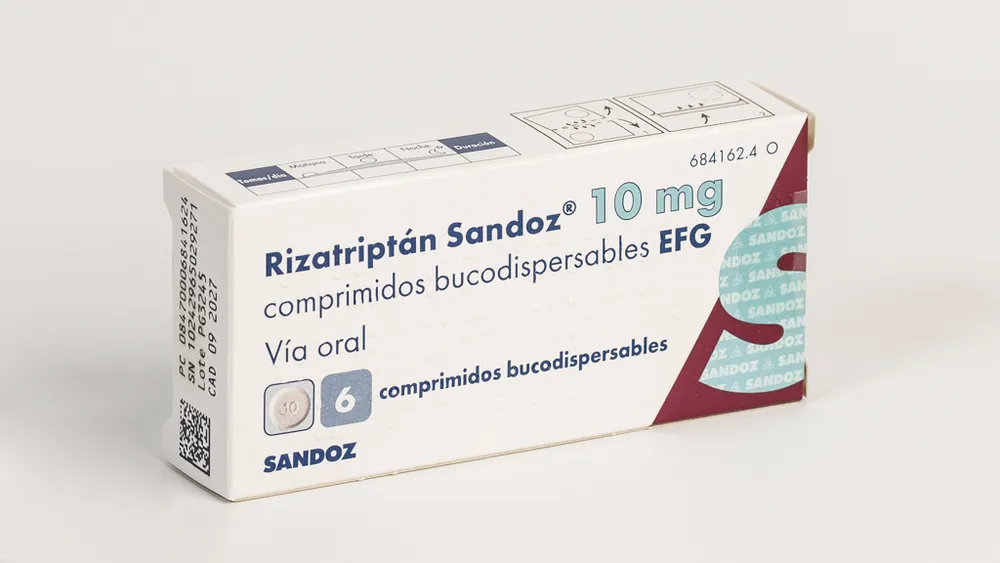
Table of Contents
- Package leaflet: Information for the user
- Introduction
- 1. What Rizatriptán Sandoz is and what it is used for
- 2. What you need to know before taking Rizatriptan Sandoz
- 3. How to take Rizatriptan Sandoz
- 4. Possible adverse effects
- 5. Storage of Rizatriptan Sandoz
- 6. Package contents and other information
Package leaflet: Information for the user
Introduction
Package leaflet: information for the user
Rizatriptan Sandoz 10 mg orodispersible tablets EFG
Read the entire leaflet carefully before you start taking this medicine, because it contains important information for you.
- Keep this leaflet, as you may need to read it again.
- If you have any questions, ask your doctor or pharmacist.
- This medicine has been prescribed for you only and must not be given to other people, even if they have the same symptoms as you. It could harm them.
- If you experience any adverse effects, consult your doctor or pharmacist, even if they are effects not listed in this leaflet. See section 4.
Leaflet contents
- What Rizatriptan Sandoz is and what it is used for
- What you need to know before taking Rizatriptan Sandoz
- How to take Rizatriptan Sandoz
- Possible side effects
- How to store Rizatriptan Sandoz
- Contents of the pack and other information
1. What Rizatriptán Sandoz is and what it is used for
Rizatriptán Sandoz contains the active substance rizatriptan, which belongs to a group of medicines called selective 5-HT1B/1D serotonin receptor agonists.
Rizatriptan is used to treat headache pain caused by migraine attacks in adults.
2. What you need to know before taking Rizatriptan Sandoz
Do not take Rizatriptan Sandoz if:
- you are allergic to rizatriptan or to any of the other ingredients of this medicine (listed in section 6),
- you are currently taking monoamine oxidase inhibitors (MAOIs), such as moclobemide, phenelzine, tranylcypromine (used to treat depression), or linezolid (a medicine used to treat bacterial infections), or if less than two weeks have passed since you stopped taking an MAOI (see section "Taking Rizatriptan Sandoz with other medicines"),
- you have severely impaired kidney or liver function,
- you have previously had a stroke or stroke-like symptoms that disappeared after one or two days (transient ischaemic attack, TIA),
- you have severe, moderately severe, or mild high blood pressure that is NOT controlled with medication,
- you have had heart disease (poor blood circulation in the heart arteries), a heart attack, or a specific type of chest pain known as Prinzmetal's angina,
- you have had circulation problems in your legs (peripheral vascular disease),
- you are taking another migraine medicine such as ergotamine, ergot-type medicines (dihydroergotamine, methysergide), or other medicines of the same class (i.e., 5-HT1B/1D receptor agonists, such as sumatriptan, naratriptan, or zolmitriptan) (see section "Taking Rizatriptan Sandoz with other medicines").
Warnings and precautions
Talk to your doctor or pharmacist before taking Rizatriptan Sandoz if you have:
-
any of the following risk factors for heart disease:
-
high blood pressure or diabetes,
-
you are a smoker or using nicotine replacement products,
- family history of heart disease,
- you are a man over 40 years of age or a postmenopausal woman,
- kidney or liver problems,
- a specific heart rhythm problem (bundle branch block),
- you have had allergies,
- headache associated with dizziness, difficulty walking, lack of coordination, or weakness in arms and legs,
- you have had allergic reactions such as swelling of the face, lips, tongue, and/or throat, which may cause difficulty breathing or swallowing, caused by this medicine or similar ones (angioedema),
- you have experienced transient symptoms including chest pain or tightness.
If you take rizatriptan too frequently, it may lead to chronic headache. In such cases, you should contact your doctor immediately and stop taking these tablets.
Please inform your doctor or pharmacist about all your symptoms. Your doctor will determine whether you have migraines. You should only take rizatriptan for a migraine attack. Rizatriptan must not be used to treat other types of headaches that may be caused by more serious conditions.
If you are over 65 years of age, your doctor will advise you on whether you can take these tablets.
Children and adolescents
The use of rizatriptan is not recommended in children and adolescents under 18 years of age.
Other medicines and Rizatriptan Sandoz
Tell your doctor or pharmacist if you are taking, have recently taken, or might need to take any other medicines.
DO NOT take rizatriptan together with:
Monoamine oxidase inhibitors (MAOIs) such as moclobemide, phenelzine, linezolid, or tranylcypromine, or if less than two weeks have passed since you stopped taking an MAOI.
Certain migraine medicines, e.g.,
- other medicines of the same class as rizatriptan, such as sumatriptan, naratriptan, or zolmitriptan,
- ergot-type medicines such as ergotamine, dihydroergotamine, or methysergide. After taking rizatriptan, you must wait at least 6 hours before taking these medicines, and wait at least 24 hours before starting rizatriptan after stopping ergot-type medicines.
Ask your doctor for advice on how to take rizatriptan and information about risks if you are also taking:
- antidepressants such as sertraline, escitalopram, fluoxetine, venlafaxine, and duloxetine,
- propranolol (commonly used to treat high blood pressure) – in this case, only the lower 5 mg dose of rizatriptan should be taken,
- St John’s wort (Hypericum perforatum). Taking it together with rizatriptan may increase the risk of adverse effects. It is recommended not to take rizatriptan together with St John’s wort.
Taking Rizatriptan Sandoz with food
It is preferable to take these tablets on an empty stomach, but you may also take them after eating. If you take rizatriptan with food, it may take longer to take effect.
Pregnancy and breastfeeding
If you are pregnant or breastfeeding, think you may be pregnant, or plan to become pregnant, consult your doctor or pharmacist before using this medicine.
Available data on the safety of rizatriptan during the first three months of pregnancy do not indicate an increased risk of birth defects.
It is unknown whether rizatriptan is harmful to the fetus when taken by a pregnant woman after the first three months of pregnancy.
If you are breastfeeding, you may delay breastfeeding for 12 hours after treatment to avoid exposing the baby.
Consult your doctor or pharmacist before using any medicine.
Driving and using machines
Migraine or treatment with rizatriptan may cause drowsiness in some patients. Dizziness has also been reported in some patients taking this medicine. If you experience these effects, you should assess your ability to drive or operate machinery safely.
Rizatriptan Sandoz contains aspartame, sodium, and sulfites
This medicine contains 5.6 mg of aspartame in each orodispersible tablet. Aspartame is a source of phenylalanine, which may be harmful if you have phenylketonuria (PKU), a rare genetic disorder in which phenylalanine accumulates because the body cannot eliminate it properly.
This medicine contains less than 23 mg of sodium (1 mmol) per orodispersible tablet; thus, it is essentially "sodium-free".
This medicine may cause severe allergic reactions and bronchospasm (sudden sensation of suffocation) because it contains sulfites.
3. How to take Rizatriptan Sandoz
Follow exactly the instructions for use of this medicine as given by your doctor. If in doubt, consult your doctor or pharmacist again.
Rizatriptan is not used to prevent migraine. It only works once a migraine attack has started.
The usual recommended dose for adults over 18 years of age is 10 mg at the first signs of a migraine attack. However, in some patients the recommended dose is 5 mg. Your doctor will decide the appropriate dose for you, and it is important that you take the medicine exactly as your doctor has instructed.
Most migraine attacks are relieved with a single dose (one tablet) of rizatriptan. However, if you do not notice relief after taking one tablet, do not take another tablet to treat the same migraine attack, and seek medical advice.
Even if a migraine attack does not respond to rizatriptan, it is still likely that you will respond to the medicine during your next migraine attack.
If you experience another migraine attack within 24 hours after the first one, you may take another tablet of Rizatriptan Sandoz, but do not take more than two tablets within a 24-hour period. Always wait at least 2 hours between doses.
Method of administration
Take the orodispersible tablets as follows:
- Tear off the blister strip along the perforated line.
- Carefully pull the tab of the blister from the arrow, as shown in the illustration.
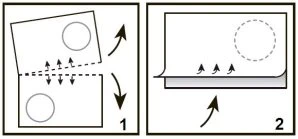
Place the tablet on your tongue so that it dissolves, and swallow it with saliva. It is not necessary to drink water to swallow the tablet.
If you take more Rizatriptan Sandoz than you should
It is important to follow the prescribed dose. If you have taken more tablets than prescribed by your doctor, you must seek immediate medical attention, as an overdose may harm you. Effects caused by taking too many tablets may include effects similar to those described in section 4, especially: dizziness, drowsiness, fainting, and slowed heartbeat. You may also experience increased blood pressure and adverse effects affecting the heart and circulation.
If you have taken more Rizatriptan Sandoz than you should, contact your doctor, pharmacist, or call the Toxicology Information Service immediately at: 91 562 04 20, indicating the medicine and the amount taken.
If you have any further questions about the use of this medicine, ask your doctor or pharmacist.
4. Possible adverse effects
Like all medicines, this medicine can cause adverse effects, although not everyone experiences them.
In clinical trials in adults, the most frequently reported adverse effects were dizziness, drowsiness, and fatigue.
Contact your doctor immediately if you experience symptoms of allergic reactions, serotonin syndrome, heart attack, or stroke:
- allergic reactions, sometimes very severe, including swelling of the face, lips, tongue, and throat that may cause difficulty breathing, speaking, or swallowing (angioedema),
- severe allergic reaction with rash, red skin, blisters in the lips, eyes, or mouth, skin peeling, and fever,
- chest pain, tightness in the chest or throat, or other symptoms associated with a heart attack,
- weakness or paralysis of limbs or face, difficulty speaking, which may indicate a stroke,
- a condition called "serotonin syndrome" characterized by coma, unstable blood pressure, extremely high body temperature, lack of muscle coordination, agitation, and hallucinations.
Adverse effects
Frequent (may affect up to 1 in 10 people):
- dizziness, drowsiness, and feeling weak/tired,
- headache, tingling sensation (paraesthesia), reduced skin sensitivity (hypoesthesia), reduced mental sharpness, insomnia,
- fast or irregular heartbeat (palpitations),
- throat discomfort,
- nausea (feeling unwell), dry mouth, vomiting, diarrhoea, indigestion,
- flushing (temporary reddening of the face),
- sensation of heaviness in parts of the body, neck pain, stiffness,
- stomach or chest pain.
Uncommon (may affect up to 1 in 100 people):
- poor muscle coordination, disorientation, restlessness, sensation of spinning,
- tremor,
- fainting,
- altered sense of taste (bad taste),
- blurred vision,
- high blood pressure,
- hot flushes,
- difficulty breathing,
- thirst,
- rash, itching, rash with bumps, swelling of face, lips, tongue, and/or throat that may cause difficulty breathing and/or swallowing (angioedema),
- sweating,
- sensation of tightness in parts of the body, muscle weakness,
- irregular heartbeat, abnormalities in electrocardiogram (ECG) (a test that records the electrical activity of the heart),
- facial pain, muscle pain.
Rare (may affect up to 1 in 1,000 people):
- wheezing,
- allergic reaction (hypersensitivity); sudden potentially life-threatening allergic reaction (anaphylaxis),
- stroke (this usually occurs in patients with risk factors for heart and blood vessel disease (high blood pressure, diabetes, smoking, use of nicotine replacement therapy, family history of heart disease or stroke, men aged 40 years, postmenopausal women, particularly heart rhythm problems [bundle branch block]),
- slow heartbeat.
Frequency not known (cannot be estimated from available data):
- spasms of blood vessels in the limbs, including coldness and numbness of hands or feet,
- seizures,
- a condition called "serotonin syndrome" which may cause reactions such as coma, unstable blood pressure, extremely high body temperature, lack of muscle coordination, agitation, and hallucinations,
- severe skin detachment with or without fever (toxic epidermal necrolysis),
- ischaemic colitis (inflammation causing abdominal pain or diarrhoea),
- heart attack or spasm of blood vessels in the heart. These generally occur in patients with risk factors for heart and blood vessel disease. Risk factors include high blood pressure, diabetes, smoking, use of nicotine replacement therapy, family history of heart disease or stroke, men over 40 years of age, postmenopausal women, particularly heart rhythm problems (bundle branch block).
Reporting of adverse effects
If you experience any adverse effect, talk to your doctor or pharmacist, even if it is a possible adverse effect not listed in this leaflet. You can also report them directly via the Spanish Pharmacovigilance System for Human Medicines: https://www.notificaram.es. By reporting adverse effects, you can help provide more information on the safety of this medicine.
5. Storage of Rizatriptan Sandoz
Keep this medicine out of sight and reach of children.
Do not use this medicine after the expiry date stated on the blister and outer packaging following EXP. The expiry date refers to the last day of the month indicated.
Store in the original packaging to protect from moisture.
This medicine does not require any special storage temperature.
Medicines should not be disposed of via wastewater or household waste. Dispose of unused containers and medicines at the SIGRE collection point at your pharmacy. If in doubt, ask your pharmacist how to dispose of medicines and containers you no longer need. This will help protect the environment.
6. Package contents and other information
Composition of Rizatriptan Sandoz
The active substance is rizatriptan. Each orodispersible tablet contains 10 mg of rizatriptan (as benzoate).
The other components are: calcium silicate, crospovidone type A, anhydrous colloidal silica, silicified microcrystalline cellulose, mannitol (E 421), aspartame (E 951), magnesium stearate, sweet orange flavouring (containing gum arabic (E 414), ascorbic acid (E 300), ethyl butyrate, maltodextrin, orange oil, propylene glycol (E 1520), sodium, sulphites).
Appearance of the product and contents of the pack
Orodispersible tablet.
White to off-white, round, flat tablets, marked with “RZT” on one side and “10” on the other.
The orodispersible tablets are packed in aluminium/aluminium blisters contained within a cardboard carton.
Pack sizes: 2, 3, 6, 12, 18 orodispersible tablets.
Only certain pack sizes may be marketed.
Marketing Authorisation Holder and Manufacturer
Marketing Authorisation Holder
Sandoz Farmacéutica, S.A.
Parque Norte Business Centre
Roble Building
C/ Serrano Galvache, 56
28033 Madrid
Spain
Manufacturer
Lek Pharmaceuticals, d.d.
Verovškova 57
1526 Ljubljana
Slovenia
or
Lek Pharmaceuticals, d.d.
Trimlini 2D
9220 Lendava
Slovenia
or
LEK S.A.
Ul. Podlipie 16
95-010 Stryków
Poland
or
Lek, S.A.
Ul. Domaniewska 50 C
PL02-672 Warsaw
Poland
or
SANDOZ
SRL Livezeni Street, 7A
RO-540472 Targu Mures
Romania
or
Salutas Pharma GmbH
Otto Von Guericke Allee, 1
D-39179 Barleben
Germany
This medicinal product is authorised in the Member States of the European Economic Area under the following names:
Denmark: Rizatriptan Sandoz
Germany: Rizatriptan lingual – 1 A Pharma 10 mg Schmelztabletten
Italy: RIZATRIPTAN SANDOZ 10 mg compresse orodispersibili
Netherlands: Rizatriptan Sandoz 10 mg, orodispergeerbare tabletten
Slovakia: Rizatriptan Sandoz 10 mg orodispergovatelné tablety
Spain: Rizatriptán Sandoz 10 mg comprimidos bucodispersables EFG
Sweden: Rizatriptan Sandoz 10 mg munsönderfallande tablett
United Kingdom: Rizatriptan 10 mg Orodispersible Tablets
Date of the most recent revision of this leaflet: July 2024.
Detailed and up-to-date information on this medicinal product is available on the website of the Spanish Agency of Medicines and Health Products (AEMPS) http://www.aemps.gob.es/