Rivastigmine Viatris 4.6 mg/24h transdermal patches EFG
Spain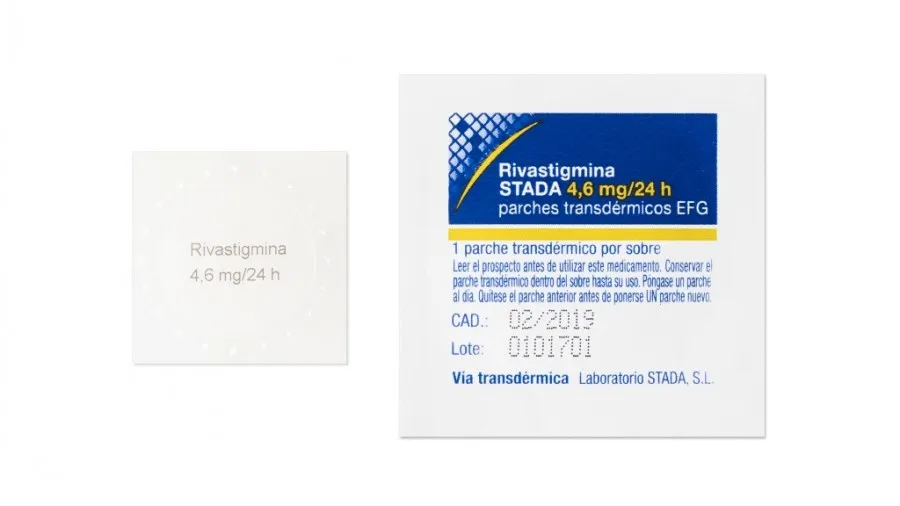
Table of Contents
Patient Information Leaflet
Introduction
Patient Information Leaflet
Rivastigmina Viatris 4.6 mg/24 h transdermal patches EFG
rivastigmine
Read this entire leaflet carefully before you start using this medicine, as it contains important information for you.
- Keep this leaflet as you may need to read it again.
- If you have any questions, ask your doctor or pharmacist.
- This medicine has been prescribed for you only; do not give it to others, even if they have the same symptoms as you, as it could harm them.
- If you experience any adverse effects, consult your doctor or pharmacist, even if they are effects not listed in this leaflet. See section 4.
Leaflet Contents:
- What Rivastigmina Viatris is and what it is used for
- What you need to know before using Rivastigmina Viatris
- How to use Rivastigmina Viatris
- Possible adverse effects
- How to store Rivastigmina Viatris
- Contents of the pack and other information
1. What Rivastigmine Viatris is and what it is used for
The active substance in Rivastigmine Viatris is rivastigmine.
Rivastigmine belongs to the group of cholinesterase inhibitors. In patients with Alzheimer's dementia, certain nerve cells in the brain die, resulting in low levels of the neurotransmitter acetylcholine (a substance that enables nerve cells to communicate with each other). Rivastigmine works by blocking the enzymes that break down acetylcholine: acetylcholinesterase and butyrylcholinesterase.
By inhibiting these enzymes, rivastigmine allows an increase in acetylcholine levels in the brain, helping to reduce the symptoms of Alzheimer's disease.
Rivastigmine Viatris is used to treat adult patients with mild to moderately severe Alzheimer's dementia, a progressive brain disorder that gradually affects memory, intellectual capacity, and behavior.
2. What you need to know before using Rivastigmina Viatris
Do not use Rivastigmina Viatris
- If you are allergic to rivastigmine (the active substance in Rivastigmina Viatris) or to any of the other ingredients of this medicine (listed in section 6).
- If you have ever had an allergic reaction to a similar medicine (carbamate derivatives).
- If you develop a skin reaction that extends beyond the size of the patch, if there is a more intense local reaction (such as blisters, increasing skin inflammation, swelling), or if the reaction does not improve within 48 hours after removing the transdermal patch.
If any of these situations apply to you, inform your doctor and do not use Rivastigmina Viatris.
Warnings and precautions
Talk to your doctor or pharmacist before starting Rivastigmina Viatris:
- If you have or have ever had any heart problems, such as irregular or slow heart rate (pulse), QTc prolongation, family history of QTc prolongation, torsade de pointes, or if you have low blood levels of potassium or magnesium.
- If you have heart failure.
- If you have had a heart attack.
- If you have or have ever had low blood levels of potassium or magnesium.
- If you have or have ever had an active stomach ulcer.
- If you have or have ever had difficulty urinating.
- If you have or have ever had seizures.
- If you have or have ever had asthma or a serious respiratory disease.
- If you experience tremors.
- If you have a low body weight.
- If you have gastrointestinal reactions such as feeling dizzy (nausea), general discomfort (vomiting), or diarrhea. You may become dehydrated (loss of large amounts of fluid) if vomiting or diarrhea are prolonged.
- If you have liver impairment.
If any of these situations apply to you, your doctor may consider it necessary to monitor you more closely during treatment.
Children and adolescents
There is no experience with the use of Rivastigmina Viatris in the pediatric population for the treatment of Alzheimer's disease.
Other medicines and Rivastigmina Viatris
Inform your doctor or pharmacist if you are taking, have recently taken, or might need to take any other medicines, including those obtained without a prescription.
Rivastigmina Viatris may increase the effects of some medicines that lower blood pressure; for example, "beta-blockers" such as atenolol; "calcium channel antagonists" such as amlodipine, nifedipine; "antiarrhythmic medicines" such as sotalol, amiodarone, digitalis, and pilocarpine (used to treat glaucoma). This could cause you to faint.
Caution is advised when using rivastigmine together with other medicines that may affect heart rhythm or the heart's electrical system (QT prolongation).
If you are prescribed any of the following medicines, your doctor may carry out regular heart checks to ensure you do not develop problems:
- Medicines used to treat mental health conditions known as "antipsychotics"; for example, chlorpromazine, levomepromazine, sulpiride, tiapride, veralipride, pimozide, haloperidol, droperidol.
- A medicine called cisapride (used to treat indigestion).
- Citalopram (used to treat depression).
- Difemanil (used to treat peptic ulcer).
- Halofantrine (used to treat malaria).
- Mizolastine (used to treat allergies).
- Methadone (a painkiller, also used in heroin addiction).
- Erythromycin IV, pentamidine, moxifloxacin (antibiotics).
Rivastigmine may interfere with anticholinergic medicines, some of which are used to relieve stomach cramps or spasms (e.g., dicyclomine), to treat Parkinson's disease (e.g., amantadine), to treat an overactive bladder (e.g., oxybutynin, tolterodine), or to prevent motion sickness (e.g., diphenhydramine, scopolamine, or meclizine).
Rivastigmina Viatris must not be administered at the same time as metoclopramide (a medicine used to relieve or prevent nausea and vomiting). Taking both medicines together may cause problems such as stiffness in the limbs and hand tremors.
If you need to undergo surgery while using Rivastigmina Viatris, inform your doctor that you are taking it, as you may need to stop it temporarily because it could excessively enhance the effects of certain muscle relaxants used during anesthesia.
Pregnancy, breastfeeding, and fertility
If you are pregnant or breastfeeding, think you may be pregnant, or are planning to become pregnant, consult your doctor or pharmacist before using this medicine.
If you are pregnant, the benefits of using Rivastigmina Viatris must be weighed against the potential risks to the fetus. Rivastigmina Viatris should not be used during pregnancy unless clearly necessary.
You must not breastfeed during treatment with Rivastigmina Viatris.
Driving and using machines
Your condition may affect your ability to drive or operate machinery, and you should not engage in these activities unless your doctor confirms it is safe to do so. Rivastigmina Viatris may cause dizziness and drowsiness, especially at the beginning of treatment or when the dose is increased. If you experience these effects, you should not drive or operate machinery.
3. How to use Rivastigmina Viatris
Follow exactly the instructions for administering this medicine as given by your doctor or pharmacist. If in doubt, consult your doctor or pharmacist.
IMPORTANT
- Remove the previous patch before applying a NEW patch.
- Only one Rivastigmina Viatris patch should be applied per day.
- Do not cut the patch into pieces.
- Press the patch firmly onto the skin with the palm of your hand for at least 30 seconds.
- Avoid touching your eyes after handling the patch.
How to start treatment
Your doctor will determine the most appropriate dose of Rivastigmina Viatris for your individual case.
- Treatment is usually started with Rivastigmina Viatris 4.6 mg/24 h.
- The usual recommended daily dose is Rivastigmina Viatris 9.5 mg/24 h. If your condition does not improve after at least 6 months, your doctor may consider increasing the dose to 13.3 mg/24 h (this medicine does not come in a 13.3 mg/24 h strength. For situations in which this dose is required, consult your pharmacist).
- Wear only one transdermal patch at a time and replace the patch with a new one every 24 hours.
During treatment, your doctor may adjust the dose according to your individual needs.
If you have not used the patches for three days, do not apply a new one without first consulting your doctor, as you may be more likely to experience adverse effects. Transdermal patch treatment may be restarted at the same dose if treatment has been interrupted for no more than three days. Otherwise, your doctor will instruct you to restart treatment with Rivastigmina Viatris 4.6 mg/24 h.
Where to apply Rivastigmina Viatris
- Before applying a patch, ensure the skin is clean, dry, and hair-free, without powders, oils, moisturizers, or lotions that may prevent the patch from adhering properly, and without cuts, redness, or irritation.
- Carefully remove any patch you are wearing before applying a new one. Wearing multiple patches on your body could expose you to an excessive amount of this medicine, which could be potentially dangerous.
- Apply only ONE patch per day to ONLY ONE of the following areas, as shown in the diagrams below:
- Upper right or upper left arm.
- Upper left chest or upper right chest (avoiding the breasts).
- Upper left back or upper right back.
- Lower left back or lower right back.
Remove the previous patch every 24 hours before applying ONE new patch to ONLY ONE of the following possible areas.
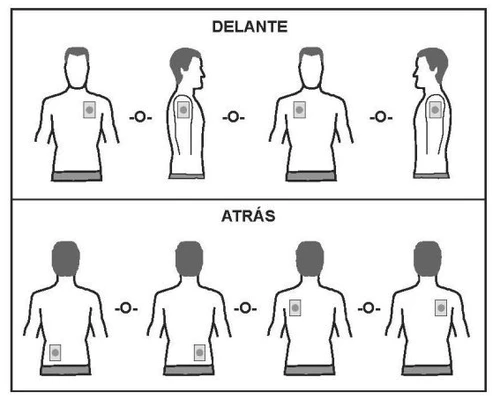
Each time the patch is changed, remove the previous day’s patch before applying the new patch to a different area of skin (for example, one day on the right side of the body and the next day on the left side; and one day on the chest or upper back and the next day on the lower back). Wait at least 14 days before applying a new patch to exactly the same skin area again.
How to apply Rivastigmina Viatris
Rivastigmina Viatris patches are thin, plastic, cinnamon-colored patches that adhere to the skin. Each patch comes in a protective pouch until ready for use. Do not open the pouch or remove the patch from the pouch until the time of application.
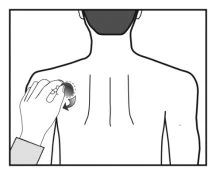
Carefully remove the existing patch before applying a new one.
Patients starting treatment for the first time and patients restarting rivastigmine treatment after an interruption should begin with the second figure.
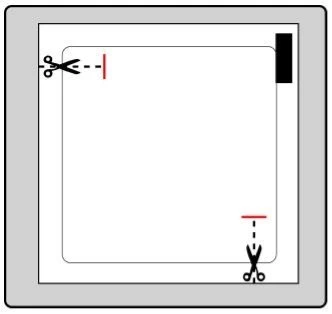
Each patch is contained in an individual protective pouch.
Open the pouch only when you are ready to apply the patch.
Cut the pouch along both scissor marks, without exceeding the indicated line. Tear open the pouch. Do not cut along the entire length of the pouch to avoid damaging the patch.
Remove the patch from the pouch.
Peel off the skin-colored protective liner from the top of the patch and discard it.
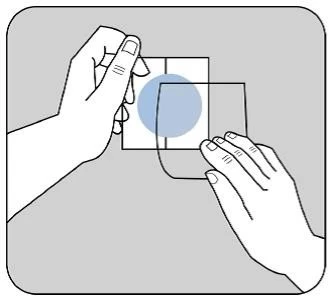
A protective film covers the adhesive side of the patch.
Remove the first protective liner without touching the adhesive side of the patch with your fingers.
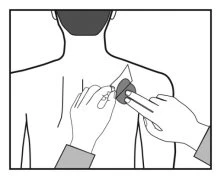
Apply the adhesive side of the patch to the upper or lower back, upper arm, or chest, then remove the second protective liner.
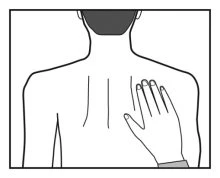
Press firmly on the patch with the palm of your hand for at least 30 seconds and ensure that the edges are properly adhered.
If helpful, you may write on the patch—for example, the day of the week—using a pen with a rounded fine tip.
The patch must be worn continuously until it is time to replace it with a new one. When applying a new patch, try different areas (choosing from those mentioned above) to find the most comfortable ones and where clothing does not rub against the patch.
How to remove Rivastigmina Viatris
Gently pull one edge of the patch to slowly peel it off the skin. If adhesive residue remains on the skin, soak the area with warm water and mild soap or use baby oil to help remove it. Do not use alcohol or other solvent liquids (such as nail polish remover or other solvents).
Wash hands
Wash hands thoroughly with water and soap after applying or removing the patch. If contact occurs with the eyes or if the eyes become red after handling the patch, immediately rinse with plenty of water and seek medical advice if symptoms persist.
Can Rivastigmina Viatris be worn while bathing, swimming, or in the sun?
- Bathing, swimming, or showering should not affect the patch. However, ensure that the patch does not partially detach during these activities.
- Do not expose the patch to external heat sources (e.g., excessive sunlight, sauna, sunbed) for prolonged periods.
What to do if a patch falls off
If a patch falls off, apply a new one to complete that day’s wear and change it again at the usual time the next day.
When and for how long should Rivastigmina Viatris be applied?
- To benefit from your treatment, apply a new patch every day, preferably at the same time each day.
- Wear only one Rivastigmina Viatris patch at a time and replace the patch with a new one every 24 hours.
If you use more Rivastigmina Viatris than you should
If you accidentally apply more than one patch, remove all patches from the skin and inform your doctor or pharmacist, or contact the Toxicology Information Service at telephone number: 91 562 04 20 (indicating the medication and amount administered). Medical attention may be required.
Some people who have accidentally used too much rivastigmine have experienced reduced pupil size (miosis), skin redness and sensation of warmth (hot flushes), stomach pain, feeling unwell (nausea), discomfort (vomiting), diarrhea, slow heart rate, sudden breathing difficulty (bronchospasms), increased sputum production, increased sweating, urinary or bowel incontinence, crying, low blood pressure, increased salivation, dizziness, tremors, headaches, drowsiness, confusion, high blood pressure, hallucinations, or lack of energy (general malaise). In severe cases, muscle weakness, uncontrollable muscle twitching, seizures, respiratory arrest, or slowed breathing have been reported.
If you forget to use Rivastigmina Viatris
If you realize you have forgotten to apply a patch, apply it immediately. The next day, apply the following patch at your usual time. Do not apply two patches to make up for the missed one.
If you interrupt treatment with Rivastigmina Viatris
Inform your doctor or pharmacist if you stop using the patches.
If you have not used the patches for three days or more, do not apply a new patch until you have consulted your doctor, as you may be more likely to experience adverse effects.
If you have any further questions about the use of this medicine, ask your doctor or pharmacist.
4. Possible adverse effects
Like all medicines, this medicine can cause adverse effects, although not everyone gets them.
You may experience adverse effects more frequently when starting treatment or when your dose is increased. Generally, adverse effects will gradually disappear as your body becomes accustomed to the medicine.
If you notice any of the following adverse effects, which may be serious, remove the patch immediately and contact your doctor without delay:
- Epileptic seizures (convulsions).
- Changes in heart rhythm, including a very fast heartbeat or a sensation of missed beats.
- Stomach ulcer (you may experience stomach pain, and if you vomit, blood or material resembling coffee grounds may appear).
- Inflammation of the pancreas – signs include severe pain in the upper abdomen, often accompanied by nausea or vomiting.
- Feeling extremely confused, possibly associated with seeing, feeling, or hearing things that are not real (hallucinations), feeling detached from reality (delusional thinking), or decreased or increased activity (delirium).
- Liver problems (you may notice yellowing of the skin or whites of the eyes, abnormally dark urine, unexplained nausea, vomiting, fatigue, and loss of appetite).
Other possible adverse effects may include:
Frequent (may affect up to 1 in 10 people):
- Headache.
- Loss of appetite, weight decrease.
- Feelings of anxiety, depression, dizziness.
- Fainting.
- General malaise, discomfort, diarrhea, indigestion/heartburn, stomach pain.
- Restlessness, fatigue, general weakness, low-grade fever.
- Skin rashes and allergic skin reactions at the site of patch application, such as eczema-like reactions, redness, itching, swelling, and irritation.
- Urinary tract infection (you may experience pain when urinating or need to urinate more frequently).
- Urinary incontinence (inability to properly control urination).
Uncommon (may affect up to 1 in 100 people):
- Heart problems, such as a slow heartbeat.
- Dehydration (loss of large amounts of fluid).
- Hyperactivity (high level of activity, restlessness).
- Aggression.
Rare (may affect up to 1 in 1,000 people):
- Falls.
Very rare (may affect up to 1 in 10,000 people):
- Stiffness in arms or legs, restlessness, muscle spasms, tremors (e.g., in the hands).
Frequency not known (cannot be estimated from available data):
- Worsening of signs of Parkinson's disease, such as tremors, stiffness, drowsiness, and shuffling gait.
- Allergic skin reactions, such as blisters, inflamed skin, itching, hives, or redness.
- Rapid heartbeat.
- Seeing or hearing things that are not real (hallucinations).
- High blood pressure.
- Changes in blood tests indicating liver function abnormalities.
- Feeling restless.
- Nightmares.
Other adverse effects reported with rivastigmine capsules or oral solution, which may also occur with patches:
Frequent (may affect up to 1 in 10 people):
- General feeling of being unwell.
- Confusion.
- Increased sweating.
Rare (may affect up to 1 in 1,000 people):
- Chest pain – likely caused by spasms in the heart.
- Intestinal ulcer.
Very rare (may affect up to 1 in 10,000 people):
- Gastrointestinal bleeding – manifested as blood in the stool or in vomit.
Frequency not known (cannot be estimated from available data):
- Some people who experienced severe vomiting have had a tear in part of the digestive tract connecting the mouth to the stomach (esophagus).
Reporting of adverse effects
If you experience any adverse effect, talk to your doctor or pharmacist, even if it is a possible adverse effect not listed in this leaflet. You can also report them directly via the Spanish Pharmacovigilance System for Human Medicines: https://www.notificaram.es. By reporting adverse effects, you can help provide more information on the safety of this medicine.
5. Storage of Rivastigmina Viatris
Keep this medicine out of the sight and reach of children.
Do not use this medicine after the expiry date stated on the carton and on the sachet after EXP. The expiry date refers to the last day of the month indicated.
This medicine does not require any special storage conditions.
Keep the transdermal patch inside its sachet until the time of use.
Do not use any patch if it appears damaged or shows signs of tampering.
After removing a patch, fold it in half with the adhesive side inwards and press firmly. When disposing of the used patch, place it back into the original sachet and ensure it is kept out of the reach of children. After removing the patch, avoid touching your eyes and wash your hands thoroughly with water and soap.
Medicines must not be disposed of via wastewater or household waste. Dispose of containers and unused medicines at the SIGRE collection point at your pharmacy. If you are unsure, ask your pharmacist how to dispose of unused containers and medicines. This will help protect the environment.
6. Contents of the pack and other information
Composition of Rivastigmine Viatris
The active substance is rivastigmine.
Each patch releases 4.6 mg of rivastigmine over 24 hours, measures 4.6 cm², and contains 6.9 mg of rivastigmine.
The other components are:
Matrix:
- Poly[(2-ethylhexyl) acrylate, vinyl acetate].
- Medium and high molecular weight polyisobutylene.
- Anhydrous colloidal silica.
- Light mineral oil.
Backing layer:
- Polyethylene/thermoplastic resin/polyester film laminated with aluminium.
Release liner:
- Fluoropolymer-coated polyester film.
- Orange printing ink.
Nature of the product and pack contents
Thin transdermal patch. The outer layer is cinnamon-coloured and printed with orange ink stating:
- «RIV-TDS 4.6 mg/24 h»
Each sachet contains one transdermal patch. Patches are available in packs containing 7 or 30 sachets, and in multipacks containing 60 or 90 sachets. Not all pack sizes may be marketed.
Marketing Authorisation Holder and Manufacturer
Marketing Authorisation Holder:
Viatris Limited
Damastown Industrial Park
Mulhuddart, Dublin 15
Dublin
Ireland
Manufacturer:
McDermott Laboratories Ltd T/A Gerard Laboratories T/A Mylan Dublin
35/36 Baldoyle Industrial Estate,
Grange Road,
Dublin 13,
Ireland
or
Mylan Hungary Kft
Mylan utca 1
Komárom, 2900
Hungary
or
Luye Pharma AG
Am Windfeld 27 and 35
83714 Miesbach
Germany
For further information about this medicinal product, please contact the local representative of the Marketing Authorisation Holder:
Viatris Pharmaceuticals, S.L.U.
C/ General Aranaz, 86
28027 - Madrid
Spain
This medicinal product is authorised in the European Economic Area member states under the following names:
Belgium Rivastigmine Viatris 4.6 mg/24 h Transdermal Patches
Spain Rivastigmina Viatris 4.6 mg/24 h transdermal patches EFG
France Rivastigmine Viatris 4.6 mg/24 h transdermal system
Italy Rivastigmina Mylan Pharma 4.6 mg/24 h
Netherlands Rivastigmine Pleister Viatris 4.6 mg/24 h Pleister voor transdermaal gebruik
Poland Rivastigmine Mylan
Portugal Rivastigmina Mylan
United Kingdom Eluden 4.6 mg/24 h transdermal patch
Date of the most recent revision of this leaflet: May 2024
Detailed information on this medicinal product is available on the website of the Spanish Agency for Medicines and Health Products (AEMPS): http://www.aemps.gob.es/