Respreeza 1,000 mg powder and solvent for solution for infusion
Spain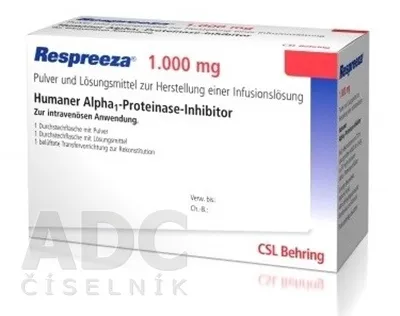
Table of Contents
Package leaflet: Information for the user
Introduction
Package leaflet: Information for the user
Respreeza 1,000 mg powder and solvent for solution for infusion
Respreeza 4,000 mg powder and solvent for solution for infusion
Respreeza 5,000 mg powder and solvent for solution for solution for infusion
Human alpha1-proteinase inhibitor
Read all of this leaflet carefully before you start using this medicine, because it contains important information for you.
-
Keep this leaflet. You may need to read it again.
-
If you have any questions, ask your doctor or healthcare professional.
-
This medicine has been prescribed for you only, and you should not give it to other people, even if they have the same symptoms as you, because it may harm them.
-
If you experience any side effects, talk to your doctor or healthcare professional, even if it is a side effect not listed in this leaflet. See section 4.
Contents of this leaflet:
- What Respreeza is and what it is used for
- What you need to know before using Respreeza
- How to use Respreeza
- Possible side effects
- How to store Respreeza
- Contents of the pack and other information
1. What Respreeza is and what it is used for
What Respreeza is
This medicine contains the active substance human alpha1-proteinase inhibitor, which is a normal component of blood and is present in the lungs, where its main function is to protect lung tissue by limiting the action of a certain enzyme called neutrophil elastase. This enzyme can cause damage if its activity is not controlled (for example, if you have alpha1-proteinase inhibitor deficiency).
What Respreeza is used for
This medicine is used in adults with a known severe deficiency of alpha1-proteinase inhibitor (an inherited condition also known as alpha1-antitrypsin deficiency) who have developed a lung condition called emphysema.
Emphysema develops when the lack of alpha1-proteinase inhibitor affects the proper control of neutrophil elastase, damaging the tiny air sacs in the lungs through which oxygen passes into the body. Due to this damage, the lungs do not function properly.
Regular use of this medicine increases blood and lung levels of alpha1-proteinase inhibitor, thereby slowing the progression of emphysema.
2. What you need to know before using Respreeza
DO NOT use Respreeza
-
if you are allergic to human alpha1-proteinase inhibitor or to any of the other ingredients of this medicine (listed in section 6).
-
if you have been diagnosed with a deficiency of certain blood proteins called immunoglobulin A (IgA) and have developed antibodies against them.
Warnings and precautions
- Consult your doctor or healthcare professional before using Respreeza.
Information on allergic reactions: when should the infusion rate be reduced or stopped?
You may be allergic to human alpha1-proteinase inhibitor even if you have previously received human alpha1-proteinase inhibitors and tolerated them well. In some cases, severe allergic reactions may occur. Your doctor will inform you about the signs of allergic reactions (e.g., chills, flushing, faster heartbeat, drop in blood pressure, dizziness, rash, hives, itching, difficulty breathing or swallowing, and swelling of your hands, face, or mouth) (see also section 4).
- If you experience any of these reactions during infusion of your medicine, inform your doctor or healthcare professional immediately. Depending on the type and severity of the reaction, your doctor may decide to reduce the infusion rate or stop the infusion completely and initiate appropriate treatment.
- In case of self-administration/home treatment, stop the infusion immediately and contact your doctor or healthcare professional.
Information on safety regarding infections
Respreeza is manufactured from human blood plasma (this is the liquid part of blood from which blood cells have been removed).
Because infections can be transmitted through blood, certain measures are implemented during the manufacturing of medicines from human blood or plasma to prevent such infections from being present in the medicine and transmitted to patients. These measures include:
- careful selection of blood and plasma donors to ensure exclusion of individuals who may carry infections,
- testing of donated blood and plasma samples to avoid using material showing signs of viruses or infections,
- inclusion of steps during blood or plasma processing that inactivate or eliminate viruses.
The measures taken are considered effective against viruses such as human immunodeficiency virus (HIV), hepatitis A virus, hepatitis B virus, hepatitis C virus, and parvovirus B19.
However, despite these measures, when administering medicines prepared from human blood or plasma, the possibility of transmitting an infection cannot be completely ruled out. This also applies to any unknown or emerging viruses or other types of infections.
Your doctor may recommend that you consider vaccination against hepatitis A and B if you are receiving regular/repeated treatment with plasma-derived alpha1-proteinase inhibitors.
- It is strongly recommended that each time you receive a dose of Respreeza, you record the product name and batch number to maintain a record of the batches used.
Smoking
Since tobacco smoke is a major risk factor for the development and progression of emphysema, you are strongly advised to stop smoking and avoid passive exposure to tobacco smoke.
Children and adolescents
This medicine is not intended for use in children or adolescents under 18 years of age.
Use of Respreeza with other medicines
- Inform your doctor or healthcare professional if you are taking, have recently taken, or might need to take any other medicines.
Pregnancy, breastfeeding, and fertility
- If you are pregnant or breastfeeding, think you may be pregnant, or plan to become pregnant, consult your doctor or healthcare professional before using this medicine.
Since human alpha1-proteinase inhibitor is a normal component of human blood, the recommended dose of this medicine is not expected to cause harm to the developing fetus. However, due to the lack of safety data on the use of Respreeza during pregnancy, if you are pregnant, this medicine should only be administered with caution.
It is not known whether Respreeza passes into breast milk. If you are breastfeeding, your doctor will explain the risks and benefits of using this medicine.
There are no data on effects on fertility; however, since human alpha1-proteinase inhibitor is a normal component of human blood, no adverse effects on fertility are expected when using Respreeza at the recommended dose.
Driving and use of machines
Dizziness may occur after administration of this medicine. If you feel dizzy, you should not drive or operate machinery until the dizziness has passed (see section 4).
Respreeza contains sodium
Respreeza 1,000 mg powder and solvent for solution for infusion:
This medicine contains approximately 37 mg of sodium (the main component of table/cooking salt) in each vial of Respreeza 1,000 mg. This corresponds to 1.9% of the maximum daily recommended sodium intake for an adult.
Respreeza 4,000 mg powder and solvent for solution for infusion:
This medicine contains approximately 149 mg of sodium (the main component of table/cooking salt) in each vial of Respreeza 4,000 mg. This corresponds to 7.4% of the maximum daily recommended sodium intake for an adult.
Respreeza 5,000 mg powder and solvent for solution for infusion:
This medicine contains approximately 186 mg of sodium (the main component of table/cooking salt) in each vial of Respreeza 5,000 mg. This corresponds to 9.3% of the maximum daily recommended sodium intake for an adult.
Your doctor or healthcare professional will take this into account if you are on a sodium-controlled diet.
3. How to use Respreeza
After reconstitution, Respreeza is administered by intravenous infusion. A healthcare professional experienced in the treatment of alpha1-proteinase inhibitor deficiency will supervise the initial infusions.
Home treatment / Self-administration
After the initial infusions, you or a caregiver may also administer Respreeza, but only after receiving adequate training. If your doctor decides you are suitable for home treatment/self-administration, they will instruct you on:
-
- how to prepare and administer this medicine (see the illustrated instructions at the end of this leaflet under “Information for healthcare professionals and for patients suitable for home treatment/self-administration”)
- how to maintain product sterility (aseptic infusion techniques)
- how to keep a daily treatment record
- how to recognize adverse reactions, including signs of allergic reactions, and the measures to be taken if such reactions occur (see also section 2 and section 4)
Your doctor or healthcare professional will regularly review your infusion technique or that of your caregiver to ensure proper procedures continue to be followed.
Dosage
The amount of Respreeza you receive is based on your body weight. The recommended dose is 60 mg per kg of body weight, administered once weekly. The infusion solution is usually administered over approximately 15 minutes (approximately 0.08 ml of solution per kg of body weight per minute). Depending on your body weight and tolerance to the infusion, your doctor will determine the appropriate infusion rate for you.
If you use more Respreeza than you should
The consequences of overdose are unknown.
- Inform your doctor or healthcare professional if you think you have used more Respreeza than you should, so that appropriate measures can be taken.
If you forget to use Respreeza
- Administer the next dose as soon as possible and continue at regular intervals as directed by your doctor or healthcare professional.
- Do not take a double dose to make up for the missed dose.
If you stop using Respreeza
- Do not stop using this medicine without first consulting your doctor or healthcare professional. If treatment with Respreeza is discontinued, your condition may worsen.
4. Possible adverse effects
Like all medicines, this medicine may cause adverse effects, although not everyone will experience them. These adverse reactions may occur even if you have previously received human alpha1-proteinase inhibitors and tolerated them well.
Some adverse effects may be serious:
Uncommon allergic reactions have been observed (may affect up to 1 in 100 people).
In very rare cases (may affect up to 1 in 10,000 people), these may progress to severe allergic reactions, even if you did not show signs of allergy during previous infusions.
- Immediately inform your doctor or healthcare professional if you experience any signs of allergic reactions (for example, chills, flushing, faster heartbeat, drop in blood pressure, dizziness, rash, hives, itching, difficulty breathing or swallowing, as well as swelling of your hands, face, or mouth) during administration of Respreeza.
Depending on the type and severity of the reaction, your doctor or healthcare professional may decide to reduce the infusion rate or stop the infusion completely and initiate appropriate treatment for the reaction.
In the case of self-administration/home treatment, stop the infusion immediately and contact your doctor or healthcare professional.
Other adverse effects may include:
Frequent (may affect up to 1 in 10 people)
Dizziness, headache, difficulty breathing (dyspnea), nausea.
Uncommon (may affect up to 1 in 100 people)
Altered sensation of touch such as burning, tingling, or numbness in your hands, arms, legs, or feet (paresthesia), flushing, hives (urticaria), scaly rash, generalized rash, physical weakness (asthenia), infusion site reactions (such as burning, stinging, pain, swelling, or redness at the infusion site (hematoma)).
Very rare (may affect up to 1 in 10,000 people)
Reduced sensation of touch such as burning, tingling, or numbness in your hands, arms, legs, or feet (hypoesthesia), excessive sweating (hyperhidrosis), itching, chest pain, chills, fever (pyrexia).
Frequency not known (cannot be estimated from available data)
Pain in lymph nodes (oval-shaped masses of tissue located throughout the body and which can be felt, for example, in the armpits, groin, or neck), swelling of the face, eyes, and lips.
Reporting of adverse effects
- If you experience any type of adverse effect, consult your doctor or healthcare professional, even if these are adverse effects not listed in this leaflet. You may also report them directly through the national reporting system included in Appendix V. By reporting adverse effects, you can help provide more information on the safety of this medicine.
5. Storage of Respreeza
Keep this medicine out of the sight and reach of children.
Do not use this medicine after the expiry date stated on the carton and on the labels of the vials after EXP. The expiry date refers to the last day of the month indicated.
Do not store above 25 °C. Do not freeze.
After reconstitution, the solution should be used immediately. If this is not possible, the solutions may be stored for up to 3 hours at room temperature (up to 25 °C). Do not freeze the reconstituted solution.
6. Contents of the pack and other information
Composition of Respreeza
The active substance is human alpha1-proteinase inhibitor. One vial contains approximately 1,000 mg, 4,000 mg or 5,000 mg of human alpha1-proteinase inhibitor.
The other components are sodium chloride, monosodium phosphate monohydrate and mannitol (see section 2).
Solvent: Water for injections.
Appearance of the product and contents of the pack
This medicine is a white to off-white powder.
After reconstitution with water for injections, the solution should be clear, colourless to slightly yellowish and free from visible particles.
Pack presentations:
Contents of one pack:
Respreeza 1,000 mg powder and solvent for solution for infusion
- 1 single-use vial of powder
- 1 vial of solvent containing 20 ml of water for injections
- 1 transfer device 20/20 (Mix2Vial) for reconstitution
Respreeza 4,000 mg powder and solvent for solution for infusion
- 1 single-use vial of powder
- 1 vial of solvent containing 76 ml of water for injections
- 1 transfer device 20/20 (Mix2Vial) for reconstitution
Administration equipment (inner box):
- 1 IV infusion set
- 1 butterfly-type infusion catheter
- 3 alcohol-impregnated wipes
Respreeza 5,000 mg powder and solvent for solution for infusion
- 1 single-use vial of powder
- 1 vial of solvent containing 95 ml of water for injections
- 1 transfer device 20/20 (Mix2Vial) for reconstitution
Administration equipment (inner box):
- 1 IV infusion set
- 1 butterfly-type infusion catheter
- 3 alcohol-impregnated wipes
Only certain pack sizes may be marketed.
Marketing Authorisation Holder and Manufacturer
CSL Behring GmbH
Emil-von-Behring-Strasse 76
D-35041 Marburg
Germany
Further information on this medicine is available upon request by contacting the local representative of the Marketing Authorisation Holder:
Belgium/Belgium/Belgium CSL Behring NV Tel/Tel: +32 15 28 89 20 | Lithuania CentralPharma Communications UAB Tel: +370 5 243 0444 |
| Luxembourg/Luxembourg CSL Behring NV Tél/Tel: +32 15 28 89 20 |
Czech Republic CSL Behring s.r.o. Tel: +420 702 137 233 | Hungary CSL Behring Kft. Tel.: +36 1 213 4290 |
Denmark CSL Behring AB Tlf: +46 8 544 966 70 | Malta AM Mangion Ltd. Tel: +356 2397 6333 |
Germany CSL Behring GmbH Tel: +49 6190 75 84810 | Netherlands CSL Behring BV Tel: +31 85 111 96 00 |
Estonia CentralPharma Communications OÜ Tel: +3726015540 | Norway CSL Behring AB Tlf: +46 8 544 966 70 |
Greece CSL Behring ΕΠΕ Tel: +30 210 7255 660 | Austria CSL Behring GmbH Tel: +43 1 80101 1040 |
Spain CSL Behring S.A. Tel: +34 933 67 1870 | Poland CSL Behring Sp. z.o.o. Tel.: +48 22 213 22 65 |
France CSL Behring SA Tél: +33 1 53 58 54 00 | Portugal CSL Behring Lda Tel: +351 21 782 62 30 |
Croatia Marti Farm d.o.o. Tel: +385 1 5588297 | Romania Prisum Healthcare S.R.L. Tel: +40 21 322 01 71 |
Ireland CSL Behring GmbH Tel: +49 6190 75 84700 | Slovenia EMMES BIOPHARMA GLOBAL s.r.o.-branch in Slovenia Tel:+ 386 41 42 0002 |
Iceland CSL Behring AB Sími: +46 8 544 966 70 | Slovakia CSL Behring Slovakia s.r.o. Tel: +421 911 653 862 |
Italy CSL Behring S.p.A. Tel: +39 02 34964 200 | Finland/Sweden CSL Behring AB Puh/Tel: +46 8 544 966 70 |
Cyprus CSL Behring ΕΠΕ Tel: +30 210 7255 660 | Sweden CSL Behring AB Tel: +46 8 544 966 70 |
Latvia CentralPharma Communications SIA Tel: +371 6 7450497 |
Date of the most recent review of this leaflet:
Detailed information on this medicine is available on the European Medicines Agency website: http://www.ema.europa.eu.
The following information is intended for healthcare professionals and patients suitable for home treatment/self-administration
General instructions
- Reconstitution must be performed according to the instructions provided below.
- The product must be reconstituted, administered, and handled with care using aseptic techniques to maintain product sterility.
- Do not use the sterile accessories supplied for reconstitution and administration if their packaging is open or damaged.
- The powder must be reconstituted with the solvent (water for injectable preparations).
- Complete reconstitution of the powder should be achieved within 5 minutes (1,000 mg presentation) or within 10 minutes (4,000 mg and 5,000 mg presentations).
- Inspect the reconstituted solution for particles and discoloration prior to administration.
- The reconstituted solution must be clear, colorless or slightly yellowish, and free from visible particles.
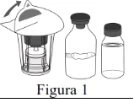
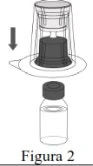
Follow the steps below for the preparation and reconstitution of Respreeza:
| |
| |
| |
Do not remove the Mix2Vial from the blister pack. |
|
|
|
|
|
| |
| |
NOTE: Ensure that all the water has been transferred into the Respreeza vial. |
|
Dispose of the water for injectable preparations vial together with the Mix2Vial. |
|
|
|
| |
Use a separate, unused Mix2Vial and a vial of water for injectable preparations for each Respreeza vial. | |
Use an aseptic technique when transferring the reconstituted solution to the infusion container. |
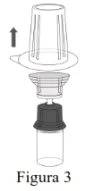
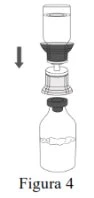
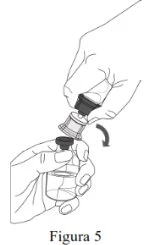
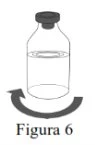
Administration
The reconstituted solution must be administered using an IV infusion set (supplied with the 4,000 mg and 5,000 mg presentations).
|
|
|
|
|
|
|
|
|
Each Respreeza vial is for single use only.
Any unused product or residual material must be discarded following your doctor's or healthcare professional's instructions.