Ramipril/hydrochlorothiazide Normon 2.5 mg/12.5 mg tablets EFG
Spain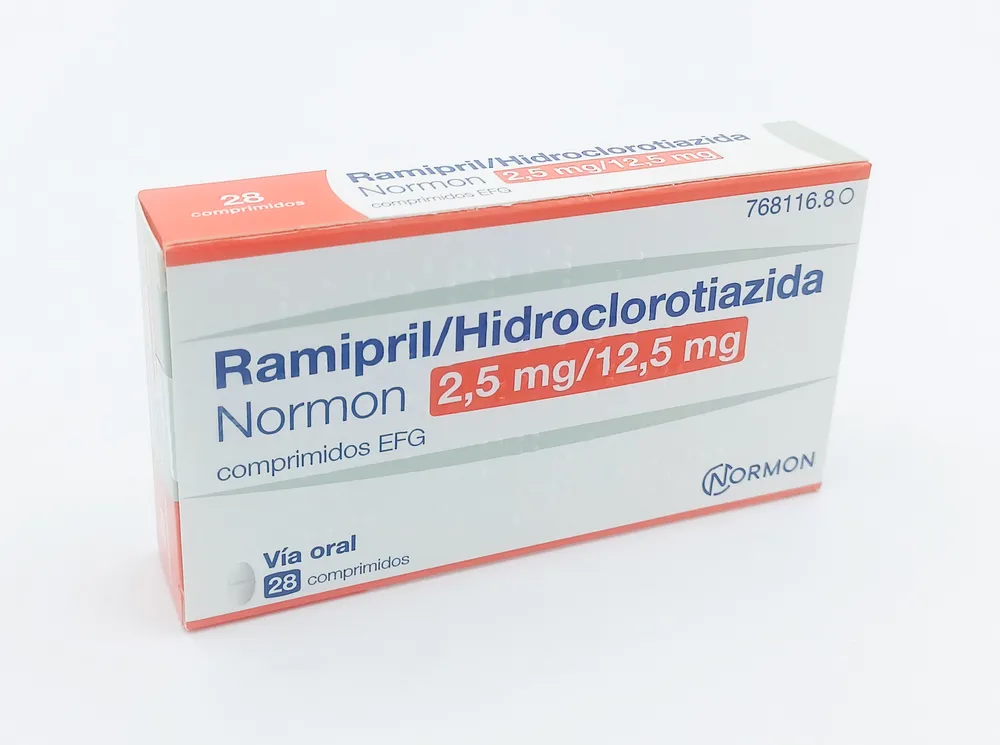
Table of Contents
- Package leaflet: Information for the user
- Introduction
- 1. What Ramipril/Hydrochlorothiazide Normon is and what it is used for
- 2. What you need to know before taking Ramipril/Hydrochlorothiazide Normon
- **Do not take Ramipril/Hydrochlorothiazide Normon**
- **Do not take Ramipril/Hydrochlorothiazide Normon if any of the above conditions apply to you.**
- **Warnings and precautions**
- **Children and adolescents**
- **Taking Ramipril/Hydrochlorothiazide Normon with other medicines**
- **Tests**
- **Pregnancy and breastfeeding**
- **Driving and using machines:**
- 3. How to take Ramipril/Hydrochlorothiazide Normon
- **Taking this medicine**
- **How much medication to take**
- **If you take more Ramipril/Hydrochlorothiazide Normon than you should**
- **If you forget to take Ramipril/Hydrochlorothiazide Normon**
- 4. Possible adverse effects
- **Stop taking Ramipril/Hydrochlorothiazide Normon and contact your doctor immediately if you experience any of the following serious adverse effects, as you may require urgent medical treatment:**
- **Inform your doctor immediately if you experience:**
- **Other possible adverse effects may include:**
- **Frequency not known (cannot be estimated from the available data)**
- **Other observed adverse reactions:**
- **Reporting of adverse reactions**
- 5. Storage of Ramipril/Hydrochlorothiazide Normon
- 6. Contents of the pack and other information
Package leaflet: Information for the user
Introduction
Package leaflet: information for the user
Ramipril/Hydrochlorothiazide Normon 2.5 mg/12.5 mg tablets EFG
Read the entire leaflet carefully before you start taking this medicine, because it contains important information for you.
- Keep this leaflet as you may need to read it again.
- If you have any questions, ask your doctor or pharmacist.
- This medicine has been prescribed for you and you should not give it to others, even if they have the same symptoms, as it may harm them.
- If you experience any adverse effects, consult your doctor or pharmacist, even if they are effects not listed in this leaflet. See section 4.
Contents of the leaflet
- What Ramipril/Hydrochlorothiazide Normon is and what it is used for
- What you need to know before taking Ramipril/Hydrochlorothiazide Normon
- How to take Ramipril/Hydrochlorothiazide Normon
- Possible side effects
- How to store Ramipril/Hydrochlorothiazide Normon
- Contents of the pack and other information
1. What Ramipril/Hydrochlorothiazide Normon is and what it is used for
Ramipril/Hydrochlorothiazide Normon is a combination of two medicines called ramipril and hydrochlorothiazide.
Ramipril belongs to a group of medicines known as ACE inhibitors (angiotensin-converting enzyme inhibitors). It works as follows:
- By decreasing the body's production of substances that may increase blood pressure.
- By relaxing and widening blood vessels.
- By making it easier for the heart to pump blood throughout the body.
Hydrochlorothiazide belongs to a group of medicines called "thiazide diuretics" (diuretics are also known as "water tablets"). It works by increasing the amount of water (urine) that is removed from the body, thereby reducing blood pressure.
Ramipril/Hydrochlorothiazide Normon is used to treat high blood pressure. The two active substances it contains work together to lower blood pressure. They are used in combination when treatment with only one of them does not provide adequate control of your blood pressure.
2. What you need to know before taking Ramipril/Hydrochlorothiazide Normon
Do not take Ramipril/Hydrochlorothiazide Normon
- If you are allergic to the active substances ramipril and/or hydrochlorothiazide or to any of the other components of this medicine (listed in section 6).
- If you are allergic (hypersensitive) to medicines similar to Ramipril/Hydrochlorothiazide Normon (other ACE inhibitors or other sulfonamide derivatives).
- Symptoms of an allergic reaction may include skin rash, difficulty swallowing or breathing, swelling of the lips, face, throat, or tongue.
- If you have ever had a severe allergic reaction called "angioedema," which may cause symptoms such as itching, hives (urticaria), red patches on hands, feet, and throat, swelling of the throat and tongue, swelling of eyelids and lips, or difficulty breathing and swallowing.
- If you have taken or are currently taking sacubitril/valsartan, a medicine used to treat a type of long-term (chronic) heart failure in adults, since the risk of angioedema (rapid swelling beneath the skin, for example in the throat) is high.
- If you are undergoing dialysis or any other type of blood filtration. Depending on the machine used, Ramipril/Hydrochlorothiazide Normon may not be suitable for you.
- If you have severe liver problems.
- If you have abnormal levels of certain electrolytes (calcium, potassium, sodium) in your blood.
- If you have kidney problems resulting in reduced blood flow to your kidneys (renal artery stenosis).
- During the last 6 months of pregnancy (see section on "Pregnancy and breastfeeding" below).
- If you are breastfeeding (see section on "Pregnancy and breastfeeding" below).
- If you have diabetes or renal insufficiency and are being treated with an antihypertensive medicine containing aliskiren.
Do not take Ramipril/Hydrochlorothiazide Normon if any of the above conditions apply to you.
If you are unsure, speak with your doctor before taking Ramipril/Hydrochlorothiazide Normon.
Warnings and precautions
Consult your doctor or pharmacist before starting to take Ramipril/Hydrochlorothiazide Normon:
-
If you have had skin cancer or if you develop an unexpected skin lesion during treatment. Treatment with hydrochlorothiazide, particularly long-term use at high doses, may increase the risk of certain types of non-melanoma skin cancer and lip cancer. Protect your skin from exposure to sunlight and UV rays while taking Ramipril/Hydrochlorothiazide Normon.
-
If you have heart, liver, or kidney problems.
-
If you have lost significant amounts of body salts or fluids (due to vomiting, diarrhea, excessive sweating, a low-salt diet, prolonged use of diuretics, or after dialysis).
-
If you are undergoing treatment to reduce your allergy to bee or wasp stings (desensitization).
-
If you are to receive an anesthetic, for example, during surgery or a dental procedure. You may need to stop taking Ramipril/Hydrochlorothiazide Normon one day beforehand; consult your doctor.
-
If you have high levels of potassium in your blood (shown in blood test results).
-
If you are taking medications or have conditions that may reduce sodium levels in the blood. Your doctor may perform periodic blood tests, particularly to monitor blood sodium levels, especially if you are elderly.
-
If you are taking any of the following medicines, your risk of developing angioedema (rapid swelling beneath the skin, for example in the throat) may increase: sirolimus, everolimus, and other medicines belonging to the mTOR inhibitor group (used to prevent organ transplant rejection); vildagliptin (a medicine used to treat diabetes); neprilysin inhibitors (NEP inhibitors) (such as racecadotril, a medicine used to treat diarrhea) or sacubitril/valsartan. For sacubitril/valsartan, see also “Do not take Ramipril/Hydrochlorothiazide Normon”.
-
If you have a collagen vascular disease such as scleroderma or systemic lupus erythematosus.
-
Inform your doctor if you are pregnant (or suspect you might be). The use of Ramipril/Hydrochlorothiazide Normon is not recommended during the first 3 months of pregnancy and may cause serious harm to your baby after the third month of pregnancy (see section below on “Pregnancy and Breastfeeding”).
-
If you experience a decrease in vision or have eye pain, these could be symptoms of fluid accumulation in the vascular layer of the eye (choroidal effusion) or increased eye pressure, which may occur within hours to one week after taking Ramipril/Hydrochlorothiazide Normon. This may lead to permanent vision loss if not treated. If you previously had an allergy to penicillin or sulfonamides, you may be at higher risk of developing this condition.
-
If you have previously experienced respiratory or lung problems (such as inflammation or fluid in the lungs) after taking hydrochlorothiazide. If you develop shortness of breath or severe difficulty breathing after taking Ramipril/Hydrochlorothiazide Normon, seek medical attention immediately.
-
If you are taking any of the following medicines used to treat high blood pressure:
-
an angiotensin II receptor antagonist (ARA-II) (also known as sartans – for example, valsartan, telmisartan, irbesartan), especially if you have kidney problems related to diabetes.
-
aliskiren.
Your doctor may monitor your kidney function, blood pressure, and blood electrolyte levels (e.g., potassium) at regular intervals.
See also the information under the heading "Do not take Ramipril/Hydrochlorothiazide Normon."
Children and adolescents
Ramipril/Hydrochlorothiazide Normon is not recommended for use in children and adolescents under 18 years of age. This is because the medicine has never been used in these age groups.
If you are unsure whether any of the above conditions apply to you, speak with your doctor before taking Ramipril/Hydrochlorothiazide Normon.
Taking Ramipril/Hydrochlorothiazide Normon with other medicines
Inform your doctor or pharmacist if you are taking, have recently taken, or might need to take any other medicines. This is because Ramipril/Hydrochlorothiazide Normon may affect how some other medicines work. Also, some medicines may affect how Ramipril/Hydrochlorothiazide Normon works.
Tell your doctor if you are taking any of the following medicines. These may cause Ramipril/Hydrochlorothiazide Normon to work less effectively:
- Medicines to relieve pain and inflammation (e.g., non-steroidal anti-inflammatory drugs (NSAIDs), such as ibuprofen or indomethacin, and Aspirin).
- Medicines used to treat low blood pressure, shock, heart failure, asthma, or allergies, such as ephedrine, noradrenaline, or adrenaline. Your doctor will need to monitor your blood pressure.
Tell your doctor if you are taking any of the following medicines. These may increase the likelihood of side effects when taken with Ramipril/Hydrochlorothiazide Normon:
- Sacubitril/valsartan – used to treat a type of long-term (chronic) heart failure in adults (see also “Do not take Ramipril/Hydrochlorothiazide Normon”).
- Medicines to relieve pain and inflammation (e.g., non-steroidal anti-inflammatory drugs (NSAIDs), such as ibuprofen or indomethacin, and Aspirin).
- Medicines that may reduce potassium levels in the blood, such as medicines for constipation, diuretics, amphotericin B (for fungal infections), and ACTH (to check whether your adrenal glands are functioning properly).
- Medicines for heart problems, including heart rhythm disorders.
- Diuretics such as furosemide.
- Potassium supplements (including salt substitutes), potassium-sparing diuretics, and other medicines that may increase potassium levels in the blood (e.g., trimethoprim and co-trimoxazole for bacterial infections; cyclosporine, an immunosuppressant used to prevent organ transplant rejection; and heparin, a medicine used to thin the blood to prevent clots).
- Steroid medicines for inflammation, such as prednisolone.
- Calcium supplements.
- Allopurinol (to lower uric acid levels in the blood).
- Procainamide (to treat heart rhythm problems).
- Cholestyramine (to reduce blood fat levels).
- Carbamazepine (for epilepsy).
- Temsirolimus (for cancer).
- Medicines more commonly used to prevent organ transplant rejection (sirolimus, everolimus, and other mTOR inhibitor-class medicines). See section “Warnings and precautions”.
- Vildagliptin (used to treat Type 2 diabetes).
Your doctor may need to adjust your dose and/or take other precautions:
- If you are taking an angiotensin II receptor antagonist (ARB) or aliskiren (see also the information under the headings “Do not take Ramipril/Hydrochlorothiazide Normon” and “Warnings and precautions”).
Tell your doctor if you are taking any of the following medicines. These may be affected by Ramipril/Hydrochlorothiazide Normon:
- Medicines for diabetes, such as oral glucose-lowering medicines and insulin.
- Ramipril/Hydrochlorothiazide Normon may reduce blood sugar levels. Monitor your blood sugar carefully while taking Ramipril/Hydrochlorothiazide Normon.
- Lithium (used to treat mental health conditions). Ramipril/Hydrochlorothiazide Normon may increase lithium levels in the blood. Your doctor will closely monitor your blood lithium levels.
- Medicines used to relax muscles.
- Quinine (for malaria).
- Medicines containing iodine (such as those sometimes used in hospitals for scans or certain X-rays).
- Penicillin (for infections).
- Oral medicines used to thin the blood (oral anticoagulants), such as warfarin derivatives.
If any of the above conditions apply to you (or if you are unsure), consult your doctor before taking Ramipril/Hydrochlorothiazide Normon.
Tests
Check with your doctor or pharmacist before taking your medication:
- If you are going to undergo a parathyroid function test, Ramipril/Hydrochlorothiazide Normon may affect the results.
- If you participate in athletic events subject to doping controls, be aware that Ramipril/Hydrochlorothiazide Normon could lead to a positive test result.
Taking Ramipril/Hydrochlorothiazide Normon with food and alcohol:
- Drinking alcohol together with Ramipril/Hydrochlorothiazide Normon may make you feel dizzy or lightheaded. If you are concerned about how much alcohol you can consume while taking Ramipril/Hydrochlorothiazide Normon, speak with your doctor, as blood pressure medications and alcohol can have additive effects.
- Ramipril/Hydrochlorothiazide Normon can be taken with or without food.
Pregnancy and breastfeeding
Pregnancy
If you are pregnant or breastfeeding, think you might be pregnant, or are planning to become pregnant, consult your doctor or pharmacist before using this medicine.
You must not take Ramipril/Hydrochlorothiazide Normon during the first 12 weeks of pregnancy, and under no circumstances should you take it after week 13, as its use during pregnancy may possibly harm the baby.
If you become pregnant while taking Ramipril/Hydrochlorothiazide Normon, inform your doctor immediately. An appropriate alternative treatment should be initiated if you are planning to become pregnant.
Breastfeeding
You must not take Ramipril/Hydrochlorothiazide Normon if you are breastfeeding. Consult your doctor or pharmacist before using any medicine.
Driving and using machines:
You may feel dizzy while taking Ramipril/Hydrochlorothiazide Normon, which is more likely to occur when you first start taking Ramipril/Hydrochlorothiazide Normon or when you start taking a higher dose. If you feel dizzy, do not drive or operate tools or machinery.
Ramipril/Hydrochlorothiazide Normon contains sodium
This medicine contains less than 23 mg of sodium (1 mmol) per tablet; essentially, it is "sodium-free".
3. How to take Ramipril/Hydrochlorothiazide Normon
Follow exactly the instructions for use of this medicine given by your doctor or pharmacist. If in doubt, consult your doctor or pharmacist again.
Taking this medicine
- Take this medicine orally at the same time each day, usually in the morning.
- Swallow the tablets whole with liquid.
- Do not crush or chew the tablets.
The score line is intended only for ease of splitting and swallowing, and should not be used to divide the tablet into equal doses.
How much medication to take
Treatment of high blood pressure
Your doctor will adjust your dose until your blood pressure is under control.
Elderly patients
Your doctor will reduce your starting dose and adjust your treatment more slowly.
If you take more Ramipril/Hydrochlorothiazide Normon than you should
Contact your doctor immediately or go to the nearest hospital emergency department. Do not drive to the hospital: ask someone to take you or call an ambulance. Take the medicine packaging with you so your doctor can see what you have taken.
You may also call the Toxicology Information Service at telephone number 91 562 04 20, indicating the medicine and the amount taken.
If you forget to take Ramipril/Hydrochlorothiazide Normon
- If you forget to take a dose, take your usual dose at the next scheduled time.
- Do not take a double dose to make up for forgotten tablets.
If you have any further questions about the use of this medicine, ask your doctor or pharmacist.
4. Possible adverse effects
Like all medicines, this medicine may cause adverse effects, although not everyone will experience them.
Stop taking Ramipril/Hydrochlorothiazide Normon and contact your doctor immediately if you experience any of the following serious adverse effects, as you may require urgent medical treatment:
- Swelling of the face, lips, or throat, which may make swallowing or breathing difficult, along with itching and rash, as these could be signs of a severe allergic reaction to Ramipril/Hydrochlorothiazide Normon.
- Severe skin reactions, such as rash, mouth sores, worsening of a pre-existing skin condition, redness, blistering, or skin peeling (such as Stevens-Johnson syndrome, toxic epidermal necrolysis, or erythema multiforme).
Inform your doctor immediately if you experience:
- Faster heartbeat, irregular or strong heartbeats (palpitations), chest pain, chest tightness, or more serious problems such as heart attack and stroke.
- Difficulty breathing, cough, and fever lasting 2 to 3 days, and loss of appetite. These could be symptoms of lung problems, including inflammation.
- Easy bruising, bleeding longer than normal, any sign of bleeding (e.g., from gums), purple spots on the skin, skin rashes, or becoming infected more easily than usual, sore throat and fever, feeling tired, dizzy, or pale skin, which could be signs of blood or bone marrow problems.
- Severe stomach pain, which may spread to the back, possibly indicating pancreatitis (inflammation of the pancreas).
- Fever, chills, fatigue, loss of appetite, stomach pain, nausea (feeling like vomiting), yellowing of the skin or eyes (jaundice), which could be symptoms of liver problems, such as hepatitis (liver inflammation) or liver damage.
- Severe eye pain, blurred vision, or seeing halos around lights, headache, excessive tearing, or nausea and vomiting, which may indicate a condition called glaucoma.
Other possible adverse effects may include:
Inform your doctor if any of the following adverse effects worsen or persist for more than a few days.
Common (may affect up to 1 in 10 people)
- Headache or feeling weak or tired.
- Dizziness, which is more likely to occur when starting Ramipril/Hydrochlorothiazide Normon or when starting a higher dose.
- Irritative dry cough or bronchitis.
- Blood tests showing higher than normal blood sugar levels. If you have diabetes, it may worsen.
- Blood tests showing increased levels of uric acid or fats.
- Pain, redness, or swelling in the joints.
Uncommon (may affect up to 1 in 100 people)
- Skin rash, with or without raised areas.
- Flushing, dizziness, hypotension (low blood pressure), especially when standing up or getting up quickly.
- Balance problems (vertigo).
- Itching and abnormal skin sensations such as numbness, tingling, pricking, burning, or skin "pins and needles" sensations (paresthesias).
- Loss of taste or changes in taste.
- Sleep disturbances.
- Depression, anxiety, increased nervousness or restlessness.
- Nasal congestion, facial sinus inflammation (sinusitis), difficulty breathing.
- Gum inflammation (gingivitis), mouth inflammation.
- Redness, itching, swelling of the eyes, or excessive tearing.
- Ringing in the ears (tinnitus).
- Blurred vision.
- Hair loss.
- Chest pain.
- Muscle pain.
- Constipation, stomach or abdominal pain.
- Stomach discomfort after meals or feeling sick (nausea).
- Urinating more than normal during the day.
- Excessive sweating or feeling thirsty.
- Loss or decrease in appetite (anorexia), reduced hunger.
- Faster or irregular heartbeats.
- Swelling of arms and legs, which may indicate fluid retention.
- Fever.
- Sexual impotence in men.
- Blood tests showing reduced numbers of red blood cells, white blood cells, or platelets, or reduced hemoglobin levels.
- Blood tests showing changes in liver, pancreas, or kidney function.
- Blood tests showing lower than normal potassium levels.
Very rare (may affect up to 1 in 10,000 people)
- Vomiting, diarrhea, or stomach burning (heartburn).
- Swollen and red tongue or dry mouth.
- Blood tests showing higher than normal potassium levels.
- Acute breathing difficulty (symptoms include severe shortness of breath, fever, weakness, and confusion).
Frequency not known (cannot be estimated from the available data)
Skin and lip cancer (non-melanoma skin cancer).
- Rapid onset of reduced distance vision (acute myopia), decreased vision, or eye pain due to elevated pressure (possible signs of fluid accumulation in the vascular layer of the eye (choroidal effusion) or acute angle-closure glaucoma)
Other observed adverse reactions:
Inform your doctor if any of the following adverse reactions worsen or last for more than a few days.
- Difficulty concentrating, feeling restless or confused.
- Fingers of hands and feet changing color in the cold, followed by tingling or pain upon warming (Raynaud's phenomenon).
- Breast enlargement in males.
- Formation of blood clots.
- Hearing problems.
- Reduced tear formation compared to normal.
- Seeing objects as yellow in color.
- Dehydration.
- Swelling, pain, and redness in one cheek (inflammation of a salivary gland).
- Intestinal inflammation called "intestinal angioedema," with symptoms such as abdominal pain, vomiting, and diarrhea.
- Increased sensitivity to sunlight.
- Significant skin peeling or flaking, itchy rash with bumps, or other skin reactions, such as reddish rash on the face or forehead.
- Skin rash or bruising.
- Skin spots and cold extremities.
- Nail problems (detachment or separation of a nail from its bed).
- Musculoskeletal stiffness or inability to move the jaw (tetany).
- Muscle weakness or cramps.
- Decreased sexual appetite in men or women.
- Blood in the urine, which could be a sign of kidney problems (interstitial nephritis).
- Higher than normal amount of sugar in the urine.
- Increased number of a certain type of white blood cells (eosinophilia) in a blood test.
- Blood test showing very few blood cells (pancytopenia).
- Blood test showing changes in the levels of salts such as sodium, calcium, magnesium, and chloride in the blood.
- Concentrated urine (dark color), feeling or being unwell, muscle cramps, confusion, and seizures, which may be due to inappropriate ADH (antidiuretic hormone) secretion. If you experience these symptoms, consult your doctor as soon as possible.
- Slowness or difficulty in reacting.
- Change in the smell of things.
- Breathing problems or worsening of asthma.
Reporting of adverse reactions
If you experience any type of adverse reaction, consult your doctor, pharmacist, or nurse, even if it is a possible adverse reaction not listed in this leaflet. You can also report them directly through the Spanish Pharmacovigilance System for Human Medicinal Products: https://www.notificaram.es.
By reporting adverse reactions, you can help provide more information on the safety of this medicine.
5. Storage of Ramipril/Hydrochlorothiazide Normon
Keep this medicine out of the sight and reach of children.
Do not use this medicine after the expiry date stated on the packaging, after EXP. The expiry date refers to the last day of the month indicated.
Store below 25°C.
Keep in the original packaging to protect from moisture.
Medicines should not be disposed of via wastewater or household waste. Return any unused medicines and their containers to the SIGRE collection point at your pharmacy. Ask your pharmacist how to dispose of medicines and containers you no longer need. This helps protect the environment.
6. Contents of the pack and other information
Composition of Ramipril/Hydrochlorothiazide Normon
- The active substances are ramipril and hydrochlorothiazide.
- Each tablet contains 2.5 mg of ramipril and 12.5 mg of hydrochlorothiazide.
- The other components are: microcrystalline cellulose, pregelatinized corn starch, low-substituted hydroxypropylcellulose, anhydrous colloidal silica, sodium hydrogen carbonate and magnesium stearate.
Appearance of the product and contents of the pack
Ramipril/Hydrochlorothiazide Normon 2.5 mg/12.5 mg: White, elliptical, biconvex tablets, engraved with the letters “R H” and a break line on one side and blank on the other.
The tablet diameter is 8.2 x 4.1 mm ± 10%.
The break line is intended solely for ease of splitting and swallowing, but not for dividing into equal doses.
Ramipril/Hydrochlorothiazide Normon is available in packs of 28 tablets in aluminum/polyamide-aluminum-PVC blisters.
Marketing Authorization Holder and Manufacturer
LABORATORIOS NORMON, S.A.
Ronda de Valdecarrizo, 6 – 28760 Tres Cantos – Madrid (SPAIN)
Date of the most recent review of the package leaflet: July 2025
March 2025
Other sources of information
Detailed information on this medicinal product is available on the website of the Spanish Agency of Medicines and Health Products (AEMPS): http://www.aemps.gob.es