Quinux 20 mg/0.8 ml solution for injection in pre-filled syringe
SpainTable of Contents
Package leaflet: Information for the user
Introduction
Package leaflet: information for the patient
QUINUX 20 mg/0,8 ml solution for injection in pre-filled syringe
Methotrexate
Read the entire leaflet carefully before you start using this medicine, because it contains important information for you.
- Keep this leaflet, as you may need to read it again.
- If you have any questions, ask your doctor or pharmacist.
- This medicine has been prescribed for you only, and you should not give it to other people, even if they have the same symptoms as you, because it may harm them.
- If you experience any adverse reactions, consult your doctor or pharmacist, even if they are adverse reactions not listed in this leaflet. See section 4.
Leaflet contents
- What Quinux is and what it is used for
- What you need to know before using Quinux
- How to use Quinux
- Possible side effects
- How to store Quinux
- Contents of the pack and other information
1. What Quinux is and what it is used for
Quinux contains methotrexate as the active substance.
Methotrexate is a substance with the following properties:
- interferes with the growth of certain rapidly reproducing cells in the body,
- reduces the activity of the immune system (the body's natural defense mechanism),
- has anti-inflammatory effects.
Quinux is indicated for the treatment of:
- active rheumatoid arthritis in adult patients,
- polyarticular forms of active severe juvenile idiopathic arthritis (JIA), when the response to non-steroidal anti-inflammatory drugs (NSAIDs) has been inadequate,
- severe, recalcitrant, and disabling psoriasis that does not respond adequately to other treatments such as phototherapy, PUVA (psoralen + UVA radiation), and retinoids, and severe psoriatic arthritis in adult patients.
Rheumatoid arthritis (RA) is a chronic collagen disease characterized by inflammation of the synovial membranes (joint membranes). These membranes produce a fluid that acts as a lubricant in many joints. Inflammation causes thickening of the membrane and joint swelling.
Juvenile arthritis affects children and adolescents under 16 years of age. The polyarticular forms are defined by involvement of five or more joints within the first six months of the disease.
Psoriatic arthritis is a type of arthritis associated with psoriatic skin and nail lesions, particularly affecting the joints of the fingers and toes.
Psoriasis is a common chronic skin disease characterized by red patches covered with thick, dry, silvery, adherent scales.
Quinux modifies and slows the progression of the disease.
2. What you need to know before using Quinux
Do not use Quinux
- if you are allergic to methotrexate or any of the other ingredients of this medicine (listed in section 6),
- if you have severe liver or kidney disease or blood disorders,
- if you regularly consume large amounts of alcohol,
- if you have a severe infection, such as tuberculosis, HIV, or other immunodeficiency syndromes,
- if you have a mouth ulcer, gastric ulcer, or intestinal ulcer,
- if you are pregnant or breastfeeding (see section "Pregnancy, breastfeeding and fertility"),
- if you are receiving vaccines made with attenuated microorganisms at the same time.
Warnings and precautions
Talk to your doctor or pharmacist before starting to use Quinux:
- if you are elderly or generally feel unwell and weak,
- if you have impaired liver function,
- if you have dehydration (loss of body fluids).
Acute pulmonary hemorrhage has been reported with methotrexate in patients with underlying rheumatological disease. If you notice blood when coughing or spitting, contact your doctor immediately.
Recommended monitoring tests and safety measures
Even when administered at low doses, Quinux may cause serious adverse effects. To detect these early, your doctor must carry out regular blood tests and check-ups.
Before starting treatment with Quinux
Before starting treatment, blood tests will be performed to ensure you have sufficient blood cells, and tests will be conducted to assess liver function and to determine whether you have hepatitis (liver infection). Additionally, serum albumin levels (a blood protein), hepatitis status, and kidney function will be monitored. Your doctor may also decide to perform further liver tests, some of which may include imaging of your liver, while others may require a small tissue sample from the liver for closer examination. Your doctor may also check for tuberculosis (an infectious disease associated with small nodules in affected tissue) and may perform a chest X-ray or lung function test.
During treatment
Your doctor may perform the following examinations:
- examination of the mouth and throat to detect changes in the mucous membranes, such as inflammation or ulceration,
- blood tests / complete blood count including blood cell counts and measurement of serum methotrexate levels,
- blood tests to monitor liver function,
- imaging tests to monitor liver condition,
- a small tissue sample taken from the liver for closer examination,
- blood tests to monitor kidney function,
- respiratory system examination and, if necessary, lung function testing.
It is very important that you attend these scheduled examinations.
If any of these test results are abnormal, your doctor will adjust your treatment accordingly.
Methotrexate may affect the immune system and the results of vaccinations.
It may also affect the results of immunological tests. It can reactivate inactive chronic infections (e.g., herpes zoster ["shingles"], tuberculosis, hepatitis B or C). During treatment with Quinux, you must not receive vaccines made with attenuated microorganisms.
Methotrexate may make your skin more sensitive to sunlight. Avoid strong sunlight and do not use sunbeds or ultraviolet lamps without medical advice. To protect your skin from intense sunlight, wear appropriate clothing or use a high-protection sunscreen.
During treatment with methotrexate, radiation-induced dermatitis and sunburns may reappear (recall reactions). Psoriatic lesions may worsen during UV radiation (ultraviolet radiation) and simultaneous administration of methotrexate.
An increase in the size of lymph nodes (lymphoma) may occur, and in such cases, treatment must be discontinued.
Diarrhea may be a toxic effect of Quinux requiring treatment discontinuation. If you experience diarrhea, speak to your doctor.
Encephalopathy (a brain disorder) and leukoencephalopathy (a specific disorder of the brain's white matter) have been reported in cancer patients receiving methotrexate. These disorders cannot be ruled out when methotrexate is used to treat other diseases.
If you, your partner, or caregiver notice the onset or worsening of neurological symptoms such as general muscle weakness, vision disturbances, changes in thinking, memory, and orientation leading to confusion, or personality changes, contact your doctor immediately, as these may be symptoms of a very rare but serious brain infection called progressive multifocal leukoencephalopathy (PML).
Special precautionary measures for Quinux treatment
Methotrexate temporarily affects sperm and egg production, which is reversible in most cases. Methotrexate may cause miscarriages and severe birth defects. If you are a woman, you must avoid becoming pregnant while taking methotrexate and for at least 6 months after stopping treatment. If you are a man, you must avoid fathering a child while taking methotrexate and for at least 3 months after stopping treatment. See also section "Pregnancy, breastfeeding and fertility."
Elderly patients
Elderly patients receiving methotrexate should be closely monitored by a doctor so that possible side effects can be detected as early as possible.
Age-related decline in liver and kidney function, as well as low body reserves of folic acid in older age, require a relatively low dose of methotrexate.
Other medicines and Quinux
Inform your doctor or pharmacist if you are taking, have recently taken, or might need to take any other medicines.
The effect of treatment may be altered if Quinux is taken at the same time as certain medicines:
- Medicines that damage the liver or blood, for example, leflunomide
- Antibiotics (medicines that prevent or treat certain infections) such as: tetracyclines, chloramphenicol, non-absorbable broad-spectrum antibiotics, penicillins, glycopeptides, sulfonamides (medicines containing sulfur that prevent or treat certain infections), ciprofloxacin, and cephalothin
- Non-steroidal anti-inflammatory drugs or salicylates (medicines for pain or inflammation)
- Probenecid (a medicine for gout)
- Weak organic acids such as loop diuretics or certain medicines used to treat pain and inflammatory diseases (e.g., acetylsalicylic acid, diclofenac, and ibuprofen) and pyrazoles (e.g., metamizole (synonyms novaminsulfon and dipyrone) for severe pain and/or fever)
- Medicines that may cause adverse effects on the bone marrow, for example, trimethoprim-sulfamethoxazole (an antibiotic) and pyrimethamine
- Sulfasalazine (an anti-rheumatic)
- Azathioprine (an immunosuppressant sometimes used in the treatment of severe forms of rheumatoid arthritis)
- Mercaptopurine (a cytostatic)
- Retinoids (medicines for psoriasis and other skin diseases)
- Theophylline (a medicine for bronchial asthma and other lung diseases)
- Proton pump inhibitors (medicines for stomach discomfort)
- Hypoglycemics (medicines used to lower blood sugar levels).
Vitamins containing folic acid may alter the effect of treatment and should only be taken if advised by your doctor.
Vaccinations with vaccines made from attenuated microorganisms must be avoided.
Use of Quinux with food, drinks, and alcohol
During treatment with Quinux, consumption of alcohol and large amounts of coffee, caffeinated soft drinks, and black tea should be avoided.
Pregnancy, breastfeeding and fertility
If you are pregnant or breastfeeding, think you might be pregnant, or plan to become pregnant, consult your doctor or pharmacist before using this medicine.
Pregnancy
Do not use Quinux during pregnancy or if you are trying to become pregnant. Methotrexate may cause birth defects, harm the fetus, or cause miscarriages. It is associated with malformations of the skull, face, heart and blood vessels, brain, and limbs. Therefore, it is very important that methotrexate not be given to pregnant patients or those planning pregnancy. In women of childbearing age, pregnancy must be ruled out by appropriate measures, for example, a pregnancy test before starting treatment. You must avoid becoming pregnant while taking methotrexate and for at least 6 months after stopping treatment, using reliable contraceptive methods throughout this period (see also section "Warnings and precautions").
If you become pregnant during treatment or suspect you may be pregnant, consult your doctor as soon as possible. You should be provided with information about the risk of harmful effects on the child during treatment.
If you wish to become pregnant, consult your doctor, who may refer you to a specialist for counseling before the planned start of treatment.
As methotrexate may be genotoxic, all women planning pregnancy are advised to consult a genetic counseling center, if possible, before treatment. Men should be informed about the possibility of sperm preservation before starting treatment.
Breastfeeding
Breastfeeding must be discontinued during treatment with Quinux.
Male fertility
Available data do not indicate an increased risk of malformations or miscarriages if the father takes a methotrexate dose below 30 mg/week. However, this risk cannot be completely ruled out. Methotrexate may be genotoxic, meaning it may cause genetic mutations. Methotrexate may affect sperm production and cause birth defects. Therefore, you must avoid fathering a child or donating semen while taking methotrexate and for at least 3 months after stopping treatment.
Driving and using machines
Treatment with Quinux may cause adverse reactions affecting the central nervous system, such as fatigue and dizziness. Therefore, your ability to drive or operate machinery may, in some cases, be impaired. If you feel tired or drowsy, you should not drive or use machinery.
Quinux contains sodium
This medicine contains less than 1 mmol of sodium (23 mg) per dose unit; hence, it is essentially "sodium-free".
3. How to use Quinux
Follow exactly the administration instructions for this medicine given by your doctor or pharmacist. If in doubt, consult your doctor or pharmacist again.
Important warning about the dose of Quinux (methotrexate): |
Use Quinux only once a week for the treatment of arthritis and psoriasis. Excessive use of Quinux (methotrexate) can be fatal. Read section 3 of this leaflet very carefully. If you have any doubts, consult your doctor or pharmacist before taking this medicine. |
Your doctor will determine the dose, which will be individually adjusted. Normally, treatment takes between 4 and 8 weeks to take effect.
The Quinux injection will be administered or supervised by your doctor or healthcare professional only once a week. Together with your doctor, you will choose a day of the week suitable for you to receive the injection. Quinux can be injected intramuscularly (into a muscle) or subcutaneously (under the skin).
Use in children and adolescents
The doctor will decide the appropriate dose for children and adolescents with polyarticular forms of juvenile idiopathic arthritis.
Quinux is not recommended for use in children under 3 years of age due to limited experience in this age group.
Duration and method of administration
Quinux is injected once a week.
The doctor in charge will decide the duration of treatment. Treatment of rheumatoid arthritis, juvenile idiopathic arthritis, psoriasis vulgaris, and psoriatic arthritis with Quinux is a long-term treatment.
At the beginning of treatment, Quinux may be administered by medical personnel. However, your doctor may decide that you can learn to self-inject Quinux. You will receive appropriate training for this. Under no circumstances should you attempt to self-inject unless you have been specifically trained to do so.
Refer to the instructions for use at the end of this leaflet.
Handling and disposal of the product must follow the guidelines for other cytotoxic preparations according to local regulations. Pregnant healthcare personnel must not handle or administer Quinux.
Methotrexate must not come into contact with the skin surface or mucous membranes. If contact occurs, the affected area should be immediately rinsed with copious amounts of water.
If you feel that the effect of Quinux is too strong or too weak, consult your doctor or pharmacist.
If you use more Quinux than you should
In case of overdose or accidental ingestion, contact your doctor or pharmacist immediately or call the Toxicology Information Service at: 91 562 04 20.
If you forget to use Quinux
Do not use a double dose to make up for a missed dose.
If you have any further questions about the use of this medicine, ask your doctor, pharmacist, or nurse.
4. Possible adverse effects
Like all medicines, this medicine can cause adverse effects, although not everyone will experience them.
The frequency and severity of adverse effects depend on the dose and frequency of administration. It is important that your doctor performs regular check-ups, as serious adverse effects may occur even at the lowest doses. Your doctor will carry out tests to monitor for abnormalities in the blood, such as low levels of leukocytes (white blood cells), platelets, lymphoma, and changes in the kidneys and liver.
The most relevant adverse effects associated with the administration of Quinux occur in the blood-forming system and the gastrointestinal tract.
Immediately inform your doctor if you experience any of the following symptoms, as they may indicate a serious, potentially life-threatening adverse reaction that may require urgent specific treatment:
- Severe pulmonary discomfort (symptoms may include general malaise, irritating dry cough, difficulty breathing, shortness of breath at rest, chest pain, or fever).
- Coughing up blood.
- Severe blistering or peeling of the skin.
- Unusual bleeding (including vomiting blood) or bruising.
- Severe diarrhea.
- Mouth ulcers.
- Black stools.
- Blood in the urine or feces.
- Small red spots on the skin.
- Fever.
- Yellowing of the skin (jaundice).
- Pain or difficulty urinating.
- Thirst and/or frequent need to urinate.
- Seizures.
- Loss of consciousness.
- Blurred vision or decreased vision.
The following adverse effects may occur:
Very common (may affect more than 1 in 10 people):
- Inflammation of the mouth, indigestion, nausea (feeling of needing to vomit), loss of appetite.
- Increased liver enzymes.
Common (may affect up to 1 in 10 people):
- Oral ulcers, diarrhea.
- Rash, skin redness, itching.
- Headache, fatigue, drowsiness.
- Decreased production of red blood cells with reduced numbers of white blood cells, red blood cells, or platelets (leukopenia, anemia, thrombocytopenia).
Uncommon (may affect up to 1 in 100 people):
- Sore throat, intestinal inflammation, vomiting.
- Sunburn-like reactions due to increased sensitivity of the skin to sunlight, hair loss, increase in rheumatoid nodules, herpes zoster, inflammation of blood vessels, herpes-like rash, urticaria.
- Development of diabetes mellitus.
- Dizziness, confusion, depression.
- Inflammation and ulceration of the urinary bladder or vagina, decreased kidney function, urinary disorders.
- Joint pain, muscle pain, osteoporosis (reduction in bone mass).
- Decreased serum albumin.
Rare (may affect up to 1 in 1,000 people):
- Increased skin pigmentation, acne, bruising due to bleeding from blood vessels.
- Allergic reactions, anaphylactic shock, allergic inflammation of blood vessels, fever, red eyes, infection, blood toxicity, impaired wound healing, decreased number of antibodies in the blood.
- Visual disturbances.
- Inflammation of the sac surrounding the heart, fluid accumulation in the sac around the heart.
- Low blood pressure.
- Pulmonary fibrosis, pneumonia caused by a specific microorganism (Pneumocystis carinii pneumonia), breathing difficulties and bronchial asthma, fluid accumulation in the sac around the lung.
- Electrolyte disturbances.
Very rare (may affect up to 1 in 10,000 people):
- Profuse bleeding, toxic megacolon (toxic and acute dilation of the intestine).
- Scalded skin syndrome, increased pigmentation of the nails, inflammation of the cuticles, furunculosis (deep infection of hair follicles), visible enlargement of small blood vessels.
- Local injury at the site of administration (formation of sterile abscesses, changes in fatty tissue) following intramuscular or subcutaneous injection.
- Vision disturbances, pain, loss of strength, or numbness or tingling sensations, reduced sensitivity to stimuli, taste disturbances (metallic taste), seizures, paralysis, severe headache with fever.
- Retinopathy (non-inflammatory eye disorder).
- Sudden drop in white blood cell count, severe bone marrow suppression.
- Lymphoproliferative disorders (excessive increase in white blood cells).
- Loss of sexual appetite, impotence, enlargement of male breasts (gynecomastia), altered sperm formation, menstrual disorders, vaginal discharge.
- Enlargement of lymph nodes (lymphoma).
Frequency not known (cannot be estimated from available data):
- Leukoencephalopathy (a disease of the brain's white matter).
- Pulmonary hemorrhage.
- Jaw bone damage (secondary to excessive increase in white blood cells).
- Redness and peeling of the skin.
- Tissue damage at the injection site.
- Swelling.
When methotrexate is administered intramuscularly, local adverse reactions (burning sensation) or lesions (formation of sterile abscesses, destruction of fatty tissue) at the injection site may frequently occur. Subcutaneous administration of methotrexate is well tolerated locally. Only mild local skin reactions have been observed, which decreased during treatment.
Reporting of adverse effects
If you experience any type of adverse effect, consult your doctor, pharmacist, or nurse, even if they are possible adverse effects not listed in this leaflet. You can also report them directly through the Spanish Pharmacovigilance System for Human Medicines: https://www.notificaram.es. By reporting adverse effects, you can help provide more information on the safety of this medicine.
5. Storage of Quinux
Keep this medicine out of the sight and reach of children.
Do not store above 25 °C. Store the pre-filled syringes in their outer packaging to protect them from light. Do not refrigerate or freeze.
Do not use this medicine after the expiry date stated on the packaging after EXP. The expiry date is the last day of the month indicated.
Medicines must not be disposed of via wastewater or household waste. Dispose of empty containers and unused medicines at the SIGRE collection point at your pharmacy or any other medicine waste collection system. If in doubt, ask your pharmacist how to dispose of containers and medicines you no longer need. This will help protect the environment.
6. Contents of the pack and other information
Composition of Quinux
- The active substance is methotrexate. 1 ml of solution contains 25 mg of methotrexate (equivalent to 27.42 mg of disodium methotrexate).
One 0.8 ml pre-filled syringe contains 20 mg of methotrexate.
- The other components are sodium chloride, sodium hydroxide, water for injections.
Appearance of the product and contents of the pack
Quinux pre-filled syringes contain a yellowish, transparent solution.
Each pack contains 1 or 4 pre-filled syringe(s) of 0.8 ml solution, with attached subcutaneous injection needles and alcohol-impregnated swabs.
Each pack contains 1 or 4 pre-filled syringe(s) of 0.8 ml solution, with attached safety-engineered subcutaneous injection needles and alcohol-impregnated swabs.
Only certain pack sizes may be commercially available.
Marketing Authorization Holder and Manufacturer
Marketing Authorization Holder
Especialidades Farmacéuticas Centrum, S.A.
C/ Sagitario, 14
03006, Alicante
Spain
Asacpharma Group
Tel.: 965288160; Fax.: 965286434
Manufacturer
Especialidades Farmacéuticas Centrum, S.A.
C/ Sagitario, 14
03006, Alicante
Spain
Date of the most recent review of this leaflet: October 2024.
Detailed information on this medicine is available on the website of the Spanish Agency of Medicines and Health Products (AEMPS) (http://www.aemps.gob.es)
Instructions for use
Read the instructions carefully before starting to administer the injection, and always use the administration technique advised by your doctor, nurse, or pharmacist.
If you have any problems or questions, contact your doctor, nurse, or pharmacist.
Preparation
Select a clean, flat, and well-lit working surface.
Gather all necessary items before starting:
- 1 pre-filled syringe of Quinux
- 1 alcohol-impregnated swab (supplied in the pack)
Wash your hands thoroughly. Before use, inspect the Quinux syringe for any visible defects (or cracks).
Injection site
The best sites for injection are:
- the upper thigh,
- the abdomen, except the area around the navel.
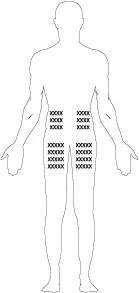
- If someone is assisting you with the injection, they may also administer it into the back of the upper arm, just below the shoulder.
- Change the injection site with each dose. This may reduce the risk of developing injection site reactions.
- Never inject into painful, bruised, red, hardened skin, or areas with scars or stretch marks. If you have psoriasis, do not attempt to inject directly into lesions or raised, thickened, red, or scaly patches of skin.
Injection of the solution
- Open the box containing the pre-filled methotrexate syringe and read the leaflet carefully. Remove the pre-filled syringe from its packaging at room temperature.
- Disinfection: select an injection site and disinfect it with the alcohol-impregnated swab. Wait 60 seconds to allow the disinfectant to dry.

- Carefully remove the protective plastic cap by gently twisting it off. Important: do not touch the needle of the pre-filled syringe.

- Cannula insertion: pinch the skin between two fingers and quickly insert the needle at a 90-degree angle.
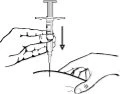
- Injection: fully insert the needle into the skin fold. Slowly push the plunger to inject the liquid under the skin. Hold the skin firmly until the injection is complete. Carefully remove the needle in a straight line.
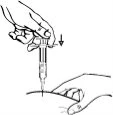
Methotrexate must not come into contact with the skin surface or mucous membranes. In case of contamination, the affected area must be immediately rinsed with abundant water.
If you or someone in your household is injured by the needle, consult your doctor immediately and do not use this pre-filled syringe.
Disposal and other handling
Handling and disposal of the medicine and the pre-filled syringe must be carried out in accordance with local regulations for cytotoxic agents. Pregnant healthcare personnel must not handle or administer Quinux.