Pitavastatin Tecnigen 2 mg film-coated tablets EFG
Spain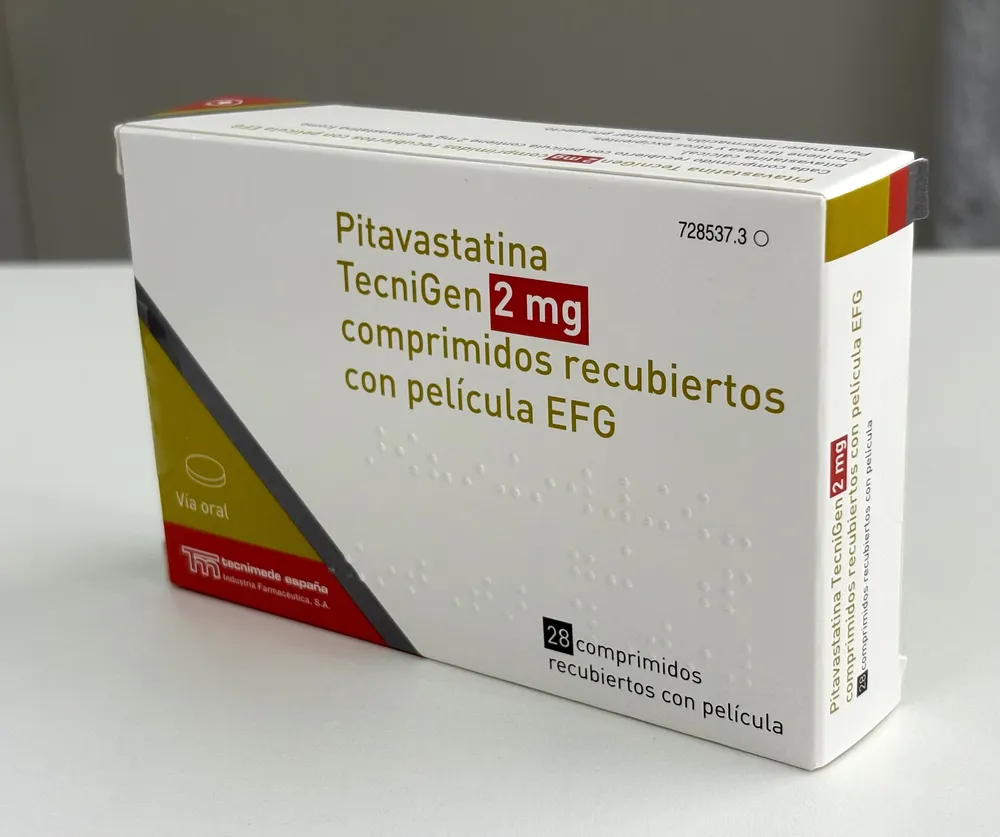
Table of Contents
- Package leaflet: Information for the user
- Introduction
- 1. What Pitavastatin TecniGen is and what it is used for
- 2. What you need to know before starting to take Pitavastatin TecniGen
- **Do not take pitavastatin if:**
- **Warnings and precautions**
- **Children and adolescents**
- **Other medicines and Pitavastatin TecniGen**
- **Taking pitavastatin with food and drinks**
- **Pregnancy, breastfeeding and fertility**
- **Driving and operating machinery**
- **Pitavastatin TecniGen contains lactose**
- 3. How to take Pitavastatin TecniGen
- **Taking this medicine**
- **How much to take**
- **Use in pediatric patients**
- **Other things you need to know while taking Pitavastatin TecniGen**
- **If you take more Pitavastatin TecniGen than you should**
- **If you forget to take Pitavastatin TecniGen**
- 4. Possible adverse effects
- **Stop taking Pitavastatin TecniGen and contact your doctor immediately if you experience any of the following serious side effects, as you may require urgent medical treatment:**
- **Frequent (affects less than 1 in 10 people)**
- **Uncommon (affect less than 1 in 100 people)**
- **Rare (affects less than 1 person in 1,000)**
- **Adverse effects of unknown frequency**
- **Other possible adverse effects**
- **Reporting of adverse reactions**
- 5. Storage of Pitavastatin TecniGen
- 6. Contents of the pack and other information
- **Appearance of the medicinal product and contents of the container**
- **Marketing Authorization Holder and Manufacturing Responsible Party**
- **Other sources of information**
Package leaflet: Information for the user
Introduction
Package leaflet: information for the user
Pitavastatin TecniGen 1 mg film-coated tablets EFG
Pitavastatin TecniGen 2 mg film-coated tablets EFG
Pitavastatin TecniGen 4 mg film-coated tablets EFG
Read the entire leaflet carefully before you start taking this medicine because it contains important information for you.
- Keep this leaflet. You may need to read it again.
- If you have any questions, ask your doctor or pharmacist.
- This medicine has been prescribed for you only and must not be given to other people, even if they have the same symptoms as you, because it may harm them.
- If you experience any adverse effects, consult your doctor or pharmacist, even if they are adverse effects not listed in this leaflet. See section 4.
Contents of the leaflet:
- What Pitavastatin TecniGen is and what it is used for
- What you need to know before taking Pitavastatin TecniGen
- How to take Pitavastatin TecniGen
- Possible adverse effects
- How to store Pitavastatin TecniGen
- Contents of the pack and other information
1. What Pitavastatin TecniGen is and what it is used for
This medicine contains a substance called pitavastatin. It belongs to a group of medicines known as 'statins'. Pitavastatin is used to correct levels of fatty substances (lipids) in the blood and can be taken by both children from the age of 6 and adults. An imbalance of fats, especially cholesterol, can sometimes lead to a heart attack or stroke.
Your doctor has prescribed pitavastatin because you have an imbalance of fats, and changes in diet and lifestyle have not been sufficient to correct it. You should continue with a cholesterol-lowering diet and lifestyle changes while taking pitavastatin.
2. What you need to know before starting to take Pitavastatin TecniGen
Do not take pitavastatin if:
-
you are allergic (hypersensitive) to pitavastatin, to any other statin, or to any of the other
components of pitavastatin (see section 6, ‘Contents of the pack and other information’). -
you are pregnant or breastfeeding.
-
you are a woman who could become pregnant and you are not using an effective method of contraception (see ‘Pregnancy and breastfeeding’).
-
you currently have liver problems.
-
you are taking cyclosporine, a medicine used after organ transplantation.
-
you have repeated or unexplained muscle pain.
If you have any doubts, consult your doctor or pharmacist before starting to take pitavastatin.
Warnings and precautions
Consult your doctor or pharmacist before starting to take pitavastatin:
- if you have severe respiratory insufficiency (serious breathing problems).
- if you have ever had kidney problems.
- if you have previously had liver problems. 'Statins' can affect the liver in some people. Your doctor will usually perform blood tests (to check how your liver is functioning) before and during treatment with pitavastatin.
- if you have ever had thyroid problems.
- if you or a family member has a history of muscle problems.
- if you have previously experienced muscle problems while taking other cholesterol-lowering medicines (e.g., statins or fibrates).
- if you drink large amounts of alcohol.
- if you are taking or have taken within the last 7 days a medicine containing fusidic acid (used to treat bacterial infection) taken orally or by injection. The combination of fusidic acid and pitavastatin may cause serious muscle problems (rhabdomyolysis).
- if you have or have had myasthenia gravis (a disease causing generalized muscle weakness that, in some cases, affects the muscles used for breathing) or ocular myasthenia (a disease causing weakness of the eye muscles), since statins may sometimes worsen the condition or trigger the onset of myasthenia (see section 4).
If any of the above apply to you (or if you have any doubts), consult your doctor or pharmacist before starting to take pitavastatin. Also inform your doctor or pharmacist if you experience persistent muscle weakness. Additional tests and treatments may be needed to diagnose and manage this condition.
While you are taking this medicine, your doctor will monitor you for diabetes or risk of developing diabetes. This risk of diabetes increases if you have high levels of blood sugar and fats, are overweight, or have high blood pressure.
Children and adolescents
Pitavastatin should not be administered to children under 6 years of age.
Before taking pitavastatin, adolescent females should receive counseling and guidance on contraception.
Other medicines and Pitavastatin TecniGen
Inform your doctor or pharmacist if you are taking or have recently taken any other medicines, including those purchased without a prescription or herbal products. Some medicines may cause others to work less effectively.
Specifically, inform your doctor or pharmacist if you are taking any of the following medicines:
- other medicines called 'fibrates', such as gemfibrozil and fenofibrate.
- erythromycin or rifampicin, antibiotics used to treat infections.
- warfarin or any other medicine used to thin the blood.
? medicines for HIV/AIDS called 'protease inhibitors' (for example, ritonavir, lopinavir, darunavir, atazanavir) and 'non-nucleoside reverse transcriptase inhibitors' (for example, efavirenz).
- niacin (vitamin B3).
- If you need to take oral fusidic acid to treat a bacterial infection, you will have to stop using this medicine. Your doctor will advise you when you can restart treatment with pitavastatin. Using pitavastatin with fusidic acid may cause muscle weakness, tenderness, or pain (rhabdomyolysis). For more information about rhabdomyolysis, see section 4.
If any of the above apply to you (or if you have any doubts), consult your doctor or pharmacist before starting pitavastatin.
Taking pitavastatin with food and drinks
You may take pitavastatin with or without food.
Pregnancy, breastfeeding and fertility
Do not take pitavastatin if you are pregnant or breastfeeding. If you intend to become pregnant, inform your doctor before starting pitavastatin.
If you are a woman of childbearing potential, you must use an effective contraceptive method while taking pitavastatin. If you become pregnant while taking pitavastatin, stop taking it immediately and contact your doctor.
If you are pregnant or breastfeeding, consult your doctor or pharmacist before taking any medicine.
Driving and operating machinery
Pitavastatin is not expected to influence the ability to drive or operate machinery. However, if you experience dizziness or somnolence while taking pitavastatin, do not drive or operate machinery or tools.
Pitavastatin TecniGen contains lactose
Pitavastatin contains lactose (a type of sugar). If your doctor has informed you of an intolerance to certain sugars, consult with them before taking this medicine.
3. How to take Pitavastatin TecniGen
Follow exactly the instructions for use of this medicine given by your doctor. If in doubt, consult your doctor or pharmacist again.
Taking this medicine
Swallow the tablet whole with water, with or without food. You may take it at any time of day. However, try to take the tablet at the same time every day.
How much to take
- To begin with, the usual dose is 1 mg once daily. After a few weeks, your doctor may decide to increase your dose. The maximum dose for adults and children over 10 years of age is 4 mg per day.
- If you have liver problems, you must not take more than 2 mg per day.
Use in pediatric patients
- The maximum dose in children under 10 years of age is 2 mg per day.
- If necessary, the tablets may be dispersed in a glass of water immediately before administration; then rinse the glass with additional water and drink immediately. Do not use fruit juices or milk to disperse the tablets.
- The use of pitavastatin is not recommended in children under 6 years of age.
Other things you need to know while taking Pitavastatin TecniGen
- If you go to the hospital or receive treatment for another condition, inform the medical staff that you are taking pitavastatin.
- Your doctor may perform regular blood tests to monitor your cholesterol levels.
- Do not stop taking pitavastatin without first talking to your doctor. Your cholesterol levels may increase.
If you take more Pitavastatin TecniGen than you should
If you take more pitavastatin than you should, inform your doctor or go to a hospital immediately. Take the medicine pack with you.
In case of overdose or accidental ingestion, contact your doctor or pharmacist immediately or call the Toxicology Information Service at telephone number 91 562 04 20, indicating the medicine and the amount ingested.
If you forget to take Pitavastatin TecniGen
Do not worry, take the next dose at the correct time. Do not take a double dose to make up for missed doses.
4. Possible adverse effects
Like all medicines, this medicine may produce adverse effects, although not everyone will experience them. This medicine may cause the following adverse effects:
Stop taking Pitavastatin TecniGen and contact your doctor immediately if you experience any of the following serious side effects, as you may require urgent medical treatment:
- Allergic reaction: signs may include difficulty breathing, swelling of the face, lips, tongue or throat, trouble swallowing, intense itching of the skin (with hives).
- Unexplained muscle pain or weakness, especially if you do not feel well, have fever, or notice dark red-brown urine. In rare cases (less than 1 in 1,000 people), pitavastatin may cause bothersome muscle effects. If left uninvestigated, these effects can lead to serious problems such as abnormal muscle breakdown (rhabdomyolysis), which may result in kidney problems.
- Respiratory problems including persistent cough and/or shortness of breath or fever.
- Liver problems that may cause yellowing of the skin and eyes (jaundice).
- Pancreatitis (severe abdominal and back pain). Other side effects include:
Frequent (affects less than 1 in 10 people)
- joint pain, muscle pain
- constipation, diarrhea, indigestion, nausea
- headache
Uncommon (affect less than 1 in 100 people)
- muscle spasms
- weakness, fatigue, or malaise
- swelling of the ankles, feet, or fingers
- stomach pain, dry mouth, vomiting, loss of appetite, altered taste
- paleness, weakness, or shortness of breath (anemia)
- itching or skin rash
- ringing in the ears
- dizziness or drowsiness, insomnia (or other sleep disturbances, including nightmares)
- increased urge to urinate (urinary frequency)
- sensation of numbness and reduced sensitivity in the fingers, toes, legs, and face
Rare (affects less than 1 person in 1,000)
- skin redness, rashes, and itching
- deterioration of vision
- tongue pain
- unpleasant sensation or discomfort in the stomach
- enlargement of the breast in males (gynecomastia)
Adverse effects of unknown frequency
- Persistent muscle weakness.
- Lupus-like syndrome (with rash, joint disorders, and effects on blood cells).
- Myasthenia gravis (a disease causing generalized muscle weakness that, in some cases, affects the muscles used for breathing).
- Ocular myasthenia (a disease causing weakness of the eye muscles).
Consult your doctor if you experience worsening weakness in the arms or legs after periods of activity, double vision or drooping eyelids, difficulty swallowing, or difficulty breathing.
Other possible adverse effects
- Memory loss
- Sexual dysfunction
- Depression
- Diabetes. This is more likely if you have high levels of sugar and fats in your blood, are overweight, and have high blood pressure. Your doctor will monitor you while you are taking this medicine.
Reporting of adverse reactions
If you experience any type of adverse reaction, consult your doctor, pharmacist, or nurse, even if it is a possible adverse reaction not listed in this leaflet. You can also report them directly through the Spanish Pharmacovigilance System for Human Medicinal Products: www.notificaram.es. By reporting adverse reactions, you can help provide more information on the safety of this medicine.
5. Storage of Pitavastatin TecniGen
This medicine does not require any special storage conditions.
Keep this medicine out of the sight and reach of children.
Do not use this medicine after the expiry date stated on the blister and on the carton after EXP. The expiry date is the last day of the month indicated.
Medicines should not be disposed of via wastewater or household waste. Dispose of containers and unused medicines at the SIGRE Point in your pharmacy. If you have any doubts, ask your pharmacist how to dispose of containers and unused medicines. This will help protect the environment.
6. Contents of the pack and other information
Composition of Pitavastatin TecniGen
The active substance is pitavastatin.
Pitavastatin TecniGen 1 mg: Each film-coated tablet contains pitavastatin calcium equivalent to 1 mg of pitavastatin.
Pitavastatin TecniGen 2 mg: Each film-coated tablet contains pitavastatin calcium equivalent to 2 mg of pitavastatin.
Pitavastatin TecniGen 4 mg: Each film-coated tablet contains pitavastatin calcium equivalent to 4 mg of pitavastatin.
The other components are: lactose monohydrate, povidone, low-substituted hydroxypropyl cellulose, calcium carbonate, magnesium stearate, hypromellose (E464), titanium dioxide (E171), triacetin.
Appearance of the medicinal product and contents of the container
Pitavastatin TecniGen 1 mg: Film-coated tablets are round, biconvex, white to off-white, with a score on one side and a diameter of approximately 6 mm. The score should not be used to divide the tablet.
Pitavastatin TecniGen 2 mg: Film-coated tablets are round, biconvex, white to off-white, with a diameter of approximately 7 mm.
Pitavastatin TecniGen 4 mg: Film-coated tablets are round, biconvex, white to off-white, with a score on one side and a diameter of approximately 9.5 mm. The score should not be used to divide the tablet.
Presented in blister packs containing 28 film-coated tablets.
Marketing Authorization Holder and Manufacturing Responsible Party
Marketing Authorization Holder:
Tecnimede España Industria Farmacéutica, S.A.
Avda. de Bruselas, 13, 3º D. Edificio América. Polígono Arroyo de la Vega,
28108 Alcobendas (Madrid)
Spain
Manufacturing Responsible Party:
Laboratorios Alter S.A.
C/ Mateo Inurria 30
28036 Madrid
Spain
Date of the latest review of this Package Leaflet: March 2023
Other sources of information
Up-to-date, detailed information about this medication is available on the website of the Spanish Agency for Medicines and Health Products (AEMPS) http://www.aemps.gob.es/