Pergoveris (450 IU + 225 IU)/0.72 ml solution for injection in pre-filled pen
Spain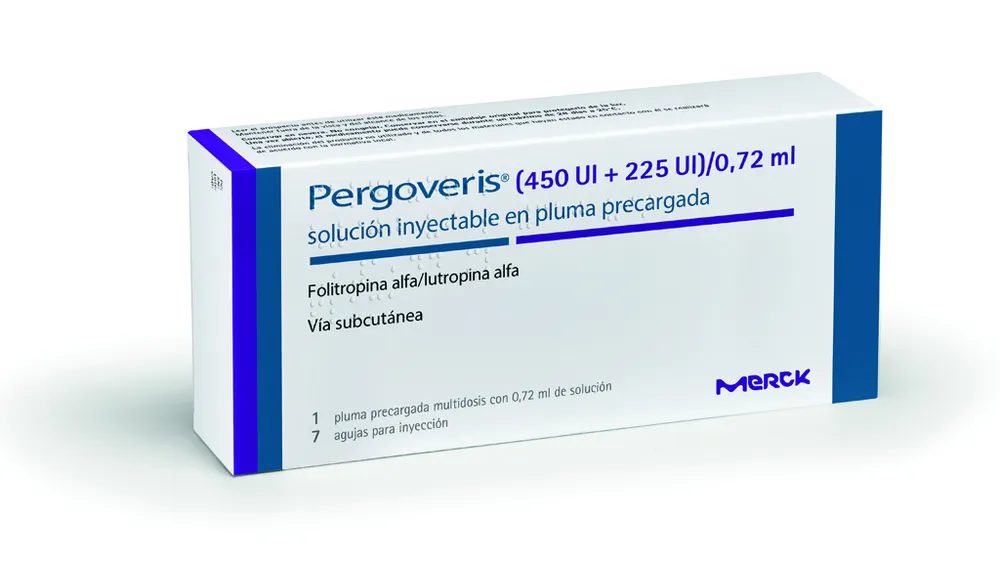
Table of Contents
Package leaflet: Information for the user
Introduction
Package leaflet: information for the user
Pergoveris (450 IU + 225 IU)/0.72 ml solution for injection in a prefilled pen
folitropin alfa/lutropin alfa
Read the entire leaflet carefully before you start using this medicine, because it contains important information for you.
- Keep this leaflet, as you may need to read it again.
- If you have any questions, ask your doctor, pharmacist or nurse.
- This medicine has been prescribed for you only, and you should not give it to other people, even if they have the same symptoms as you, because it may harm them.
- If you experience any adverse effects, consult your doctor, pharmacist or nurse, even if they are adverse effects not listed in this leaflet. See section 4.
Contents of the leaflet
- What Pergoveris is and what it is used for
- What you need to know before using Pergoveris
- How to use Pergoveris
- Possible side effects
- How to store Pergoveris
- Contents of the pack and other information
1. What Pergoveris is and what it is used for
What Pergoveris is
Pergoveris contains two different active substances called "folitropin alfa" and "lutropin alfa". Both belong to the family of hormones known as "gonadotropins", which are involved in reproduction and fertility.
What Pergoveris is used for
This medicine is used to stimulate the development of follicles (each containing an egg) in the ovaries in order to help you become pregnant. It is intended for use in adult women (18 years of age or older) who have low levels (severe deficiency) of "follicle-stimulating hormone" (FSH) and "luteinizing hormone" (LH). Typically, these women are infertile.
How Pergoveris works
The active substances in Pergoveris are copies of the natural hormones FSH and LH. In the body:
- FSH stimulates the production of eggs
- LH stimulates the release of eggs.
By replacing the missing hormones, Pergoveris enables women with low levels of FSH and LH to develop a follicle, from which an egg will be released following an injection of the hormone "human chorionic gonadotropin (hCG)". This helps women to become pregnant.
2. What you need to know before using Pergoveris
Before starting treatment, your fertility and that of your partner should be assessed by a physician experienced in the management of fertility disorders.
Do not use Pergoveris:
- if you are allergic to follicle-stimulating hormone (FSH), luteinizing hormone (LH), or any of the other components of this medicine (listed in section 6).
- if you have a brain tumor (in the hypothalamus or pituitary gland).
- if you have enlarged ovaries or fluid-filled sacs in the ovaries (ovarian cysts) of unknown origin.
- if you have unexplained vaginal bleeding.
- if you have cancer of the ovary, uterus, or breast.
- if you have a condition that would prevent a normal pregnancy, such as premature menopause, genital malformations, or benign tumors in the uterus.
Do not use this medicine if any of the above conditions apply to you. If you are unsure, consult your doctor, pharmacist, or nurse before starting to use this medicine.
Warnings and precautions
Talk to your doctor, pharmacist, or nurse before starting to use Pergoveris.
Porphyria
Consult your doctor before starting treatment if you or any family member has porphyria (a disorder impairing the breakdown of porphyrins, which may be inherited).
Immediately inform your doctor if:
- your skin becomes fragile and blisters easily, especially in areas frequently exposed to sunlight.
- you have stomach, arm, or leg pain.
In such cases, your doctor may recommend discontinuing treatment.
Ovarian hyperstimulation syndrome (OHSS)
This medicine stimulates your ovaries, increasing the risk of developing ovarian hyperstimulation syndrome (OHSS). This occurs when your follicles develop excessively and become large cysts. If you experience pelvic pain, rapid weight gain, nausea or vomiting, or difficulty breathing, contact your doctor immediately, as they may instruct you to stop treatment (see section 4, “More serious side effects”).
If you do not ovulate and the recommended dosage and administration schedule are followed, the occurrence of severe OHSS is less likely. Treatment with Pergoveris rarely causes severe OHSS. The risk increases if the medication used to trigger final follicular maturation (containing human chorionic gonadotropin, hCG) is administered (see details in section 3, “What dose to use”). If OHSS develops, your doctor may withhold hCG in this treatment cycle and advise you to abstain from sexual intercourse or use a barrier contraceptive method for at least 4 days.
Your doctor will carefully monitor ovarian response through ultrasound examinations and blood tests (estradiol measurements) before and during treatment.
Multiple pregnancy
When using Pergoveris, you have a higher chance of becoming pregnant with more than one baby at a time (“multiple pregnancy,” usually twins) compared to natural conception. Multiple pregnancy may lead to medical complications for both you and your babies. You can reduce the risk of multiple pregnancy by using the correct dose of Pergoveris at the correct times.
To minimize the risk of multiple pregnancy, ultrasound monitoring and blood tests are recommended.
Miscarriage
If you undergo ovarian stimulation to produce eggs, the likelihood of miscarriage is higher than in the average woman.
Ectopic pregnancy
Women who have previously had blocked or damaged fallopian tubes (tubal disease) are at risk of embryo implantation outside the uterus (ectopic pregnancy), whether conception occurs spontaneously or through fertility treatments.
Blood clotting problems (thromboembolic events)
Consult your doctor before starting Pergoveris if you or any family member has ever had blood clots in the leg or lung, myocardial infarction, or stroke. You may have an increased risk of developing serious blood clots or worsening of existing clots during treatment with Pergoveris.
Tumors of the reproductive organs
Benign and malignant tumors of the ovaries and other reproductive organs have been reported in women who have undergone multiple infertility treatment cycles.
Allergic reactions
Isolated cases of non-serious allergic reactions to Pergoveris have been reported. If you have previously experienced such a reaction to a similar medicine, consult your doctor before starting Pergoveris.
Children and adolescents
Pergoveris must not be used in children and adolescents under 18 years of age.
Other medicines and Pergoveris
Inform your doctor or pharmacist if you are taking, have recently taken, or might need to take any other medicines.
Do not mix Pergoveris with other medicines in the same injection. You may use Pergoveris together with an authorized preparation of follitropin alfa in separate injections, if prescribed by your doctor.
Pregnancy and breastfeeding
Do not use Pergoveris if you are pregnant or breastfeeding.
Driving and using machines
This medicine is not expected to affect your ability to drive or operate machinery.
Pergoveris contains sodium
Pergoveris contains less than 1 mmol of sodium (23 mg) per dose; hence, it is essentially “sodium-free.”
3. How to use Pergoveris
Follow exactly the instructions for administration of this medicine given by your doctor or pharmacist. If in doubt, consult your doctor or pharmacist again.
Use of this medicine
- Pergoveris is designed to be injected just under the skin (subcutaneously). To minimize skin irritation, select a different injection site each day.
- Your doctor or nurse will teach you how to use the Pergoveris pre-filled pen to self-inject the medicine.
- If they are satisfied that you can safely administer Pergoveris yourself, you may then prepare and inject the medicine at home.
- If you self-administer Pergoveris, read and carefully follow the “Instructions for Use”.
What dose to use
A treatment course starts with the recommended dose of Pergoveris containing 150 international units (IU) of follitropin alfa and 75 IU of lutropin alfa, taken daily.
-
Depending on your response, your doctor may decide to add daily a dose of an authorized follitropin alfa preparation to the Pergoveris injection. In this case, the follitropin alfa dose is usually increased every 7 or 14 days by 37.5–75 IU.
-
Treatment continues until the desired response is achieved. This occurs when you have developed a suitable follicle, assessed by ultrasound and blood tests.
-
Up to five weeks may be required.
When the desired response is achieved, you will receive a single injection of human chorionic gonadotropin (hCG) 24 to 48 hours after your last Pergoveris injection. The best time for sexual intercourse is on the day of the hCG injection and the following day. Alternatively, intrauterine insemination or another medically assisted reproductive procedure may be performed, at your doctor’s discretion.
If an excessive response occurs, your treatment will be stopped and you will not receive hCG (see section 2, “Ovarian Hyperstimulation Syndrome (OHSS)”). In this case, your doctor will prescribe a lower dose of follitropin alfa in the next cycle.
If you use more Pergoveris than you should
The effects of an overdose of Pergoveris are unknown; however, ovarian hyperstimulation syndrome (OHSS) could be expected. However, this will only occur if hCG is administered (see section 2, “Ovarian Hyperstimulation Syndrome (OHSS)”).
If you forget to use Pergoveris
Do not use a double dose to make up for a missed dose. Contact your doctor.
If you have any further questions about the use of this medicine, ask your doctor, pharmacist, or nurse.
4. Possible adverse effects
Like all medicines, this medicine can cause adverse effects, although not everyone experiences them.
Serious adverse effects
Contact your doctor immediately if you notice any of the adverse effects listed below. Your doctor may tell you to stop using Pergoveris.
Allergic reactions
Allergic reactions, such as skin rash, redness of the skin, blisters, swelling of the face with difficulty breathing, can sometimes be severe. This adverse effect is very rare.
Ovarian hyperstimulation syndrome (OHSS)
-
Pelvic pain, accompanied by nausea or vomiting, may be symptoms of ovarian hyperstimulation syndrome (OHSS). Your ovaries may have over-responded to treatment, resulting in the development of ovarian cysts or large fluid-filled sacs (see section 2 under “Ovarian hyperstimulation syndrome (OHSS)”). This adverse effect is common. If this occurs, your doctor will need to examine you as soon as possible.
-
OHSS may worsen with clearly enlarged ovaries, reduced urine production, weight gain, difficulty breathing, and/or possible accumulation of fluid in the abdomen or chest. This adverse effect is uncommon (may affect up to 1 in 100 people).
-
Complications of OHSS, such as ovarian torsion or blood clotting, occur rarely (may affect up to 1 in 1,000 people).
-
Serious blood clotting problems (thromboembolic events), usually with severe OHSS, occur very rarely. These could cause chest pain, shortness of breath, stroke, or myocardial infarction. In rare cases, this could also occur independently of OHSS (see section 2 under “Blood clotting problems (thromboembolic events)”).
Other adverse effects
Very common (may affect more than 1 in 10 people)
- fluid-filled sacs inside the ovaries (ovarian cysts)
- headache
- local reactions at the injection site such as pain, itching, bruising, swelling, or irritation.
Common (may affect up to 1 in 10 people)
- diarrhea
- chest pain
- nausea or vomiting
- abdominal or pelvic pain
- abdominal cramps or bloating
Very rare (may affect up to 1 in 10,000 people)
- asthma may worsen.
Reporting of adverse effects
If you experience any type of adverse effect, consult your doctor, pharmacist, or nurse, even if it is a possible adverse effect not listed in this leaflet. You may also report them directly through the national reporting system included in Appendix V. By reporting adverse effects, you can help provide more information on the safety of this medicine.
5. Storage of Pergoveris
Keep this medicine out of the sight and reach of children.
Do not use this medicine after the expiry date stated on the label and the carton after EXP. The expiry date refers to the last day of the month indicated.
Store in a refrigerator (between 2 °C and 8 °C). Do not freeze.
Keep in the original packaging to protect from light.
After first opening, the pre-filled pen may be stored for up to 28 days outside the refrigerator (at 25 °C). Do not use any remaining medicine in the pre-filled pen after 28 days.
Do not use Pergoveris if there are visible signs of deterioration, or if the liquid contains particles or is not clear.
After injection, dispose of the used needle safely.
Medicines must not be disposed of via wastewater or household waste. Ask your pharmacist how to dispose of medicines and packaging you no longer need. This will help protect the environment.
6. Contents of the pack and other information
Composition of Pergoveris
The active substances are follitropin alfa and lutropin alfa.
- Each Pergoveris pre-filled pen (450 IU + 225 IU)/0.72 ml contains 450 IU (international units) of follitropin alfa and 225 IU of lutropin alfa in 0.72 ml and can deliver three doses of Pergoveris 150 IU/75 IU.
The other components are:
- Sucrose, arginine monohydrochloride, poloxamer 188, methionine, phenol, disodium hydrogen phosphate dihydrate, sodium dihydrogen phosphate monohydrate and water for injections. Small amounts of concentrated phosphoric acid and sodium hydroxide are added to maintain normal acidity levels (pH levels).
Appearance of the product and contents of the pack
Pergoveris is presented as a clear, colourless to slightly yellowish injectable solution in a multi-dose pre-filled pen:
- Pergoveris (450 IU + 225 IU)/0.72 ml is available in packs containing 1 multi-dose pre-filled pen and 7 disposable injection needles.
Marketing Authorisation Holder
Merck Europe B.V., Gustav Mahlerplein 102, 1082 MA Amsterdam, The Netherlands
Manufacturer
Merck Serono S.p.A, Via delle Magnolie 15 (Zona industriale), 70026 Modugno (Bari), Italy
Date of the most recent revision of this leaflet: {MM/YYYY}.
Other sources of information
Detailed information on this medicine is available on the European Medicines Agency website: http://www.ema.europa.eu.
Instructions for use
Pergoveris
(300IU + 150IU)/0.48ml (450IU + 225IU)/0.72ml (900IU + 450IU)/1.44ml
Injectable solution in a pre-filled pen
Follitropin alfa / Lutropin alfa
Important information about the Pergoveris pre-filled pen
-
Read the instructions for use and the package leaflet before using the Pergoveris pre-filled pen.
-
Always follow all instructions in these instructions for use and the training provided by your healthcare professional, as they may differ from previous instructions you have received. This information will help prevent treatment errors or needle-stick infections and injuries from broken glass.
-
The Pergoveris pre-filled pen is for subcutaneous injection only.
-
Use the Pergoveris pre-filled pen only if a healthcare professional has shown you how to use it correctly.
-
Your healthcare professional will tell you how many Pergoveris pre-filled pens you need to complete your treatment.
-
Administer your injection at the same time each day.
-
The pen is available in three different multi-dose presentations:
(300 IU + 150 IU)/0.48 ml |
|
(450 IU + 225 IU)/0.72 ml |
|
(900 IU + 450 IU)/1.44 ml |
|
Note:
- The maximum dose you can select is 300 IU for the (300 IU + 150 IU)/0.48 ml presentation.
- The maximum dose you can select is 450 IU for the (450 IU + 225 IU)/0.72 ml and (900 IU + 450 IU)/1.44 ml presentations.
- The dose adjustment button rotates in increments of 12.5 IU until the desired dose is reached.
Refer to the package leaflet for more information on the recommended dosing schedule and always follow the dose prescribed by your healthcare professional.
- The numbers in the dose information window indicate the number of International Units (IU) and show the dose of follitropin alfa. Your healthcare professional will tell you how many IU of follitropin alfa you should inject each day.
- The numbers displayed in the dose information window help you to:
|
|
|
|
|
|
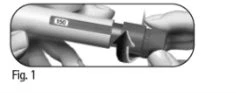
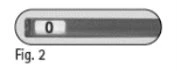
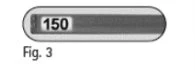
- Remove the needle from the pen immediately after each injection.
Do not reuse needles.
Do not share the pen or needles with anyone else.
Do not use the Pergoveris pre-filled pen if it has been dropped, or if the pen is cracked or damaged, as this may cause injury.
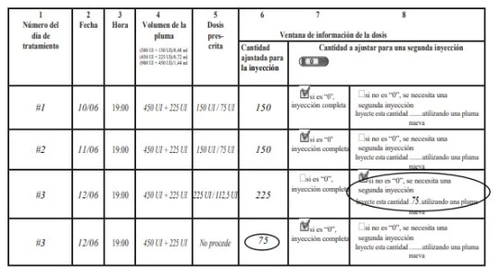
How to use the treatment diary for the Pergoveris pre-filled pen
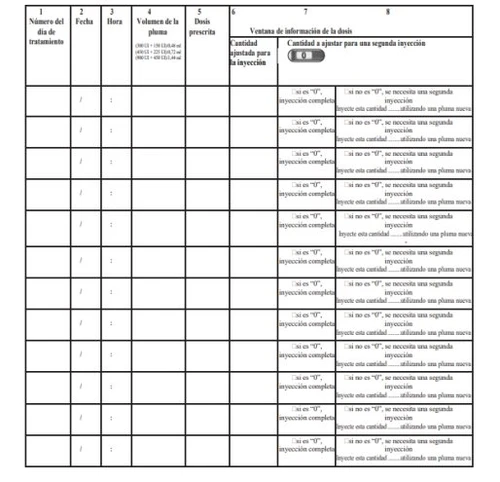
A treatment diary is included at the end of the instructions for use. Use the treatment diary to record the amount injected.
Injecting an incorrect amount of medication may affect your treatment.
- Record the treatment day number (column 1), date (column 2), time of injection (column 3), and pen volume (column 4).
- Record the dose prescribed by your doctor (column 5).
- Check that you have selected the correct dose before administering the injection (column 6).
- After the injection, read the number displayed in the dose information window.
- Confirm that you have received a complete injection (column 7), or record the number shown in the dose information window if it is not “0” (column 8).
- If necessary, perform another injection using a second pen, selecting the remaining dose indicated in the section “Amount to be set for a second injection” (column 8).
- Record this remaining dose in the “Amount set for injection” section on the next row (column 6).
Using the treatment diary to record your daily injection(s) allows you to verify that you have received the full prescribed dose each day.
Example of a treatment diary using a pen of (450 UI + 225 UI)/0.72 ml:
Familiarize yourself with the Pergoveris pre-filled pen
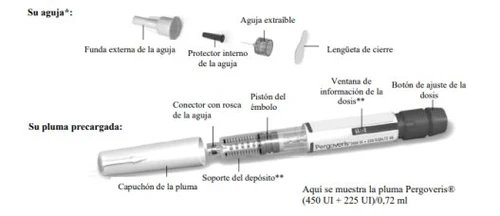
- For illustrative purposes only. The needles supplied may look slightly different.
** The numbers in the dose information window and on the cartridge holder represent the number of International Units (IU) of the medication.
Step 1 Gather the materials
Do not use a microwave or any other heating device to warm the pen. | |
|
|
Do not use any tools, as they may damage the pen. | |
| |
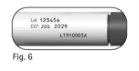
Do not use the Pergoveris pre-filled pen if the expiration date has passed or if the pen does not say Pergoveris. |
|
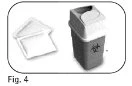
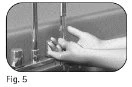
Step 2 Prepare for the injection
| |
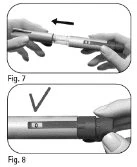
Do not use the pre-filled pen if the medicine has changed color or is cloudy, as this could cause an infection.
|
|
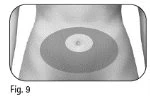
Choose an injection site: | |
Do not touch or cover the skin you have just cleaned. |
|
Step 3 Attach the needle
Important: always make sure to use a new needle for each injection. Reusing needles may cause infection. |
|
| |
| |
| |
|
|
| |
Do not use the needle if it is damaged or expired, or if the outer needle cap or sealing tab is damaged or loose. Using expired needles or needles with damaged or loose sealing tabs or outer needle caps may cause infection. Dispose of it in a sharps container and take a new needle. | |
Do not overtighten the needle when attaching it, as this could make it difficult to remove after the injection. |
|
Do not discard the outer needle cap, as it will prevent needlestick injuries and infections when detaching the needle from the pre-filled pen. |
|
Do not recap the needle with the inner needle shield, as this may cause needlestick injuries and infections. |
|
|
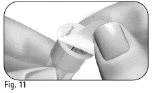
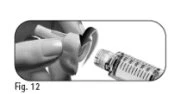
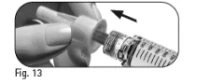
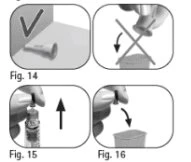
If | Then |
|
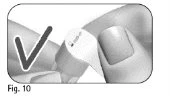
Use a new pen | Check that there is a drop of liquid at the needle tip.
If you do not see a drop at the needle tip or nearby, you must perform the steps described in the next section to remove air from the system. | |
Reuse a pen | It is NOT necessary to check for a drop of liquid. |
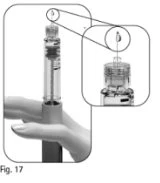
If you do not see a small drop of liquid at the tip or near it the first time you use a new pen:
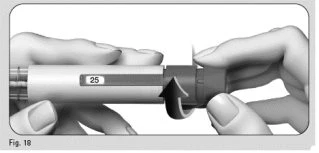
- Carefully turn the dose adjustment knob forward until “25” appears in the dose display window (Figure 18).
- You may turn the dose adjustment knob backward if you have gone past “25”.
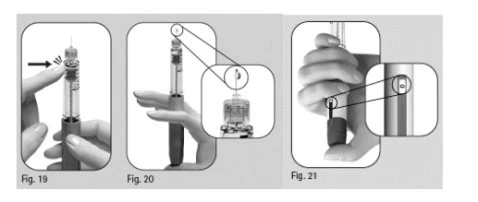
- Hold the pen with the needle pointing upward.
- Gently tap the reservoir holder (Figure 19).
- Press the dose button completely. A drop of liquid should appear at the needle tip (Figure 20).
- Check that the dose display window shows “0” (Figure 21).
- Proceed to Step 4 Select the dose.
If no drop of liquid appears, contact your healthcare professional.
Step 4 Select the dose
- Turn the dose adjustment knob until the desired dose appears in the dose display window.
- Example: if the desired dose is “150” IU, confirm that the dose display window shows “150” (Figure 22). Injecting an incorrect amount of medication may affect your treatment.
|
|
|
|
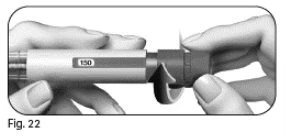
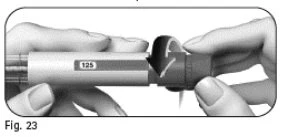
- Check that the dose information window displays the full prescribed dose before proceeding to the next step.
Step 5 Inject the dose
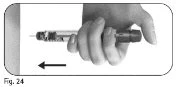
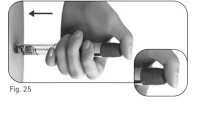
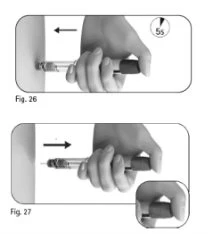
Important: inject the dose as shown to you by your healthcare professional. | |
|
|
|
|
Note: the higher the dose, the longer the injection will take. | |
|
|
Do not release the dose button until after the needle has been removed from the skin. |
Step 6 Remove the needle after each injection
|
|
| |
|
|
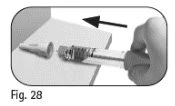
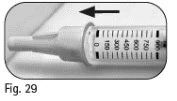
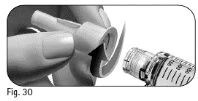
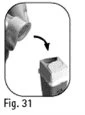
unscrew the needle by turning it in the opposite direction (Figure 30). |
|
|
|
Do not reuse or share any used needle. |
Step 7 After the injection
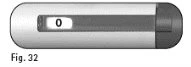
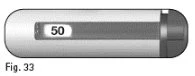
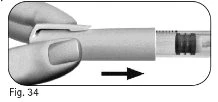
If the dose information window displays “0”, the dose has been completed. If the dose information window displays a number greater than “0”, the Pergoveris pre-filled pen is empty. You have not received the full prescribed dose and must perform step 7.2 described below. |
|
|
|
Step 8 Storage of the Pergoveris pre-filled pen
|
|
| |
| |
Do not store the pen with the needle still attached, as this may cause infection. | |
Do not reuse the Pergoveris prefilled pen if it has been dropped, or if the pen is cracked or damaged, as this may cause injury. | |
Contact your healthcare professional if you have any questions. |
Treatment diary for the Pergoveris prefilled pen
Date of last review of these instructions for use: