Pepcid 10 mg film-coated tablets
Spain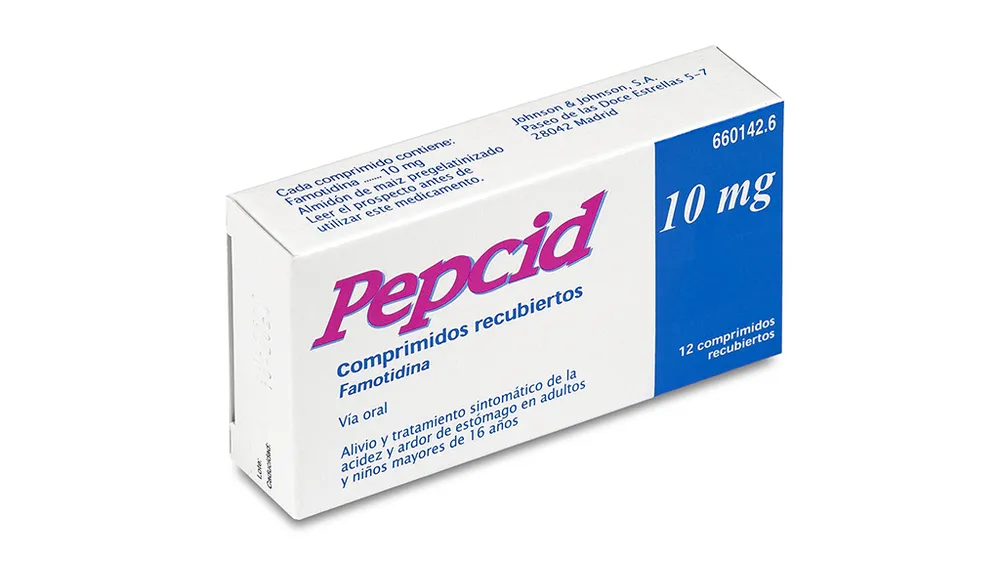
Table of Contents
- Package leaflet: Information for the user
- Introduction
- **Pepcid 10 mg coated tablets**
- 1. What is Pepcid and what is it used for
- 2. What you need to know before starting to take Pepcid
- 3. How to take Pepcid
- 4. Possible adverse effects
- 5. Storage of Pepcid
- 6. Contents of the pack and other information
Package leaflet: Information for the user
Introduction
Package leaflet: information for the user
Pepcid 10 mg coated tablets
Famotidine
Read the entire leaflet carefully before you start taking this medicine, because it contains important information for you.
Follow exactly the instructions for use provided in this leaflet or those given by your doctor or pharmacist.
-
Keep this leaflet, as you may need to read it again.
-
If you need advice or more information, consult your pharmacist.
-
If you experience any adverse effects, consult your doctor or pharmacist, even if they are adverse effects not listed in this leaflet.
-
You must consult a doctor if your condition worsens or if you do not improve after 7 days of treatment.
Leaflet contents:
- What Pepcid is and what it is used for
- What you need to know before taking Pepcid
- How to take Pepcid
- Possible adverse effects
- How to store Pepcid
- Contents of the pack and other information
1. What is Pepcid and what is it used for
Famotidine belongs to a group of medicines that act on the acid-producing cells located in the stomach, reducing acid production.
Pepcid is indicated for the relief and symptomatic treatment of acid reflux and heartburn in adults and children over 16 years of age.
You should consult a doctor if symptoms worsen or do not improve after 7 days of treatment.
2. What you need to know before starting to take Pepcid
Do not take Pepcid
-
if you are allergic to famotidine or to any of the other ingredients of this medicine (listed in section 6).
-
if you are allergic to other H2 antagonist medicines (antihistamines), as cases of cross-sensitivity have been observed.
Warnings and precautions
Talk to your doctor or pharmacist before starting to take Pepcid:
- If you experience unexplained weight loss.
- If you are of middle age or older and are having stomach discomfort for the first time, or if your symptoms have recently changed.
- If you have liver or kidney problems.
- If you have difficulty swallowing or if stomach discomfort persists.
- If you have a history of allergy to other medicines in this group (cimetidine, nizatidina, ranitidine).
Stop treatment and consult your doctor if you experience difficulty or pain when swallowing, severe vomiting, black stools, choking, or chest pain.
Treatment should not exceed 7 days. If your symptoms have not improved or worsen within this time, consult your doctor.
To prevent stomach discomfort related to hyperacidity (indigestion, heartburn, and acid reflux), avoid smoking, eat regular meals, do not consume alcohol, and avoid stressful situations.
If you are scheduled to undergo any diagnostic tests (including blood tests, skin tests using allergens, etc.), inform your doctor that you are taking this medicine, as it may alter test results.
Children and adolescents
This medicine must not be taken by children under 16 years of age.
Taking Pepcid with other medicines
Inform your doctor or pharmacist if you are taking, have recently taken, or might need to take any other medicines:
-
Calcium carbonate, when used to treat high blood phosphate levels (hyperphosphatemia) in dialysis patients.
-
Do not take neutralizing antacids (bicarbonates, carbonates, hydroxides, aluminum, magnesium, calcium salts, etc.) until 2 hours after taking this medicine.
-
If you are taking oral preparations containing ketoconazole or itraconazole (antifungals), you should avoid taking acid-reducing medicines (e.g., famotidine 10 mg) beforehand, and should always take famotidine at least 2 hours after the antifungal.
-
This medicine may reduce the effects of iron-containing preparations.
-
Pepcid may reduce the effect of oral posaconazole suspension (a medicine taken to prevent and treat certain fungal infections).
-
Pepcid may reduce the effect of dasatinib, erlotinib, gefitinib, or pazopanib (medicines used to treat cancer).
Pregnancy and breastfeeding
If you are pregnant or breastfeeding, think you may be pregnant, or are planning to become pregnant, consult your doctor or pharmacist before using this medicine.
Women who are breastfeeding should either discontinue treatment with famotidine or stop breastfeeding.
Driving and using machines
Although effects of this kind are not expected, if dizziness occurs, you should not drive or operate dangerous machinery.
3. How to take Pepcid
Follow exactly the instructions for use provided in this leaflet or those indicated by your doctor or pharmacist. If in doubt, consult your doctor or pharmacist.
Adults and adolescents over 16 years of age:
The recommended dose is 1 tablet when symptoms occur, or 1 tablet 1 hour before eating to prevent symptoms associated with food and drink.
Do not take more than 2 tablets per day.
The duration of treatment should not exceed 1 week.
This medicine is taken orally.
Swallow the tablets whole with a glass of liquid.
Use in children and adolescents
Children under 16 years of age must not take this medicine.
Use in elderly patients
Elderly patients experiencing stomach discomfort for the first time or weight loss not attributable to known causes should consult their doctor before taking this medicine.
Use in patients with renal impairment
You must consult a doctor before using this medicine. A dose adjustment may be necessary.
If you take more Pepcid than you should
In case of overdose or accidental ingestion, contact your doctor or pharmacist immediately, or call the Toxicology Information Service at telephone 91 562.04.20 (indicating the medicine and the amount ingested).
If you forget to take Pepcid
Do not take a double dose to make up for missed doses.
If you have any further questions about the use of this product, ask your doctor or pharmacist.
4. Possible adverse effects
Like all medicines, this medicine can cause adverse effects, although not everybody gets them.
The most frequently reported adverse effects are headache and dizziness.
Other adverse effects include:
Uncommon (may affect up to 1 in 100 people):
- excessive intestinal gas
Rare (may affect up to 1 in 1,000 people):
- constipation and diarrhoea
Very rare (may affect up to 1 in 10,000 people):
- hypersensitivity, anaphylaxis, angioedema
- reversible psychiatric disorders such as depression, anxiety, agitation, confusion, and hallucinations
- dizziness, asthenia, fatigue, and somnolence
- nausea and/or vomiting, abdominal discomfort, pain or distension, loss of appetite, dry mouth
- cholestatic jaundice, changes in liver enzymes
- toxic epidermal necrolysis, skin rash, pruritus, urticaria
- joint pain (arthralgia), muscle cramps
- malaise
- hair loss
Reporting of adverse effects
If you experience any adverse effects, consult your doctor or pharmacist, even if they are not listed in this leaflet. You can also report them directly via the Spanish Pharmacovigilance System for Human Medicines: www.notificaRAM.es. By reporting adverse effects, you can help provide more information on the safety of this medicine.
5. Storage of Pepcid
Store below 30°C. Keep the container tightly closed to protect it from moisture.
Keep this medicine out of the sight and reach of children.
Do not use this medicine after the expiry date stated on the packaging after "EXP". The expiry date refers to the last day of the month indicated.
Medicines must not be disposed of via wastewater or household waste. Return any unused medicines and their containers to the Sigre collection point at your pharmacy. If you are unsure, ask your pharmacist how to dispose of medicines and containers you no longer need. This will help protect the environment.
6. Contents of the pack and other information
Composition of Pepcid
-
The active substance is Famotidine 10 mg per coated tablet.
-
The other components are: hydroxypropyl cellulose, magnesium stearate, hypromellose, microcrystalline cellulose, pregelatinized corn starch, iron oxide red (E172), talc, titanium dioxide (E171), and carnauba wax.
Appearance of the product and contents of the pack
The tablets are pale pink coated tablets.
Pepcid is available in packs containing 6 and 12 coated tablets.
Marketing Authorization Holder and Manufacturer
Marketing Authorization Holder:
JNTL Consumer Health (Spain), S.L.
C/ Vía de los Poblados 1, Edificio E, planta 3
28033-Madrid
Spain
Manufacturer:
JANSSEN-CILAG, S.P.A.
Vía C. Janssen
04010 Borgo S. Michele, Latina (Italy)
Date of the most recent revision of this package leaflet: September 2018
Detailed and up-to-date information on this medicinal product is available on the website of the Spanish Agency for Medicines and Health Products (AEMPS) http://www.aemps.gob.es/.